

Financial Adviser: 5 Business Lessons Everyone Can Learn from 'The Pretzel King' Mikkel Paris, CEO of Auntie Anne's Philippines

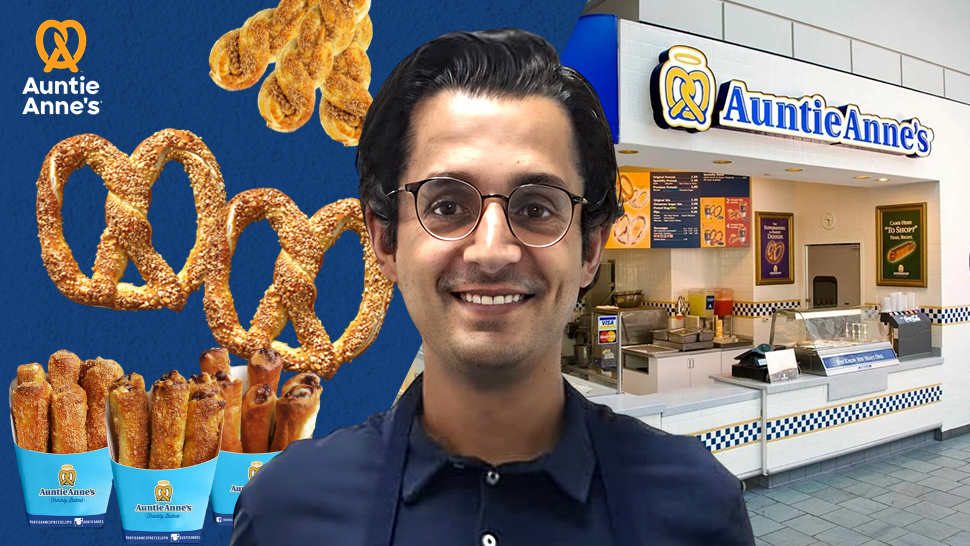
When it comes to the delectable world of pretzels, one name stands out with a legacy of excellence. Auntie Anne's made its grand debut in Asia in 1995 and since then has captivated pretzel enthusiasts in the Philippines.
However, after 16 years of operation and merely 14 outlets to its name by 2011, Auntie Anne's faced significant financial challenges. It was during this critical juncture that an enterprising figure, Mikkel Paris, a Filipino with Spanish and Indian descent who grew up in the Philippines, emerged to breathe new life into the franchise.
Paris saw an opportunity to rescue Auntie Anne's from its challenging circumstances. With the unwavering support of his own aunt, Mary Anne, Paris wasted no time in devising a strategy to rejuvenate Auntie Anne's and bolster its financial standing.
Having graduated in Biology from UP Los Baños, Paris might not have had a business background, but he possessed an entrepreneurial spirit that set him apart. Working closely with a dedicated team, Paris introduced new offerings such as the Nuggets and Cream Cheese Stix, which became an instant hit with consumers.
The introduction of these new products sparked a remarkable financial turnaround for Auntie Anne's. Within just one year, the franchise witnessed an impressive revival in profitability, instilling renewed confidence in the franchise's potential. This encouraged Paris to expand Auntie Anne's outlets, which marked the beginning of the franchise's remarkable growth trajectory.
Today, 12 years after Paris took over the franchise, Auntie Anne's boasts an impressive 80 outlets nationwide, with expectations to end the year with 93 outlets.
The heartwarming tale of Auntie Anne's recovery, fueled by Paris' visionary leadership and relentless pursuit of innovation, stands as a testament to the power of determination and creativity.
As the brand evolves and reaches new heights, Auntie Anne's remains a beacon of excellence, leaving a lasting impression on the culinary landscape in Asia.
How did Paris turn Auntie Anne’s around and make it into the number one pretzel brand in the Philippines? What qualities and vision of Paris that contributed to the enduring success and growth of Auntie Anne's?
Here are the five business lessons everyone can learn from ‘The Pretzel King’ Mikkel Paris, co-founder and CEO of Auntie Anne’s Philippines:
ALSO READ
1| Know how to find opportunities for turnaround
Investing in a failing business with valuable assets provides an opportunity to strategically use these resources for the company's turnaround.
By capitalizing on brand recognition, customer loyalty, infrastructure, intellectual property, partnerships, and skilled employees, the new management can accelerate the process of revitalizing the business without having to start from the ground up.
Paris recognized the inherent potential of the Auntie Anne's brand, despite its current challenges. Familiarity with the brand and its popularity among his family in London motivated him to take on the opportunity.
Paris identified key areas that needed improvement and growth. He prioritized retraining and re-engaging his employees and building new relationships with suppliers, which helped him secure the necessary resources for the turnaround.
He also implemented financial restructuring measures to allocate resources effectively and optimize the use of minimal investments in regenerating the company, aimed at addressing the challenges faced by the business and revitalizing it for future growth and success.
“Auntie Anne’s is a global brand,” Paris says. “It was started by Anne Baylor kaya Auntie Anne’s. She started this late 80s but this was first brought in the Philippines in 1995 by another family. They had a few stores and it did pretty well. It was one of the first franchisees of Auntie Annes outside the United States.
“For some reasons, I think they encountered some problems. They had to close a few stores and they were really struggling at the time and for some fortuitous circumstance, we ended up owning the brand in 2011.
“It was a very complicated process. We didn't necessarily go out to intend to own the brand; it just landed on our plates. But the problem is when we looked at it, there were so many challenges at the time.
“I remember when we came in, it was like everybody told us, ‘Just close it na lang,’ kasi it had so many problems, but we've known Auntie Anne’s as a brand even when we were younger and I lived in London for about 10 or so years because my family and I loved it, so I was very reluctant to close it. I believed so much in the potential of Auntie Anne’s.
“I really believed in the product. I've loved Auntie Anne’s ever since I was young. I saw the potential in it. I really believed that if we were able to save it, then it would be a brand worth having.
“Bear in mind like it had been in the Philippines for like 16 years or so and not even looking good or nice, pero may customer pa rin, and when we looked around, they're still alive. Kahit na there were times when they didn't even have enough inventory because they're having problems with customs and all that, so I really had strong faith in the brand that I said, ‘I believe I could turn it around here.’
“At the time when we took over the brand, talagang it was really down. Employees were leaving and suppliers did not want to talk to us. The malls didn't want to give us locations, but we were able to find ways, with minimal investment, to regenerate the money within the company and rebrand it.
“My first focus was to retrain everybody and re-engage the teams because they have been so demoralized. And then, obviously build new relations with the malls, build new relationships with suppliers because so many suppliers did not want to talk to us.
“It was a challenge, and I remember there were 14 stores already existing at the time when we took over but they were all old and dilapidated, as in built in the 90s or early 2000s.
2| Know how to empower the team and demonstrate commitment
Motivating a demoralized team is a crucial aspect of effective leadership and organizational success. It not only leads to improved individual performance but also fosters a positive and productive work environment that benefits the entire organization.
Investing in employee empowerment and motivation can yield substantial returns in terms of increased productivity, innovation, employee retention, and overall business performance.
Recognizing the importance of an energized and motivated team, Paris made it a priority to get the employees excited about the brand's potential. He believed that a motivated team was vital for the brand's success, and accordingly, he focused on inspiring and empowering them.
Paris also showcased his commitment to the brand's rebranding by putting up new stores. He also understood the significance of building relationships with new suppliers and mending relations with government agencies. This approach ensured smoother operations and support for the business.
“So the first year, I said what we need to do is we need to retrain all our teams,” Paris says. “We need to re-motivate them, re-engage them with us, and tell that there're new owners here now and we're here to help you. We want to build this brand. We want to grow so stay with us. So I contacted (the main) Auntie Anne’s and I said I need you guys to come here and retrain us.
Luckily there was a Filipino representative and I told him, ‘Come with me. Let's go around to the existing stores, mga sira-sira na, and tell me what needs to be fixed. Teach me. Show me what we need to do.’
We focused so much on training the stores and then getting the team energized because I always believe without an energized or motivated team, there's no amount of money that you can put anywhere that will make your brand do well. It starts with the people. We got them happy, engaged and rebuilt some of the stores kasi talagang giba-giba. They were falling apart. They were built in the 90s and they hadn't been touched.
“We put up new stores just to also show the malls that we were serious about rebranding. I remember at the time when I approached SM, they said, ‘If you're really, really serious, we have two malls in Davao. One is a brand new one that's opening and another one is already there.’
“And I said, ‘I've never even been to Davao. We're just starting. It's a bit hard for us to manage this.’ But to show our commitment to SM, I flew to Davao and I opened those two stores and after we opened those two stores, siguro SM saw that, ‘Hey, these guys are serious.’ The offers for new locations started coming in throughout na and ever since, we never looked back.
“But it was really retraining everybody, looking at the team, making sure everybody's got what they need. It was also about building relationships with new suppliers and fixing our relationships with the government agencies.
“I didn't do a lot of marketing in the first year because I didn't want to say, ‘Hey, look at Auntie Anne’s, under new management, new owners.’ Hindi pa kami ready. Like the stores weren’t yet fully trained.
“I started all the marketing on my phone with Facebook. I didn't have a marketing team at the time. I started promoting it to my friends, to everybody. I said, you know, like our page and then started posting. A lot of our initial product shots that we post on social media were me on my phone taking pictures of it and then promoting it.
“But then by the second year because we had worked so hard in rebuilding, we won a best new franchisee (award). We were told we were the best Auntie Anne’s in the world, but the year before that, we were literally the worst, so we were able to turn it around, and I really believe it was because we really motivated the team and rebuilt from that that point.”
3| Know how to foster a culture of creativity and innovation
Encouraging creativity and innovation often involves collaborative efforts. It promotes a culture of innovation that encourages employees to constantly seek better ways of doing things. It fosters a mindset of continuous improvement, leading to enhanced processes, products, and services.
Paris believed in the value of every team member's input and actively encouraged them to share their creative ideas. He embraced failures as learning opportunities rather than reprimanding mistakes. This encouraged a growth mindset among the team, where they felt comfortable taking risks and experimenting with new ideas.
To drive innovation in the product line, Paris involved the team in the development process. He initiated an R&D (Research and Development) program where team members could submit flavor ideas for new products to be considered for launch.
He implemented a trial and feedback mechanism for new products. The team would create various flavors, and together they would sample and evaluate each option, voting on the ones they believed would resonate with customers the most.
“The supply chain was very important because the dough that we used to make the pretzels is a proprietary mix that comes from the US so we import quite a lot of that and there were the challenges at the time kasi nauubusan ng flour sa stores because of problems with customs or problems with logistics, so we had to make sure that our supply chain was good,” he says.
“The second is for us was product innovation, making sure the product was back to scratch kasi the main thing of Auntie Anne’s is people love the pretzel, people love that product so if you make that well…Di ba we started with retraining everybody, making sure our ingredients were the quality ingredients, the product will be good and people will start noticing it.
“When the stores are starting to look nice, the customers will start saying ‘Uy, anong nangyari kay Auntie Anne’s? Mukhang gumaganda na ulit.’ Then they will go and will try the product and then they will say ‘Oh, it's still really good. It's even better now.’ Then word of mouth will spread, right? Then there's a momentum there and the malls will also see it and start offering new locations.
“We started building new stores, new design, new everything. Much nicer than what they were before, then we innovate. We started making new products.
“So the first thing we made were those nuggets, the little ones, because the thing with Auntie Anne’s, it’s a product that you buy when you're in the mall. When you walk around the mall, it has to be convenient, you know, it's not something that you wake up in the morning, ‘Uy tara, let’s go to Auntie Anne’s.
“They had nuggets in the states, but plain. Its plain salted so I said, ‘Let's make almond nuggets. Let's make cinnamon nuggets. Let's make it all, so kami nag-isip nyan, and also we utilized our team. We said, ‘Guys, ano kaya maganda i-launch natin na product? One of our team members here said, ‘Sir, gawa tayo cream cheese stick.’
“So that's the one there where the inside of the stick is the cream cheese and on top of it could be almonds or cinnamon and that is what changed the game for us.
“The cream cheese stick is the biggest innovation we made that completely changed the game for Auntie Anne’s Philippines. The sales doubled when we did that and until today those are our best-selling products and that was something we made here from the innovation of our own team and that's why we're so proud of that.
“The way I operate kasi, the way I manage any business and I've learned this even from my time in England, is we never operate by fear or anything. I don't shout. We don't get mad. Anybody here can talk to me at any point of the day. I walk around here all the time. I know everybody in the stores, and when I go to the stores, I always ask them ‘Hey, what do you need?’ What’s this? What do you think?
“And I believe kasi if you don't rule by fear and you rule by, like, an open relationship with respect, people are more open.
“My favorite part of my job here is what we call the R&D, which is every month we try new products, and the way we do that is we tell the stores, we tell our teams, ‘Submit kayo ng mga flavors na you think will work.’ Kasi every quarter, we launch a new product eh.
“So every quarter we have to have a new product just to keep you relevant and fresh in the market. But before we get to that, we tell everybody, ‘Submit kayo ng short list ng mga flavors.’ Then they give us a list and we make it all different flavors and try it.
“Then botohan kami, saying, ‘Alin yun pinaka-nagustuhan natin?’ What do we think will work? And when we choose a flavor that we think will work, we look at the costing na. Are we able to afford to sell it at this price for our customers?
“Every time we launch a new product, the limited time offer, it's super successful. And then I go back to the team and I say ‘that's you.’ You guys thought of this because the main logic is our teams are the ones who make these pretzels day in, day out. They talk to customers day in, day out so they would have the input.
“Kumbaga, sila na yung chef dun sa stores eh. They know it so they would have ideas in their head of what will work. There's no point reinventing the wheel sometimes. The Philippines is full of immensely talented and creative people. They're just not given a voice and that's always been something that frustrates me because when I took over the brand, the employees were so scared.
“Example lang, I went to one store, it was my first time to visit the store and paglabas nila ng pretzel, may konting sunog so I said, ‘Bakit sunog ang pretzel nyo?’ Sabi sakin ng team, ‘Sir kasi masyadong mataas yung thermostat.’ So sabi ko, ‘Bakit ayaw mo palitan, alam nyo naman pala mataas, sabi nila, ‘Sir bawal kasi namin galawin, ganyan.’ So parang they were so scared even if they knew that it was going to burn. So I said, ‘No, guys that’s not how we operate.’
“I said if you are the store manager, you own this place. You are part of it. You make the decisions here because I'm not the kind of CEO who is there all the time. I delegate. I find people and we empower them. You do the job and we give them the creative license to do what they need to do.”
4| Know how to offer competitive pricing and deliver quality products
Customers have varying preferences and budgets. Providing affordable pricing allows businesses to cater to price-sensitive customers, while maintaining quality ensures that customer expectations for value and satisfaction are met.
A delicate balance between pricing and quality enables businesses to remain competitive. Consistently delivering high-quality products at reasonable prices builds a positive brand reputation. Balancing affordability with quality builds trust, which fosters customer loyalty and positive word-of-mouth recommendations.
Paris recognized the importance of offering competitive prices to attract a wide customer base. When he took over the brand, Paris inherited an existing price point. To maintain continuity and avoid abrupt price changes that could alienate customers, he sought ways to make it work while still delivering quality products.
Paris scrutinized food costs and explored negotiations with suppliers to bring down expenses. While there were minor price increases, he ensured they were carefully implemented, not compromising affordability for the majority of customers.
Paris successful balancing between affordable pricing and delivery of high-quality, fresh products contributed to the brand's popularity, widespread appeal, and sustainable growth, making it a notable player in the competitive market.
“My goal was to make enough money from the stores to plow it back into the company to open more outlets,” Paris says. “I wanted to create parang to have a buzz to see, ‘What's that? What's new in Auntie Anne’s?’ Because the stores were looking new.
“And also my goal kasi was to make sure that our price point is affordable for most Filipinos. If you were to bring in Auntie Anne’s today from the US, you would definitely price it much higher than our current prices are, but I was kind of limited at the time because na-inherit ko na itong price point. I cannot all of a sudden charge 20 pesos more than what the customer was buying, so I had to find ways to make it work that the cost was still there.
“Syempre, we looked at the food cost, how we can negotiate with the suppliers to bring down the cost. Were we at the right price point? Kasi they hadn’t changed their prices for so long, so we made some increases a little bit, but not too much.
“There was a lot of negotiating with suppliers to get terms with suppliers kasi if may utang ka sa supplier and bad credit ka, nobody wants to give you terms. Those were the challenges we had to face. I met every single supplier. I went out there and I said, ‘Hey, look, promise, new owners are here. We're committed. This is who we are. We've got money. We will pay.’ And that's what we did.
“I always want to keep it P100 or less so that the average Filipino can still buy it and I can reach more markets. Kasi before ang tingin nila sa Auntie Anne’s, ‘Ay mahal yan, imported, ayaw ko lumapit dyan.’ But now we have stores in high-end malls and we have stores in provincial areas. You wouldn't think Auntie Anne’s would do well, but we do really, really well, because nga that’s our price point.
“So I don't have to make huge profits on every single product, as long as people will keep buying from me. That's okay. I want to reach this market so that price point is very important to me.
“But so what we do now when we do the price increase because every year like especially this year was the biggest challenge with the price increase because of inflation.
“All our suppliers had to raise their prices like crazy so what we did is we increased these lines considerably, maybe some of them P10, but I offered you more savings if you bought the drink with the pretzel or if you bought the box with discount.
“So basically I'm trying to get people to buy less individual and to buy more of the combo because they get to save more this way, so I offer more savings.
“I don't want to alienate our customers so we always want to still offer value. And I want people to realize na kahit na it's a little bit more mahal, talagang where will you get that experience where the product is being made in front of you.
“This is a fresh product. What you get is fresh. It's not something made in the morning and sold to you in the afternoon. Every 30 minutes we have to make that fresh.
“Our menu is still the same with just the addition of this cream cheese sticks and the nuggets, but I did this mga combos. Dati wala yang combos. Our lemonade, believe it or not, we still use fresh lemons to make our lemonade. That's a very popular drink, that's a real lemon.
“We choose to reinvest our profits because we're opening so many stores. The beauty of it is we're able to make enough money to open 10 stores a year with no loans, no nothing.”
5| Know how to value hard work and prioritize family
In the world of business, hard work, determination, and ambition are often seen as key ingredients for success. Entrepreneurs and professionals strive to achieve their goals, aiming to build profitable ventures and secure a prosperous future.
While the pursuit of success is commendable, it is equally essential to recognize the significance of enjoying the fruits of one's labor, particularly in the context of work-life balance and family time.
Having the freedom to spend quality time with family is a reward that should not be underestimated. When individuals strike a healthy balance between work and personal life, they create opportunities to create lasting memories, support their loved ones, and foster deep relationships.
Paris achieves work-life balance by embodying the values he holds dear: hard work, family, and contentment. His dedication to his team and business is matched by his commitment to spending meaningful time with his loved ones.
By instilling the importance of earning success, appreciating simple joys, and prioritizing family, Paris sets a powerful example for his children, showing them the path to fulfillment and happiness beyond material wealth.
Paris's approach to money is grounded in a realistic perspective. While he acknowledges the importance of financial stability, he does not let material wealth drive him. He appreciates having enough to cover essential expenses and medical needs, but his primary focus lies in spending quality time with his family and enjoying the simple joys of life.
“I always believe that whatever I have, I have to earn myself,” he says. “I always believe in doing it my own way, even if I work for a very wealthy family, I don't take handouts or anything.
“I had to learn everything on my own. Nobody ever gave me anything. Nobody gave me a house, you know how it is in the Philippines. I had to work for everything I own and I'm happy that it was that way. I'm proud of that.
“I have been offered, been given things and I've always turned it down because, sometimes it's foolish pride, but I really believe you have to work for this team and I want to show my team that one, I can be like them, and two, they can also do it.
“This is what I love. More than just Auntie Anne’s, this team means the world to me. I work every day for these guys. I don't want to lose them or leave them.
“For me kasi, it's not really about money, like this job affords me to have a lot of time with my family. I have a lot of free time and I've never really been driven by money because, and I know it’s a cliché, a lot of people say I don't want to be rich but I just want to have enough to cover my bills and pay my medical expenses.
“Everything I have I had to work for, so the same for my kids. Nothing will be given to them. Like my son in the next few weeks will start working in one of our stores, as in talagang full immersion because I want them to learn the value of money. We don't spoil our kids, they have to work for everything.
“With money kasi it comes with a lot of problems, like family dynamics. If you have more businesses, you just lose more time with your family. You may have more money in your bank account but you don't see your children.
“Right now, I see my kids every single day. I play football. I still am very active. I'm there with my kids before I've even coaching my son’s football team. I spend so much time with my family.
“So for me, what more can I ask for? I have a very good team that I work with. I have a job that I love that I'm very proud of. I spend more time with my family than anybody I know. What else would I ask for? If I bring in more businesses, baka nga yumaman pa ako, I'll be super rich, but I won't enjoy it.”
Henry Ong, RFP, is an entrepreneur, financial planning advocate and business advisor. Email Henry for business advice hong@financialadviser.ph or follow him on Twitter @henryong888
