
Financial Adviser: 5 Business Lessons Everyone Can Learn from ‘Banh Mi King’ Mon Santos, Founder and CEO of Banh Mi Kitchen

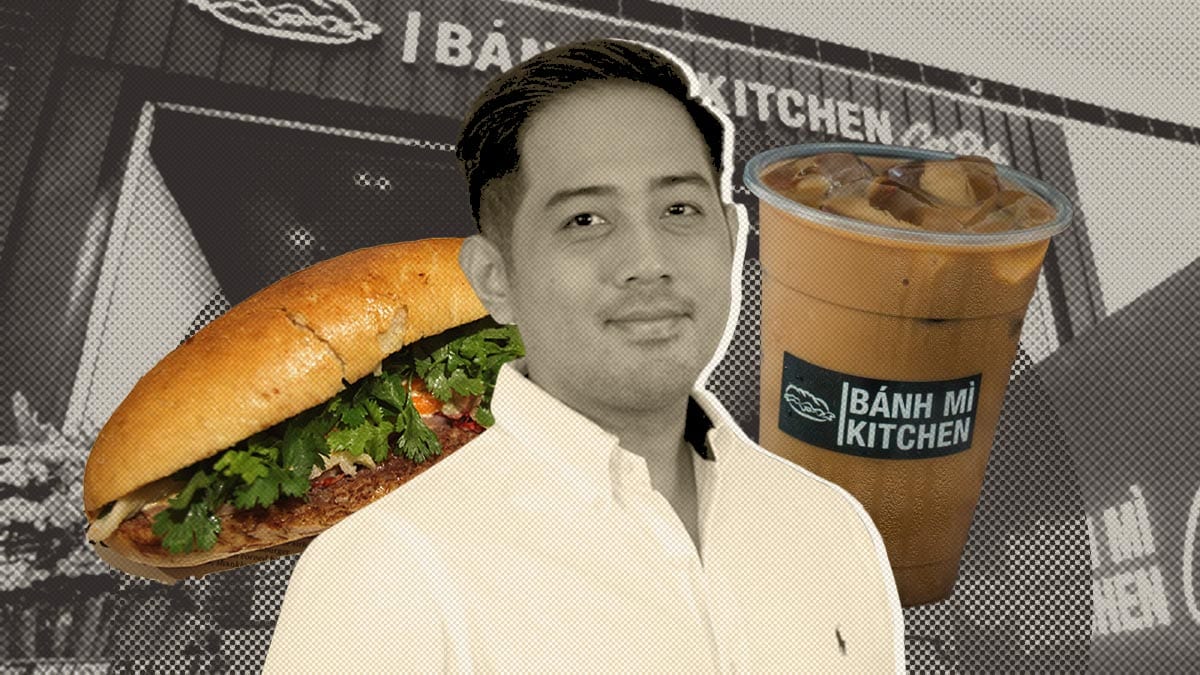
ILLUSTRATION: Igi Talao
From losing his parents at a young age to facing financial struggles in his late 20s, Mon Santos persevered and turned challenges into opportunities. As the visionary behind Bahn Mi Kitchen (BMK), the Philippines’ leading Vietnamese sandwich chain, he built a nationally recognized brand from humble beginnings.
Santos faced adversity early in life. He lost both parents to cancer before turning 16 and had to face life as an orphan. With financial support from his father’s family, he earned a Management degree from Ateneo de Manila University, which helped him secure a job at Unilever.
Though he achieved corporate success, he felt a strong desire to start his own business. In 2012, at 28 years old, he left his job to pursue entrepreneurship. His first venture did not go as planned as it failed to gain traction and eventually collapsed. Newly married and expecting his first child, he faced financial instability.
In the midst of this uncertainty, he stumbled upon a Vietnamese store in Makati that sold banh mi sandwiches. Intrigued by the product’s potential in the Philippine market, he initially planned to franchise the Vietnamese-owned business.
However, just as he secured a space in a mall, the owner backed out. Instead of walking away from the opportunity, Santos decided to build his own brand from scratch that would soon become Banh Mi Kitchen.
When Banh Mi Kitchen launched in 2016, it quickly gained popularity. By the end of the year, Santos opened two more outlets. By the close of 2017, Banh Mi Kitchen grew to 10 branches and established its presence in the food industry.
Today, Banh Mi Kitchen is the largest sandwich company in the country and has expanded into a nationwide brand with over 100 branches, earning Santos the title of “Banh Mi King” in the Philippines.
With ambitious plans to open an additional 50 to 100 branches in the coming years, he aims to further cement Banh Mi Kitchen’s dominance in the market by expanding to more key cities, strengthening the brand’s presence, and continuing to innovate its menu to cater to changing customer preferences.
What challenges did Santos face when transitioning from the corporate world to entrepreneurship, and how did those experiences shape his strategy in building Banh Mi Kitchen? What lessons can aspiring entrepreneurs take from his journey that led Banh Mi Kitchen to become a dominant force in the food industry?
Here are the five business lessons every entrepreneur can learn from the “Banh Mi King” Mon Santos, founder and CEO of Banh Mi Kitchen:
ALSO READ
How a Filipino-Owned Vietnamese Food Concept Grew to 100 Branches
1| Know how to develop the right skills from corporate experience before starting a business
Building the right business skills from corporate work before transitioning into entrepreneurship provides a strong foundation for long-term success. Corporate experience exposes individuals to structured business processes, from supply chain management to financial planning, which are important when running a business.
It also helps in developing leadership and management skills that allow individuals to manage teams, make strategic decisions, and explore workplace challenges—all of which translate into effective business leadership.
Exposure to corporate sales and marketing strategies also equips individuals with the knowledge to position a product, target the right customers, and implement branding techniques, which are essential skills for any business to thrive.
Santos effectively used his work experience at Unilever to develop the skills necessary for entrepreneurship. His role in sales and distribution management provided firsthand exposure to business operations, supply chain logistics, and customer engagement—elements that are important for running a successful business.
Managing distributors required him to balance company objectives with market realities, which taught him financial discipline and the importance of operational efficiency. His experience in brand management and negotiation helped him understand market positioning and consumer behavior, which gave him the strategic foresight to identify opportunities in the food industry.
Santos faced personal and financial challenges yet remained steadfast in pursuing his goals. His discipline and work ethic, instilled from his early years and reinforced in his corporate career, allowed him to execute his business plans with precision.
Santos’ initiative and opportunity-seeking mindset enabled him to take calculated risks, such as securing a space in SM Megamall despite setbacks. His commitment to learning ensured allowed him to apply corporate best practices to his own business.
“I lost my parents at an early age,” Santos says. “I lost my dad when I was seven and then my mom when I was in high school. My dad got lung cancer because of smoking. He was 40 years old lang. He used to sell fish in Divisoria, so doon sila nag-meet ng mom ko. So yong mom ko naman nagba-buy and sell din ng fish.
“When my dad died, she was the sole provider. Gagawin nya, bili sya ng fish sa Divisoria and then ire-resell nya sa village namin, sa garahe namin, para meron siyang pang support samin. Kasi lahat kami Ateneo nag-aral eh so medyo mahal, tapos nagtayo rin sya ng parang ready-to-wear na mga clothes sa palengke.
“My mom naman had breast cancer. I think she was 53 years old when she passed away, so luckily yung eldest namin, my ate, was very responsible. Siya yung nag-alaga sa amin. Parang siya yung kasama naming lumaki. And then, my kuya naman, medyo malayo din ang age gap. I think 10 years, so medyo siya naman parang father figure.
“I grew up with my siblings with the support of my lola. Siya yung nagpapa-aral samin. Wala talaga akong exposure sa kahit anong business or corporate. Walang nag-guide sakin, so swerte lang talaga ako na I studied well enough.
“My mom used to say wala kaming mapapamana sayo. Yung education lang talaga yong mapapamana ko sayo and we took that seriously. So, we really studied hard, and right after I graduated from Ateneo, I worked for Unilever Philippines.
“I worked in sales. I was assigned in Bicol, and then Batangas. I handled the different brands of Unilever for the local supermarkets. My main focus talaga was handling distributors. That was my first exposure in business because it was like handling the business of the distributor, that's where my world opened up.”
2| Know how to turn business failures into opportunities
In entrepreneurship, challenges and unexpected obstacles are inevitable. The ability to pivot allows business owners to adapt to market changes and unforeseen circumstances. It enables them to reallocate resources and refine their strategies.
Recognizing when a plan is not working and making necessary adjustments is an important skill that separates successful businesses from those that fail.
Instead of persisting with a failing approach, entrepreneurs who pivot can explore alternative solutions and align their business model with the market. This proactive approach opens new opportunities for growth.
When Santos’ first venture in beer distribution failed, he did not let the experience discourage him. Instead, he remained open to new opportunities and actively searched for a viable business idea. His exposure to business operations at Unilever helped him recognize market gaps, and his ability to identify trends led him to discover the potential of bahn mi in the Philippines.
One of his biggest challenges came when he attempted to franchise a bahn mi brand he had found but was abruptly denied by the owner. Instead of giving up, Santos saw this setback as a chance to build his own brand from scratch.
He took decisive action, securing a loan, hiring a chef, and developing a unique bahn mi recipe that catered to Filipino tastes. His perseverance paid off when his first store in SM Megamall became an instant success, even in a non-prime location.
“Yung sa Unilever talaga, doon talaga yong parang serious na exposure ko sa business kasi I talked to the distributors that Unilever had,” Santos says. “Of course, I had my own agenda, but I also had to ensure that the distributors were doing well for Unilever. That’s actually where I also met my wife, who was working there at the time.
“After four years with Unilever, I moved to the liquor industry, mga alak naman, pero in two years, nag-resign din ako. I got married right after leaving my job. Medyo gamble kasi I just got married tapos naging jobless pa ako. I think I was around 28 years old nung nag-stop ako mag-work.
“I stopped working kasi gusto na maging entrepreneur. I've always wanted to really go into business, but during those times, of course, limited yung capital ko and bata pa ko noon and wala pa akong maisip. Nagkaroon ako ng chance to explore. I dabbled into importing and put in a little bit of money. The business was parang distribution ng beer, pero hindi rin nagtagal. It didn't fly, so nawala.
“During that time, I was at a crossroads in my corporate career and business kasi parang di ko alam gagawin ko. Then, I just got married. Right after our wedding, we found out that my wife was pregnant. Pero sabi nila kasi swerte yung mga buntis sa business. Sabi ko, sige nga, pero wala akong maisip talaga eh. Then, since wala naman akong masyadong ginagawa, I would drive my wife to work and sunduin siya.
“Going to her work at Unilever at that time, sa Manila sila based, sa Paco, Manila. May dinadaanann akong shortcut sa Makati from Taguig. I chanced upon this parang bahn mi hole-in-the-wall concept. Tinikman ko siya, and then, sobrang nasarapan talaga ako sa sandwich na ‘yon.
“Kasi nga I was really looking for a business, and wala akong ginagawa that time. Parang nagka-light bulb moment lang talaga. Wala pang ganito sa market. Ang daming burger, ang daming shawarma, pero wala pang ganitong sandwich. Naisip ko lang na, with my experience in Unilever, kaya kong i-market ito. Kaya kong paganahin ‘to.
“So I talked to the owner. I just wanted to franchise the brand. Sabi ko kasi my father-in-law used to work sa SM, baka may makuha akong space. Sabi niya, sige, let’s draft a franchise agreement. Pinagawa ko na yung booth. Magbabayad na dapat ako sa kanya ng franchise fee. Then bigla niyang sinabi na, ‘Oh, we have decided not to franchise it out anymore.’ Sabi ko, ha? Paano ba ‘to? Eh nag-usap na kami ng SM, nag-sign na ako ng lease, magbabayad na ako.
“But still, bahn mi, kasi I really believe in it. Nasarapan talaga ako. Sabi ko, magtatayo na lang ako ng sarili kong brand without even knowing what to do. So ‘yon, sabi ng mall, 'Sige, bahala ka’, so they awarded me the space.
“Buti na lang I already sourced my contacts. I was able to loan money from my uncle at that time, around P500,000 lang ‘yon. Then, I hired a chef to develop a bahn mi recipe for me. Buti na lang, kasi I’m not really a chef, but I know how to cook. I know the taste that I want, so dinescribe ko lang ‘yon sa chef that we hired. Ito yung gusto ko—may bread and ganyan. Buti na lang, nakuha niya yung taste na gusto ko.
“This was in 2016 when we opened our first branch at SM Megamall. We were surprised—fortunately surprised—na ‘yon nga, the reception of the food was very good. Although yung pwesto namin sa Megamall, nasa 4th floor siya, sa may art gallery, hindi siya ganoon ka-prime location pero pinupuntahan pa rin siya. In the first few days, we even got sold out. Sold out lahat ng mga items namin, sobrang dami.”
3| Know how to scale a business without overspending on expansion
Overexpansion without careful financial management can lead to cash flow problems, excessive debt, and operational inefficiencies. By ensuring that growth aligns with available resources, businesses can maintain financial stability while scaling effectively.
A well-planned expansion strategy minimizes financial risk, which allows the company to reinvest profits into further growth rather than relying on excessive borrowing. Additionally, controlled expansion ensures that customer service and operational efficiency are maintained. This helps prevent the business from becoming overwhelmed by rapid growth.
Instead of aggressively expanding without a solid financial plan, Santos first tested the market by opening outlets in different locations to assess demand. When he realized the need for a central commissary to maintain quality and efficiency, he converted his second branch into a commissary, which allowed him to streamline operations and reduce overhead costs. This approach ensured that stores received prepared ingredients, minimizing the need for large kitchen spaces and additional staffing expenses.
Rather than heavily investing in company-owned stores, Santos leveraged franchising as a growth strategy. Initially hesitant due to lack of experience, he took a cautious approach by franchising to trusted individuals, such as former colleagues.
This method allowed the brand to grow without requiring significant capital investment while ensuring that franchisees shared his vision. By reinvesting profits into an upgraded commissary and focusing on maintaining product quality, he reinforced the brand’s foundation before scaling further.
Santos resisted the urge to expand beyond his means and instead allowed growth to follow demand. His strategic thinking helped him develop a model that balanced expansion with sustainability, which ensured that each move aligned with market needs.
“At first, we wanted to test the market,” he says. “Nakita namin na may market dito sa Megamall, so baka may market in other areas also. On that same year, kasi kailangan namin ng commissary, we decided to open up a second branch in Pearl Plaza, which eventually became our commissary. Doon namin niluluto lahat. Ang style kasi namin, everything is made in the commissary, and then delivered to the store. Then, before the year ended, we opened a third outlet in BGC. Tatlo kaagad, although maliliit lang, so it’s not that big.
“Then, sabi namin baka ito ‘yong perfect test ng market for bahn mi, which was true. BGC and Ortigas both clicked. Then, madami nang nagtatanong, at first, friends. My ex-Unilever officemates started inquiring about franchising on our second year. Sabi ko, hindi pa kami ready, pero if you want, we can grow together.
“Kumbaga, wala kaming experience sa franchising. First time naming magtayo ng food business, tapos biglang magfa-franchise kami. Of course, madaming growth pains, but we promised them that we would grow together, and ‘yon nga, nag-franchise sila. That was our first franchisee—ex-officemates ko. This was the following year, 2017 na yata ‘yon sa SM North Edsa naman.
“Because we had limited capital, so ang strategy namin, let’s focus on the commissary, supplying na lang. Then, we just franchise the brand to grow the business. After friends started inquiring, mas naging visible na rin ‘yong brand namin. Madami nang nag-inquire outside our circle, so we got used to franchising and supplying. Eventually we invested in a new commissary.
“We invested as we grew. Ang style kasi namin, hindi ‘yong invest big and then aantayin ‘yong sales na pumasok. Ang strategy ko was, we expand as we grow, kasi kung magi-invest ka muna ng malaki, parang hahabulin mo ‘yong sales eh. Kailangan may sales target ka talaga para maging sustainable.
“So ang strategy namin is to be sustainable—we expand as we grow. Kunyari, ‘yong dati naming commissary could only cater to 10 to 20 branches. Up until hindi tayo umaabot ng 20 branches, huwag muna tayo mag-move kasi sayang sa capital.
“As your branches grow, we also need to invest in people and systems ‘no. So now, we have parang quality audit checks or kung sino man yung iikot sa amin na ina-assign naming umikot to check on the way they serve. Kasi pwede naman na we deliver it to you, pero iba yung pagkaka-serve mo, so hindi rin at par to our standards.
“So you have people who go around, and at the same time, of course, we need to check our suppliers also. We need to have the best suppliers talaga for the best quality of ingredients or food that we make. And so, ‘yon talaga—it’s really about striking the balance. The right price, kailangan not that expensive yung supplier but at the same time, very good quality.”
4| Know how to build a strong brand by blending authenticity and innovation
Authenticity creates a strong emotional connection with consumers, making the brand more relatable and memorable. It differentiates a business from competitors by highlighting its unique values and heritage.
However, innovation is equally important for staying relevant in an evolving market. Businesses must adapt to changing consumer preferences and industry trends to sustain growth.
Striking the right balance between authenticity and innovation ensures that a brand remains fresh and competitive without alienating loyal customers. When a brand evolves while staying true to its core values, it can attract new audiences while reinforcing its credibility.
Santos successfully balanced innovation while preserving the authenticity of Banh Mi Kitchen by staying true to the essence of traditional Vietnamese bahn mi while adapting it to Filipino tastes and market demands.
His approach involved maintaining key elements of the sandwich—such as the crunchy bread, fresh cilantro, and flavorful patties—while making subtle adjustments to suit the local palate.
Beyond the recipe, Santos also innovated in branding and product presentation. He ensured that Banh Mi Kitchen retained a strong Vietnamese identity by incorporating cultural elements, such as the newspaper-inspired sandwich wrapper, which mimicked the way traditional Bahn Mi is sold in Vietnam.
He also introduced a “crunch campaign,” to guarantee product quality by offering to replace any sandwich that lacked the signature crunch. This initiative not only reinforced authenticity but also strengthened customer trust and brand reputation.
Santos’ commitment to quality and customer satisfaction ensured that product integrity was never compromised. His adaptability allowed him to modify recipes and offerings without losing the brand’s authenticity.
“Yung ginagawa namin yung brand name, kailangan talaga may ‘Bahn Mi,’” he says. “Nagdi-discuss kami like, ‘Anong magandang name?’ Dapat talaga ‘Bahn Mi Depot’ eh. Kaso, ‘depot,’ parang supply naman ng mga ano, so ‘kitchen’ na lang para at least medyo flexible. Kaya, ‘oh sige Bahn Mi Kitchen na lang.’ Tapos okay naman yung recall.
“Then we hired an artist to do the logo. If you open yung Bahn Mi namin, yung wrapper is a newspaper design. Sa Vietnam kasi yung pag bumili ka sa kanto, yung Bahn Mi binabalot nila sa totoong newspaper. So yan yung naging inspiration namin na, ‘Oh magandang packaging ito ah.’
“I believe that talagang the brand speaks for itself. What we do is we really take care of the brand and take care of the products that we serve. We have this crunch test campaign. It’s like a campaign for product quality assurance.
“Kumbaga, if the bread is not crunchy enough for you, we will replace it, no questions asked. Pag walang crunch, pwede mong ibalik, papalitan namin. It’s both a campaign and a product quality assurance initiative. Every time we serve a bahn mi, we make sure it’s masarap and crunchy. Kasi nga, ang nagustuhan ko is yung crunchy on the outside, chewy on the inside.” Santos says
“Yung nag-first year kami sa business, I went to Vietnam to check their banh mi kasi iba rin yung taste ng Filipino eh. Tayo kasi, sweet and salty. Iba rin yong taste profile sa Vietnam, masarap din pero iba din yong taste natin, yan ang profile ng Bahn Mi Kitchen, kumbaga. That’s what I realized, that the taste profile is different. Siguro more of yung sweetness. I just added a little bit, but otherwise the bread, I think it's the same. Cilantro is the same, patty is the same.
“Their bread is also crunchy. The patty carries the taste of the overall bahn mi, and then yung meats naman, usually walang lasa yung cold cuts nila eh, talagang very bland. Nagdadala lang talaga yong patty and the soy sauce that you put on it. Yung cilantro, yan yung common denominator, and the patty, so yun yung parang distinct taste sa bahn mi.
“Ang ginawa ko rin is to put a different twist. Meron kaming traditional flavors—yung parang flavors na makukuha mo sa Vietnam. Meron din kaming, what you call, BMK creations. Ito naman yung mga fusion, like wagyu tapa. Hindi naman puro purely Philippine. Dati, meron kaming kani burrito, so parang Japanese. Now, we have Samgyeopsal kimchi.
“May mga iba na nagco-comment na, ‘Oh it’s authentic bahn mi. Just like what I had in Vietnam.’ Ang dami ding nagco-comment na ganon. I don't know if it's a compliment or, a take on Filipino ingenuity. Yung iba nga sabi, ‘Are you an international brand?’
“It warms our hearts na when people say that na, ‘Oh, I know that’. Before kasi when I say bahn mi, sabi ng tao, ‘Ha? Ano yung Bahn Mi?’ I need to explain pa what a bahn mi is. But now, when you meet new people, they would say, ‘Ah bahn mi. I know that.’ We are proud to say that we're proudly local na Vietnamese cuisine and we’re the only sandwich brand available nationwide. We found out na yung sandwich competitors pala namin di sila nationwide.”
5| Know how to combine rational thinking with good judgment in business
While logic and data-driven analysis are important, businesses operate within a network of employees, customers, and stakeholders whose needs and well-being must be considered. Prioritizing people ensures higher employee engagement, customer satisfaction, and stronger partnerships, all of which contribute to a company’s growth.
Balancing logic with people-centric and value-driven decisions helps businesses manage challenges and maintain stability during crises. Entrepreneurs who focus solely on short-term profits may struggle with long-term sustainability, while those who consider the human and ethical aspects of their decisions create a solid foundation for lasting success.
One of the key ways Santos applies logic is through his disciplined approach to expansion. He believes in starting small and growing sustainably rather than making large upfront investments that could strain financial resources. This logical decision-making ensures that the business remains profitable while minimizing risk. His experience at Unilever instilled in him the importance of financial discipline, and business fundamentals, which allowed him to scale his company methodically.
However, Santos also relies on intuition, particularly when making decisions that affect people—his employees and franchisees. He understands that the most logical option is not always the right one, especially when it comes to maintaining relationships and sustaining long-term success.
His willingness to compromise and support franchisees, even when it may not be the most financially advantageous move, reflects his entrepreneurial values of empathy, trust, and relationship-building. This focus on people strengthens loyalty and helps ensure the overall health of his business.
“If you want to go into business, learn to start small,” Santos says. “Kasi like for us, in my experience, it doesn't mean that when you start small, you can’t grow as much as you want. When you start small kasi, it also ensures that you're sustainable and profitable.
“Gets ko rin naman that you can start big also—like investing a big amount of money in a large commissary—because you have the large scale. Pero my thinking lang din there is, kailangan mong habulin yung sales. You might operate at a loss for X number of years.
“Siguro, you also learn how to take care of your employees and franchisees. For me kasi, we just started the business, but we're not the ones selling every day in the store. We just make sure that it's profitable, that it runs, but really, the bloodline is your employees.
“Hindi ko kaya kasi yung the pressure of someone waiting for you. Sinubukan ko rin ‘yon. Iba yung pressure na may nag-aantay sayo na customer, kaya you have to take care of your employees and franchisees. Parati kong sinasabi that if you have the luxury, you have to make the logical and the right decision. So, logical and right.
“For me kasi, different ‘yon eh. Pero for me, if you have to choose between the two, you always need to make the right decision. Hindi naman always na logical is right, at hindi rin naman always na right is logical. But logical is always right. For me kasi, right means making the right decision.”
“For your employees, for your franchisees, it might not be the most logical decision kasi baka hindi ka masyadong magpro-profit, hindi masyadong kikita, but it's the right decision kasi it helps sustain the business or it helps your relationship with the franchisees and your employees.
“I always believe that Unilever instilled discipline in me. Parang for me, more than just getting experience in the corporate world, it was more like an extended college or parang MBA nga siya eh kasi parang tine-train ka talaga. I dealt with distributors and distributor owners, so direct ako to the owner, and they show you or teach you how to run the business.
“Up until now, I don't consider myself to be an expert in my own field, even though I have tons of experience, because andami mo pa ring pwedeng matutunan. Kahit from day one, willing ako to learn new things, but as I get more used to the business, I still learn a lot every day—like from franchisees, from our team, I still learn a lot.
“I am very open to suggestions from franchisees. Siguro, ‘yon din part of our success—really taking care of our franchisees. I've heard horror stories from other brands na nag-franchise sila tapos nalugi. Siguro ngayon, if we're not taking care of our franchisees, baka we could be a little bit richer kung walang compromise. Kasi marami kaming compromise—na kung kaya naman ng negosyo, why not just help the franchisee. Kasi kung ako din naman sila, pera ko rin ‘yon eh, na sinusugal ko sa brand mo.
“So ako, I will take care of you kasi you invested in us. Hindi porke’t nagbayad ka na, bahala ka na. Wala naman mawawala sa amin kung malugi ka. Kumbaga, we can take over your branch, pero sayang lang ‘yung pera mo, but we don’t think that way. Kumbaga, nagbayad ka, kaya ka namin tutulungan. Kaya namin papa-grow ‘yong negosyo mo, so we want that.”
