
Financial Adviser: 5 Business Lessons Everyone Can Learn from the Founders of Bruno’s Barbers

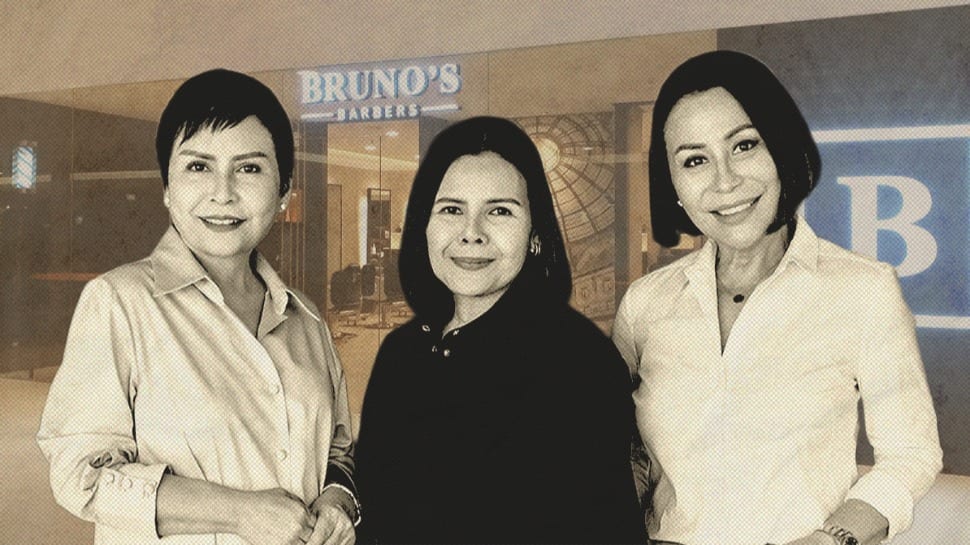
ILLUSTRATION: Igi Talao
Bruno’s Barbers started as a modest business idea that eventually grew into one of the most trusted barbershop chains in the Philippines. At the center is Amelia Manas, the visionary founder who saw an opportunity to elevate the traditional barbershop into a more professional, customer-focused experience. Alongside her sisters, Karina and Joyce, Amelia helped shape an industry long defined by habit into one that could offer both quality and dignity.
What began as a simple solution to a mother’s everyday frustration would soon become the foundation for a pioneering business. Bruno’s Barbers began as a practical response to a personal need. While searching for a good barbershop for her young son in Ayala Alabang, Amelia was surprised to find that most available options were poorly maintained roadside establishments, which often have uncomfortable furniture and little regard for comfort or service.
Seeing a clear gap in the market, she borrowed capital from her parents and invited her sister Karina to join her in launching a new kind of barbershop experience.
In 1988, the sisters opened the first Bruno’s Barbers in Alabang, which offered a leveled-up grooming experience for men: clean interiors, professional service, and a premium ambiance. Despite charging twice the usual price, the shop quickly gained a loyal clientele and became a success.
Just a year later, they expanded to Katipunan, then to Greenhills. Over the next decade, Amelia and Karina focused on refining their operations and learning the ins and outs of the industry. By 1998, they had grown to five outlets.
That year, they brought in their youngest sister, Joyce who had a background in five-star hotels, to help them scale. With Joyce’s expertise, Bruno’s entered a new phase of expansion. Over the next 10 years, the brand grew more aggressively. Today, 37 years since its founding, Bruno’s Barbers is the largest men’s barbershop chain in the Philippines, with over 70 branches nationwide.
Bruno’s Barbers stands today as a model of how a traditional service can be reinvented through thoughtful leadership, family cooperation, and a strong focus on quality.
How did Amelia and her sisters grow Bruno’s Barbers from a single branch in Alabang into the country’s leading barbershop chain? What were the key decisions or turning points that allowed the business to scale successfully over the years?
Here are the five business lessons everyone can learn from the founders of Bruno’s Barbers:
ALSO READ
1| Know how to identify market pain points and act on them
Building a business around real pain points is one of the most powerful ways to create lasting value. When people experience frustration or feel underserved, it signals a gap in the market and those gaps are where real opportunities begin.
By solving a problem that genuinely matters, you’re not just launching a product or service; you're offering something people truly want and need. This kind of business becomes instantly relevant. Customers quickly understand the value you bring because the solution feels personal, meaningful, and timely. That clear alignment leads to a stronger product-market fit and often faster adoption.
Amelia Manas didn’t start with a business plan; she started with her son’s needs. Her firsthand experience as a mother allowed her to see what customers, particularly women bringing in sons or husbands, might want from a grooming space: cleanliness, professionalism, and comfort.
She acted quickly when she sensed both a gap in the market and an urgent personal need. Facing financial uncertainty, she didn’t wait for perfect conditions or a full business plan. The decision to launch with just a scratch-paper calculation of how many haircuts were needed to break even shows her resourcefulness and drive.
At a time when the barbershop industry was considered dying and outdated, she dared to believe it could be revived with the right concept. She imagined something new before anyone else did. That vision, combined with her courage to act without the backing of feasibility studies or industry expertise, was key.
“After college, I worked for a year with BPI, but I realized that a 9-to-5 job wasn't for me, so I quit,” Amelia says. “Then I became a housewife, and at the same time, Karina and I started a venture. I would say I was a serial entrepreneur. We started a video rental business, and it gave us good returns.
“After that, I went into home baking, all kinds of mom-and-pop businesses. Then I ventured into a cafeteria concessionaire business. When we moved to Alabang, I was a young mom back then, looking for a barbershop for my son. I could have taken him to a salon, but at that time, salons couldn’t give him the kind of haircut that I wanted—something clean and tapered.
“During the '80s, actually, the barbershop was a dying industry. When my son was around four or five years old, I would take him to barbershops. At first, I tried bringing him to salons because, you know, barbershops were really outdated or neglected. They didn’t have clean towels or sanitized tools, so sometimes it seemed better to go to a salon.
“As I’ve said, I could have taken him to a salon, but fortunately or unfortunately, his hair was just different. It was hard to manage, and only a barber could give him the kind of cut that I wanted. So we had no choice but to end up in those barbershops. People were going to salons more, even men, because the barbershop was really a dying industry. At that time in Alabang, I wasn’t a member of the club, so I ended up going to the roadside barbershops. Looking back, madumi din. So anyway, those roadside barbershops inspired me.
“That’s when it hit me. I said, why can’t they do better? Why not have clean towels, sanitized tools, and a welcoming environment? Because during that time, when you went to a barbershop, you’d see barbers playing chess outside in their sandals. And then when they started cutting, they smelled of cigarette smoke.
“Sometimes I wanted to get a manicure while waiting for my son, but I couldn’t because I could see the tools neglected. So that’s how it all started. What motivated me to act right away was, of course, that urgency—because at that time, I was also going through a difficult period in my life and needed to be financially independent. I think that’s what pushed me to act fast.
“Karina and I started from scratch. We had no background in grooming, but we knew what a good experience should be like. I guess, with a warm, strong vision and our belief that we could do better, that was enough to push us forward, which was fueled partly by our frustration.
“There was no feasibility study, just some notes scribbled on scratch paper. We simply asked ourselves: how many heads do we need to cut to at least break even? That was the start.”
2| Know how to reinvent the old school into the next big thing
Many old-school businesses fade not because the demand disappears, but because they fail to evolve with changing customer expectations. By modernizing the customer experience, updating branding, or rethinking service delivery, entrepreneurs can unlock fresh relevance in an otherwise forgotten space.
This process doesn’t just rescue the business, it also creates new markets. Reinvention allows entrepreneurs to bridge the gap between nostalgia and innovation, offering products or services that feel both familiar and exciting. It also gives them a first-mover advantage in a space where competition is low, but potential is high.
The founders of Bruno’s Barbers successfully reinvented the barbershop business by recognizing a neglected need in men’s grooming and transforming it into a premium, customer-centric experience.
What set them apart was their ability to identify a market gap and act decisively on it despite having no formal background in the grooming industry. This early-stage insight, which was to bring fresh towels, sanitized tools, and a welcoming ambiance to a space often dismissed as outdated redefined what a barbershop could be in the Philippines.
Instead of replicating the typical roadside model that dominated the market at the time, they chose to elevate the standard, offering both hygiene and hospitality. This shift wasn't born from elaborate business plans or feasibility studies. It was born from frustration and observation.
They built the brand from the ground up with resourcefulness (buying reconditioned chairs), intuition (scouting barbers they already knew), and a commitment to learning along the way, even through missteps like hiring the wrong staff.
“Bruno’s was actually founded in 1988, but we opened a little later,” Amelia says. “We closed the location, bought the chairs, and just parked them in my garage because the space we got wasn’t completed until late ’89.
“We started construction immediately. That first store, for me, felt easy and everything just fell into place. There were no major challenges at the time. The moment I thought of the idea, I began scanning the classified ads. There were reconditioned chairs for sale. We clearly saw the gap in the market. Men’s grooming was so underserved. No one was reimagining it as a proper grooming experience or as a first-class barbershop. There was a real gap, and that motivated and inspired us to set up one with a better ambiance and more professionalism.” Amelia says
“The concept was very basic. I just wanted what I needed and what used to frustrate me: fresh towels, sanitized tools, and a clean, welcoming environment. That was it, simple as that. We provided that. But we couldn’t afford barbers right away, so I approached the same barbers I used to take my son to. I asked if they wanted to join us. And, easily naman, they agreed. But of course, we had to tweak the standards. The standards of roadside barbershops were very different.
“I hate to say it, but we attracted them blindly. They joined without knowing what we really planned to do. But we listened to them. We weighed their suggestions and slightly elevated things to fit our standards. We were learning along the way. It was all growing pains.
“At that time, if a barber was good-looking and presentable, okay na. We gave them a try. But we also had several instances where we hired bad barbers, who had plenty of complaints, bad attitudes, and that’s how we learned to screen better. We’d let go of a few and bring in new ones.
“We started with six chairs and maybe four barbers. A few months later, we added two more. When people started lining up, we tore down the pantry area and added more chairs. We ended up with 10 or 12 chairs in our Alabang branch. The shop size was around 80 square meters. Depending on the location and the mall, we don’t go below that size.
“People came and what was important was, they kept coming. One experience I’ll never forget happened during our first week of operations. A woman came in, she looked elegant and well put together. She walked in with either her boyfriend or husband and said, ‘Not bad.’ That was her reaction.
“To me, that was an understated comment. But there was a glow on her face, something positive. If you’re really impressed, you’d say, “Oh, this is nice.” But she said, “Not bad.” Thirty-six years later, I’m still analyzing that comment.
“I’ve come to think it’s the modest Filipino way of appreciating or giving feedback. ‘Not bad.’ It wasn’t that I was unhappy with the comment, and it just made me reflect. Her reaction reflected that she didn’t expect it to be that nice because her perception of a barbershop was something low-end.
“But I know it was a positive comment, understated, yes, but coming from someone who looked so put together, it meant she noticed all the details. And that encouraged me to keep elevating the brand.”
3| Know how to scale by choosing the right locations
Scaling one right location at a time is important because it allows a business to grow with intentionality, control, and consistency. Rather than expanding too quickly and risking quality or brand dilution, this approach ensures that every new branch reflects the same level of service, ambiance, and customer experience that built the brand's reputation in the first place.
By taking time to perfect each location, founders can study local market behavior and adapt operational systems. It also provides room to fix mistakes before they are multiplied across multiple branches. This steady, strategic scaling ensures that growth is sustainable, that every outlet performs well, and that the brand becomes known not just for size—but for consistency and excellence.
The founders expanded their barbershop business by strategically choosing locations they knew and understood. Their expansion started with familiarity, opening the second branch in Katipunan, an area Karina frequently passed through. Rather than rushing into aggressive growth, they took a careful, measured approach, waiting a year before opening another store.
Their decision-making was also customer-informed. Positive feedback from clients, especially about the comfort, ambiance, and service, validated their model and helped them refine the concept as they grew. They listened closely to stories from clients who appreciated having a professional grooming experience that they could enjoy with their families.
As the business grew to five branches, the turning point came with mall expansion. Once they had proof of concept, mall developers began offering spaces, and the team could scale more confidently. The shift to malls signaled a new growth phase.
Bringing in their youngest sister Joyce, who had hospitality experience, added structure and discipline to operations. Her entry brought organizational strength and customer service orientation, which balanced Amelia’s visionary instincts and Karina’s operational experience.
“Eventually, we had to look for our second branch, which was near my location in Pasig,” Amelia says. “I stayed in Pasig, but we opened in Katipunan because I would go through that area all the time. I was familiar with it. We were kind of less aggressive, maybe we were too careful. So it was only after a year that we opened the next branch, which was Katipunan.
The success and the good feedback from people encouraged us. It was something new to them. The barbershop was a very good alternative to a salon. And just like a lot of men and boys at that time, the ‘cassette’ was the ‘uso,’ the shaved look. Salons couldn’t really give that; only a barber could.
“We would also get feedback directly from our clients. They would share their stories like how happy they were with the haircut, how much they appreciated the ambiance of the store. It was something unimaginable for them to be in a barbershop where they could be comfortable and, at the same time, bring the whole family.
“Initially, a big hurdle for us at the start was really location, because we were introducing something new. Most of our lessors were not familiar with the concept of a first-class barbershop or a proper grooming experience. They couldn’t go beyond the stereotypical image of a barbershop, which was the roadside version. They would ask, ‘Why would you put a barbershop in a nice building?’
“We had so many challenges explaining our concept. We had to communicate clearly that this wasn’t going to be like the roadside barbershops they were used to. This was going to be a more inviting, family-oriented barbershop. We explained to them our vision, and we described the brand we wanted to introduce to the market, to the industry, at that time. I think people started noticing us after five branches and they noticed the design as they drove by. They’d say, ‘That’s a barbershop?’ because it looked different from anything else in the industry.
“We were very careful with picking locations. Initially, we focused on standalone spaces. Our first few branches were standalone—not in malls. But when we started experiencing mall setups, that changed things. That’s when we expanded faster because it became easier, malls would offer us spaces left and right. During that time, we had to convince our youngest sister, Joyce, to help us. She was working in corporate and enjoying corporate life.
“When they started, I was still a student. After graduation, I worked with two hotels. I was really enjoying my job there. What I enjoyed most was the service aspect. And when I joined Bruno's, I realized that it was connected. Even if it was a different industry, aside from just giving haircuts and shampoos, the more important part was really dealing with the customers.
“That was the time we were able to expand. We got bigger—we had two more hands to manage. Joyce brought a whole new level of organization. She has a keen eye for structure, which I personally don't have.
“During that time, we were really hands-on. Our team was so small. For a while, we would do everything. If our utility staff or our cashiers were on their days off, we would do the sweeping, we would do the cashiering ourselves.
“It was hard for us to expand, but we knew we had to grow. That was when we convinced (Joyce) to join. I’m like a shotgun—fire first before I aim. So I guess our strengths and weaknesses just fell into place.”
4| Know how to stay authentic while building a brand
In a crowded marketplace where consumers are bombarded with choices, people gravitate toward brands that feel real, those that speak with sincerity and deliver consistently on their promises.
Authenticity makes a brand more relatable. When customers feel that a brand understands their needs and stays true to its story and mission, they’re more likely to form an emotional connection. This connection becomes the foundation for repeat business, word-of-mouth marketing, and resilience during difficult times.
Moreover, authenticity guides internal culture. It helps align teams around a shared purpose, shapes hiring decisions, and ensures that growth doesn’t come at the cost of the brand’s soul. Brands that stay true to who they are don’t just sell products—they inspire trust, create meaningful experiences, and stand the test of time.
What started as a simple desire to improve the traditional barbershop experience gradually evolved into a brand that prioritized cleanliness, consistency, professionalism, and care, without losing sight of its humble roots.
From the beginning, Amelia, Karina, and Joyce didn’t think in terms of “branding.” Their focus was on delivering a service they themselves wished existed, one that replaced the powder-and-alcohol smell of old barbershops with a more refined, hygienic, and welcoming experience.
As the business grew to multiple branches, they encountered challenges that tested their ability to stay true to their values. Ensuring service consistency became critical. They learned that it wasn’t enough for a barber to be skilled, they also had to embody the same standards, mindset, and dedication to quality.
In this process, the sisters emphasized alignment of values and attention to customer experience, which helped preserve the authenticity of their brand while scaling.
One of their key entrepreneurial values of the founders was integrity, they refused to cut corners or compromise on hygiene and professionalism. They also showed resilience and patience in shifting both staff and consumer mindsets around what a barbershop could be, especially when charging double the market rate at the time.
“We started without thinking of the brand initially,” Amelia says. “At first, we were just focused on setting things up. Then we realized, now we’re creating a brand already, so we better make it strong.
“A barbershop used to have that amoy of powder and alcohol combined. Even during the early days of Bruno’s, it was like that. Eventually, we said—powder and alcohol? Maybe not. So we did away with the powder.
“We would come home smelling like the barbershop, amoy barbershop talaga. But of course, over time, we took out the powder because we realized it wasn’t good for us. Not good for the lungs. There were so many learnings throughout that journey.
“Then our work clothes; before, the barbers would just come in white. And then, when we started having several branches na, we decided, okay, let’s make it all the same for all the branches. So there would be a standard look for everyone.
“But they had that option. Sometimes, the barbers would wear aprons or cutting aprons. Others would prefer something else. So we were open about it. But we just had to set a standard. It wasn’t really a uniform.
“I think another challenge came when we started growing into a third branch. That’s when we realized it was really important to not just look at skills, but to also know the people you would be working with. Are you aligned with their standards, values? Everything boils down to that. I mean, if you're trying to build a brand or create one, it’s important that the people you work with can also deliver the kind of excellent service you want to offer your clients. That’s when we started being more mindful.
“It was difficult, yes, the skills were there, that part was easy, but making sure they were aligned with what we envisioned, that was the hard part.
“Another issue we encountered with people was that some of them were used to roadside setups. During that time, a haircut at a roadside barbershop cost P20. We were starting at P40 to 60, double the price. So we had to change the mindset of the barbers too, to convince them to work for us. We had to explain that there was a market for good-quality service at a higher price. At the same time, we also had to shift the consumer mindset. It was a challenge on both sides.
“I think when we were growing, it became more about ensuring that all our branches, when we already had three or four, could deliver the same level of service. That became a challenge. Because speaking of that market, one branch should be able to give the same experience as another. So that was something we really had to work on.
“Let’s say one barber in one branch gives a three-minute massage, while another in a different branch gives a longer one, maybe because the client is a regular or mas friendly. That was something we had to address. So consistency across branches became essential. It wasn’t just one or two Bruno’s branches anymore.
“That’s also when we started setting P1,000 pricing. We had to standardize pricing across all locations so clients would get the same value for their money. We also set standards on how many minutes a service should take and the procedures that should be followed.
“Barbering is a skill. It’s also an art. That part, we left to the barbers, because that’s their trade. But when it came to other aspects like hygiene, we standardized everything.
“From our experience, this is what happens: at first, yes, customers would look for a specific barber. But eventually, they would try other barbers and realize, ‘Oh, kaya naman pala.’ Sometimes, they’d even find someone better or discover a new style of haircut they liked.
“Of course, there were also cases where some clients would try other barbershops. But eventually, many of them would come back. And we saw that it gave barbers better opportunities too, if they’re masipag, they can really work harder and earn more. There’s no limit to what they can achieve.
“For our barbers and therapists, of course, skill is a given. But more than that, we look at attitude and values. Their values have to be aligned with ours. Before, it was also a sign of the industry, most barbers were really old. But as the barbering industry grew, I’ll be proud to say, the children of our barbers also became barbers.
5| Know how to prepare the next generation with purpose
When founders equip their successors with not just operational knowledge but also the vision, culture, and discipline behind the brand, they create a solid foundation for continuity.
Without intentional preparation, businesses risk losing their identity, culture, or momentum. The next generation may inherit the business but struggle with direction or decision-making, especially if they didn’t experience the challenges of building it from scratch. Preparing them early promotes ownership, accountability, and stewardship.
More importantly, involving the next generation encourages fresh perspectives while still grounding them in the principles that made the business succeed. It’s not just about handing over the reins; it’s about teaching them how to lead with both innovation and respect for legacy.
From the beginning, Amelia emphasized frugality, resourcefulness, and financial discipline. Even when technology was limited, they made sure to know their numbers, manually tracking costs and revenues.
This deeply ingrained value of being financially hands-on is something Amelia is now consciously passing on to her son, reminding him that even with more capital today, the discipline of scrimping and spending wisely remains essential. This shows a strong entrepreneurial value of stewardship, managing not just money, but the mindset behind it.
Karina, meanwhile, highlights brand clarity and purpose. In an age of constant opportunities, she reminds the next generation that not every good idea is aligned with the brand. Asking “Is it really Bruno’s?” reflects a deep understanding of authenticity, focus, and brand integrity. These values are not just spoken, they are practiced and embedded in decision-making frameworks.
Joyce also underscores structure and governance, noting the role of a family constitution in aligning decisions and avoiding conflict. This is an important entrepreneurial value often overlooked in legacy businesses, professionalizing family governance while still nurturing emotional investment.
Their constitution is a vehicle for continuity, ensuring that as the next generation assumes leadership, they do so with shared principles and clear boundaries.
In preparing their children to inherit the business, the founders are not just handing over operations, they are passing down a culture grounded in discipline, stewardship, and purposeful growth. These values, more than any business system or strategy, are what ensure Bruno’s legacy can thrive across generations.
“From the business lessons I’ve learned, start small,” Amelia says. “Start small, but always think big. Of course, so you lessen the risks. And then there’s also, of course, know your numbers. Because like us, when we were starting, we really knew our numbers, even if everything was handwritten. No Excel yet. So yeah, we had to make do. You really have to know your numbers because it’s easier to make decisions when you do.
“Back then, we operated purely on gut feel. We’d look at a location and ask, ‘Is this good?’ But when it came to demographics, we didn’t know. Gut feel lang. We just had a sense it would work.
“We’d observe the cars passing by and ask, ‘Can they afford a P480 haircut?’ That’s how we worked. But through the years, as we grew, we eventually had enough funds to invest in more strategic tools. Like recently, we invested in a cloud-based ERP system. I remember Joyce saying how important it was. I was in charge of finance, and that decision really made sense. Our strengths and weaknesses naturally shaped how we managed the business.
“Everything just fell into place. I handled business development, finance, and accounting. Karina led operations. Joyce led human capital. It was the perfect setup for us, all aligned with our individual strengths. Saan ba ako papunta? Why did I even start talking about this? Oh right, it’s really just to say that all of this happened organically, but with the right structure and teamwork, we were able to grow.
“Before, it was all gut feel. People, especially some highfalutin ones, would ask, ‘Did you make a feasibility study?’ ‘What about the market research?’ And we couldn’t answer because we didn’t have those. We just operated based on instinct.
“Don’t underestimate the power of small changes. Because just like Bruno’s, we never invented haircuts. But we made small improvements. And those small changes transformed the industry.
I’d love to believe that we disrupted the grooming industry. Back then, barbering was a dying industry. But now, everyone’s getting into barbershops again, men and even women are going back. So I’d love to think that we also played a role in that disruption.
“It’s kind of like how Canon disrupted Xerox. Xerox was the giant, but Canon came in with small, affordable printers for every household. That changed everything. In the same way, we were affordable compared to a salon, but more expensive than the usual barber shop. So we created a new market, I think.
“One of our key learnings is staying true to our brand,” Karina says. “That’s really important. It’s so tempting to do many things—there are so many nice ideas, exciting opportunities, but in the end, we always have to ask: Is it really Bruno’s? Is it really us? That’s one learning we hold on to.
“We’ve also made certain business decisions that taught us valuable lessons, like knowing when to persevere and also knowing when to stop. That’s a big one. We want to turn Bruno's into a trusted Filipino brand. And, you know, after us, the second gen is coming in. So that’s also our vision for them.”
“And mind you, we have…a family constitution that’s really working for all of us,” Joyce says. “We base all our decisions on that family constitution. And it works, actually. We want to be proud of the legacy that they will build moving forward.
“For the business, I always inculcate the values and how important the culture is, especially in handling the finances,” Amelia says. “My son, who is now in charge of the business, I think he’s capable. I think he knows how to handle it. But there are times, we notice the younger generation doesn’t know how to scrimp anymore. That’s because they didn’t experience what we went through, starting with very limited funds.
“Now that they’re already here with bigger resources, it’s easier for them not to nickel-and-dime. So I still remind him: you have to remain frugal and only spend on what’s necessary.”
