

Financial Adviser: 5 Business Lessons Everyone Can Learn from Malou M. Fores, Co-founder and CEO of Mamou

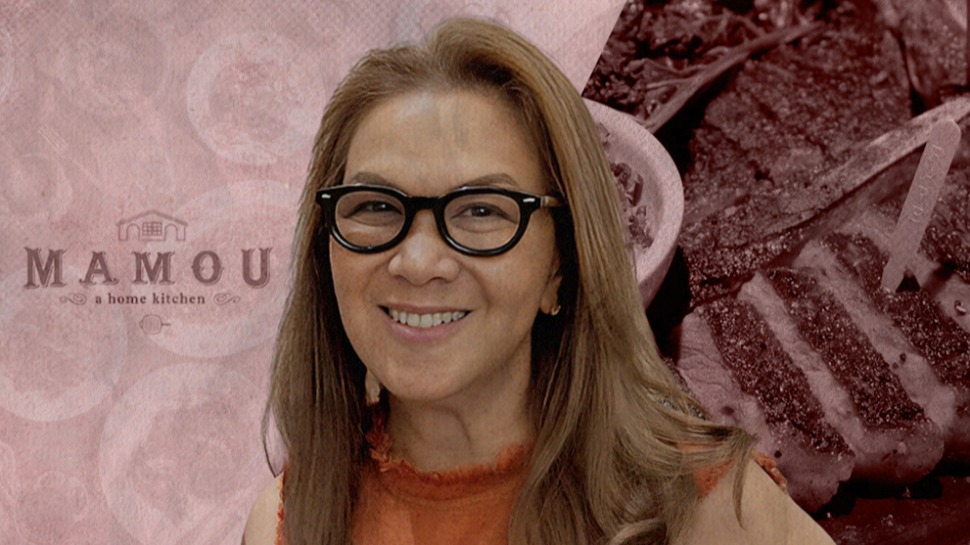
Malou M. Forés began her career as a preschool teacher, working with children, but her journey took a different turn when she discovered her passion for cooking. From her humble beginnings in the kitchen to founding the renowned Mamou restaurant, Forés story is one of entrepreneurial success and creativity in the world of food and business.
Forés’ interest in food started in her home kitchen, where she began supplying homemade cakes to a specialty food shop in Magallanes in the 1990s, marking her first venture into the food business. At the same time, she ventured into retail, collaborating with two friends to run a clothing store called Sari Sari, where she had her own section, Stylus, to sell clothes.
However, as international brands began entering the Philippine market, Forés and her partners decided to wind down the business. She then returned to her passion for food and co-founded Blue Kitchen, an artisanal deli that focused on specialty food items.
Building on this renewed focus, Forés continued to pursue her culinary aspirations. In 2007, with the support of her husband Oye, she opened her first restaurant, Mamou, in Serendra, with the goal of bringing the home recipes she had perfected over the years to a wider audience.
Although Forés initially wanted to focus on home-cooked meals, the restaurant became widely recognized for serving some of the best steaks in Manila. To her surprise, she recovered her investment within just five months of opening. The success of Mamou encouraged Forés to expand the brand.
Today, Mamou is one of the most recognized and respected brands in the local dining scene, known not only for its exceptional steaks but also for its comforting, home-inspired meals. Its reputation for quality and consistency has made it a favorite among food enthusiasts and a go-to destination for diners seeking a memorable culinary experience.
As Mamou expanded, how did Forés maintain the consistency and quality that the restaurant is known for? What practices did she put in place to ensure that the customer experience remained consistent across all Mamou locations as the brand grew?
Here are the five business lessons every entrepreneur can learn from Malou M. Forés, co-founder and CEO of Mamou - A Home Kitchen:
ALSO READ
1| Know how to transform passion into a thriving business
Passion fuels persistence. When a person is passionate about what they do, they are more inclined to innovate and experiment, who will look for better ways to improve their offerings and stand out in the market. This often leads to fresh ideas and creative solutions.
Businesses born from passion often offer a more authentic and unique product or service. When passion drives a business, it is not solely focused on profit but also on creating value for customers. This authenticity can help attract customers who appreciate the genuine effort and dedication behind the brand.
Forés’ love for cooking began as a personal hobby. She enjoyed preparing meals for her family, especially replicating dishes from her travels. This passion formed the foundation of her business, as she aimed to share her family’s favorite dishes with a broader audience.
Forés’ concept behind Mamou was clear and personal. She focused on authenticity and a personal connection to the food. This approach helped build a loyal customer base that appreciated the sincerity behind each dish.
Forés acted on her passion despite knowing that running a restaurant would require a 24/7 commitment and affect her lifestyle. She and her husband Oye used their own savings and even borrowed from their son’s account to make the business happen. They resisted outside investments to maintain full control of their vision.
“I went to Assumption for early learning,” Malou says. “I took Elementary Education for children, specifically preschool. But then I got married. When I got married, I couldn’t take my master’s anymore. Because for me to open a school, I would need to take my master’s. But to be a good wife, you cook for your husband and your family, right. And I really enjoyed eating.
“Then, when we traveled, I would always cook something that I liked from my trips. For example, in California, there’s this restaurant that I really like—yung prime rib at Lawry's—so I tried making Lawry's at home. And after that, there were steaks. I really love steaks, like yung Peter Luger in New York, mga ganyan. Inuuwi ko yung idea, and then after that, I tried to replicate it at home.
“When my son was already in middle school, and he was saying, ‘Mom, you don’t have to do this,’ parang he wanted his own life in school. I didn’t have to volunteer to help out, kasi parang he wanted his own space. So I said, ‘Ah, now I don’t have to be a full-time mom, right?’ So I said, ‘Okay, maybe I’ll try it now.’
In 2007, I decided to open a restaurant in Serendra, which became my first Mamou. That was my first restaurant. Mamou has been around for 17 years na. Mamou's food concept was based on food that we enjoyed as a family, you know, during our travels or when we were in the Philippines or abroad.
“My wife by nature really likes to cook,” Oye says. “She would cook for our family and friends. We would probably spend weekends, you know, when she would invite our barkada and cook for them. It was a hobby of hers. She was un-schooled, not trained by a culinary school or anything like that. But when she decided she wanted to pursue and start this restaurant business, we thought, ‘Why don't we try that as a concept?’ Luto na galing sa bahay, not necessarily lutong bahay. We saw it as pretty much a passion project—something na, sige, let's try it. It's a small place.
“Actually, we thought it would be an issue because it would sort of curb our lifestyle. We used to travel a lot back in the day, and we knew that if she started a restaurant, it would be a 24/7 business, right? It’s not something where you can just clock out at 5 p.m. or take off for a month or two on vacation, especially not in the beginning.
“So it started that way—this one restaurant in Serendra, a 97-square-meter space with 60 seats, and a maximum of 20 employees, 23 including Malou. Our initial business plan was really for a two-year project, with an ROI expected in that timeframe. So I said, let's do it, get it out of your system, and after a couple of years, you'll be happy, and then we can move on and go back to our old life. But to our surprise, it took off.”
“We actually started with our own money,” Malou adds. “People wanted to invest, but I told Oye, 'No, let's just keep it to ourselves,' which I’m happy about. When we started, we scraped together every penny we had. In fact, we were short on money and even borrowed from our son's savings. The business became quite successful. We were profitable in like six months. So I, myself, was shocked. I thought it would take four years. When we saw that it was something quite promising, we decided to keep going.”
2| Know how to build a brand that resonates with family and home
In a competitive market, a restaurant that emphasizes its connection to family and home can stand out. This unique identity helps create a distinct brand that customers associate with specific feelings, flavors, and memorable experiences.
Family-oriented concepts tend to appeal to a broad range of customers, including couples, families, and groups of friends. This wide demographic appeal helps ensure consistent foot traffic and encourages repeat business.
A restaurant brand built around family values also conveys a sense of consistency and tradition. Customers come to expect familiar, comforting meals, making it a reliable choice for special occasions or everyday dining.
Forés ensured that Mamou’s menu reflected the diversity of the meals her family enjoyed at home. Instead of focusing on one type of cuisine, she chose to offer a variety of dishes from different cultures. This bold, creative approach allowed Mamou to stand out in a competitive market.
Forés was highly particular about the quality of ingredients, especially when selecting the meat for her steaks, even though it was considered expensive. Her commitment to using top-tier ingredients and persistence in maintaining high standards paid off, as the steak became one of Mamou’s most popular offerings.
Forés also embraced feedback from focus groups and mentors to refine the menu and dining experience. Rather than strictly adhering to traditional concepts, she designed the restaurant to feel more like a bright, welcoming home kitchen, resonating with customers seeking comfort and familiarity.
“My nephews used to call me Mamu,” Malou explains. “My oldest nephew, the son of Oye’s brother, would call me Tita Mamu. He couldn’t pronounce Malou, so he would call me Mamu. And when we were thinking of a name for the restaurant, I was toying with different words like Brenner for breakfast, lunch, dinner.
“Sabi ni Oye, ‘Hindi, pangit yung name na yun.’ And then, one of his cousins said, ‘Why not Mamou as in Tita Mamu?’ I said, ‘Hmm…Oo nga ‘no?’ And tamang tama, the word in French, "Maman," means mother and in Kapampangan, I heard it’s an endearing term for mother, and I'm a mother.
“My idea is to cook. If you look at our menu, you have Filipino, you have American, you have Italian, sometimes you have Japanese. So it's like the different cuisines that we cook at home. So I said, 'The Mamou concept has to be something eclectic, you know, different.'
“If you look at the way the place is presented, it's bright, and the colors are white,” Oye adds. “Before, our first store was white and red. It's not really a steakhouse concept per se, like a typical steakhouse with dark woods. It's more lounge-y. You know, ours, if you look at the name, is more like a home kitchen, lutong bahay, pagkain sa bahay namin. And one of the items on our menu happened to be steak, which we thought was going to be our loss leader. Kasi mahal yung meat eh. It was quite expensive,” Oye says
“I was very persistent about the choice of meat that we were using, and Oye being the numbers guy said, 'Malou, it's so expensive.' Finally, pumayag sya, sabi nya, 'Sige na, sige na. Loss leader na yan, loss leader yung steak kasi mahal. Yung gusto ko na supplier mahal yung steak kasi masarap.' Talagang gustong gusto ko, and until today, he's still my steak supplier,” Malou says.
“We had other items, but steak actually really took off, ‘no. So even if you ask me today, what is my Mamou? Mamou is a family restaurant. We serve steaks, and I think we do it quite well. But that's not all we do. You can, and I think that was the secret, or maybe one of the unique things about us—hindi kami tied to just one genre. Kunwari Japanese restaurant, kunwari steakhouse.”
“You can also find people who come here to have our sinigang,” Oye says. “We also have lumpiang ubod, and we have this Cuban roast pork and chicken dish that is one of our original menu items, which is also quite popular. It comes with cinnamon, sugar, bananas, refried black beans, and the rice is cooked in the marinade.”
“So when I designed my menu back then, we did focus groups pa,” Malou says. “We invited different groups to help us, to give us their thoughts after trying it. 'What do you think of this?' I had mentors na chefs that I asked, you know, 'How do you design your kitchen?' For Mamou, we had focus groups. Back then, everybody was saying, 'No, you have to make your concept one cuisine.' I said, 'No, hindi ako pwede dyan because I cook anything.'
“All the ideas were already practiced at home first, sa guests and friends namin. These were dishes that we would serve at home. My favorite ulam is adobo and sinigang. So when you apply as a chef before in Mamou, they usually have trade tests, right?
“Because my trade test for my chefs, I don't ask them to cook steak. I tell them, 'Please cook me an adobo.' Because I found that pag magaling magluto yung chef ng adobo, magaling yun kasi it’s very difficult to work with vinegar, soy, and garlic—the flavors. Because if it's a little too much of one, it's too salty. If it's a little too much of the other, it's too sour or too tart, right? And so, for me, a chef who wanted to apply at Mamou back then, besides their experience, their trade test would have been how to cook adobo.
“I designed the menu with the help of Oye, my son, some friends, and family. Some of it are from Oye’s grandmother. Every Thanksgiving, there's always a turkey, or let's say the prime rib. Any function in their family, there's always prime rib—roast beef and that's one of his favorites. And our friends, they love it. The steak, we love, Peter Luger steakhouse. So that was our peg all the time, yung kulang lang sa Peter Luger, wala silang steak rice. Wala silang kanin. Ang Mamou, merong steak rice so that's the difference.”
3| Know how to sustain business growth with consistent service
In markets where products and prices are similar, service quality often becomes the key differentiator. Consistent service builds trust and reliability. Satisfied customers are also more likely to recommend your business to others. This organic promotion through word of mouth can attract new clients and contribute to business growth without significant marketing costs.
By focusing on consistency, businesses position themselves for steady, sustainable growth rather than short-term success. This long-term approach ensures the business remains competitive and profitable over time, and better equips it to weather downturns.
Forés understood that the initial support from friends and family could only take the business so far. She recognized that long-term success would depend on delivering exceptional service and food to all customers. This focus on service quality helped build a loyal customer base and sustain the restaurant's growth.
She believed that customers should be "wowed" from their very first visit. Her team was trained to treat customers as they would their own family or "ninong" visiting their home. This personal touch reflects the value of empathy and customer focus that ensure each guest felt special and cared for, which led to repeat business.
To maintain consistent service, Forés invested heavily in staff training. She exposed her team to fine dining experiences by taking them to renowned restaurants like Antonio’s and Cibo. This investment in employee development not only improved service quality but also motivated the staff by teaching them the nuances of excellent service.
“When you open a restaurant, you're supported by friends and family, so the first month is very successful,” Malou says. “The secret is whether you can sustain it. In our case, that’s what happened. The first few days were very strong. All our friends came, and the support was very good. We were so happy. But then came one rainy Sunday, our first rainy Sunday evening, and nobody was there.
“I was in Serendra at the time. Back then, BGC was not as busy as it is today. But the truth is, word gets around. Word of mouth and the support of friends and family are crucial. In the restaurant business, you get someone to visit at least once. If you serve them well, your food and service should speak for themselves. People will say, 'There’s a new place, let’s try it.' You get one chance at that. If you don’t impress your clients, they won’t come back. Maybe they'll come a second time if they hear more buzz, but if you don't wow them with your service and food, you might not succeed.
“One of the successes of Mamou is that we pride ourselves on the type of service we give. We try our best to offer the best choice, and hopefully, the food speaks for itself. We want our customers to keep coming back.
“Our ROI was about five months. When we did the numbers, we expected it to take years, but we got our return on investment in just 5 months. Back then, we had 23 employees. We were very conscious of how our team should deliver service. Oye would tell the team, 'How would you serve your ninong if he visited your home?' Our staff should be able to relate to their work. If they’re happy in their workplace, they can exude happy service, and the clients will be happy too.
“In the beginning, we brought all 23 of us, including our dishwasher and head chef, to fine dining restaurants for training. I chose Antonio’s for fine dining because Antonio’s was our supplier for salad greens. We visited their farm, and then we took the team to the restaurant.
“Tony Boy Escalante spoke to them, and they were wowed by his service. We also took them to Cibo, which had excellent service for a fast turnover restaurant. We exposed them to these experiences. Of course, now, with eight restaurants, we can’t do that anymore, but we have a different trainer who designed a training program for Mamou. That’s why, if you go to the different Mamou branches, you’ll more or less see the same level of service.
“We brought them there to experience it. Many of them, and to this day, we still try to go out and eat out as much as we can, even with our staff. The idea is, kasi mahirap magsilbi kung hindi ka marunong, kung hindi ka nasilbihan. Unfortunately, if you don't get that exposure, it's harder to understand.
“Tony Boy knows that because he talked to my staff. Actually, maybe for the first three restaurants, we brought all our staff there. Now, there are just too many of us, but we still take them to different restaurants around town. We brought our head chefs to Singapore and Hong Kong for exposure. Our managers, I brought them to Bangkok. We stayed in a nice hotel, parang they have to live it. They have to live and experience a Mamou experience so that they can deliver that same experience to our clientele.
“We do invest in our training and exposure because you can't expect someone who has only eaten at, let's say, fine dining na nila Jollibee, to fully understand the broader dining experience. Hey, I'm not underestimating Jollibee—Jollibee is my favorite, and their fried chicken is my favorite. But our staff needs to experience something like Tony Boy’s, or something like Cibo, you know, ganon di ba?
“And when our managers went to Bangkok, it was both bonding and exposure, experiencing different meals. You know, I'll tell you something ha. When I like to cook and do all this, sometimes the inspiration doesn’t come from food alone. I can get inspired by a garden or a plant—seeing a beautiful garden makes me think of nice things.
“I like going to Bordeaux because I have a friend who used to work for us. She's French and lives there, and when I'm in Bordeaux, I love the wine. It’s just that when I see something that beautiful, like fresh. That’s part of the inspiration.”
4| Know how to leverage loss leaders to enhance customer value
Offering a premium product or service at a lower price enhances the overall customer experience. This adds perceived value that makes customers feel they are getting more for their money.
Loss leaders, typically high-quality products sold at a lower profit margin or even at a loss, attract customers. Once drawn in by these appealing offers, customers are more likely to explore the rest of the menu that increase overall sales.
By offering loss leaders, a business demonstrates that it prioritizes customer satisfaction over immediate profit. This approach builds trust and strengthens customer relationships. Customers who have a great experience are more likely to return.
Forés understood that to create a well-rounded dining experience, it was important to offer more than just great steaks. She introduced high-cost items like live seafood, even though they didn’t generate much profit.
By doing so, she prioritized customer satisfaction over maximizing profit on every dish. This approach reflects the value of putting the customer first, ensuring guests left with a positive and memorable experience.
Forés emphasized that dining at Mamou was about offering a full, satisfying experience, from premium steaks to surf-and-turf options, and even reasonably priced wines. By providing access to high-end products at fair prices, she ensured that customers could enjoy a diverse and fulfilling meal.
Forés accepted lower profits on certain dishes because she understood the long-term benefits of customer loyalty and satisfaction. This long-term thinking shows her focus on sustaining the business by consistently delivering value, rather than chasing immediate profits.
“We choose our ingredients carefully,” Malou says. “Our ingredients are of high quality. We've also standardized our recipes, and Oye is very particular about consistency, which is great because people often ask me, ‘How come it's always so consistent?’ My business partners are very focused on maintaining that consistency.
“So we standardized the recipes because I tend to be more of an artist, you know. I’m a bit spontaneous in the kitchen. In fact, my head chefs are so used to me that when I’m cooking, they assign one person to literally watch me and another to take a video of what I’m doing. Sometimes I just grab ingredients and create something on the spot. It’s nothing fancy naman, but that’s how I like to work that way, then they take care of the measurements.
“Back then, there was no dry aging yet in Manila. But Oye and I asked our supplier if they could bring us dry-aged steaks, so they ordered and worked with a company in the US to do the dry aging for us. We first started with 21 days, then we worked it up to 28. Today, it’s 28 days. We found out that we prefer the 28-day dry age over the 21-day dry age. We even visited the site in Orange County, where they dry age the steak.
“Dry aging is like, you age it in a controlled temperature room with its fat intact, and it is monitored,” Oye adds. “What they do is they put the meat in a controlled environment where they remove the moisture, and the fibers in the meat break down. It becomes denser, and in the process, a certain nutty flavor comes out because of the bacteria that grows in the crust of the meat. The purpose of dry aging is to make the meat tender and flavorful. You remove the moisture.
“The longer you dry age it, the stronger the flavor. Some people prefer very strong dry-aged steak. But one drawback of dry aging is that the meat loses weight as the moisture evaporates, resulting in a significant loss in terms of weight.
“That’s why not everyone practices it, as it increases the cost of the meat. For example, if you dry age a regular kilo of steak for a month, you lose about 30 percent of the weight. While the flavor intensifies as the moisture is removed, the outer crust of the meat must be trimmed off because of the bacteria that grows on it.
“In terms of pricing, you really have to approach it two ways. One is by doing a market check and seeing what the prices are for similar items. You need to figure out how much you can price it at, and of course, consider your traditional food cost. I mean, even for us, we try to use the best quality ingredients, but at a price that’s appropriate for our market segment.
“Some people would say, ‘Oh, your food is expensive.’ It is, I mean, no doubt about that. But I think, relative to the quality, you'll find that the same quality at competitor restaurants that serve the same type of food, we are probably 20-25 percent cheaper.
“We also have certain dishes that act as loss leaders. We offer live seafood, like live lobsters and Alaskan king crab. For those dishes, the food cost may range from 60 to 70 percent, so you make very little money. But we still serve them because, for us, it completes the dining experience.
“Mamou might have a great steak, but you might also want surf and turf—like a nice king crab. If you make the price too high, though, you won’t be able to offer that experience. Wag lang malugi—just make a little money, and that’s okay.
“For us, it’s about offering a complete experience. Some people really want that. Let me give you another example: at Mamou, if you check our pricing for wine, you’ll see that it's very similar to what you’d find in a wine store. We’re quite unorthodox in that sense. Typically, when you go to a restaurant and order a bottle of wine, the prices are usually higher.
“In our case, it's not. It's really wine store prices. Kasi sa amin, it's more about, we try to complete lang din the experience. You want to have a nice meal. Yung wine, if you buy an expensive bottle, and you just go to the market, all we do is open that and pour it into a glass.
“There's no real value added for us. Sa amin, you bring the wine that you like. We don't charge corkage, or if you have a nice bottle there, some mark-up naman to pay for service and also our rent. And if you notice, it's not as cost-prohibitive as you'll find in other restaurants.”
5| Know how to overcome the fear of failure and pursue your dreams
Fear of failure can inhibit learning opportunities. Embracing the possibility of failure allows entrepreneurs to learn from their mistakes and adapt their strategies, which is essential for long-term success.
Many successful entrepreneurs have faced failures before achieving success. Overcoming the fear of failure promotes a mindset of persistence, helping entrepreneurs to push through difficult times.
Additionally, fear can stifle creativity. When entrepreneurs are less worried about making mistakes, they are more likely to think outside the box and develop unique solutions or products.
Forés believes that the greatest regret comes from not trying at all. She understands that while the fear of failure can be daunting, it should not prevent anyone from pursuing their goals. Instead, they should view every setback as an opportunity to analyze what went wrong and refine their approach. This perspective shifts the focus from fearing failure to valuing the lessons that come from it.
Forés understands that true learning comes from hands-on experience, which can lead to greater confidence and self-reliance. This value of independence not only applies to their family but also extends to their business philosophy.
Forés’s focus on simple, authentic cooking reflects a commitment to quality and a genuine passion for her craft. By prioritizing what they love—simple, enjoyable food—they cultivate a brand identity that emphasizes quality over pretentiousness.
“I remember I had a teacher in Assumption who said, ‘There’s nothing worse than having a dream and not trying it. That is the worst thing that can happen, right?’ Forés says. “If people laugh at you because you don’t know, it’s okay. That’s the worst thing that can happen to you—to be laughed at for a brief moment, rather than to be laughed at forever because you never tried.
“It's the same with business. What’s the worst that can happen? Malugi ka? Okay lang. For me, that's already a learning experience. Why did it fail? Okay, learn from that, move on, and try the next thing. That's how I am. I started when I was 41. You know what? Even now, I’m still learning. I learn from my manager. I can learn from anyone. I love listening to the younger generation, the younger hires. For me, they're always very refreshing.
“I would ask a dishwasher something, and I believe I can learn something from them, or even my waiters, I talk to them. Every week, we meet with the management committee and for me, that's always refreshing. In business, it's not just about the product you’re selling; it’s about the people you work with. I believe in business, you always have a new perspective, and it’s never just about one leader or one person. It’s not a dictatorship. For a business to thrive, especially today, it can’t survive long enough if you don’t have an open mind
“That’s what I would advise to any entrepreneur: no matter what age you are, you should always be constantly learning, constantly learning from everybody.
“For the most part, we also encourage our son to pursue his own path, to go out and do his own thing,” Oye says. “It's in his best interest to learn and try things on his own. Whatever we've built will always be there for him later on, but it’s different when you go out and experience things on your own. I believe we are a product of that. I initially programmed myself to work for my family and continue the legacy, but now, in retrospect, after having ventured out on our own, I find it very rewarding.
“For me, I feel very accomplished. When I was working for my family, you can never really separate or remove the fact that you're part of the next generation. In my case, I’m the third generation. So, even if you achieve something, you might think it’s probably also a result of being part of the family, not just inheritance but because of your family’s legacy. In this case, it was really Malou’s project, so to speak. I helped her, but together we were able to grow it and build something worthwhile, which has been very rewarding.”
“Let me tell you something: opening my restaurant wasn’t my ultimate dream,” Malou adds. “It was more like, ‘Oo nga ‘no? Why not try it?’ I had already tried the garment business, and I was already in the food business. I enjoy eating. You know, before I even got into cooking, it was because, as a child, I was really matakaw. I love to eat, and I’m not into highfalutin food. My food is very simple, as you can see—it’s simple.”
