
Financial Adviser: 5 Business Lessons Everyone Can Learn from Jose Victor Paterno, the President and CEO of 7-Eleven Philippines

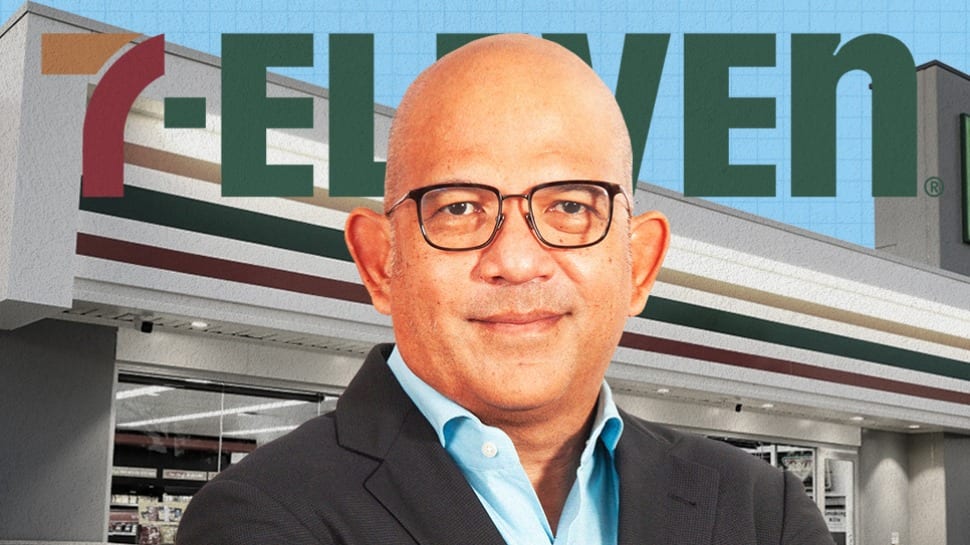
Jose Victor Paterno has played a key role in shaping the success of 7-Eleven in the Philippines. Under his leadership, the franchise has not only expanded its footprint across the country, but has also solidified its position as a market leader in the convenience store industry.
Born into a family with a strong legacy in business and public service, Paterno grew up in an environment that emphasized leadership and excellence from a young age. His father, Vicente Paterno, was a former senator and a well-known business leader, who founded Philippine Seven Corporation with Titoy Pardo and Francisco Sibal in the 1980s.
Paterno graduated magna cum laude with a degree in mechanical engineering from Lehigh University in Pennsylvania, USA. Prior to his role at Philippine Seven, he gained valuable experience in various industries, working in investment banking and consulting.
Paterno’s transition into the 7-Eleven franchise came at a critical time when the company was facing significant financial challenges. Through his strategic initiatives, Philippine Seven Corporation began its remarkable transformation from a company burdened with debt to one of the region’s most profitable convenience store chains.
One of the key elements of Paterno’s leadership was his focus on strategic expansion. He recognized the importance of increasing the company’s presence in both urban and rural areas.
By 2010, the number of 7-Eleven outlets in the Philippines had grown to over 1,000 stores, but Paterno’s expansion strategy didn’t stop there. He continued to drive growth, and at the end of 2024, Philippine Seven Corporation will have over 4,000 7-Eleven outlets operating across the country, making 7-Eleven Philippines, the largest convenience store chain in the country today.
Paterno’s focus on strategic expansion and innovation has ensured that 7-Eleven remains a trusted and preferred choice for millions of Filipinos. How has Paterno's leadership style influenced the growth and organizational culture of 7-Eleven Philippines? What key strategies employed by Paterno can aspiring business leaders adopt to drive organizational growth?
Here are the five business lessons every entrepreneur can learn from Jose Victor Paterno, President and CEO of Philippine Seven Corporation:
ALSO READ
1| Know how to be prepared when opportunities arise
A successful business career is built on credibility. People trust professionals who have demonstrated expertise and competence. Being prepared through experience not only helps you build a strong reputation but also fosters trust with colleagues, clients, and other stakeholders, which is important for career growth.
As one rises through the ranks in their business career, leadership becomes a critical component. Preparedness through experience and skill development enhances your ability to lead teams effectively, make important decisions, and influence others. Leaders who are well-prepared inspire confidence and loyalty from their teams, paving the way for further career success.
Paterno’s early career involved working abroad, where he gained exposure to different markets and businesses. This helped him understand global business practices and broadened his perspective.
When he joined his father’s business in 1993, he had no prior experience in retail. However, he took on the challenge and started as the construction and maintenance manager, quickly adapting and learning the ropes. This demonstrated a willingness to step outside of his comfort zone and learn new skills.
Even though he initially worked within the family business, Paterno had a strong desire to be an entrepreneur. His entrepreneurial mindset is reflected in his eventual departure to start a technology company, Easy Pay, which was later sold to Globe. This venture gave him valuable experience in building and managing a company, preparing him for future leadership roles.
Paterno moved from construction and maintenance to roles in strategy and general management, where he took on more responsibilities. This strategic mindset was key when he later returned to 7-Eleven to expand and build the business. His experience in diverse roles allowed him to see the bigger picture and prepare for high-level decision-making.
“My father started the business with two others, Titoy Pardo and Frankie Sibal,” he says. “He started the business after 10 years in government. He was in the Marcos cabinet as Secretary of Industry for most of that time, but he spent his final year in public highways before leaving. When he started the business, he wanted something as far away from government regulation as possible and that was retail.
“He said that he didn’t know anything about retail but when he went to Hong Kong and saw how 7-Eleven was actually doing well against Chinese retailers, he was inspired and decided to learn from them. And that was the start of it.
“He didn’t have much money as a government minister, but at least he was honest. All he ever really invested was around P1 million each and they had to bootstrap their way. They had to take in private equity type of financing, mga ganon, so it took a while because capital was limited and it was probably a bit early. Convenience stores are very much a function of GDP per capita. Essentially, you're selling time, so it has to be valuable to people. This business works best when people have more money than time, basically.
“When I joined the business in November 1993, we had around 40 stores. The mandate was to expand to 100 stores to prepare for an IPO and allow the private equity investors to exit. I joined as the construction and maintenance manager after spending three years working abroad. At that time, I decided to return to the Philippines because I missed home. The Philippines was starting to grow, the US was heading into a recession, and I wasn't enjoying the corporate big life. I wanted to be an entrepreneur. Initially, they agreed and said, ‘While you're figuring out what space you want to be in as an entrepreneur, why don’t you join me? I need some help building out stores faster.’
“Eventually, I started taking on more roles. The next position was in strategy, and later on, I became the general manager for support services, which included everything except operations. But I left after the IPO in 1999. I ended up starting a technology company called EC Pay, which was later sold to Globe in 2019.
“Then, in 2000, the Taiwanese had acquired a 50.4 percent stake in 7-Eleven kasi we had the IPO and the stock price had gone down so they acquired it. From 2000 to 2004, we were deeply in the red. Meanwhile, competition was rising. Serious competition came in the form of Mini Stop. Mini Stop basically entered the market by being the first to set up in the CBDs. Dati hindi puede yung retail sa CBD; even coffee shops had to go to the malls.
“But when it opened up, they knew it was going to happen and they positioned already. We had no idea, and bigla na lang, boom—they became the new kid in town. Bago yung mga stores nila located in the CBD, and medyo sosyal yung customer base. They became parang trendy, and people started calling us the ‘faded movie star.’
“At that point, the Taiwanese asked me to come back. The Taiwanese are good people. They're really good operators, especially in Taiwan. However, Taiwan and the Philippines are very different countries with very different markets. So, they felt they needed a local who understood the market, someone who had done this before and who, since my father was pivotal in shaping the culture, was also the son of the founder. So, it kind of worked out, and for me as well.
“I remember the words of my mentor from Taiwan, the guy who brought me back. He said, ‘Look, you're a smart guy, and I know you're enjoying this tech thing, but there are many smart guys. What makes you different? Why don't you join us, build out the company to a few thousand stores, and then that's your tech platform, and you're differentiated.’ So sabi ko, okay, so, I joined in 2004 as VP for Operations and became CEO in 2005.”
2| Know how to create a team-oriented culture built on data-driven decisions
Data provides measurable benchmarks that hold teams accountable for their performance. When combined with a strong culture, it promotes an environment of responsibility and continuous improvement, where team members are encouraged to take ownership of their results.
When a company is led by both data and a strong culture, employees feel more engaged. They see that decisions are transparent, fair, and aligned with the company's values. This builds trust within the team and encourages collaboration, loyalty, and a shared commitment to success.
Paterno built a strong business culture at 7-Eleven Philippines by integrating a deep respect for data-driven decision-making with a commitment to teamwork, integrity, and customer focus. Upon his return to the company, he faced resistance from the existing culture, which was reluctant to accept rapid changes, especially after a period of losses caused by misfit strategies imposed by previous management.
However, Paterno used the difficult situation to position himself not as a disruptor but as a problem-solver, gaining the trust and political capital necessary to implement strategic changes.
Paterno believed in promoting a culture based on integrity and transparency. He introduced the idea that decisions should be made based on data, rather than hierarchy or influence. This was a progressive move, especially in the 1990s, when data-driven decision-making was not the norm.
By championing teamwork, data-driven decision-making, and a culture of integrity and respect, Paterno was able to create a business culture that thrived not just on operations but on continuous learning and improvement.
“When I came back, I spent the first two years trying to implement changes,” he says. “The culture kind of spat me out and resisted because I tried to do so many things differently. After they had gone through a very difficult period with losses, the Taiwanese were trying to impose a lot of things that just didn’t fit the local culture.
“So when I came in, I was no longer the "rebel black sheep" trying to shake things up. I became parang the savior; someone to rescue them from all this. That gave me the political capital to make changes. I brought in functional experts in franchise acquisition, IT, marketing, and other areas from outside.
“It wasn’t a case of, ‘Oh, your marketing guy should have started as a clerk in the store.’ I brought in the best talent I could find, and they took over. I didn’t really fire anyone; it was more that someone else took over from them, and they moved into secondary roles. It's easy to bring in a new team, but it's hard to integrate it in a way that preserves the culture. At that time, we would have called it reengineering the business.
“I understood that I had to move slowly because the culture was still important. I really believe this: culture is the only asset a company has that must be built—it cannot be bought. And it’s hard to sell, as the Taiwanese found out if you don’t take care of it, right? Culture is the core competitive advantage of any company. Everything else can be bought and sold, but culture can’t. It has to be built and nurtured over time. It doesn’t happen overnight. That’s why startups are often acquired for the team, even if the idea doesn’t work—they want that team that’s already used to working together. That’s the culture.
“It's especially important for an operation with 4,000 stores now. I have no idea what’s happening at every store. When we opened 400 stores last year, I didn’t sign off on the leases. I don’t know if we were overcharged or not, or if there was collusion between the person acquiring the site and the landlord.
“We have controls and checks and balances in place, but at some point, if you want to move fast, you can’t control everything too tightly. If I had to visit every site, we’d only open 50 stores a year. You have to rely on the culture to keep people honest.
“We have our key values: teamwork, integrity, customer focus, and being data-driven. That last one may sound trite now since everyone claims to be data-driven, but I introduced it back in the 1990s when that wasn’t the norm. At that time, it wasn’t about data; it was about kung sinong pinaka-malakas, siya yung susundin, siya yung tama. Sabi ko, ‘No, it’s the data that matters.’ To this day, I always say that anyone can challenge me, respectfully, with data. I’m happy to be proven wrong and will respect you all the more if you do. So yeah, we’re very data-driven.
3| Know how to gain market leadership with a strong distribution strategy
A scalable distribution model allows a business to grow without being limited by logistical constraints. By optimizing the supply chain, businesses can reduce costs, improve product availability, and respond quickly to market demand. This leads to better inventory management, reduced overhead, and the ability to offer a wider variety of products.
Additionally, having an efficient and scalable distribution strategy enables a company to expand into new markets more easily. It provides the infrastructure needed to support larger volumes of sales while maintaining operational efficiency. This scalability not only strengthens the business’s ability to compete with rivals but also positions it for sustainable long-term growth.
Paterno emphasized getting the unit economics of each store right before thinking about expansion. He knew that if individual stores were not profitable, scaling would only magnify losses. This methodical approach shows his strategic thinking and financial discipline.
Paterno recognized that convenience stores thrive on scale. Without a distribution center, stores were limited in the number of products they could offer, as suppliers could only deliver once a week. By establishing efficient distribution centers, 7-Eleven could carry three times more products than stores without a distribution center, providing a competitive edge.
The CEO used financial models to identify the key metrics that drove profitability, with the most important being sales per store and year-over-year sales growth. His emphasis on data demonstrates his analytical skills and highlights the value of data-driven decision-making, which are essential traits for entrepreneurial success.
“I spent the first two years putting those processes in place and making sure the unit economics were profitable,” Paterno says. “If each store can make money, then you can build more. But if a store is losing money sometimes, you can't scale that. So, don't worry about expanding first. Get the unit economics to work, and then expansion becomes easier. I called that first phase ‘building the machine,’ because, as an engineer, I approached it as just that: building a machine
“You know, convenience stores are a scale business. That's not something everybody understands. You need to have distribution. If you don't have distribution and you're relying on suppliers to deliver to the store, how often can they come? They're just dropping off their products at one time, so you're lucky if you can get it once a week. This means your inventory of that item lasts at least a week, and that's a lot. It's a dull case. So if you put that on the shelf, that's a lot of facing.
“My estimate is that if you don't have a distribution center (DC), you can only carry maybe 30 percent of the products that someone with a DC can carry. We can carry three times as many products if we have a DC, but you need a few hundred stores for the DC to be efficient. The optimal number from other countries is 1,000 stores per DC—that's the most efficient. We have that in Metro Manila because we have over 1,000 stores, but in the islands, we don't have that because we need one DC per island.
“You can break it up into pieces or sub-cases, so you can just have one facing. If you go to our stores, many items, most items, will just have one facing. You compare that to a supermarket, parang isang case yung itinambak dun sa shelf. How many products can you carry like that? Most of our items are delivered in pieces, not cases. You need a real logistics process to do that, and it's expensive.
“In the beginning, we only had a few stores. There was no scale. We didn't have the capital for more stores. We were probably too early, and the market couldn't absorb that many stores at that time. We tried to be more strategic about where to open stores, using financial models to determine what metrics mattered and what metrics drove profitability. For us, the most important number is the sales per store and the increase versus last year. That's the biggest driver of profitability.
“Location is super important because most of what you sell is the same as what you can find in many places. So, how do we find the location? Basically, first, you start with how many people you need to support a store, and that varies as GDP per capita increases. Then, you look for a trade area with that number of people and you kind of set boundaries for that trade area. Ok, here, and then you decide where the best location is. The best location would be defined as the most convenient to the most number of people. I call it the center of gravity of that location.
“So, for example, in the CBD, it’s pretty simple. You’ll pick the tallest building there because it’s most convenient for the most number of people and preferably with an entrance to the outside. Right now, we need about 8,000 people per store in Metro Manila. It depends if that 8,000 is in Tondo or in a call center in the CBD; you don’t need as many people in the call center, but you need more people in Tondo.
“And if you look at the industry structure, you’ll see in Asian countries, it’s usually just three players. The market cannot support more than that because of the vertical integration of the DC. That drives the industry structure. In the US, the biggest player will have 40 to 50 percent, and the next has 20 to 30 percent, and then the third is only marginally profitable.
“The first guy is usually the most profitable. But that’s because of the vertical integration with distribution. So, if you look at the U.S. 7-Eleven is the biggest with only 12 percent market share. Nobody really has their own distribution because the U.S. is so big, so they share distribution with wholesalers. That’s why there’s no significant competitive advantage, and the market is fragmented. The U.S. has 150,000 convenience stores. 7-Eleven has, like, 14,000—about 10 percent market share, and it’s already the biggest. So, there are still a lot of mom-and-pop stores, like the sari-sari stores here.”
4| Know how to leverage competitor insights to drive business growth
Measuring a business against competitor benchmarks is essential for strategic growth because it provides a clear understanding of where the business stands within its industry.
By comparing performance metrics, such as pricing, customer service, product offerings and sales volume, businesses can gain valuable insights into their market positioning. This process helps highlight areas where the business may be underperforming or where competitors have a clear advantage, allowing for targeted improvements.
Paterno emphasized the importance of learning from peers and competitors alike, understanding that their success or actions could reveal opportunities or gaps in his own operations. By visiting competitor stores, checking their customer traffic, and analyzing their pricing strategies, Paterno gained valuable insights into areas where his business could improve or capitalize on unmet market needs.
Paterno displayed a strong sense of strategic foresight by adopting practical solutions, like installing recycling ATMs to manage the high volume of cash flow from GCash top-ups and loads, especially in the context of the Philippines' cash economy.
Paterno’s approach to learning from competitors, respecting their strategies, and integrating useful insights into his business reflects his adaptability, attention to detail, and an openness to continuous improvement.
“I think one of the things I’ve learned is you always benchmark yourself against your peers in the 7-Eleven world, in the convenience world. I learned a lot from my peers. That’s where most of the learning comes from. And I also learned a lot from my competitors, just by visiting their stores and seeing how many there are. They're filling a space that we might be missing. So, we learn from them and respect them.
“Competition is supposed to be like that. I check their stores. I know their prices. Of course. I'm sure they don't mind. It's very transparent. You can go there regularly; it’s not a secret. Every store manager has to check the competition and know how many customers their stores have per day, every month, every couple of months. I have that in a database. The customer count is a publicly accessible number.
“If you buy something at the same time from the same register 24 hours later, under BIR regulations, the serial numbers are consecutive. You just subtract one from the other—that’s your customer count. I’m pretty sure we're the most data-driven retailer in the Philippines. You know, our top-selling items are sigarilyo, alak, hotdogs. Those don’t change much unless bawal yung sigarilyo at alak kasi may school.
“We do an audit every month. If it’s a franchise, the franchisee is responsible for theft. If it’s corporate, the manager's incentive is partly tied to that. Theft is one of the problems. We also have to deal with outright robberies, which can be a problem. In the U.S., this happens a lot. Here in the Philippines, it’s less frequent, but it does happen. One of the things we put in place is a big cash-in business. Aside from our sales, we also take in a lot of over-the-counter payments like GCash top-ups and loads. That’s actually a multiple of our sales and bigger per store than most 7-Eleven licensees. The Philippines is a cash economy, and we’re digitizing that cash flow.
“The robbery risk for that is quite high. That’s where culture becomes important. On a long weekend, when banks are closed, you have high sales, let’s say pag Christmas. Taas ng sales spike for five days, and you also get top-ups. A store manager could be sitting on 10 years’ worth of salary. They might run away, right? That’s where your culture comes in. That’s also why we put in recycling ATMs. We have ATMs in almost all stores now. If you’ve noticed, those ATMs can take our deposits. They’re called recycler ATMs.”
5| Know how to make practical financial choices in business and life
In business, sound financial decisions help in managing resources efficiently, ensuring profitability, and sustaining operations. Practical choices around budgeting, investment, and cost management allow businesses to thrive even in challenging market conditions.
In personal life, practical financial decisions help maintain a healthy balance between saving and spending. They reduce stress related to money, provide a sense of security, and support long-term goals such as retirement, education, or major purchases. When aligned, practical financial decisions in both areas ensure that financial health is maintained, allowing for flexibility and resilience in changing circumstances.
Paterno made practical financial choices in both his business and personal life by applying his analytical mindset and focusing on what truly mattered to him. In business, he leveraged his engineering background to approach financial systems systematically.
By learning to read balance sheets and income statements on his own, Paterno relied on data and numbers to make decisions, emphasizing that business is about understanding systems.
In his personal life, Paterno demonstrated practical financial choices by prioritizing what he found meaningful and avoiding unnecessary expenses. For instance, while he could afford luxury items like a boat, he chose to spend his money on his passion for cycling, which brought him joy but was less costly compared to other luxuries like collecting cars.
Paterno avoided being pressured by societal expectations, choosing instead to live within his means and invest in what aligned with his passions and goals. This approach helped him build both a successful career and a balanced personal life.
“I always wanted to be in business, but I've never taken a business course in my life. I mean, I've taken economics, which is about as close as I've come to business. But business is just another system. It's just numbers, and as an engineer, you already know how to think in numbers, right?
“So, you just teach yourself to read a balance sheet and a P&L statement. That's not so hard, right? I mean, compared to engineering? It's much easier. That's why I would actually discourage any of my children from taking up business. An MBA, yes, but to take up business without any experience, what are you really going to learn? You can learn when you actually do business. I'm quite skeptical of business majors at the undergraduate level.
“It's pretty easy to learn to read financials. Anybody can learn to read financials. The balance sheet is more complicated, and I still struggle with that, but it's not that important for a convenience store. I guess my dad was my mentor, you know. But in the end, I was always a bit nerdier than him. He was also an engineer with an MBA, by the way, and a mechanical engineer, so I kind of followed in his footsteps.
“But business is really just about systems and numbers. The income statement is super trivial. When I talk about learning the business and understanding it with numbers, I'm talking about billions of rows of transactions. You need to know how to read that. That requires an engineering mindset. You probably won't get that from a business degree because now you have to be able to write some code. You need that kind of mindset to handle it.
“We have programmers, but most of them are engineers, and they’re young. They can write the code, but they don’t always know what to look for. That’s why they have to work closely with me. I can write code too, not as well as they can, but I can do it. I mean, the analytics for Power BI.
“When you’re dealing with data, especially when you have billions of records, you need to know exactly what you want to see and what to look for, and that’s an iterative process. I could say, ‘Sige, ito gawin mo, ah, tignan natin.’ Then they’ll come back a couple of hours later, and by that time, I’ve already forgotten my train of thought. I have ADHD. So it’s better if I handle it myself in five minutes.
“Aside from the analytics, I think my other big advantage is that, as a cyclist, like I was saying, I placed number two. The number one and number three guys, nagtitinda ng pyesa sa kalye. They’re my friends, and cycling is a very inclusive sport. The bike only matters so much; it’s the legs that are most important.
“Being able to hang out with a full spectrum of people, from the very top to the very bottom, gives you a better understanding of Philippine society. It also gives you a better understanding of your customers. Unless you’re a jeweler who only sells to the rich, if you’re in the mass market, you have to understand who you’re selling to. You can’t just stay in your tower, disconnected from reality.
“My father would always say, ‘Don’t try to keep up with everybody else.’ One of the reasons why I chose to live in an ordinary village was because if I lived in places like Dasma or Forbes, I would always be pressured to keep up with the neighbors. ‘Oh my, ang ganda ng kotse nya, dapat maganda rin yung kotse ko.’
“For me, ang luho ko lang is expensive bikes, because I race them. But it's cheaper than being a car collector, right? You know, someone was selling me a boat. I looked at it, and I thought, ‘Yeah, okay, I can afford it.’ But the cost of the crew, the depreciation of the boat at 10 percent a year, whether you use it or not—it didn’t sit well with me.
“So I said, no. I can’t live with the idea of paying for something I don’t use. It would just stress me out. I would feel like I have to use it, and then I’d get stressed because I can’t find the time to use it. So, no, that's not the kind of thing I want. I don’t have a lot of assets, and I don’t have many luxuries either.”
