
Financial Adviser: 5 Business Lessons Everyone Can Learn from Marla Moran, Co-Founder and CEO of Café Mediterranean

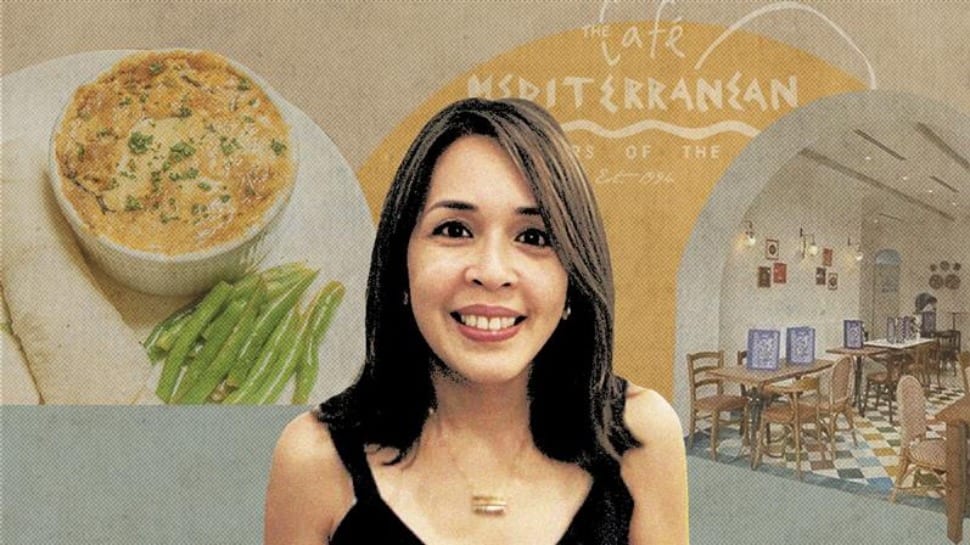
ILLUSTRATION: Igi Talao
From a nine-table corner shop in Greenbelt to a chain of restaurants spanning Manila’s top malls, Café Mediterranean is proof of what disciplined leadership and vision can achieve.
At the heart of its success is Marla Moran, co-founder and CEO, who transformed a modest startup into a household name. Her journey began not in the kitchen but in the corporate world, where she learned systems and controls and later used those skills to build one of the Philippines’ most enduring restaurant brands.
Moran’s early career started in corporate marketing. After her first role at a five-star hotel, she joined a food conglomerate’s packaging division, where brand management exposed her to pricing, operational discipline, financial planning, and cross-departmental coordination. These lessons gave her the rigor and structure that she later used to build a resilient food business.
In 1994, when Moran was only 28 years old, her sister and brother-in-law invited her to join them in starting a Mediterranean restaurant. She saw an opportunity to bring this type of food to more Filipinos and decided to put her savings into the venture. It was a bold step to leave her corporate work and start Café Mediterranean.
Today, Café Mediterranean stands as one of the Philippines’ most recognizable Mediterranean-inspired dining brands. From its humble nine-table beginnings, it has grown into a chain that continues to thrive more than 30 years later.
With branches in some of the country’s most prominent lifestyle hubs, the brand has proven its staying power in a highly competitive restaurant scene, which offers the local market a trusted destination for authentic yet affordable Mediterranean flavors.
In 2018, Moran also launched Roti Shop, a sister brand that offers Singaporean and Malaysian comfort food such as roti and Hainanese chicken. The concept resonated with younger diners and grew to three branches in Rockwell, The Podium, and Estancia.
What strategies did Moran use to grow Café Mediterranean from a single shop in Greenbelt to a well-known brand with multiple branches across Manila? How has Moran managed to keep Café Mediterranean thriving for more than 30 years in an increasingly competitive restaurant industry?
Here are the five business lessons everyone can learn from Marla Moran, co-founder and CEO of Café Mediterranean:
ALSO READ
Financial Adviser: 5 Business Lessons Everyone Can Learn from George Go, CEO of Ho-land Hopia
1| Know how to recognize opportunity and act on it
Opportunities often appear in small windows of time, and if you hesitate too long, they may disappear or be taken by someone else. Seeing the right moment is only half the challenge; the real impact comes from acting on it by making a decision and moving forward.
When you act on opportunity, you create momentum. Even if the outcome is not perfect, you gain learning and often new doors open as a result. Those who succeed in business and in life are not just the ones who notice opportunities, but those who are willing to take action and make things happen.
Moran recognized early on that Manila in the 1990s had very few Mediterranean options, mostly limited to small shawarma stalls. She and her partners saw an opportunity to fill that gap by making Mediterranean food both mainstream and mall-friendly.
This ability to identify what the market lacked reflected her customer-focused mindset. She was not chasing a passing trend but responding to an unmet demand in the dining scene.
Choosing to leave a secure corporate job at 28, even with the offer of an early retirement package, required boldness. Many in her position would have chosen the safety of a corporate career, but Moran trusted her instincts that the timing was right.
Her decision to invest her retirement payout into Café Mediterranean also revealed practical financial discipline. Rather than spend the money or set it aside, she redirected it into a venture with long-term growth potential.
While her partners were more drawn to the creative and culinary side, Moran focused on operations and structure. She placed strong value on systems and controls, which are the qualities she knew were important for scaling the business.
“Before Café Mediterranean, I was working at a big corporation in the packaging division,” she says. “It was my second job after working in hospitality, and I was still very young at the time. My sister and her husband, who owned a Mexican restaurant, approached me with the idea of starting a Mediterranean concept. They asked me if I wanted to quit my job.
“Around that time, the business where I was then assigned was merging with another company. They were offering early retirement packages. So I said, ‘Why not? Perfect timing.’ So at 28 years old, I got early retirement, and I put the money into the Café Med. And that's how it started.
“I always felt I was meant to be involved in the day-to-day because I really enjoy operations. Bagay sa akin, and unlike me, my partners didn’t enjoy that part. That was back in 1994. All of us saw the need for a Mediterranean concept, since at that time the only options in Manila were shawarma stalls run by Middle Eastern owners. We thought it was time to bring it into the mainstream, inside the malls.
“We opened our first branch in Greenbelt. It was a tiny space of only 50 square meters. We started with shawarma but made it more… reachable, something the crowd could relate to. We even made it kind of ‘Greek-y’ by calling it gyros instead of shawarma. And then we had more options like hummus and motabo.
“It was really a mom-and-pop operation in the beginning. We launched more items, and eventually we also served pasta. Families would go, and the children wanted pasta, so we added two or three dishes to the menu.
“Since we all traveled a lot, we wanted to bring in food we enjoyed abroad. One of my partners, who lived in London and had spent time in Spain and Italy, suggested some items from there. We also hired a chef from the Middle East. He was Pinoy, but very skilled, and he helped us a lot.
“Eventually, he moved on, and later, when we expanded, we felt the need to bring the restaurant to another level and so we hired a Turkish chef to teach us authentic techniques. That was maybe 10 years after we started.”
2| Know how to build a scalable business from the ground up
A business that scales well is not just about opening more branches or serving more customers. It’s about having the systems, people, and processes that can handle expansion smoothly.
When you build scalability early, you avoid the common trap of success turning into chaos. Many businesses grow fast but collapse because operations, finances, and controls were not ready. Starting with scalability in mind ensures that growth is sustainable, efficient, and consistent.
It also shows foresight. A scalable business doesn’t just depend on one person’s energy or presence; it creates structures that allow the company to run well even as the founder steps back or new markets open. This is why scalability is linked to resilience and brand longevity.
Moran showed operational discipline early on. When Café Mediterranean started as a nine-table shop, things were “kalat,” like money going out without structure. While her partners thrived in the kitchen, she stepped into the less glamorous but important role: operations, controls, and systems.
This decision revealed her ability to recognize what the business needed most and to fill that gap, even at a young age. By bringing order to chaos, she created a backbone that made future scaling possible.
Second, Moran showed strategic persistence. For two years, she pushed to expand while her partners resisted, content with a one-branch identity. She understood that in Manila, diners would not travel far just to eat in a tiny restaurant with no guaranteed table. Her insistence that “you can’t grow with just one branch” reflects her growth mindset. This persistence led to the Rockwell opening, which became a turning point and proved her instincts right.
Third, Moran displayed financial prudence paired with bold risk-taking. She refused to distribute dividends too easily, instead reinvesting profits to fund expansion without loans. This choice revealed both restraint and vision: she was willing to sacrifice short-term rewards to build long-term stability.
Fourth, Moran showed customer sensitivity and product innovation. Rather than chasing trends blindly, she made deliberate menu decisions. Families asked for pasta, but she resisted turning Café Mediterranean into just another pasta-serving restaurant.
Instead, she introduced kebabs, a move that transformed the brand’s fortunes. Kebabs now make up 60 percent of sales. This pivot highlighted her ability to listen to customer needs while staying true to the brand’s identity.
“In the beginning, though, we had no idea how Café Mediterranean would turn out,” Moran says. “Our first branch was just 50 square meters with nine tables. It was so small you might not have even noticed it. We served gyros, shawarma, moussaka, around 20 items in total. But people came, and we had lines.
“Everyone helped everywhere. There wasn’t really a division of roles. But I insisted on handling operations, controls, and systems because my partners weren’t strong in that area. They were very creative, and they cook well, but things were quite kalat at first. Money was going out left and right, and I said ‘Wait a minute guys, we need some order here. I was just 20-something, so I said, ‘That’s it, I’ll take charge,’ and they agreed. They were happy to let me run that side while they focused on cooking.
“For a while, they handled the kitchen, while I was more in the dining area. Eventually, they went their own way, and I carried on with the operations. After all, my background was in marketing. I really enjoyed it because, in marketing and brand management, you’re everywhere. You work with sales, you coordinate with finance for pricing, you deal with R&D, so it gave me exposure to so many things. I stayed there for about four years, and I enjoyed it very much.
“That shift eventually brought me back to working with chefs. I found myself involved in product development in the kitchen, and that was really fun. Whenever my partners came home for vacation, we would all take part in developing new dishes together.
“For two years, I wanted to expand, but my partners wanted us to stay in Greenbelt. I told them, ‘I’m quitting if we don’t grow.’ How can you build with just one branch? That’s not the way Manila works. People won’t travel far just for a tiny store where they’re not even assured of a table. Eventually, they agreed, but instead of opening in the city, they pushed to open in Subic because it had just become a Freeport under Ramos.
“We opened a huge branch there, managed by my sister and her husband. By then, I had already set up a small commissary to prepare bread and marinades daily. They ran that branch, and at first it did very well. But when the tax-free limit was reduced, people stopped going to Subic. There weren’t many multinationals there yet either, so business declined.
“After that, Rockwell came into the picture. Around 2000, we catered the Lopez family’s Centennial event, and they invited us to open in the mall. They told us, ‘Please join us. You have to.’ Of course, I said yes. Rockwell became a turning point for us, but there was also a struggle. One mall had told us, ‘You’re not allowed to open anywhere else, or we won’t give you space anymore.’ That was very limiting. You couldn’t go to another mall also. You couldn’t go anywhere else. At some point, I just said, ‘To hell with that.’ We had to grow.
“I had really decided it was time to expand. Our money wasn’t growing, we were stuck. My partners wanted to keep Café Mediterranean as a one-of-a-kind place, but that wasn’t enough. There’s only so much you can earn in a day unless you open more branches and grow sideways. With inflation eating away at income, I pushed harder until they finally gave in.
“When we opened in Rockwell, and I decided, ‘Let’s go all out.’ Around the same time, I was already preparing to expand into The Podium when it first opened. I wasn’t the type to give out dividends easily; I saved a lot instead. That allowed us to expand without taking out loans.
“After Rockwell, we opened in Galleria. That branch eventually closed, but by then we had already learned from the ups and downs of expansion.
“Despite the setbacks, I was determined to keep expanding. I’ve always believed in growing steadily. I don’t like expanding too fast, but I also don’t believe in standing still.
“After we expanded, the earnings doubled. At that time, I was the only one with a salary from the business. If the store grew, that was the only way the company could grow. It wasn’t just about more salary, it was also about building the name. If you don’t expand, nothing happens. Yes, I was already a partner from the beginning, but I also enjoyed working on my own, even if it meant working twice as hard.
“We felt the need to expand our menu. My chef, who had worked in Saudi Arabia, knew people loved the food, but we also knew they couldn’t eat it every day. People began asking if we could serve pasta. We thought about it but decided not to, because although pasta is Mediterranean, we didn’t want to go that route. Instead, we added slowly. I told the chef, ‘We have to have kebabs.’ We launched them, and until now, kebabs are still number one on the menu.
“We introduced kebabs maybe three years after opening in the ’90s. Today, they make up 60 percent of our sales. At that time, kebabs weren’t very popular yet, so we were proud to be among the first to offer them. Café Med was going down a bit, and we didn’t want to push pasta.
“So when we introduced kebabs, business really shot up. We started with beef and chicken, but sourcing lamb was difficult. At first, we used local lamb from a customer’s farm in Bacolod. Our customers really became our source.”
3| Know how to learn a business through hands-on experience
When you take on every role, you see the business from the ground up. This builds empathy for employees and helps you design systems that actually work in daily operations.
Hands-on learning also reduces blind spots. Leaders who have only stayed in the office may overlook small problems that affect customers or staff. But someone who has done the work firsthand understands the pressures, mistakes, and challenges of each role, which allow them to make better, fairer decisions.
It also creates credibility and trust. Employees respect a leader who has walked in their shoes. It makes the leader harder to deceive or mislead because they know what “real work” looks like. This combination of empathy and authority makes hands-on learning one of the strongest foundations for building and scaling a sustainable business.
Moran learned the restaurant business through deliberate hands-on immersion, a choice that revealed both her humility and discipline as a leader. Coming from a corporate background, she could have relied on theory or limited herself to overseeing operations.
Instead, she acknowledged her lack of industry experience and sought mentorship from someone who knew the business inside out—a manager from McDonald’s. This decision already showed two key traits: self-awareness (knowing what she didn’t know) and teachability (being willing to learn from others regardless of rank).
Her learning process was not passive. She went through a structured rotation where she worked every role in the restaurant—waitress, cashier, cook, accountant, purchaser—each for two months.
This was not symbolic “shadowing” but real work, including tasks she disliked, like cashiering, where mistakes came at personal cost. By enduring those responsibilities, she built a deep respect for the everyday struggles of her staff. This formed the foundation for her management style: firm on systems and controls, but empathetic toward people.
By the end of the year, she had advanced to manager, not because of entitlement as an owner, but because she had earned credibility by doing the work. That credibility became a lifelong asset, which she often says her staff “cannot fool her” because she knows their jobs firsthand.
More importantly, this experience shaped her belief that the only way to lead effectively is to understand the ground-level realities of the business.
“Not knowing anything about the industry, I relied on my corporate background from San Miguel,” Moran says. “I hired a manager from McDonald’s to teach me how to run a restaurant. He taught me everything. In fact, he made me take on every position in the store. I was a waiter, a cashier, even a cook. That was the best lesson, because you really understand what the staff go through every day.
“I did this rotation for a year, two months as a waitress, two months as a cashier, two months as a cook, and so on. I hated cashiering because if you were short in the kaha, you had to pay. I also handled accounting work since we didn’t have an accountant, and I took care of purchasing. By the end of the program, I became the manager. It’s the only way you learn.
“That experience is why, even today, when I talk to the staff, they cannot fool me because I’ve done their jobs before. Until now, I still like to wait on tables once in a while, kasi it’s nice.
“Coming from corporate, the biggest difference I noticed was dealing with people. You deal with corporate people. In the restaurant, you deal with warehouse staff, cooks, and drivers. It’s a completely different world, but it’s a great one. I really liked it. Much like during election season, sometimes you wonder, ‘Why are they voting for these people?’
“But when you talk to them, you start to understand. You may not agree, but at least you see where they’re coming from. That was a big lesson for me.
The other difference was time. Here, you’re on call 24 hours. I’m not retired, and I don’t plan to be. None of my kids want to take over anyway.
But I still enjoy this much more than the corporate world, because there’s no politics. I’m in control, and I don’t tolerate politics here either. Having been in the corporate world, I know what I like and what I don’t like. The structure helped me learn how to organize things, even finance, pricing, and costing.”
4| Know how to build a strong brand through consistency and structure
Consistency ensures that customers have the same experience every time they visit. Whether it’s the taste of a dish, the speed of service, or the look of the brand, reliability builds loyalty. People return to brands they can depend on, and consistency transforms a one-time visitor into a repeat customer.
Structure provides the backbone that allows a business to scale. Without systems for quality control, cost management, and operations, growth often leads to chaos. Structure creates efficiency, minimizes waste, and makes it possible to replicate success across multiple branches without diluting the brand’s promise.
Authenticity makes the brand meaningful. In food, authenticity is about respecting tradition and sourcing ingredients that reflect the cuisine’s true roots. For customers, it signals honesty that they feel they are experiencing something real, not just a superficial imitation. Authenticity builds emotional connection, which strengthens customer loyalty even more than price or convenience.
Moran’s approach reveals a mindset that is shaped by both creativity and corporate discipline. First, she understood that authenticity could not be compromised. Instead of settling for “good enough,” she invested in learning from specialists like hiring Turkish and Lebanese chefs who brought credibility, and technical expertise.
This was more than just hiring cooks; it was a deliberate strategy to raise standards. By ensuring the food carried the hallmarks of real Mediterranean cuisine, she gave the brand a foundation of trust and authenticity. That authenticity became part of the identity customers associated with Café Med.
Second, Moran attacked the problem of consistency through systems. She centralized production by creating a commissary where 95 percent of the menu was prepared. This decision was critical: it meant every marinade, sauce, and ingredient followed the same process before reaching any branch.
By taking cooking out of the variability of individual stores, she built a structure where quality could be controlled at scale. This was not just operational efficiency, it was brand protection.
Third, her “OC” mindset (meticulous attention to detail) drove her to design precision systems. She built recipe programs that calculated exact measurements based on orders. This ensured accuracy and reduced human error.
Fourth, Moran integrated discipline into financial management. Cost control wasn’t an afterthought. It was built into the pricing model itself. Daily variance reports forced managers to monitor stock and sales tightly, and she herself reviewed results monthly.
This layered system of accountability kept margins intact in a low-margin industry. Over time, what began as “being OC” evolved into a culture of discipline.
Finally, Moran made sure this culture didn’t feel oppressive. By staying engaged, even waiting tables occasionally, she kept structure tied to purpose. Staff saw consistency not just as a burden, but as a source of pride that customers could walk into any Café Med and experience the same quality.
“Authenticity was another challenge,” she says. “In the beginning, our chef was Pinoy, so naturally it wasn’t exactly the same as the original dishes. That’s why we hired a Turkish chef. In Turkey, chefs specialize; like one may focus only on baklava, another only on shawarma.
“At one point we worked with three chefs, each teaching us their specialty for about two years. They taught us everything and even helped with sourcing. Later on, a Lebanese chef approached me, and told me he could make our food better. I gave him a chance, and true enough, he raised the quality so much. He worked with us daily for about a year, then occasionally.
“The number one challenge was how to source ingredients, because a lot of it had to come from the Middle East. At that time, there was only one supplier in the Philippines, si Werner Berger, the owner of Santis.
“At that time, getting a license to import was very hard. I tried, but a lot of importers didn’t want to deal with Greece or Turkey. Eventually, we were able to connect with Greek and Turkish importers, but in the beginning it was so difficult.
“Because so many PAL employees ate at our place, we became friends with them. We had no choice. And then, would you believe, the head office of PAL was right across the street from our Greenbelt branch. The stewardesses and pilots used to buy for me whenever they flew to the Middle East.
“They would bring back ingredients, and we relied on them for quite a while. We were very creative, lots of stewardesses and pilots helped. Our chef was also able to source from his old employer, since they had maintained good relations, but prices were very expensive, syempre.
“As for the brand, it was supposed to be called Café Med, but there was already a Café Med in Medical City. So we registered as Café Mediterranean instead. The problem is the name is too long, and even the SEC often got the spelling wrong. Still, everyone knows us as Café Med. The logo was designed by my London-based partner’s husband, an artist. It’s still the same original design.
“You know, it would be very hard to start from zero now because the operation is already set. We have a commissary, a central kitchen that provides everything. All marinades and products go there first. There’s only one delivery, and it all comes from the commissary. That’s where the quality control happens. Ingredients are received, the cooks prepare and marinate everything, and then it’s brought to the stores for final cooking. Basically, 95 percent of the menu is prepared there.
“We’ve got it down to a system. I’m very OC, so we even came up with a program where recipes are generated based on orders. If there are 500 kebabs ordered, we just type in 500 and the recipe comes out, which gives us the exact measurements every time. That output then connects to our ordering system, which tells us exactly how much beef is needed.
“I learned a lot of this discipline from my corporate work before which is how to make operations efficient. Even cost control is built into the price. Monitoring is done daily by the managers with the help of the POS system. They prepare variance reports that compare what was sold to what’s in stock. I personally review everything once a month, but the managers check daily. In the beginning, we had issues, but now it’s very controlled. They’re able to order properly, and waste is minimized.
“We’re very OC here, but I think the staff enjoy it too. That culture of discipline and consistency has kept the brand strong. After all, it’s been 30 years now.”
5| Know how to balance hard work with life beyond business
Maintaining a balance between business demands and personal life helps entrepreneurs preserve their energy, stay clear-minded, and keep their creativity alive for the long run.
Without rest or outside experiences, even the most disciplined leader risks burnout and tunnel vision. Time away from the business—whether through travel, hobbies, or simply spending time with family that creates space to recharge and return with fresh perspective.
Moran’s approach to balancing business and life shows that discipline in operations goes hand in hand with discipline in personal choices. She learned early that running a business isn’t just about passion for food but about systems, consistency, and controls.
By putting structures in place, she ensured the business could operate smoothly without requiring her to micro-manage every detail. This freed up space for her to step back when needed and not let work consume her entirely.
At the same time, Moran emphasized the importance of people and relationships. She treated staff well, paid them above minimum wage, praised their work, and made herself approachable. This culture of trust and empowerment allowed her team to take responsibility for daily operations.
Because she trained them rigorously and instilled standards of hospitality, she didn’t have to be on the floor at all times to guarantee service quality. Her ability to delegate and trust her people created room for her to live beyond the business.
Her financial philosophy of being “kuripot” and reinvesting earnings rather than taking out too much also reflected long-term thinking. By controlling costs and protecting margins in an industry with razor-thin profits, she kept the company healthy without overstretching herself.
This mindset not only stabilized the business but gave her peace of mind, which is important for maintaining personal balance.
Finally, Moran herself acknowledged the need for balance in later life. While she insists she’ll never fully retire because work keeps her mind active, she also wants to travel, play tennis, and enjoy her golden years.
Her perspective is shaped by decades of experience: work provides purpose and energy, but life outside work brings clarity and renewal. By envisioning a “50 percent work, 50 percent enjoyment” lifestyle, Moran shows that the lessons she applied in business also guide her in creating a fulfilling balance between enterprise and personal growth.
“When you put up a business, get people who know the business,” she says. “Don’t go into the food business because you like to cook. It doesn’t work that way. There’s so much more to running a business than cooking.
“In fact, cooking is only a percentage of it. It’s the consistency that matters. As you grow, it gets easier because you have a pattern to follow. That’s the biggest one, your controls. Be in control of your controls, or else it’s so easy to lose money here because the margins are very small.
“Next, treat your people well. That’s the most important, treat them and appreciate them all the time. I’m always praising them. I also like to be above minimum wage always. If it’s minimum wage, when the new minimum wage comes, we’re always on top so that they’re also proud to be working here.
“They all have nameplates because I want to know their names. It’s very important to me that I know them all. So they feel appreciated. Every morning I walk into the kitchen, say hi, ask what’s cooking, and try the food. They like it. I’m not way up there, unreachable. I think that’s important.
“And number three, train to death. Focus especially on the front-of-house staff, the waiters, because hospitality is so important now. I always tell the staff, you can make up for bad food with good service, but you cannot make up for bad service even with good food. So until now I train the waiters.
“Sometimes I do it myself. Every six months of the year, every week they come to our office, and we have training. I come up with modules and we do role play. I don’t train all, just one representative from each branch. The managers are there, and they have to cascade everything down. I enjoy that. Basically, if you can do all of that, then they do their jobs well. Right? Because they’re the ones doing the work, not me.
“When it comes to handling money, I’m really kuripot. In a few years, I’ll probably still be working. I want to work because it keeps your brain working. If I stop, I think I’ll get old. I want to travel. You learn a lot with the kids grown up. So it’s my time to travel and enjoy the world. Maybe 50 percent work, 50 percent enjoyment, because you also need to enjoy the golden years.”
