
Financial Adviser: 5 Reasons Why Henry Sy Jr’s Synergy Grid Is the Most Undervalued Power Company in 2025 and How to Profit from It

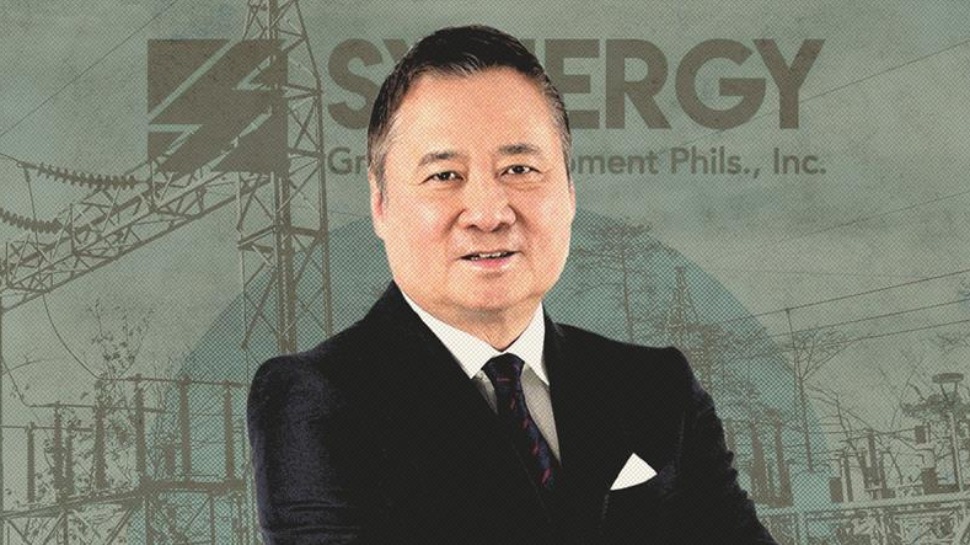
ILLUSTRATION: Igi Talao
The Philippine Stock Exchange Index (PSEi) has yet to find clear direction this year. So far, it has slipped by 3.26 percent year-to-date and extended the weakness that started last year.
After a volatile market last year, driven by interest rate swings, geopolitical concerns, and uneven domestic growth, investors remain cautious. Foreign inflows have not returned in a meaningful way, and local sentiment has not shown signs of conviction.
In such an environment, investors often look for defensive stocks that combine stability with cash-flow visibility. Energy stocks have answered that demand.
While the PSEi trades in negative territory, most energy companies have posted robust year-to-date gains. AboitizPower (PSE: AP) has advanced 13.4 percent, Meralco (PSE: MER) has risen 14.75 percent, First Gen (PSE: FGEN) has improved 1.74 percent, and Citicore Renewable Energy (PSE: CREC) has jumped 31.1 percent. Synergy Grid & Development Phils., Inc. (PSE: SGP), meanwhile, has also delivered, with its share price climbing 28.4 percent since the start of the year.
Why energy stocks have moved higher
The explanation lies in the essential nature of electricity. Consumers reduce discretionary spending when inflation rises, but they cannot cut back on electricity use. That makes revenues in this sector resilient across cycles.
Utilities and grid operators enjoy regulated pricing schemes that allow them to adjust for inflation, which reduces margin pressure. Investors, therefore, have turned to the sector as a hedge against both uncertainty and inflation.
Another factor rests on operating leverage. Fixed costs in the power sector remain high, but once those costs are covered, incremental revenues flow disproportionately to profits. When electricity demand rises, even modestly, earnings expand at a faster rate than revenues. This dynamic explains why investors view energy as a sector that compounds value over time, especially in markets where demand for power continues to rise with urbanization and industrialization.
Energy has outperformed in a market where most sectors have lagged. Investors have turned to the sector for protection, but the rally has not lifted all names equally.
Companies with stable, regulated or contracted cash flows have drawn capital, while more speculative renewable firms have sold off. Within this divide, SGP sits in a unique category.
The question for investors is not whether SGP has already rallied, but whether that rally captures its intrinsic value. As with any value stock, an investor must first understand the company’s business and weigh its long-term potential. A clear view of the fundamentals allows better judgment of both risk and return.
Here are the top five things every value investor needs to know about Synergy Grid and Development Philippines (SGP) and how you can profit from it:
ALSO READ
Financial Adviser: 5 Business Lessons Everyone Can Learn from George Go, CEO of Ho-land Hopia
1| Know the profitability and growth of the company
SGP’s earnings have been falling for the past two years before bouncing back this 2025. In 2022, the company earned P34.7 billion before non-controlling interests. That dropped to P23.4 billion in 2023 and went down further to P17.35 billion in 2024. The slide came from regulatory delays and higher costs that weighed on its business.
But the first half of 2025 tells a different story. SGP already made P21.3 billion in net income before non-controlling interests, which is more than the entire earnings for 2024. This marks a clear turnaround. After two years of decline, the company has regained its momentum and looks on track to post its strongest results in years.
From this total, net income attributable to equity holders of SGP rose to P9.72 billion in 1H25, higher by 109 percent increase compared with P4.64 billion a year earlier.
Using the 2024 ratio where the first half accounted for 58.87 percent of full-year earnings, SGP’s P21.3 billion net income in 1H25 projects to about P36.2 billion for the full year. That figure would more than double the P17.3 billion posted in 2024, which is an increase of roughly 109 percent year-on-year.
The sharp rise in profitability was not merely the result of one-off events. A major driver came from the recognition of regulatory under-recoveries covering 2016 to 2022, which bolstered revenues in 2025.
These adjustments are part of NGCP’s standard tariff recovery framework, which reflect the company’s regulated model. However, even without these catch-up revenues, the underlying business delivered strong results.
Revenues from operations increased by 48.9 percent to P39.6 billion in 1H25, compared with P26.6 billion a year ago, driven by higher ancillary services and stable wheeling charges.
Operating expenses rose by only 12.7 percent, mainly due to amortization and higher employee costs. The gap between revenue growth and expenses widened margins and demonstrated stronger operating leverage.
As a result, SGP’s earnings grew strongly and remained steady. This momentum reflects both operational strength and the stability of its revenue model.
SGP holds clear advantages: its monopoly concession rests on regulatory protection, its tariffs adjust with inflation, and it avoids the fuel price risks that weigh on power generators. These strengths make earnings more stable and create a solid foundation for long-term value creation.
2| Know the liquidity position and balance sheet strength of the company
SGP’s latest financials reveal that it is deliberately reshaping its risk profile by steadily strengthening its balance sheet. The decline in its Debt-to-Equity Ratio to 1.88x in the first half of 2025 from 2.01x a year earlier signals that equity growth is beginning to carry more weight in its capital structure.
For a capital-intensive utility with a regulated concession, this reduction in leverage enhances sustainability and lowers refinancing risk over the long term. At the same time, interest coverage has risen sharply, increasing to 5.62x from 3.97x, which means that the company now generates more than five times the earnings needed to meet its debt obligations. This improvement not only reflects stronger operating income but also greater financial resilience in an elevated interest rate environment.
Liquidity trends also reinforce this stability, with cash and cash equivalents increasing by 47 percent to P13.2 billion as of June 2025 from P8.96 billion at year-end 2024. This larger cash buffer provides SGP with flexibility to fund capital expenditures, meet concession obligations, and sustain dividends without immediately resorting to new borrowings.
An important factor that could further enhance SGP’s liquidity profile is the collection of its P23 billion in current receivables from under-recoveries. By classification, these receivables are expected to be realized within the year, as they are embedded in the regulatory framework approved by the Energy Regulatory Commission (ERC).
Unlike ordinary trade receivables that depend on customer payments, under-recoveries are systematically passed through to end-users via transmission charges, which means their eventual recovery is not in question, only the timing.
If collected as scheduled, this P23 billion inflow would provide a substantial boost to SGP’s operating cash flow in 2025. It would augment the company’s existing P13.2 billion cash balance as of the first half. In effect, this recovery could more than double the company’s cash reserves.
For investors, the near-term boost from the P23 billion current receivables could translate into stronger dividend-paying capacity this year. Taken together, these balance sheet improvements show a company transitioning from financial stress to financial flexibility.
3| Know how a company generates profit from its investment
SGP’s profitability ratios further underscore why the stock is undervalued. In the first half of 2025, net income attributable to equity holders reached P9.72 billion, or about P19.4 billion on an annualized basis. Against average equity attributable of roughly P116 billion, this translates into an annualized ROE of around 17 percent, a level that already exceeds MER’s 10–11 percent and AP’s 8–9 percent.
On a broader measure, SGP generated an annualized operating income of about P52.8 billion, which, when set against invested capital of roughly P401 billion (equity including non-controlling interests plus net debt), results in a ROIC of approximately 13.2 percent.
For a capital-intensive infrastructure utility, this is an exceptional figure, especially compared with regional peers that typically earn only six to eight percent ROIC. These results highlight that each peso invested in the business yields robust returns, thanks to NGCP’s regulated monopoly position and preferential tax treatment.
Now, a key test of value creation is whether a company’s Return on Invested Capital (ROIC) exceeds its Weighted Average Cost of Capital (WACC). Using its 1H25 results, we have computed that SGP posted an ROIC of 13.2 percent. To test if this truly creates value, we benchmark it against its WACC.
For the cost of equity, we applied the CAPM framework using a Philippine 10-year bond yield of 6.2 percent as the risk-free rate, a market risk premium of 5.5 percent, and a beta of 0.6 (reflecting SGP’s regulated utility profile). This produces a cost of equity of 9.5 percent.
On the debt side, SGP’s interest coverage indicates a relatively low-risk credit profile, which suggests a pre-tax cost of debt of around 7 percent, which nets to 5.6 percent after accounting for its franchise tax in lieu of income tax.
With a capital structure of about 44 percent equity and 56 percent debt, the weighted average of these costs results in a WACC of 7.9 percent.
The comparison is decisive: SGP’s 13.2 percent ROIC comfortably exceeds its 7.9 percent WACC, which results to a positive spread of more than five percentage points.
By contrast, many utilities across the region typically earn ROICs that barely clear their WACC, often stuck in the single-digit range. SGP’s ability to sustain a higher spread reflects its ability to create compounding value for shareholders.
4| Know how the market is valuing the company
When you look at SGP’s valuation, it almost feels like the market is punishing it for risks it doesn’t have. The numbers tell a different story.
Start with the balance sheet. As of June 2025, SGP’s book value per share is about P22.19. Yet the stock trades at only P12.60, which means the market is valuing the company at barely half of its net asset value.
For a business that owns regulated transmission assets, where book value usually serves as an anchor for returns, this is unusually cheap. To put this in perspective, Meralco (PSE: MER) often trades at 4.5 times book, while AboitizPower (PSE: AP) hovers around 1.6x. SGP, in contrast, trades at just 0.6x. That’s not just a discount; it’s a disconnect.
Earnings tell the same undervaluation story. On a trailing 12-month basis, SGP’s P/E ratio stands at about 5.1x, which is already well below the sector average. But looking ahead, the gap becomes even clearer.
With first-half 2025 profits of P21.3 billion, SGP is projected to deliver around P36.2 billion in full-year earnings. Against its current market capitalization of P66.3 billion, that translates to a forward P/E multiple of just 1.8x.
To put this in perspective: MER trades at 13.5x and AP at 10.5x. SGP, by contrast, is priced as though its earnings are unsustainable. Yet these profits are anchored by a regulated monopoly concession on the national transmission grid which is insulated from fuel cost swings and periodically adjusted for inflation.
In other words, the market is valuing SGP as if it were a risky, cyclical business, when in fact its cash flows are among the most predictable in the sector.
Paying less than 2x forward earnings for such a franchise represents a valuation gap so wide that even a modest rerating closer to peer averages could unlock substantial upside, on top of already attractive dividend potential.
If SGP were to be valued using its expected full-year earnings at its historical P/E ratio of 6.55x from last year, the stock price could rise by more than threefold from its current forward multiple of 1.8x. This would imply a target price of around P45.40 per share by year-end.
On an enterprise value basis, SGP looks even more undervalued. Adding both current borrowings of P26 billion and non-current borrowings of P206 billion gives a total debt of about P232 billion. Adjusting for roughly P13 billion in cash, and with a market capitalization of P66.3 billion, SGP’s enterprise value comes out to around P285 billion.
Against an annualized EBITDA of about P61 billion, this translates into an EV/EBITDA multiple of just 4.7×. That’s significantly below its peers: MER typically trades around 8–9×, AP around 7–8×, and regional ASEAN utilities generally fall in the 8–12× range.
The comparison highlights how deeply discounted SGP remains. Despite operating a monopoly backbone, the market is pricing it as though it were a higher-risk utility. This valuation gap provides a wide margin of safety, with room for rerating closer to peer averages. Even a move toward 7–8× EV/EBITDA would imply a substantial revaluation upside.
What’s happening here is classic mispricing. The market is treating SGP as if it were a risky, cyclical utility, when in reality it’s the opposite. Despite operating a monopoly backbone, the market is pricing it as though it were a higher-risk utility. This valuation gap provides a wide margin of safety, with room for rerating closer to peer averages. Even a move toward 7–8× EV/EBITDA would imply a substantial revaluation upside.
5| Know how to identify potential stock price movements
The technical picture for SGP shows that the stock is at a decisive juncture. After bottoming out at around P6 in late 2023, it has doubled in value, rallying toward P12.60 and approaching a critical resistance band near P13.20–P13.50.
Under Elliott Wave principles, this advance appears to be part of a corrective Wave B rebound, meaning that unless the stock breaks cleanly above this resistance zone, the risk of a Wave C pullback remains.
If the stock decisively breaks above the P14 resistance level, it would signal the start of a new bullish leg. From an Elliott Wave perspective, this breakout could confirm the transition into a larger impulsive wave, with the potential to target the next resistance zone around P17 in the medium term.
On a longer horizon, provided momentum holds and market conditions remain supportive, the structural target aligns closer to the P20 level, which represents a measured move projection.
From a Gann perspective, time cycles also reinforce this setup. Gann observed that markets often make key turns every 90, 180, or 360 days from major lows, and SGP is now about 18 months past its 2023 bottom which is a natural cycle window where decisive moves tend to unfold. This means the next one to two months, particularly into September–October 2025, are a high-probability period for SGP to resolve its trend direction.
For traders, the setup suggests a clear strategy. A breakout above P14 on convincing volume would be a bullish trigger, which confirms that the corrective phase is over and opening upside potential toward P17, where the prior peak lies.
On the other hand, failure to break resistance could invite profit-taking and drive prices back toward P10 level, which aligns with both Fibonacci and Gann support zones.
For those considering a position, an ideal entry would be on a confirmed breakout above P14, with a protective stop just below P12 to manage risk.
