

Financial Adviser: 5 Business Lessons Everyone Can Learn from Ramon Castillo, Founder and CEO of Tronix Imaging Center

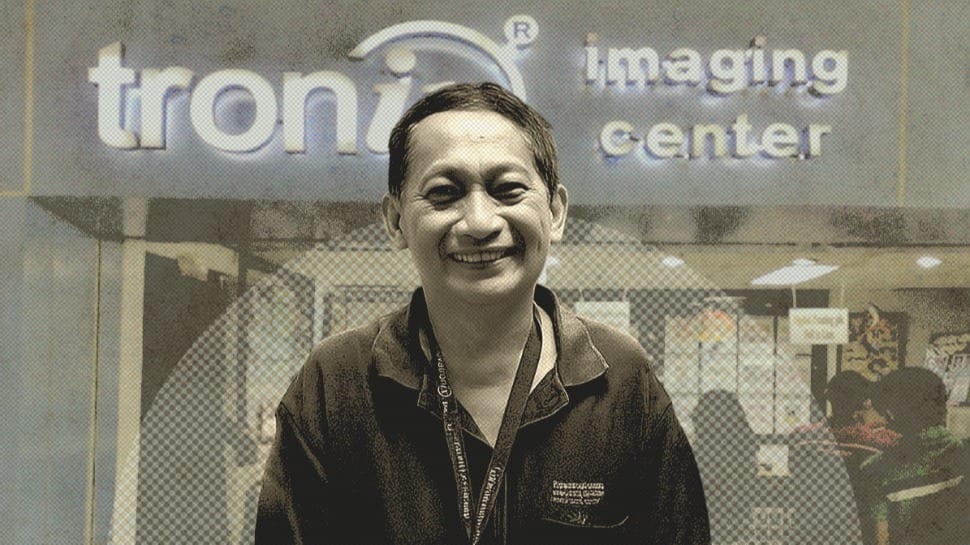
ILLUSTRATION: Igi Talao
As the founder of Tronix Imaging Center, Ramon Castillo carved out a dominant position in the highly competitive world of photo services. What started as a single store in Farmers Plaza in 2000 evolved into a chain of nearly 180 branches across the country, making Tronix one of the most recognized imaging brands in the Philippines.
Backed by his engineering roots and years of corporate discipline, Castillo redefined how Filipinos accessed photo services. He offered affordable, high-quality prints through a replicable, standardized business model that allowed efficient scaling without sacrificing service consistency.
Before establishing Tronix Imaging Center, Castillo began his career at Intel Philippines. After four years in a stable corporate role, he chose to resign and pursue his long-held dream of becoming an entrepreneur.
Castillo’s early ventures included developing electronic scoreboards, but the Asian financial crisis of the late 1990s disrupted many traditional businesses. It was during this period that he spotted a growing opportunity in digital imaging services. Drawing on his technical expertise and personal passion for photography, he launched Tronix Imaging Center at a time when digital photography was still emerging and not yet fully mainstream.
Castillo recognized that the public needed access to affordable, easy-to-use photo printing services without the complexity of high-end photography studios. By offering ID photos, portraits, and document prints at budget-friendly prices, Tronix quickly captured market share from both traditional photo studios and higher-end competitors.
Today, Tronix Imaging Center stands as one of the largest and most recognizable photo service brands in the Philippines, with 180 branches nationwide and a footprint in nearly every major mall.
Despite the rise of digital platforms and automated photo apps, Tronix continues to thrive by meeting the enduring need for high-quality physical prints—whether for official documents, personal keepsakes, or commemorative events. To adapt, Tronix has integrated centralized service platforms, a proprietary app, and streamlined branch operations to reduce overhead while improving customer engagement.
How did Castillo manage to create a scalable enterprise that evolved with changing market demands? How has Castillo kept Tronix agile in today’s increasingly digital-first economy? What key values can we learn from Castillo about his leadership and business decisions over the years?
Here are five business lessons every entrepreneur can learn from Ramon Castillo, founder and CEO of Tronix Imaging Center:
ALSO READ
Financial Adviser: 5 Business Lessons Everyone Can Learn from the Founders of Bruno’s Barbers
1| Know how to transition from employee to employer with purpose
Starting a business with a mission gives you the power to help others by creating jobs, developing people’s skills, and supporting your community. It also changes you as a person. You grow from doing tasks to making decisions, from being an employee to becoming a leader. You stop building someone else’s dream and start building your own, one that comes from a purpose bigger than yourself.
Unlike businesses that only chase profit, a mission-driven business follows a deeper purpose. This purpose keeps you going through tough times and pushes you to create things that truly matter. It also attracts people, customers, supporters, and team members, who believe in what you stand for.
Castillo’s shift to entrepreneurship stemmed from a sense of purpose. He saw that developing high-technology products could raise incomes, reduce dependence on imported tech, and create meaningful jobs for Filipinos. His success was not just about becoming an employer—it was about using entrepreneurship as a tool to solve real problems and uplift others.
As an engineer at Intel, Castillo built a solid foundation in automation and systems thinking. He rose through the ranks to become a senior automation engineer and demonstrated both technical skill and leadership potential.
Despite a stable and promising career, he walked away after four years driven by a mission to create value through Filipino-led technology. His reputation and credibility served as his first form of capital. His employer, Intel, continued to entrust him with projects even after he resigned.
Castillo never confined himself to what he already knew; when faced with unfamiliar tasks, he simply asked for time to study the manuals and figure things out on his own. This willingness to learn became important in the early stages of his business.
By 1991, Castillo no longer saw pure contracting as sustainable, so he pivoted toward scalable product development. This led to manufacturing of their own line of electronic scoreboards. Castillo focused on value creation over quick profits.
“I graduated from U.P., BS Electrical Engineering, in 1983,” he says. “I took the board exam, then luckily, top five naman ako sa board exam. After that, I joined Intel. I worked there for four years. That was my first job.
“In four years, I was promoted to senior automation engineer. In technology, we were involved in developing machines, yung simple machines lang. Minsan kasi they have two automated machines, and they need a bridge between these two machines.And since this is made by another company, usually that bridge is not available. So ang nangyayari, you have a fully automated machine, then they transfer it manually to this other company. So ang task namin as an automation group before was to develop those bridges, para wala nang tao na maglilipat pa ng output ng machine A to machine B. So that was my job in Intel.
“After Intel, I realized that after four years, I had bigger dreams. It’s funny, but a lot of people sometimes find it OA, but my dream has always been to help more Filipinos. And I know that we can only upgrade our pay if we go into technology, because ang low technology products usually are being paid much less.
“The reason why a lot of first world countries are rich is because they're selling us technology at a much expensive cost than what we sell back to them. So sabi ko I wanted to put up a technology company in the Philippines.
“When I started my business in 1987, I became a contractor of Intel. Kasi when I left, I had a good reputation naman as a capable person, so yung mga small items na gusto nila ipagawa, pinapagawa nila sa akin. Kunyari repair ng mga machines nila, yung mga ganon. May mga gusto silang ipa-reprogram na machine nila, mga small, customized things. Kasi marami na akong alam, and even if I don't know, I just ask them for, let's say, two weeks to study the manuals.
“After few years, mga 1991, sabi ko ang hirap naman palakihin yung purely contracting job. So we started manufacturing with simple electronic products. We came out with our own product, yung scoreboards.
“In 1992, we were the supplier for all scoreboards during the Southeast Asian Games that was held in the Philippines before. Ganon lang, we were growing, but not fast. You realize ang dami naming ginagawa dito na barya-barya pero pag pinagsama mo na rin nagiging significant income na rin.”
2| Know how to turn crisis into opportunity
Uncovering new opportunities during tough times is often what separates resilient entrepreneurs from those who get left behind. When markets collapse or economy slows down, most people pull back—but those who spot unmet needs can turn adversity into advantage.
Tough times reveal weaknesses in existing systems and force consumers and businesses to rethink their priorities. This creates space for new ideas to flourish.
Finding opportunities during a downturn trains you to think creatively under pressure, take calculated risks, and solve problems with limited resources. Businesses born in crisis are often more agile and more aligned with what the market truly needs.
Faced with the 1997 Asian Financial Crisis, Castillo’s electronics manufacturing business suffered a sharp downturn. Many entrepreneurs might have simply downsized, closed shop, or waited for better conditions. Castillo, however, chose a different path—he proactively searched for a viable pivot.
What stands out is his entrepreneurial reflex to scan for new needs amid the chaos. He did not just think of survival for himself; he thought about the livelihood of 17 employees under his care. His internal question shifted from “How do I stay afloat?” to “What can I build that will sustain the team?” That shift in mindset—from fear to purpose—reveals a deeper entrepreneurial value: using business as a means to protect and empower people, even in hard times.
As a photography hobbyist and member of a camera club, he was already immersed in the rising conversations about digital imaging. But while others were still talking theory, Castillo spotted the practical, underserved demand—fast, quality ID photos. At the time, people waited an hour or more for ID photos or resorted to low-quality kiosk options. He saw that speed, not just quality, was the real pain point. That insight became the foundation for Tronix Imaging Center.
Castillo did not wait for ideal conditions or a perfect plan. Even with uncertainty, he moved forward. His decision was not blind risk-taking, but calculated courage.
“Then came 1997, nahirapan ako,” he says. “We had a very small loan, but at that time, it was a big blow by our standards. Nung 1997, tuloy-tuloy naman kaming nagbabayad, pero kinukulit ako ng bangko. So sabi ko, ano ba naman ’tong mga bangko na ’to? And those were the days na parang nag-dry up lahat ng demand. Remember 1997–98? This was the Asian Financial Crisis. So because of that, nahirapan talaga kami.
“And so nag-isip ako ng bagong puedeng ibenta. Ano kaya ang pwede naming pasukan nito? Eh mahilig ako sa photography as a hobbyist. At that time, pumapasok na yung mga digital. Usong-uso nga yong talk about digital. Since I'm a member also of a camera club, syempre pinag-uusapan namin yan; ang bilis ng gumawa ng ID ngayon, ganyan-ganyan. Sila pinag-uusapan pa lang, ako nag-iisip ako. Bakit di tayo magtayo ng studio? So sabi ko, pasok kaya tayo sa digital?
“Ang pinakauna kong nakitang need talaga was ID. Kasi ang ID dati, swerte na yung one hour eh. With digital, you could do it in five minutes. So ang laking advantage ’yon. That was the opportunity I saw. At the same token, although hindi masyado noon yung mga beauty shots, kasi people were willing to wait two or three days more for IDs. Lately lang naman yung mga beauty shot na waiting na rin eh. Remember yung kiosk na kukuhanan ka ng ID? Ang pangit ng kuha noon. Ang dami niyan, pumipila ’yan.
“So I said, why were they availing of a poor-quality picture when they could avail it in a studio? And of course, the answer was very obvious: they did not want to wait, they wanted it ASAP. So that was the market that I saw, coupled with the fact that bumagsak talaga ang business namin dito noon, yung electronics manufacturing namin.
“I had 17 people to save. I had no job for them, but I didn’t want to lay them off. So I had to have a new business model where I could put them there. So doon nagsimula yung business. Some of them are still with me right now.
“When I was planning to put up yung Tronix Imaging Center, sabi ko sa wife ko, ‘I'm not sure kung magkli-click itong idea ko.’ So sabi ko if it fails balik talaga tayo sa zero. I'll probably have to look for another job. Sabi naman ng wife ko, ‘Alam mo love, sanay naman ako sa wala eh. Go ahead. Follow your dream.’”
3| Know how to start small and grow steady
Building a business from modest beginnings and growing at a steady pace offers entrepreneurs a reliable path to long-term success. It minimizes risk by allowing them to test their ideas, refine operations, and learn from mistakes without putting everything on the line.
This approach also helps build a strong foundation, as business owners can develop systems, train their team, and improve processes gradually. Financially, it promotes discipline—profits can be reinvested back into the business rather than relying heavily on loans or outside capital.
By staying close to customers early on, entrepreneurs also gain a deeper understanding of market needs, which helps shape better products and services. The flexibility of a smaller operation means changes and pivots can be made quickly in response to shifting market conditions.
Castillo’s approach to building Tronix Imaging Center reflected his caution and resourcefulness. Instead of going all in on a risky venture, Castillo tested his business idea within a small space inside their existing electronics store at Farmers Plaza. He didn’t gamble on a full rollout but treated the venture as a live experiment. This allowed him to learn and adjust quickly without overextending his resources.
What stood out was his commitment to process over talent. Rather than relying on expensive or hard-to-find professional photographers, he created a standardized workflow—complete with taped positions, focal lengths, and fixed lighting—to ensure that anyone could be trained to deliver consistent results. This systems-based thinking made the model scalable, even with limited manpower or experience.
Despite lacking capital, he expanded at a sustainable pace—opening three to four stores per year, then pausing to save up before resuming growth. This cycle showed strong financial discipline and patience. Rather than pursuing rapid expansion fueled by debt or outside funding, Castillo reinvested profits and moved at the pace the business could afford. Over time, the network of branches grew steadily across the country from Laoag in the north to Davao in the south.
Another key to his steady growth was market timing. Larger competitors like Kodak and Fuji were slow to shift to digital, and Castillo capitalized on that window. While others hesitated due to the high cost of upgrading, he moved decisively with a leaner, low-cost model. This first-mover advantage allowed Tronix to dominate the digital ID photo space before the giants could catch up, by which time they had already lost ground.
“I experimented with our first branch ng Tronix Imaging Center in Farmers Plaza, that was year 2000,” Castillo says. “Ang ginawa ko because I wasn't sure of the concept, nag-allot ako ng small space don sa electronics store namin na yon para makagawa kami ng ID.
“Actually, feeling ko it's not really pumunta sila don sa studio namin because we have that service. I think yung mga naglalakad-lakad, yon ang naghahanap ng murang ID kasi sa Farmer’s, ang dami dong ID-han.
“I can't remember exactly the price pero parang kasing presyo namin yong Fotome noon. Kaya lang medyo kung compare mo naman sa quality, malayo.
“Nung una, talagang mahirap din, kasi walang procedures. Kaya nung una, makikita mo yung studio namin, may mga tape pa ’yan. May mga masking tape yan: ‘As a photographer, dito ka pumwesto ha. Set mo yung camera mo to this focal length. Yung ilaw niyo, ’wag niyo nang galawin yan. Eventually, the people started to learn how to do it right.’
“After training, marunong na sila eh. Tapos ng style kasi namin, if you're a new store officer, three months ka munang ililipat lipat sa ibang stores. So although you’re a store officer, ang trabaho mo clerk. Yung taga-kuha. So you get to learn. Tapos, since it's digital madali naman yung quality control namin, papadala nila dito, i-email nila yung mga litrato mo para makita kung okay and ma-evaluate how good or how bad you are in photography.
“Kasi yung ibang business on photography, kailangan mo talaga ng magagaling na photographers, but that’s not the way I like to run things. I want to have a procedure—a process—na even somebody who is not really very good in photography can follow and come out with good results.
“Nag-click siya. Then we started expanding. Dahil nga wala naman kaming pera, after three or four branches na ma-expand namin for the year, magpapahinga na kami niyan. Mag-iipon na naman kami ng pera para makapagpatayo na uli ng branch. Eventually, dumami nang dumami yung branches na ’yon.
“We never had the time to work on a franchising model. We were too busy expanding all over the Philippines, hanggang Davao kami at saka hanggang Ilocos Norte kami sa Laoag. Actually, that lack of money to expand that was really our biggest challenge, and at that time the demand for that was really very strong. Kasi wala pang nagdi-digital nun. It took Kodak, Fuji and Agfa and the rest four years before they began to offer their own digital offering. Ang mahal nong upgrade to go digital noon. Milyon aabutin eh.
“Siguro dahil slow mover lang itong mga Kodak, Fuji, Konika, Agfa, they allowed us to grow. And eventually, it was very hard for them siguro to stop us kaya they gradually lost market share.”
4| Know how to build a brand with limited resources
Building a business on a budget using low-cost marketing is important because it teaches entrepreneurs to be resourceful, creative, and strategic from the very beginning.
Instead of relying on large ad budgets, business owners learn to focus on what truly connects with their target market, whether it's word-of-mouth, social media, or grassroots campaigns. This kind of lean approach allows the business to grow steadily without overspending, and helps build strong customer relationships based on trust and value rather than flashy advertising.
Castillo built his business and brand with a clear understanding of what mattered most to his customers, and he did it without relying on a big budget. He did not let limited funds limit his business. His marketing strategy was rooted in low-cost, high-impact tactics.
“Instead of expensive ads, he used flyers and created the Tronix Image Model Contest, a grassroots event that combined customer engagement with brand promotion. It didn't just build awareness—it also built community.
“As social media became more popular, Castillo quickly adopted Facebook, Instagram, and YouTube as platforms to advertise. He appreciated their affordability and reach by recognizing them as tools that leveled the playing field for small businesses.
“Even with a limited store budget, Castillo made deliberate choices. He admitted their stores lacked fancy ambiance, but they were transparent, functional, and price-accessible. He knew that for many customers, hesitation came from the fear of high prices—so he addressed this by clearly displaying affordable pricing outside the store. This removed barriers and built trust.
Castillo’s philosophy centered around making it easy for customers to buy. Every strategy—from brand naming to social media use to store setup was guided by that principle: make it easy, affordable, and trustworthy.
“Honestly nagsimula yan because our company name is Innovatronics, which means innovations in electronics,” he says. “Nung nagtayo kami nitong business, sabi ko para madali Tronix na lang; Tronix Imaging Center, kasi nandyan na yan, naka-establish na kahit papano yung brand para tuloy-tuloy na.
“So a lot of people say, ‘Di ba mas maganda ganito ang pangalan nyo? Sabi ko hindi na pwedeng palitan kasi lahat yung mga documents namin sa munisipyo. Tronix Imaging Center na. It’s too late to replace it and why would we replace it now, nakilala na naman sya?
“Simple lang ang marketing namin noon. Usually flyers, then every year we have what you call Tronix image model contest. You join the contest and you get your pictures taken in Tronix, and then meron kaming professional judges and there's a People’s Choice where they will rank kung sino ang pinaka-magandang model. Yung mananalo siya yung Tronix image models. May kids. May teenagers na lalaki, teenager na babae. At saka below 30 na lalaki at below 30 na babae. Maganda premyo namin, P100,000 at may mga trip to Boracay pa.
“Nung nauso na yong social media, we started advertising sa Facebook. So yon lang basically ang mga marketing programs namin sa Facebook lang. Sa Instagram, sa YouTube ganon din lang.
“You know ang ganda din ng business model ng Facebook eh. You can start advertising with a very little amount. Yon ang palagi kong sinasabi pag nag kwekwentuhan kami ng wife ko, sabi ko dapat TV stations, open sila doon na isisingit yong advertisement sa program nila na like ito lang ang timeslot na allowed sayo kasi maliit lang ang budget mo. Parang they will be empowering small businesses.
“Parang Smart nong araw diba? Piso lang ang business model ng Smart nong una eh. Yung text, pero it’s so easy to pay Smart that one peso by buying load from Smart. Yun yong key eh. You have to make it very easy for people to buy your product. So yun ang napapansin ko ngayon, nagbabago na mundo.
“We take care of our quality. At Tronix Imaging Center, lahat ng mga products namin, once in a while, we test it for what we call rapid aging test. Rapid aging test will show you how long approximately your products will last if displayed properly ‘no. So ang target namin nyan dapat 50 years at least.
“Hindi kukupas yan dapat pero yung rapid aging test in one week malalaman mo na yon. Because you expect it to be exposed sa Ozone and UV Extreme para makikita mo kung yung kung gano sya katagal.
“Also, yung customer complaints. Kung may mga reklamo ang customer, I am one of those few CEOs na pag may reklamo ang customer, you can send us a text. You can send us an e-mail for whatever complaint or kung anuman yon? Pumupunta sa akin yon. So I always read that in the morning. I read that. Tapos, I call the attention of the managers so alam ng mga tao ko kung may problema sila.
“Lastly we have very little budget to put ambiance sa store namin, talagang pang mumurahin pero okay naman sya. Hindi sya sosyal and I do not know if it's intentional, pero parang naging ganon yung tatak nong Tronix.
“Unlike many other stores nakalagay lahat ang presyo namin sa labas ng stores namin kasi lalo na pag bago yong store namin, minsan may iba natatakot pumasok kasi baka mahal eh pero pag nakita, ay P75 lang, P85 lang pala eh.”
5| Know how to lead with values even in crisis
When leaders stay true to their principles during tough times, they show integrity and courage. Employees feel more secure knowing they’re working for someone who won’t abandon them when things get hard.
Customers and partners also notice when a company acts with empathy and responsibility. Values act like a compass—they help guide decisions when profits are uncertain and pressure is high. In the end, businesses that lead with values don’t just survive a crisis, they emerge with stronger relationships and a reputation that money can’t buy.
Castillo’s leadership during crisis reveals a values-driven mindset that prioritized people, purpose, and prudence over profit. Instead of adopting a hardline approach to internal dishonesty, he chose to implement systems that promoted accountability.
This showed a mature understanding that leadership is not about blind trust, but about creating structures that uphold fairness without assuming the worst in people.
His belief that leaders should be risk-takers, but never at the expense of their people, also highlights his sense of responsibility. He refused to bet the company’s future on high-risk decisions that could leave employees jobless.
Even when presented with the opportunity to take the company public, Castillo walked away because doing so would compromise his personal values. He wasn't driven by the lure of wealth or prestige, but by a deeper commitment to job security and internal stability. That value came into full display during the pandemic when many businesses resorted to layoffs.
Whether launching new innovations or helping underprivileged communities, Castillo’s entrepreneurial energy comes from purpose, not pressure. This alignment between values and action has allowed him to lead with authenticity and resilience.
“One lesson I learned is that although you cannot afford not to trust anybody, there are people really who are easily tempted with money,” he says. “That's one, so you have to make procedures na hindi mo man sila mapigilan magnakaw, at least mahuhuli mo. There will always be cases like that, and you should be prepared.
“Palagi ko sinasabi na you have to be a risk-taker. But never take the risk na pag hindi nag-materialize, bagsak yung buong kumpanya mo. I will not take the risk na all-in ’yan na pag hindi nag-click yung business, eh pasensya na po kayo, wala na po kayong trabaho.
“Actually, you really have to ask yourself the question: ‘Ano ba talagang gusto mo?’ Kasi your approach to the business would depend on what, what would make you happy siguro. For example, even during the year 2004, I was already looking at the idea of going public, after nung nag-click yung aming Tronix Imaging Center. But I would have to be open to scrutiny in exchange for new investments.
“So my answer eventually was always no. Because I was never attracted to become very rich. What I’m more interested in is making sure that people have guaranteed employment in the sense na, I have always wanted to make sure that people don’t have to worry about being unemployed.
“You know, during the pandemic, when we had our first zoom meeting, the first thing I announced was there would be no layoffs. That was a commitment. I always do something that makes me happy. Kasi ako naman, I'm happy with my life. I do what I need to do. I'm excited. I can't sleep every time I have a new product idea. Tuwang-tuwa ako like next year, maglalabas kami ng robotic guard dog.
“I want to retire and focus on helping others—helping communities, giving schools in really far-flung areas where there is no electricity and no internet at least a level playing field for their students. That’s what I want to do.”
