
Financial Adviser: 5 Business Lessons Everyone Can Learn from George Go, CEO of Ho-land Hopia

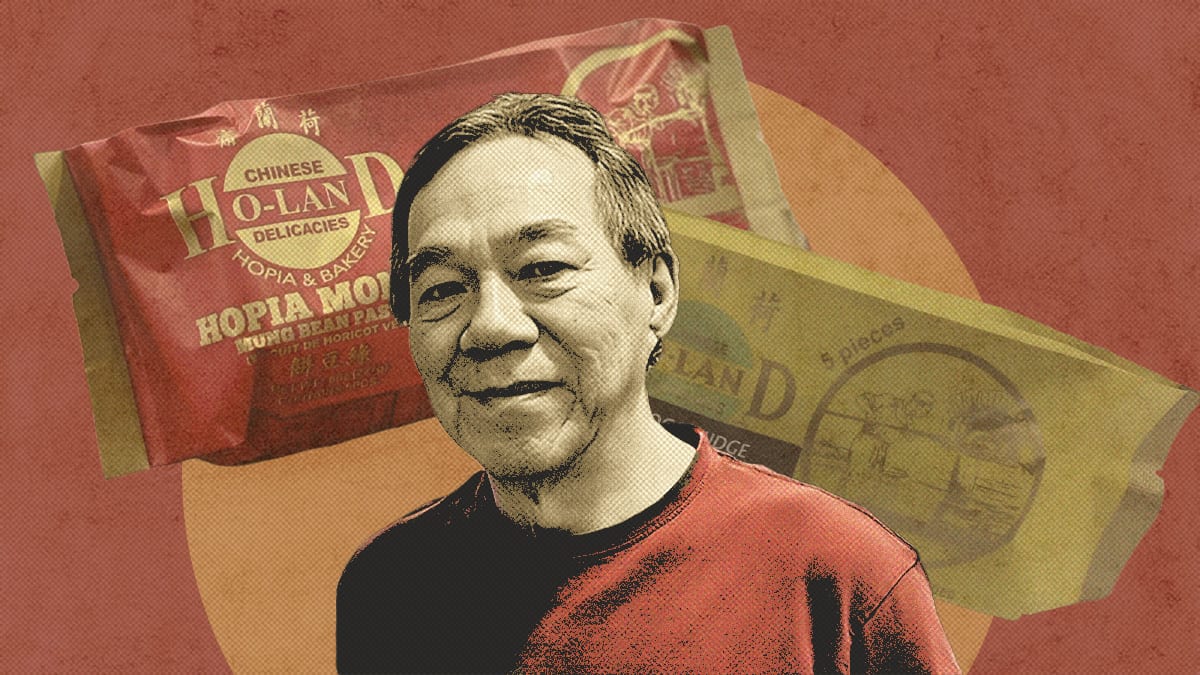
ILLUSTRATION: Igi Talao
George Go’s journey is a story rooted in family legacy and an early immersion in the business his father built from the ground up.
As the second-generation head of the company, Go did not simply inherit a title—he inherited decades of tradition, hard work, and a brand identity shaped by the craft of making hopia and tikoy.
Ho-Land Hopia’s origins trace back to Go’s father, who founded the business. Growing up in this environment, Go absorbed the rhythms of the bakery. It was an education that went beyond theory; it was hands-on exposure to every detail of production. He also observed the business side of operations and learned the importance of customer loyalty and consistent quality.
When the time came for a leadership transition, Go was the natural choice. He had the trust of his family, the respect of employees, and the confidence of customers who had seen his commitment to the business.
Taking over as CEO, he approached the role with a dual mission: safeguard the authenticity that defined Ho-Land while making strategic adjustments to strengthen its position in a changing industry.
One of the hallmarks of his leadership has been the decision to maintain Ho-Land’s original hopia and tikoy-making process. While faster, cheaper methods exist, Go chose tradition over convenience because authenticity was part of the brand’s appeal.
Today, more than 70 years since its founding, Ho-Land Hopia continues to thrive under Go’s leadership, upheld by the same values instilled by his father, commitment to quality, respect for tradition, and a thoughtful approach to innovation. His leadership marks not just the continuation of a family business, but the preservation of a legacy, and it ensures that Ho-Land remains a beloved name in Filipino-Chinese delicacies for generations to come.
How did Go balance tradition and innovation to keep Ho-Land competitive in a changing market? What strategies did Go adopt to ensure Ho-Land’s survival against larger competitors in the market?
Here are the five business lessons everyone can learn from George Go, CEO of Ho-land Hopia:
ALSO READ
1| Know how to build the family business slowly and stand the test of time
Growing a family business slowly is often the key to making it last for generations. By expanding at a steady pace, the business can preserve the quality and consistency that built its reputation in the first place.
Customers develop loyalty not just to the products, but to the trust and reliability that come with them. Financially, gradual growth reduces the risk of overextending resources or taking on burdensome debt, which allows the business to remain stable even during challenging times.
It also keeps decision-making within the family, which ensures that core values and traditions are upheld. A slower pace provides the time needed to study the market and innovate thoughtfully, rather than reacting hastily to trends.
The growth of Ho-Land Hopia under the Go family was marked by patience and conservatism. From its beginnings in the 1960s, the business remained rooted in its original Binondo location for decades.
Both Go’s father and later his mother chose not to pursue aggressive growth, preferring to operate within their means and avoid the risks of overextension. This meant that from the 1970s to the 1980s, Ho-Land operated only a single store. Even after Go’s father passed away in 1981, his mother expanded only modestly, opening just a few more outlets for their children to manage.
This slow-growth approach had several advantages. First, it allowed the family to preserve the quality and authenticity of their hopia, which came from a formula passed down from Go’s grandfather’s bakers in China. By not overextending, they maintained consistency in production and ensured that customers could rely on the same taste and texture for decades.
Second, the family’s conservative stance protected the business from financial strain. With no large-scale loans or risky ventures, they avoided the kind of debt burdens that often topple small and medium-sized enterprises.
Another significant benefit was the preservation of loyalty—both from customers and employees. Many workers stayed with Ho-Land for decades, with some families producing second- and even third-generation employees.
This stability meant the company retained valuable experience and skills, as well as a strong sense of community within the business. Furthermore, the measured pace gave Go the time to learn the trade firsthand, from making hopia beside his father to managing day-to-day operations with his mother. This gradual immersion ensured that when it came time for him to lead, he understood every aspect of the business.
“Ho-Land Hopia started with my father way back in the 1960s,” Go says. “At that time, it was known as Kingsland. Kingsland was the dominant bakery then. It survived through the 1970s. Kingsland was our main place; doon kami galing sa Kingsland. My grandfather was the one handling it back then, and the hopia formula came from China.
“I think it was in the 1950s, maybe during World War II, when my grandfather set up a restaurant business here. After the war, he went back to China. Then he saw that the hopia business was doing okay, so he talked with his contacts in China. Wala pang brand nun.
“My grandfather wanted to set up a hopia factory or bakery here in the Philippines. He brought bakers here from China to set up in the Philippines and start operations here. These bakers migrated here and opened Kingsland.
“My father was the ‘chief baker’ of Kingsland, while his sister was in both the restaurant business and the hopia business. She was very good at cooking, probably learning it from her time in the restaurant. Later on, when he got married, he wanted to branch out. This was around the 1960s.
“After about two to three years, nag-decide yung dalawa to separate, my father and his elder sister. In Chinese agreements, it’s usually like that—'oh sige, you get one thing, and the other gets another thing.’ My father set up Ho-Land and took the space. It was at 551 Nueva St in Binondo.
“My father died in 1981. His sister passed away earlier or later, I can’t remember exactly. I was around 22 years old then. After my father passed away, my mother took over the business. She ran it for some time and expanded a little bit.
“At that time, when my father pretty poor. Because of that, I was sent to Cebu to live with my grandfather and grandmother on my mother’s side. After maybe three to four years, they brought me back. You know parang they were struggling so much that my lolo and lola even considered adopting me, but once my parents became more settled, they brought me back home.
“After the split, my father was very conservative in the business, and my mother too was more conservative, so they didn’t expand that much. From the 1970s to the 1980s, they stayed in just one place. Then, after my father died—and we were still young then—the business was in my mother’s hands. She handled the business for maybe 10 to 20 years, something like that. We only had a few stores then, one for my sister, another one for my other sister, and one for my brother. Tatlo lang.
“My mother managed everything, and I was working for her. All the while, I stuck with Ho-Land. As for my studies, actually, I didn’t graduate. I studied at Mapua. I took up Management Industrial Engineering, but I didn’t finish. I dropped in my second year. After that, I just worked. You know how it is in Chinese families; it’s all around from up to down. When my father was still there, I would usually go up with him and make hopia.
“If I made any mistakes or caused mischief, I’d be in front of him kneeling while he was making hopia. Pag may pinagawa, tapos may pangit akong ginawa. While he was busy making hopia, andyan ako sa tabi nakaluhod.
“After my father died, I helped out with my mom. Actually, people way back then, the workers, were very loyal. May utang na loob. So, most of, like now, the first batch of workers of my father, mostly about 80 percent stayed until they retired.
“We have people here, workers who are second generation or even third generation. Tatay nila, tapos anak nila, then yong apo nya andito pa rin, parang ganon. People way back then were more loyal than now.”
2| Know how to diversify offerings without diluting the brand
Adapting to customers while keeping a legacy business relevant is important for long-term survival. Customer preferences, buying habits, and expectations change over time, often influenced by trends, and competition.
If a legacy business ignores these shifts, it risks becoming outdated, no matter how strong its history or brand reputation is. At the same time, preserving the core identity and values that made the business successful in the first place ensures it remains authentic and trustworthy in the eyes of loyal customers.
Striking this balance means listening to the market, adding new products or improving services, without abandoning the traditions that define the brand. This approach not only attracts new generations of customers but also reinforces loyalty among long-time patrons.
Go’s approach to diversifying Ho-Land’s offerings while keeping the brand intact shows a deliberate balance between honoring tradition and meeting evolving customer needs. Each move he made addressed a clear gap in the market but was executed in a way that still preserved Ho-Land’s core identity as a hopia brand.
Go broke away from his father’s strict “hopia only” philosophy after realizing that customers had to visit multiple stores to complete their purchases. His solution, which is sourcing complementary products from other sellers and offering them in his own store, wasn’t about replacing hopia as the brand’s centerpiece, but about making Ho-Land more convenient. This strategy adapted to modern consumer expectations of one-stop shopping, yet hopia remained the anchor product.
“When Go’s wife Monica took over the main store, she amplified the product range even further by adding diverse items like shabu-shabu and peanut cake. This widened Ho-Land’s appeal to customers looking for variety and convenience without abandoning its brand positioning.
Go and Monica’s branch expansions were not random. Each branch served a different customer profile, which allowed Ho-Land to adapt its product mix and store experience according to local demand. This mirrors modern retail strategies where physical presence is diversified to capture multiple market segments, yet each branch still carries the Ho-Land heritage and product line.
Go’s diversification strategy was not about replacing the old with the new but about layering convenience and market reach on top of a strong traditional core. By doing so, Ho-Land managed to adapt to changing customer expectations and broaden its product range.
“About 30 years ago, the business was handed over to me,” Go says. “I remember my father told me this once, when he was still alive, there were a lot of things I wanted to introduce to Ho-Land that time, like new products. I said, ‘Pa, let’s sell other things’, parang ganyan, then my father told me this, he said, ‘We are in the hopia business, so we do hopia. We don’t do other things so that we will not get into other people’s businesses. If they have their own business, they are prioritizing that. We don’t try to compete or take their market.’
“Parang it’s business ethics, like what my father had. His thinking was, we sell only this one thing. We don’t like to mingle into other people’s business. When I took over, I started to buy from others, I did some trading na.
“Kasi sometimes customers would say, ‘I bought hopia from you, but later I have to go to another store to buy this, then I have to go to another store to buy that.’ So I thought, ‘Because of this, they have to go to three different places.’ So during my time, I decided, ok, I’ll go to buy something, negotiate for a discount, then sell what they’re selling so that I would sell these in my store to become a one-stop shop.
“So that was one improvement. Then after I married Monica, she handled the main store. She just kept on adding and adding products. Until now, Ho-Land is almost like a grocery store. If you go to N. Domingo and take a look, you’ll see so many products like shabu-shabu, peanut cake, and maraming bagay. It’s like a convenience store now.
“One time, I was riding a bus and saw vendors selling hopia, mani, popcorn. Even in movie theaters, it’s hopia, mani, popcorn. I told my mother, “I want us to enter the Class C and Class D market.” Actually, Class C and Class D make up the majority of the buying public—malaki benta doon. I wanted to make a cheaper version of our products, but my mother didn’t want it. So at that time, I couldn’t do anything.
“When I took over, it wasn’t easy. The main store was struggling a bit, Monica was expanding, and both of us focused on strengthening our main branch in Nueva. Of course, there were more competitors, but also more customers.
“We set up one in Banaue. Then from Banaue, we opened in N. Domingo, San Juan. During my time with Monica, we expanded to White Plains. Now, I think we have around nine branches. We have one in Alabang, where my son handles the mall markets, and he also opened a store in Antipolo.”
3| Know how to build customer loyalty through consistency and authenticity
Maintaining authentic product integrity amid industry trends preserves the core identity and trust that a brand has built over time. While trends may bring short-term attention, they can also tempt businesses to alter their products in ways that dilute their original quality and taste. Customers who have been loyal for years often value consistency and the assurance that what they are buying is the same product they have always loved.
By keeping product integrity intact, a business protects its heritage and differentiates itself from competitors who chase fleeting fads. It also strengthens brand loyalty, as customers associate the product with reliability and authenticity.
In the long run, this approach helps the business sustain its market position, command premium pricing, and pass down a legacy that remains relevant regardless of changing industry trends.
Go preserves the authenticity of Ho-Land’s hopia through a disciplined commitment to tradition. First, he safeguards the original Kingsland recipe that has been passed down from his father to him, and now to his son. This consistency has allowed Ho-Land to hold a strong position in the market for traditional hopia flavors few or no other producers maintain.
Second, Go differentiates Ho-Land from competitors by rejecting the flavor trend cycle. This protects Ho-Land from being swept up in fads that may bring short-term novelty but erode the brand’s traditional positioning.
Third, he is selective about modernization. Although automation could increase production efficiency, he refused to adopt machines that would alter the hopia’s handmade texture and quality. Only when technology evolved to replicate the handmade process without compromising the product’s integrity did he integrate it, which limited machinery’s role to dough preparation while keeping the “balat” or skin and filling handmade.
Finally, Go maintains authenticity by emphasizing freshness as part of the brand experience. He ensures customers can still buy hopia straight from the oven by recreating the same sensory appeal Ho-Land offered decades ago. This reinforces both quality control and customer loyalty, as freshness becomes another hallmark of the brand’s tradition.
“The formula for hopia actually came from Kingsland pa, so our hopia tastes different from other hopias in the market. We have preserved the traditional formula. Pinasa sa Papa ko, then nasa amin then now I'm passing it to the son, so our hopia is the same as it was way back in 1950s or 1960s.
“Sabihin natin traditional hopia, hindi namin hawak actually ang lahat ng market pero pwede ko sabihin hawak namin ang original hopia, the original taste. If you say it’s original, we don’t need to improve it, di ba? If you improve the original hopia, it’s no longer the original and no longer the classic.
“So those things stay intact. The way we made hopia way back in the 1950s up to now—it’s still the same. Authentic, traditional, and classic. That’s how we maintain it.
“We have always preserved the quality of our hopia. There are other brands that came out with a lot of flavors. To me, like I said, parang ginagawang ice cream. Ang daming flavor, but to me, the original hopia flavors are munggo, baboy, pinya, kundol, otawsa, potaoko, and others. There are maybe about seven original flavors only, but there are 15 or even 20 flavors. Maybe every month, may isang flavor lalabas. Kaya sinasabi ko ice cream flavor eh.
“Munggo is the traditional hopia for us. Kami ang may hawak ng market ng munggo. Baboy and Pinya, kami rin ang may hawak from the old formula pa. We are the ones making it. The Taiwan pinya is different from our pinya. The Taiwan pinya was adapted here and became their style of pinya. Kundol, walang gumagawa nyan kundi kami. Otawsa, amin din. So all the traditional hopia, yes, we maintain them because hindi (mawawala) yan eh.
“That’s why other flavors keep coming out that it’s like a fad. They introduce flavors like ube, etcetera, and people think those are original pero it’s not original. The original is munggo, baboy, pinya, kundol, otawsa, potaoko, and so on. Those are the original hopia.
“Actually, that’s what I lacked—because I wanted to make our hopia the old style, the traditional way of making hopia. Handmade. So if it’s handmade and I get a machine in, it should do the work exactly like handmade, not so different. Because one thing I know is, back then I wanted to go into machineries, into automating the hopia. But I didn’t push it through because for every machine I wanted to buy, we had to change the formula.
“Kasi minsan, texture nya changes. So we had to find machines that could work. May machine na now because some machines have evolved to the point that pwede and the machine can only put the dough, it’s still handmade for the balat and the filling. There’s no compromise on the texture of our balat and filling, then the machine just helps, nagbabalot lang.
“People like to buy from us in Nueva in Binondo because sometimes they can buy fresh from the oven. There’s a certain hour when customers come specifically to buy hopia that’s still hot. That’s our focus, people like fresh. Back then, in production, our store was downstairs and production was upstairs. Our factory was upstairs so you could control the sale of fresh hopia.”
4| Know how to innovate with time-tested methods
Innovating new products without compromising heritage allows a business to remain relevant in changing markets while preserving the qualities that make it unique and trusted.
Heritage and core identity represent the brand’s history and established reputation. When these are protected, innovation becomes an extension of the brand’s legacy rather than a departure from it.
This balance ensures that while the business can capture new markets and stay ahead of competitors, it does so without alienating its long-time supporters. In effect, the company evolves while maintaining the trust and competitive edge that have sustained it over time.
Go’s approach to innovation demonstrates how a business can expand product offerings while staying anchored to core principles. His work with tikoy is a clear example. Instead of following the modern shortcut of using glutinous flour, a method that simplifies production but sacrifices tradition, he continues to adhere to the original method, which preserves authenticity and ensures that the taste and texture remain distinct from mass-produced versions.
When introducing new flavors, Go applies the same philosophy. The external element, the filling, may change to evolving tastes, but the base methods and textures remain intact.
His collaboration with skilled family members, like his sister Joanne, reinforces this method. By working with people who share the same respect for tradition and commitment to quality, the innovations stay aligned with the company’s heritage. This disciplined balance between creativity and tradition allows Go to keep the brand relevant.
“Regarding sa tikoy, actually, nobody is making the original tikoy except us,” he says. “Now, yung original tikoy, mahirap gawin because you have to buy a certain type of rice, 2 kinds of rice. Then you have to grind them, mix them, extract the water from them, et cetera.
“The tikoy now, you only get the glutinous flour, you put in the water, then you put in the sugar, you stir it and that’s it. Yung original, you have to buy 2 kinds of rice, etcetera. Then you grind them separately, then you mix them. Then you extract all the water out. After the water is out, you make the syrup. Then you cook it, then you dry it for maybe 3 or 4 days. Then you cook it again.
“It’s a lot of process. The taste is almost the same, except if you know how to eat. That one is glutinous flour. Ours is pure rice, so should we say na ours could be healthy? Or ours authentic? Oo. But we are the only one who’s doing it.
“Now, yung alam namin, the way we cook it, we sometimes we innovate it sa ibang product na coming out. Yung texture, yung mga ganyan, yung mga balat.
“For example, yung balat ng munggo namin, baboy ano, it’s still the same, but we put ube as the filling. So the way we make it, the process is still the same, from the classic to the now innovation of ube and other brand new flavors. Yung laman lang sa loob ang nagbabago.
“My sister, Joanne, is a vet but also a very good cook. My mother taught her how to cook, so she’s really skilled. When I say, ‘I want this one—can you make this one?’ she will find a way to produce it. For us, if we say ube, it’s not white munggo mixed with ube flavor and coloring. When we come out with ube, it’s pure ube.
“If we say munggo, it’s pure munggo. If we say pinya, it’s pure pinya. We make it ourselves—from raw materials, we try to make everything ourselves. No flavoring, no coloring, no additives. Because we want to maintain the name that we produce products that are real.
“Yung laman ng bagong flavors namin, we don’t add flavoring, we don’t add coloring, but we maintain the raw materials. Like when you say ube, ube talaga ang laman. When you say ube and langka, it’s ube talaga with langka talaga. Now, when we say pinya, it’s actually tunay na pinya.
“Now, nasa kamay na ng anak ko. And also with Monica—they are the ones who keep coming out with new flavors. The factory—during my first 10 years or so—remained the same, only the mixer and some parts changed a lot. It’s only after maybe about 10 years ago that we had some machines coming in.”
5| Know how to prepare the next generation for long-term success
When the next generation feels trusted to learn and grow in their own time, they develop a deeper sense of ownership and responsibility for the business. This approach encourages independent thinking, and problem-solving skills, which are essential for managing changing markets.
It also preserves family harmony and avoids resentment, as successors feel respected rather than pressured. Guiding rather than dictating ensures that the legacy is carried forward with passion and a personal connection which make it likely to endure for the long term.
Go’s approach to preparing his children for the next generation of the family business is rooted in trust and patience. Instead of pressuring his sons to meet immediate targets, he frames their involvement as a legacy challenge that if his generation has sustained the business for 60 years, and theirs should aim for 100. This sets a clear, inspiring goal without imposing rigid demands.
He recognizes that genuine readiness comes from experience, not just education, and acknowledges that real-world conditions such as markets, consumer behavior, and industry trends can change faster than textbooks can adapt.
By allowing his children to work at their own pace, he gives them the space to manage learning curves and adapt to shifts in the business environment. His “laidback yet calculative” style balances freedom with guidance while ensuring they understand the business fundamentals.
“My eldest son, Joshua, is in charge of production,” Go says. “We were actually lucky we got this one set up muna and tumatakbo na kasi nasunog yung tindahan namin sa Nueva last year. That place na nasunog is where we really started. That’s why swerte kami we moved our production here.
“We moved our store somewhere else in Nueva street also. Wala na yung store sa original place ha, pero nasa ibang lugar. It was accident by neighbor sa tabi and nadamay ang Ho-Land, but we are planning to open up another one, sa Rosario.
“If my sons are expanding, then we have to expand our production. It’s like legacy. I put a challenge to them in a sense, just talking like that. In my hand, it’s 60 years. In your hand, try to make it 100 years. So it will be a legacy.
“I don’t motivate them by forcing. Kasi parang ganito eh: we do things, you do things at your own pace. Nobody is forcing you to do things. If you step on it, katulad sila, kakapasok lang sila, they have a lot of things to learn. A lot of curves to take pa, diba?
“Now, not everything you study or learn will apply in real life. Let’s say something like this in six months or a year, time changes, people change, and parang market changes. Ours, luckily, we survived 60 years. In your hands, you should adapt with what is coming forward. Pero I don’t say, ‘you beat that one, you beat this one.’ My ugali is more laidback and medyo calculative.”
