
Financial Adviser: 5 Things to Know About Edgar Saavedra’s Citicore REIT Corp in 2025 and How You Can Profit from It

When the first REITs were launched in the local market, they were heralded as a way for investors to gain steady income streams from premium office towers, malls, and commercial properties without needing to directly own physical real estate.
Since then, the lineup has grown to include offerings from major developers such as Ayala Land ( PSE: AREIT), Robinsons Land (PSE: RCR), Megaworld (PSE: MREIT), Filinvest (PSE: FILRT), DoubleDragon (PSE: DDMPR), and others.
The performance, however, has been mixed. Some REITs have rewarded patient investors with consistent dividends and even capital appreciation. Others, however, are still trading below their IPO price, reminding the market that not all REITs are created equal.
Share prices have been influenced by changes in interest rates, currency volatility, and broader concerns about the property sector—particularly the oversupply of office space in Metro Manila and the structural shifts brought about by remote and hybrid work.
This makes 2025 an interesting time for REIT investors. On one hand, yields remain attractive compared to time deposits or government bonds, with many REITs offering dividend yields in the five to eight percent range.
On the other hand, investors must weigh these yields against risks such as slowing rental escalations, tenant vacancies, and the impact of higher borrowing costs on REIT balance sheets. The recent movement in the peso-dollar exchange rate and expectations that interest rates may begin to ease in the coming quarters also add new dimensions to the investment decision.
A lower interest rate environment could make dividend-paying REITs more appealing, while currency fluctuations could affect the cost of debt and capital inflows.
Now, the question for investors is not simply whether to buy into REITs, but which ones have the resilience to perform in a changing environment. Diversification within the sector is important, as not all REITs are tied to the same type of real estate or subject to the same risks.
This is where one particular listed REIT may deserve a closer look—not because it has avoided the challenges of the general market, but because its business model is built on something fundamentally different.
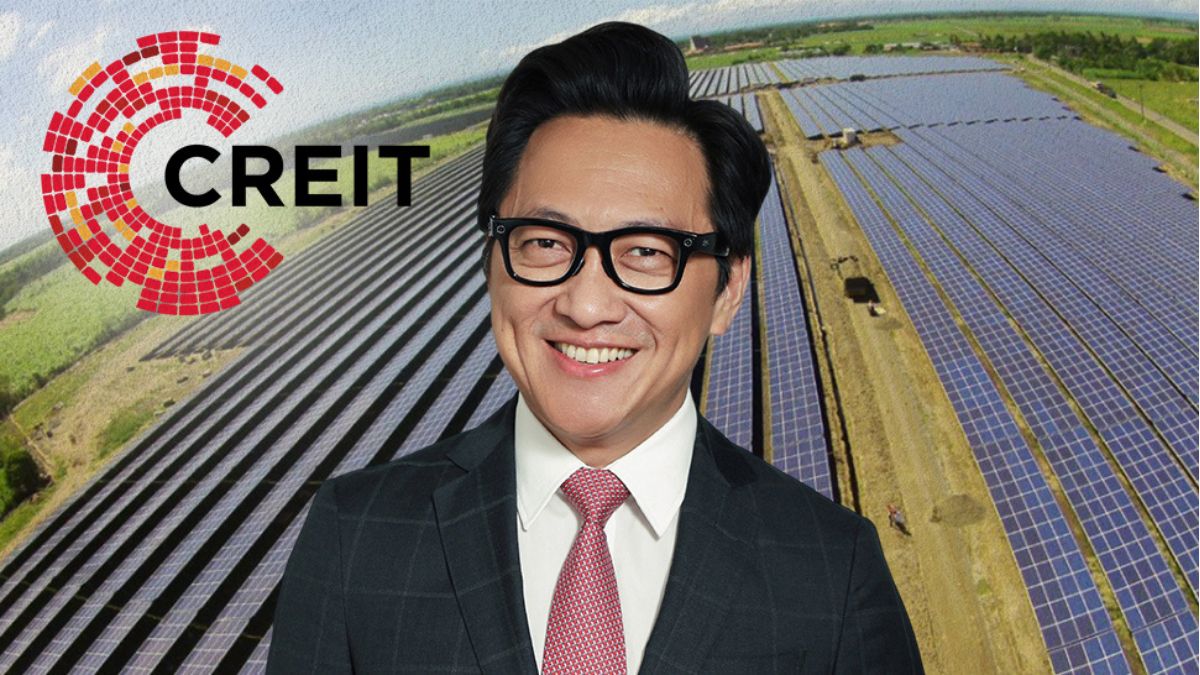
Citicore Energy REIT Corp. (PSE: CREIT) is the country’s first and only renewable energy REIT, and instead of deriving income from leasing out offices or commercial spaces, CREIT earns through long-term land leases tied to solar power plants operated by its sponsor, Citicore Renewable Energy Corporation (CREC).
This model means CREIT is less exposed to the cyclical dynamics of the property sector and more connected to the long-term growth story of renewable energy in the Philippines.
CREIT offers investors a different flavor of REIT exposure: one that provides stable dividends like its peers, but with a foundation tied to the rising demand for clean energy rather than the traditional property cycle.
This distinction could make it less risky than some of the office- or mall-heavy REITs, particularly at a time when the property sector faces structural uncertainties.
Of course, before buying any REIT, it is always important to study the financials of the company. How stable and predictable are the REIT’s cash flows? Why is the REIT’s dividend yield sustainable (or not)? What risks could materially affect the REIT’s future performance?
Here are the five things every investor in the stock market should know about Citicore Energy REIT and how you can profit from it:
ALSO READ
Financial Adviser: 5 Business Lessons Everyone Can Learn from George Go, CEO of Ho-land Hopia
1| Know how a company creates value through its business model
CREIT’s biggest strength lies in the consistency of its revenues which is driven by a business model that is designed for long-term stability. Unlike property-focused REITs that depend on office occupancy rates or mall foot traffic, CREIT generates income primarily through long-term land lease agreements with its sponsor, Citicore Renewable Energy Corporation (PSE: CREC), and its solar project subsidiaries.
These contracts typically span 25 years, renewable, and include fixed annual escalations. This ensures a steady and predictable stream of income regardless of property market fluctuations.
What makes CREIT’s model even more attractive is that it earns not only from fixed rental income, but also from variable lease income. Under its contracts, CREIT is entitled to 50 percent of the incremental gross revenues of the solar plant operators above an agreed base level. This revenue-sharing feature means that when solar farms perform better, whether due to higher generation output or stronger electricity prices, CREIT directly participates in the upside.
In 2022, this variable component contributed P43.9 million which surpassed projections, largely because solar plants sold more power at favorable prices in the Wholesale Electricity Spot Market.
The company’s financial results reflect this stability. In 2023, CREIT’s revenues grew 31 percent year-on-year, reaching P1.80 billion. Last year, CREIT’s revenues increased by five percent to reach P1.89 billion. Nearly half of this amount, or 46 percent came from freehold land leases, while 39 percent was generated from leasehold properties.
The remaining 15 percent was attributable to solar plant–linked revenues. This balanced mix highlights that CREIT’s income streams are diversified across different types of assets within its renewable energy.
This year, CREIT’s first-half 2025 revenues came in at P916.0 million, which slightly declined from P920.8 million in the same period of 2024. The slight decline was due to an accounting adjustment under PFRS 16 in 2024 that extended the lease period of the Lumbangan lots from 21 years to 25 years.
This created a one-time catch-up effect that boosted 2024’s numbers. Excluding this, CREIT’s revenues were steady, which highlighted the resilience of its lease income base.
Importantly, gross profit margins remained exceptionally high at 94 percent, which underscored the low-cost, high-efficiency nature of its business model.
2| Know how dividend growth can drive stock price gains
CREIT’s strong dividend profile is directly supported by its stable and predictable cash flows from long-term land lease agreements. Because revenues are anchored on fixed rental income with built-in escalations and supplemented by variable income tied to solar plant performance, the REIT is able to generate consistent earnings that flow through to shareholders in the form of dividends.
As required under the Philippine REIT Law, CREIT distributes at least 95 percent of its net income as dividends. In the first half of 2025, it reported P688 million in net income, which allowed it to continue declaring quarterly dividends and providing investors with steady yields. This payout pattern has been consistent since listing in 2022.
In 2022, quarterly dividends averaged P0.04 per share, equivalent to an annual yield of about 6.3 percent based on its IPO price of P2.55. By 2023, dividends had increased by 25 percent to an average of P0.05 per share, which lifted yields to roughly 7.3 percent. In 2024, the company maintained its average payout of P0.05 per share, which translated into a 7.1 percent yield at prevailing market prices.
This year, in 2025, payouts increased further to P0.06 dividend declared in April, bringing the year-to-date average to P0.053 per share, a further 6.7 percent increase from the prior year. This steady upward trajectory confirms that CREIT’s business model not only sustains dividends but also supports their gradual growth, which reward investors who take a long-term position in the stock.
As a result of this consistent dividend growth, CREIT has also enjoyed steady stock price appreciation, which reflects the close relationship between reliable cash distributions and investor confidence.
Dividend signaling theory suggests that when companies demonstrate a pattern of stable or rising payouts, markets interpret it as a strong indicator of underlying financial health and long-term sustainability.
CREIT has exemplified this principle since its debut on the Philippine Stock Exchange in February 2022. From an IPO price of P2.55 per share, CREIT’s stock price has climbed to P3.67 today, which represents a 43.9 percent gain on top of steady dividend income. This clearly shows how sustained payout growth has translated into long-term price appreciation.
3| Know how a company turns capital into earnings
ROE measures how efficiently a company converts shareholders’ equity into profits. In CREIT’s case, its ability to generate superior profitability relative to the capital invested reached 31.4 percent in 2024. This far outpaced its peers, with AREIT posting only 8.7 percent and RCR at 20.9 percent.
The driver of this high efficiency lies in CREIT’s unique renewable energy model. Unlike most REITs that depend on the cyclical performance of offices, malls, or commercial spaces, CREIT earns from long-term land leases tied to solar farms. These contracts typically span 20 to 25 years with built-in escalations and are further supported by variable income linked to the performance of the solar plants.
Because CREIT’s costs are minimal, where land has virtually no maintenance expense compared to buildings, nearly all of its revenues flow through to profits, which explains its unusually high margins and exceptional ROE.
For example, in 2024, CREIT generated P1.89 billion in revenues with a 94 percent gross margin, which translated into P1.4 billion in net income. This level of profitability relative to equity invested is what pushes ROE above 30 percent, which sets it apart from property-based REITs where operating costs and vacancies weigh down returns.
4| Know how companies use leverage to grow profits
At 102.4 percent, CREIT’s debt-to-equity ratio is the highest among Philippine REITs, compared to peers that typically carry less than 15 percent. At first glance, this may appear to be excessive leverage. However, a closer review of its balance sheet shows that the risk is controlled and tied directly to expansion.
The borrowings came largely from its P4.5 billion ASEAN Green Bonds issuance, proceeds of which were used to acquire more than 500 hectares of land in Batangas, Pampanga, and Pangasinan for its utility-scale solar projects.
This means leverage is not being used to plug operational gaps but to fund income-generating renewable energy properties that are already underpinned by long-term lease agreements with CREC.
Moreover, CREIT’s lease contracts are long-dated, about 20 to 25 years with fixed annual escalations, which ensure stable and predictable cash flows that align well with debt servicing. Its interest costs are also locked in under the green bond framework, which protects the company from sudden spikes in borrowing costs.
This strategic use of debt not only supports growth but also contributes to CREIT’s exceptionally high return on equity (ROE) of 31.4 percent. By using borrowings to acquire land that immediately translates into contracted lease revenues, CREIT amplifies its profitability relative to equity invested. In this way, the high leverage is a feature of its business model rather than a flaw.
While the headline debt-to-equity ratio looks aggressive on paper, the underlying structure, secured by long-term, renewable-backed rental streams, makes the debt burden both sustainable and strategic.
Rather than being a source of undue risk, it has become one of the factors driving CREIT’s ability to deliver superior returns to shareholders.
5| Know how future growth could fuel higher stock prices
CREIT’s growth prospects are directly tied to the aggressive expansion of its sponsor, CREC. The sponsor has laid out a clear roadmap to complete 1.5 gigawatts (GWDC) of solar power projects by 2025, with an additional 1.5 to 2 GW of capacity in the pipeline toward 2030.
To fund this ambitious buildout, CREC strategically raised fresh capital in March 2024 by selling part of its stake in CREIT to SM Investments Corporation (PSE: SM). The transaction involved the sale of 1.88 billion shares, raising around P5 billion in proceeds earmarked specifically for solar expansion projects nationwide.
By monetizing its holdings in CREIT, CREC secured the resources it needed to accelerate renewable energy development. Every new solar farm developed by CREC requires large tracts of land, and CREIT is positioned to own these sites under 25-year renewable lease contracts.
With CREC’s ambitious 2030 targets on the horizon, CREIT is positioning itself to fully capture the growth by strengthening its capital base and securing future project pipelines. In 2023, the company raised P4.5 billion through ASEAN Green Bonds, which funded the acquisition of over 512 hectares of land in Batangas, Pampanga, and Pangasinan. These sites are tied to roughly 500 MW of upcoming solar projects scheduled to go online between 2025 and 2027.
At the same time, CREIT benefits from a right-of-first-refusal agreement with its sponsor, which guarantees it priority access to CREC’s expanding portfolio of renewable projects. Together, these measures ensure that CREIT will continue to lock in long-term, predictable lease revenues as every new solar project comes online.
Looking ahead, CREC’s goal of 1.5 GW of solar capacity by 2025 and an additional 1.5 to 2 GW by 2030 will require several thousand hectares more, which provide CREIT with a steady runway for new land acquisitions and lease contracts.
Based on current lease rates of roughly P3 million to P5 million per MW annually, CREIT could generate an additional P9 to 15 billion in rental income per year if it captures the full 3 GW pipeline by 2030.
For investors, this means CREIT has the potential to multiply its current P1.9 billion revenue base several times over, which ensures both sustained dividend growth and continued share price appreciation as its sponsor’s renewable footprint expands.
For example, if CREC achieves its target of 3 GW by 2030 and CREIT captures the associated land leases, annual revenues could rise from P1.9 billion today to over P9 billion. Assuming dividends increase in line with revenues, the annual payout could grow from about P0.20 per share to close to P1.00 per share.
Applying the same yield range that investors currently assign to CREIT which is around 5 to 6 percent, the stock could reasonably trade between P6.50 and P7.50 per share in the future.
