
Financial Adviser: 5 Business Lessons Everyone Can Learn From 'Fintech Pioneer' Robertson Chiang, Founder and CEO of Dragonpay

In the dynamic world of entrepreneurship, success stories are not rare but truly remarkable ones that shape industries are few and far between.
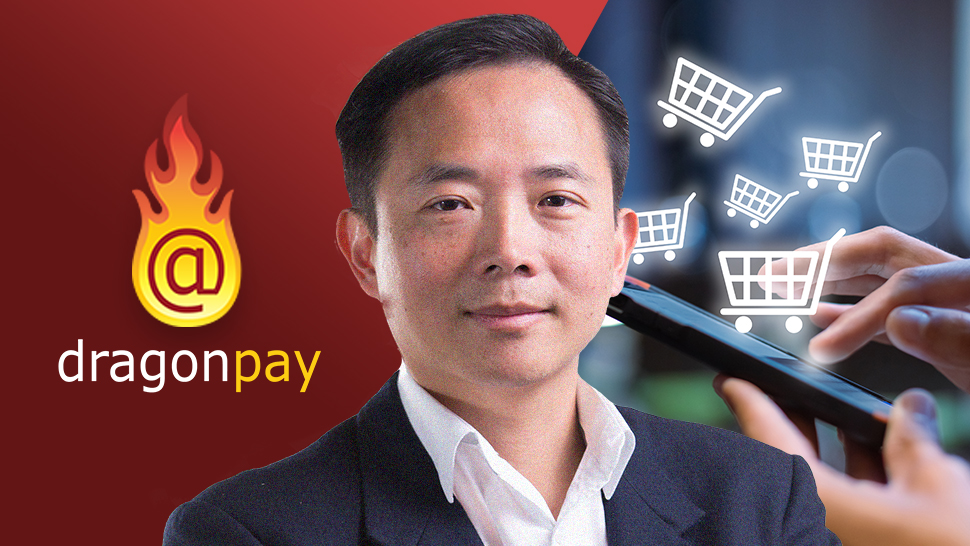
One such inspiring tale is that of Robertson 'Dick' Chiang, the founder of Dragonpay, a pioneering payment solutions provider in the Philippines. Chiang's success story begins in Ateneo, where he completed his Bachelor of Science in Computer Science.
Like many fresh graduates, he initially set his sights on pursuing a career as a programmer. However, fate had other plans for him. His life took a significant turn when he decided to pursue an MBA at Babson College in the United States. During his time there, Chiang discovered a newfound interest in entrepreneurship. The dynamic environment and exposure to business concepts sparked his passion for building something of his own.
Armed with his technical skills and the knowledge acquired during his MBA, Chiang returned to the Philippines and established an Internet Service Provider (ISP) company.
However, a few years later, he realized the opportunity to work with a larger and more established organization while continuing to explore his entrepreneurial aspirations. As a result, he sold his company and worked for Mozcom, which at that time was one of the prominent players in dial-up internet.
While working with Mozcom, Chiang witnessed the rise of e-commerce and its growing potential. It was during this period that he noticed a gap in the market. Many potential customers were hesitant to transact online due to the lack of a secure and accessible payment method. This realization was the spark that led to the inception of Dragonpay.
To address this challenge, Chiang developed a revolutionary program that allowed customers to make transactions with online merchants without relying on credit cards. This innovative system enabled customers to make payments in cash at well-established retail outlets like 7-Eleven or Cebuana Lhuillier, breaking down barriers for the unbanked population.
Initially intended to be a sideline business while working at Mozcom, Dragonpay quickly gained traction and became more successful than Chiang had ever anticipated.
Dragonpay's rise to prominence was rapid and impressive. Within a year of going full-time, the platform experienced an exponential increase in monthly transactions, propelling it into the mainstream and solidifying its position as a reliable and essential payment channel solution.
Fast forward to the present day, and Dragonpay is the largest locally based payment channel in the Philippines. By offering secure and convenient payment solutions, Dragonpay has played a crucial role in the advancement of e-commerce in the Philippines, fostering a thriving online marketplace and empowering both merchants and consumers.
As the digital landscape continues to evolve, Dragonpay's determination to innovate and provide unparalleled services has ensured its place as a true leader in the payment solutions domain.
How did Chiang develop Dragonpay’s unique value proposition that catered to the needs of the unbanked population and set it apart from competitors? What lessons can we learn from Chiang's entrepreneurial journey about the importance of overcoming challenges and obstacles?
Here are the five business lessons everyone can learn from Robertson ‘Dick’ Chiang, founder and CEO of Dragonpay:
ALSO READ
1| Know how to capitalize on emerging business trends
Emerging trends often represent unexplored or underserved markets. By recognizing and acting upon these trends early on, startups can align their products or services with the changing needs and expectations of their target audience, fostering customer loyalty and satisfaction.
Chiang witnessed the booming growth of the internet in the US. This exposure allowed him to recognize the immense potential of the internet as a transformative force in business. He saw the lack of basic internet access in the Philippines as an opportunity to fill a crucial gap in the market.
When the internet landscape evolved with the introduction of DSL, Chiang saw the need to transition once more. He recognized the value of leveraging the already established internet structure and DSL services in homes to push forward with online payments and e-commerce. This foresight allowed him to capitalize on the existing internet infrastructure and increasing connectivity.
“I took computer science in college and after that, I worked for a bank so my first professional work was in the finance industry, pero it was in the computer department; I was in programming,” Chinag says. “After two years of working in the bank, I went to the US to pursue my MBA.
“That two years were a bit pivotal in what would happen next, because that was the time when the internet was just booming. It was just starting in the US during that period. Doon yung nag-start pa lang mag boom yung sina America Online. It was the very early days of dial-up internet and the Philippines, of course, was like three to four years behind.
“So when I was there, I was really exposed to it, and I really got excited kasi I was in the MBA program and the school that I went to, Babson Graduate School of Business, was really focused on entrepreneurship, so I guess fate brought me to the right place at the right time.
“While I was taking my MBA, I had that drive that I really wanted to start a new business when I was done, and it just so happened that the internet was booming at the time. So when I came home, I wanted to do something in the internet. Of course, it was the very, very early days of the internet. The modem back then was only 28K, that was really slow. Very, very slow, so I figured I wanted to do parang consulting work making websites.
“Again, this was 1995, so people really couldn't quite grasp the concept yet, because basic internet access wasn't really there, so we struggled quite a bit trying to convince people to, you know, put up websites and make applications, and then I realized about a year into the venture that we needed something even more basic before people can go to that level.
“We had to provide the Internet access service first because that wasn't existing, so we stepped back a little bit and started offering Internet dial-up service in the early days.
“We kind of grew the business a bit but going towards the late ‘90s the internet business was starting to consolidate with the telcos. Back then, hindi pa uso DSL nun, but with the big boys coming in, we saw that we cannot compete with these big guys because they own the facility, so the only way to compete was to join a bigger player.
“And it just so happened that, at that time Mozcom, which was the very first company to offer dial-up service because there was nothing else, took me in as a professional manager. I started there as VP for technical services.
“So we were doing basic internet business, but again, same story going towards 2000, dahan-dahan na pumapasok yung change in technology. Dial-up was slowly disappearing. DSL started coming in, Sky started offering cable TV na internet.
“We saw the writing on the wall, so we figured we have to transition the business somehow to something else, so we were looking at things that are still related to the internet and one of the things that we happened to bump into almost by accident was online payments.
“We saw that the Internet structure infrastructure was already there. The homes were already getting basic DSL services. Back then it was like 256K, 384K; mabilis na yun. Of course, megabytes pa lang yung pinag-uusapan, pero nakikita na namin na people were starting to get connected na. I thought, ‘Now maybe it's a good time to push e-commerce.’ So we started going into electronic payments.”
2| Know how to adapt to market conditions and innovate
Customer feedback and market insights are invaluable in understanding what consumers truly want. By listening to customer feedback and innovating accordingly, businesses can tailor their products and services to better meet the needs of their target audience.
Chiang initially experimented with online banking, but when he realized the market was not yet ready for it, he shifted his strategy to offer cash payments as an alternative option by collaborating with companies like LBC and Cebuana to facilitate physical cash transactions.
Chiang's ability to pivot from online banking to cash payments and then introduce Dragonpay as an alternative payment aggregator showcased his agility and adaptability in responding to market demands. These pivotal decisions ultimately contributed to the success and growth of his business venture.
“We started dabbling a little bit with payments initially,” he says. “Of course, back then when you say electronic payments, it's really just credit cards. There was no concept of GCash at the time. No e-wallets, nothing, so it was really primarily credit cards that we started with and then I saw that opportunity of, ‘How do people who do not have credit cards become part of this online economy?’
“Because before, probably the credit card penetration would have probably been like three to four percent only in the entire Philippines. Even today, it's still very low, probably about five to seven percent, so how do we bring in the masses into the e-commerce business?
“By sheer coincidence, I bumped into this company in Canada wherein they were facilitating online payments through bank accounts, which really intrigued me. We exchanged a lot of information with them until I figured out how to do it, so at that time, I thought that it was kind of risky and it was really going into a different direction already from where Mozom was, which was still an internet service provider.
“So I sought the permission of the board and asked, 'You know, there's this opportunity that I'm interested in personally pursuing, which is doing online payments for e-commerce that does not involve credit cards but purely alternative means. It's my own personal project, independent of the company, but if there is anything that I can commercialize, I will resell it to Mozcom to make money out of it.' The board gave me a positive signal.
“So I started tinkering around with the idea of online banking, allowing people to use it with a handful of banks. However, I quickly realized that, at that time, it was still in the very early stages, and people were not yet really used to online banking yet. During those times when people used online banking, it was generally only to inquire about their balance. People didn't really have a concept yet of making payments using their bank accounts.
“It was still too early in the cycle, so I experimented with it for a while. By the time I went commercially into production, which was around late 2010, luckily, that was the time when the daily deal sites started booming. This was the time when CashCash Pinoy, Metrodeal, Ensogo, and similar platforms were thriving.
“We tested the market for online payments kasi we wanted to see how people would buy those restaurant deals or spa deals without using credit cards. So, I positioned myself as the alternative payment provider.
“However, about two months into the venture, I quickly realized that people didn't have online banking accounts, and even for those who did, they were not comfortable using online banking for transactions. This prompted me to make another pivot.
“I figured that the market was still really cash-based, so I took a step back and started offering cash payments to allow people to physically go to a bank, hand over their cash to the teller, and make their payments.
“I began working with companies like LBC and started talking with Cebuana. At that time, of course they were already doing it for billers like Meralco, Manila Water, but they did not have the concept of Dragonpay that acts as an intermediary between them and e-commerce merchants.
“We were effectively aggregating payments. We were collecting payments from all sources, and then we were the ones that integrate with the merchants.”
3| Know how to develop an unparalleled value proposition
In a crowded marketplace, a unique value proposition enables a business to differentiate itself from competitors. It communicates what sets the product or service apart, addressing customer pain points and presenting a compelling reason to choose it over alternatives.
Chiang created a unique value proposition for Dragonpay by offering a disruptive payment solution that departed from the traditional credit card payment model. He emphasized the ease of using Dragonpay's system for merchants.
Instead of dealing with multiple payment methods, merchants could integrate with Dragonpay, which handled all the interactions with customers. This simplified the payment process, allowing merchants to focus on their core business.
Chiang highlighted the cost advantage of using Dragonpay over credit cards, where fixed fees were charged instead of a percentage-based admin fee. He focused on providing an inclusive, simplified, and cost-effective payment solution to merchants, appealing to businesses of all sizes and gaining traction through word-of-mouth marketing and strategic partnerships with well-known brands.
“Our value proposition to the merchant was essentially, you know, ‘Hey, you can accept payments from people from all walks of life. They don't have a card? Fine, they can pay cash by going to M.Lhuillier, so you just talk to our system. You don't have to talk to everybody.’ We'll handle all the interactions then we just take our cut for every transaction for a fixed fee, which was also departure at the time from the standard way that merchants used to pay because it was mainly credit cards and credit cards were always based on the percentage.
“In those days, it was common to see a merchant discount rate ranging from three to four percent. However, when Dragonpay came in, we offered a fixed fee model, which ranged from only P10 to P20, depending on the source of the payment.
“So, if the payment comes in through online banking, we charge a flat P10. It doesn't matter if you're selling a coupon worth P100 or P100,000; if it's paid through online banking, we will charge you P10.
“So, it was a bit of a departure from the way people were thinking back then. It worked very well for businesses, especially those that required larger payments, such as school tuitions or business-to-business transactions where the amounts were substantial.
“That was the initial market we got into, and fortunately, the daily deal market experienced a significant boom for at least three years, giving us a very good run.
“We didn't spend anything on advertising because everybody was buying from Ensogo, CashCash, and Metrodeal, and they kept seeing Dragonpay appear whenever they checked out. As a result, we benefited greatly from word-of-mouth marketing. We never engaged in any formal marketing, and we didn't spend anything on marketing initiatives.
“And then, I guess, every time a new merchant would enter the market, they would have already seen us, and they would just reach out to us and contact us. That's how we grew in the early days.
“And then we started attracting bigger and more prominent merchants knocking on our doors, such as Ayala Land and even airlines. Even before AirAsia Philippines was established, the AirAsia Malaysia group had already reached out to us, and we were already processing payments for them.
“Actually, if you try paying through Dragonpay versus using credit cards, you will notice that the final checkout prices differ. If you use a credit card, mas malaki yung admin fee kasi they're paying the card company a percentage eh, whereas in Dragonpay, they pay only a fixed fee and the amount could be quite significant.”
4| Know how to drive sustainable business growth
Organic growth allows a business to grow steadily, aligning with its available resources, capabilities, and market demand. It reduces the risk of rapid expansion that might lead to financial strain or operational inefficiencies.
Chiang grew Dragonpay organically through a self-sustaining approach. From the outset, he funded the business using his personal resources, avoiding reliance on external seed funding. Initially, he operated as a one-person team, taking on roles as a programmer, customer service representative, and salesperson. This limited staffing helped control overhead costs and maintain profitability.
Chiang followed a sustainable growth strategy, focusing on steady revenue generation from a large volume of transactions with smaller profit margins. By delivering excellent service and gradually expanding the team as the business grew, Chiang built trust and a solid reputation in the market.
“Unlike typical startup businesses, especially in the fintech world, where they go for initial seed funding from venture capitalists and start spending like crazy, hoping that one day, two or three years later, they would earn money, back then, it was entirely different as we had to grow organically.
“So, since day one, everything was funded basically from my personal account. Initially, I was the only employee for almost the first year, and then I hired someone to work from home for me, making us the only two employees.
“Everything was very organic. We never spent more than what we earned. Also, it's a typical Chinese-style of business, you know, like Henry Sy's approach, where you make money from a lot of volume but with a small profit margin per volume. That's how we grew.
“When we earned around P10,000, at that time, I was so happy. Practically, we had zero overhead, and it just kept on growing, growing. And then, again, it was always just from whatever income we had; we set aside some amount to add more people. We never spent more than what we earned. That's why I'm saying we've been profitable since the start.
“I had one staff na all around na, customer service slash operations kasi I was the programmer. Our technical department was just mainly me for a very long time, because it’s my passion. I love coding. I prefer coding than talking to people, tapos ako rin taga-benta.
“I started the brand from scratch. Dragonpay was just starting. Very nascent pa yung industry for e-commerce. Nobody has heard of us and then they just started seeing our name appear in the checkout page of Metro Deal and CashCashPinoy and awareness started to happen lang.
“The biggest challenge at that time was convincing companies to trust in us. I distinctly remember Ayala Land asked me, ‘Why should I trust you with our money?’ And I've always believed in the saying, ‘Luck is the product of being prepared.’ Even if you have all the luck in the world and everything just drops in front of you but you're not ready to take it, then it’s gone. So, it's about being at the right place at the right time, but also being prepared for it. I feel that the series of events that happened in our timeline, parang we were just right there at the right place.
“AirAsia came knocking at our door, and the person I was talking to was so easy to deal with. They didn't ask a lot of questions, and then they signed up. I brought that name to the next guy and said, ‘Hey, an airline actually signed up with us, and a Japanese company is putting money with us.’
“So, I started building that story and kept adding on. By the time we got to Ayala Land, and then when we went to the next client, I said, ‘Hey, Ayala Land signed up with us,’ and you keep name-dropping these big names until you reach a point where you become a household name.”
5| Know how to embrace your unique path to success
Embracing your individual journey allows you to align your life and career with your true passions, interests, and strengths. It enables you to carve a fulfilling path that resonates with your core values and aspirations.
Chiang's path towards entrepreneurship was a transformative process driven by personal revelations and exposure to entrepreneurial experiences. His journey of self-discovery changed his mindset dramatically, altering his course of action, and potentially steering him away from a corporate career.
Chiang's realization of his true calling, which led him to embrace the entrepreneurial path, has shaped his life. Now, he advocates for the importance of following one's own true calling, whether it lies in entrepreneurship or other fulfilling professions.
“Before that, I never really thought of myself as becoming an entrepreneur because my father has worked for the same company since he was a working student until he passed away. He never moved company, so yung mentality of working as an employee parang alien yung concept sa amin, yung starting on my own.
“So all the time, I was thinking, ‘Oh, I'll go to the corporate world,’ and I started working with Citibank. Maybe someday, sana maabot ko yung mataas na position, starting from a computer analyst role. That was my mode of thinking all along.
“Then, everything changed when I went to Babson, and during that full two-year period, I was constantly exposed to entrepreneurs. They would come to campus and talk about themselves, what they do. You know, you get inspired, and that's how it is. So one thing led to another.
“By the time I graduated in 1995, I was dead set. I wanted to be an entrepreneur; this was it. No more turning back. It completely changed my perspective. Maybe if I went to a different school, I might have ended differently. I might not have become an entrepreneur. Maybe I would have ended up working in a corporate world.
“My family background is different from my wife's. My dad spent his whole life working for someone else; he was not an entrepreneur. In contrast, my wife's family consists of all entrepreneurs. For her, working for someone else is not an option, and she strongly encourages our kids to become their own bosses.
“For me, the life of an entrepreneur is not for everyone. It works for certain personalities, but if it doesn't fit with your character, I tell my children that I wouldn't look at you any less; it may be just because it's not your personality.
“In the same way, when I was younger, I never envisioned myself to be an entrepreneur. So, there's nothing wrong if you want to pursue a professional career; we will fully support you. If you aspire to become a doctor, go ahead.”
Henry Ong, RFP, is an entrepreneur, financial planning advocate and business advisor. Email Henry for business advice hong@financialadviser.ph or follow him on Twitter @henryong888
