

Financial Adviser: 5 Business Lessons Everyone Can Learn from Dioceldo Sy, founder and CEO of Ever Bilena Cosmetics

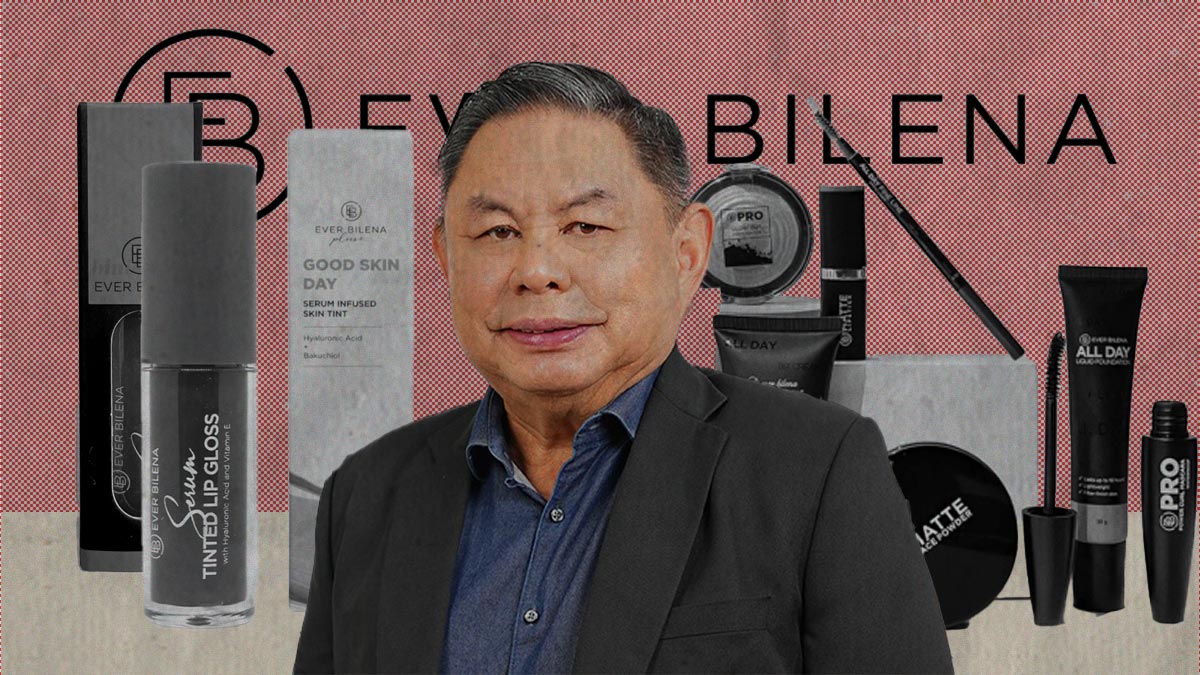
From a young salesman in Binondo to the founder of a multi-billion peso cosmetics empire, Dioceldo Sy's journey is a true example of perseverance and wise decision-making.
His story serves as a powerful inspiration for aspiring entrepreneurs and shows that with determination, market awareness, and adaptability, success remains possible—even in the face of challenges and uncertainty.
Growing up in a modest household, Sy was no stranger to hard work. At 18, Sy joined his grandfather’s cosmetics business in Binondo where he gained firsthand experience in buying and selling, while attending night classes at the Philippine School of Business Administration (PSBA) Manila.
In 1980, after his grandfather’s cosmetics business shut down, Sy faced a difficult situation. Unable to continue college, he took a job as an “ahente,” selling women’s clothing and underwear in Manila’s commercial hub, Divisoria.
After two years, Sy saw the opportunity of selling a product he already knew well: cosmetics. This decision would eventually lead to the birth of Ever Bilena, one of the biggest players in the Philippine beauty industry.
Using his savings from his earnings as a trader, Sy officially established Ever Bilena in 1983. He began by importing nail polish products in bulk and selling them to clients in Divisoria. Though his entry into the cosmetics industry came at a time of significant economic challenges following the assassination of Ninoy Aquino, Sy’s business thrived and quickly gained traction.
With its initial success, Sy expanded Ever Bilena’s product line, introducing makeup kits, lipsticks, and foundations to meet the growing demand for beauty products. Within just two years, his cosmetics business grew fivefold.
Today, Ever Bilena is a multi-billion peso company with an estimated 20 percent market share in the cosmetics industry. It remains one of the most iconic cosmetic brands in the country.
How did Sy manage to grow Ever Bilena from a small nail polish business into one of the leading cosmetic brands in the Philippines? What strategic decisions did Sy make to keep Ever Bilena competitive and relevant in today’s beauty industry?
Here are the five business lessons every entrepreneur can learn from Dioceldo Sy, founder and CEO of Ever Bilena Cosmetics:
ALSO READ
Financial Adviser: 5 Business Lessons Everyone Can Learn from the Founders of Baliwag Lechon Manok
1| Know how to learn the trade before launching a business
Many businesses fail due to avoidable mistakes that stem from a lack of practical knowledge. By working within the industry first, entrepreneurs can observe challenges, learn from the experiences of others, and develop strategies to handle common problems.
This hands-on learning process prepares them for the realities of business ownership that increases their chances of success. Additionally, working in the industry provides valuable networking opportunities.
Establishing relationships with suppliers, customers, and potential partners before launching a business can give new entrepreneurs a significant advantage. These connections can lead to better supplier deals, early customer support, and even mentorship from industry veterans.
Building a strong network helps ensure that when an entrepreneur finally starts their business, they already have a support system in place. This support system can provide valuable advice, resources, and opportunities that can help the business grow and overcome initial challenges.
Sy did not rush into business blindly; he first learned the trade through years of hands-on experience. Born into a family rooted in the cosmetics industry, he grew up surrounded by the business his grandfather built.
His grandfather, a pioneer in the pomade business, dominated the market with little competition. However, when his grandfather passed away in 1969, the responsibility of running the business fell to his uncle who lacked formal training.
At 18, Sy entered the workforce and helped his uncle. He started from the bottom and took on various roles. He handled purchasing, worked in sales, and became involved in different aspects of operations.
This exposure allowed him to see how the business functioned from within, which prepared him with practical knowledge that would later prove invaluable.
By 1980, when financial struggles forced the family business to shut down, Sy had to carve out his own path. Instead of giving up, he turned to trading women’s underwear in Divisoria. While this venture provided an income, he soon realized the unpredictability of buying and selling goods due to unstable supply chains and fluctuating prices. This realization led him back to the industry he knew best—cosmetics.
By first mastering the trade, Sy developed the knowledge, skills, and resilience needed to create a strong foundation for Ever Bilena. His journey proves that understanding the industry from the ground up is important before launching a business.
Through experience, persistence, and strategic thinking, he transformed challenges into opportunities and built a legacy that continues to thrive.
“I was born in the family of cosmetics, because my angkong is a pioneer,” Sy says. “When he came in 1938, before the war, he started a pomade business. I remember my angkong, sabi nya yung piso ko na puhunan nabebenta ko ng sampung piso kasi walang kalaban eh. Yan yung pomade business nya.
“Hindi ko na alam ang brand, pero naalala ko, Tancho yung kalaban. Sabi ko, ‘Angkong pano ka mag-deliver?’ Sabi nya, ‘I used a bicycle.’ Nagde-deliver siya mga 12 dozen. Hindi ko na alam kung magkano yun, pero naalala ko yung margin niya, 10 times na mabilis.
“Tapos, nung 1969, namatay siya at 58 years old kasi nasunugan kami. Mga 80 percent nasunog siya, ako naman 11 years old nun, bata pa. Uncle ko yung pumasok, siya nag-handle ng business, pero high school graduate lang siya, syempre walang training eh. Yung pumasok na yung uncle ko, kompleto na yung Angkong ko ng mga products, hindi lang pomade. Meron na siyang lipstick, powder. Nag-expand na. He was number one na may 70 to 80 percent ng market share.
“When my uncle passed away in 1969, I remember he was already (selling) sabon, yung bath soap, kasi at that time, lahat ng sabon natin importe. Wala pa kasi gumagawa ng sabon and shampoo noon, so sabi ko, pag ginawa nya yun, pag hindi sya namatay, baka mas malakas pa siya, kasi ang lakas na nya sa mga cosmetics saka mga pomade.
“In 1976, when I was 18 years old, pumasok ako, doon ako nag-work. I started as a bank messenger, then I just learned everything—all the aspects—kasi dati naman walang job description. Basta kahit ano ang utusin sa’yo, ginagawa ko lahat.
“Pero within four years, nung 1980, nagsara yung business kasi ang daming utang. But I knew the ins and outs na of the business kasi from messenger, nag-purchasing ako, nag-ahente ako. Nag-jack-of-all-trades ako kaya I knew how the business was running.
“So I had to do my own thing. Kung ano-ano binebenta ko—bra, bag, T-shirt, mga stocking—kasi nagbebenta ako sa Divisoria. Madami akong sideline nun. It's okay naman, kaya lang hindi siya sustainable kasi kung walang supply, wala rin ako eh. Minsan pag may supply na madami, bagsak naman ang presyo. Minsan I need to keep the inventory, hihintayin ko munang tumaas, eh walang naman transaction, so walang income.
“Then after two years, I said, why should I sell all these things? So I realized I should go back to the industry that I know, which is cosmetics. I went to the consul office of Taiwan. I forgot the name of the office, sa may Intramuros yun. Nag-research ako ng mga 20 to 30 companies. Nagpadala ako ng sulat kasi wala namang fax noon, di ba? And then hinintay ko lang na may mag-reply. May isang nag-reply, ito nga si Ever Bilena, tapos sabi nya, ‘We're looking also for a distributor.’ So, ako naman sabi ko, nag-send na ako ng maraming letters looking for suppliers, wala naman nagre-reply, tapos siya rin ganun din, they were looking for a distributor. So parang nagtagpo lang kami.
“At that time, ang hot item was nail polish. Sabi ko I need nail polish. Sabi nya, ‘We do have nail polish.’ Long distance call pa nun. Tapos lumipad ako. Yun ang first trip ko to Taiwan. Nag-usap kami tapos, so pwedeng LC. Eh LC nun mabigat din kasi 25 percent deposit dati. Yung puhunan ko kinuha ko sa savings ko na naipon from 1976 to 1983. Meron ako naipon mga P150,000. Yan ang lahat ng pera ko, all-in ako. Lahat ng savings ko tinaya ko. So, I started with nail polish. That's how I began.”
2| Know how to find market gaps and turn them into opportunities
When a business finds an underserved market or a product deficiency, it can develop innovative solutions that attract customers and drive demand. This gives the business a strong position, few competitors to deal with, better control over pricing and higher profits.
Capitalizing on market gaps also promote long-term business growth. By addressing specific needs that others overlook, a company builds customer loyalty and trust, which can lead to repeat business and brand recognition.
In 1983, when most businesses hesitated due to political instability and capital flight, Sy saw an opportunity. Instead of following the trend of leaving, he took the bold risk of entering the market by filling the vacuum left by others. He did not wait for perfect conditions but made the most of what was available to build something from scratch.
Sy recognized Caronia’s dominance in the nail polish market and strategically positioned his product as a similar alternative at a lower price. Understanding that price sensitivity played a major role in consumer choices, he sought ways to increase profits while keeping prices low by introducing repacking, a move that transformed his business.
Sy’s innovation in cost management extended beyond nail polish. Drawing from his grandfather’s expansion into cosmetics, he expanded his product line to include eyeliner, lipstick, and other beauty products. Instead of relying solely on what was available, he worked with his suppliers to develop customized items that allowed his business to adapt to market needs.
Sy's ability to anticipate demand, reduce costs, and build strong relationships allowed him to sustain his competitive advantage. He ensured that his products remained at least 20 percent more affordable than those of competitors, which made Ever Bilena the preferred choice for many retailers.
“When I started in 1983, di ba nung August nun, binaril si Ninoy,” he says. “It created capital flight. Everyone was leaving. Ako lang pumasok. Reverse ako kasi nagkaron ng vacuum ang market eh, so naging opportunity sa akin.
“We started, four lang kami: ako, my sister, driver, and pahinante. Yung driver ko siya taga bukas. Tapos, we used my auntie’s place muna, kapiraso lang saka may isang table lang. After two years sabi ko, hindi na ko pwede rito. Nahihiya na ko sa Auntie ko kasi sumisikip na eh. So, nung 1984-85, I rented a place from a friend. It's an old haunted house in Felix Huertas. I had mga eight people na at that time, dun na sila tumira.
“At that time, I just used the brand of the supplier. Kasi in Taiwan, the Chinese words ‘Bilena’ means ‘beautiful lady,’ so parang forever beautiful, Ever Bilena. Tapos pagdating dito, sa market natin, naging ‘Bili Na!’ Kaya ang ganda ng diba ng istorya.
“I was selling in Divisoria kasi kilala ko naman lahat mga kliyente ko. At that time, ang number one sa nail polish was Caronia. Sikat yun dati, so ang ginawa ko, I sold the same product at 20 to 30 percent cheaper with similar bottles pero Taiwan. Ako lang ang imported nun.
“Syempre, dati nagta-trabaho pa ako sa uncle ko, kilala ko lahat ng wholesalers. Alam ko na yung laro. Syempre mga tindera kaibigan ko, mga owner kaibigan ko. Tapos sabi ko give me orders kahit konti lang, lahat naman ng mga stores binigyan ko. Tapos, nag-click.
“Syempre tayo lang ang imported. Yan ang tinuro ko sa mga tindera. Tapos nagpagawa ako ng t-shirts, binigyan ko. Yung mga tindera dati, ganon lang naman nung araw yan eh, so ang lakas ng benta ko.
“Nag-import ako from Taiwan nung umpisa, okay naman. I earned around five to six percent ng kung ano-ano tapos nag-improve to between 30 to 40 percent ang margin ko, so maganda na, pero I needed to grow the business. So I started yung repacking. I imported the empty containers and the raw materials separately, then I just filled them here. So yun ang ginawa ko, nag-click din. Lalong nag-click kasi gumanda margin ko eh— from 30 to 40 percent, naging 100 percent margin.
“Yung Ever Bilena sa Taiwan, nail polish lang sya, pero ako nag-expand ng all other products, kasi linya ko yan, nakita ko sa angkong ko. Alam ko eh, so when I was inventing the new things like eye liner, lipstick, pinapagawa ko lagi sa supplier ko. Talagang magaling sila sa production. They expanded with me and natuto sila sa anong gusto ko, so meron na rin sila. After the repacking of Ever Bilena nail polish, everything was repacked na, like yung lipstick ko repacked.
“Tapos nung pumasok yung 1986, after the EDSA revolution, doon nag-boom. Kasi bumalik na ulit yung mga investors. Yung benta ko ng 1985 increased by 3.5 times in 1986. At that time, medyo marami na akong products. Meron ng eyeliner, may lipstick, may eye shadow, may mga makeup set na, eye shadow set. Siguro mga meron nako mga 15 SKUs, so medyo dumami na. Lahat manufatured in Taiwan tapos repacked dito. Everything was imported and mas mura ako ng 20 percent, kaya akin lahat yung market. Eh wala namang mga online-online nun eh.
“Lahat binenta ko lang sa Divisoria. Isang container ko Divisoria lang, ubos lahat. Ang bilis. It was easy to sell, kaya nag-expand ako ng nag-expand.”
3| Know how to use customer feedback to develop winning products
When companies take the time to gather customer feedback, they gain insights into preferences, pain points, and expectations. This knowledge helps them develop products that resonate with the target audience and increase the chances of strong demand and customer loyalty.
Listening to customers also allows businesses to stay ahead of market trends. Consumer preferences change over time, and businesses that fail to adapt risk losing relevance. By continuously engaging with customers and analyzing their feedback, businesses can refine existing products and remain competitive.
Sy built his business by understanding consumer preferences and adapting to market trends. He did not rely on assumptions but actively sought feedback, tested ideas, and adjusted his product offerings based on real customer insights.
Sy knew that the success of a cosmetics brand depended on offering products that consumers truly wanted. Instead of guessing, he directly asked women about their preferences. He used an unconventional but effective approach—seeking feedback from his girlfriends.
By letting them test lipsticks and choose preferred shades from a dozen samples, he ensured that his products matched real consumer tastes. This approach reflected his market awareness and customer-centric mindset—two critical traits that helped him create products that resonated with buyers.
Beyond personal feedback, he also observed trends in pop culture and media. This method gave him insights into mainstream beauty trends, which helped him align his products with what women aspired to wear. Sy’s resourcefulness in studying consumer behavior outside traditional market research channels gave him an edge over competitors.
As the market evolved, Sy recognized that consumer behavior had shifted, especially among younger generations. He noted that past strategies of copying premium brands and offering cheaper alternatives were no longer effective.
Sy understood that to stay relevant, Ever Bilena had to create fresh and exciting products rather than rely on past successes. His strategic thinking enabled him to continuously introduce new products while phasing out those that no longer appealed to consumers.
This focus on continuous innovation helped him maintain Ever Bilena’s dominance. Instead of clinging to bestsellers, he understood that product life cycles had shortened.
Customers no longer remained loyal to a single product for years; they quickly moved on to the next trend. His ability to adapt and refresh his offerings allowed Ever Bilena to remain relevant in an industry where consumer tastes changed rapidly.
“When I was starting in business, I was only 20-plus years old, dami kong girlfriend,” Sy says. “Nakaka four girlfriends ako dati sabay-sabay. Dun ako nagtatanong. There are two things. Number one, I ask from the girlfriends for feedback like, ‘Itong lipstick, testing mo nga. Anong kulay gusto mo?’ Gusto ko ganon, tapos dala ko isang dosena. I would ask them, ‘Anong kulay gusto mo?’
“Tapos minsan may eye shadow, meron akong color chart, siguro mga 40 na colors yun. ‘Anong gusto mong kombinasyon? Ito ba? Ito?’ Tapos tinitignan ko kung pare-pareho. Tinatanong ko lagi sa mga girlfriends ko. Uso ba yan? Eto gusto mo ba ito? Hindi maganda yan, ito gusto ko, ito. I would ask about packaging, mga ganun.
“At saka yung sa TV dati, pinapanood ko si Vilma Santos or Alma Moreno yung mga eye shadow nila, I would check kung anong kulay. Doon ako kumukuha. Inaaral ko, kaya akala nila bakla ako. Eh hindi naman.
“Because in this market now, you cannot stop coming out with new products. Otherwise, lalangawin ka. You have to keep launching new products. Unlike before, when I would just copy higher-priced products and undercut them. Now, that won’t work anymore. No one will buy. You have to create something different. Nung araw, I copied 80 percent, but now, the market doesn’t want that anymore. Iba na yung way of thinking nila.
“We take a look at the data. Very important sa akin ang data. Tapos yung how to phase out products. Kunyari you produce 10 new items, and after six months nasaan sya? So ngayon sa sampu, maybe 80 percent tanggal eh. Because this market now, you cannot stop coming out with new products. Otherwise, lalangawin ka. You have to keep launching new products. Unlike before, when I would just copy other higher price product and undercut them. Hindi na pwede ngayon. No one will buy. You have to create something different. Nung araw, kinokopya ko 80 percent. Pero yung market ngayon, ayaw na.
“Ayaw ng mga bata ngayon. Ayaw nila na copycat ka. Iba na yung mindset ng market now. If your salary is P20,000, will you spend P15,000 for a concert ticket? They’re doing it. Tayo nung araw, hanggang 10 percent lang. Saka concert natin dati Folk Arts lang eh, di ba? P800 or P1,000 pesos was already expensive. Hanggang dun lang tayo. Eh sweldo ko P10,000, so 10 percent of salary lang. Now, they’re spending 75 percent of their salary. Philippine Arena, kahit nakatayo lang, they still spend. Iba na yung mindset nila.
“You have to create and innovate. What’s funny is that before, when we came out with this product, walang pakialam sa ingredients, basta gusto mo, kunin mo na. Saka tayo, we don’t want to change. We’ve had a relationship with the product for 10 years, and when it disappears, we get mad—'Nasaan na yung product?' Oh di ba? Nawala.
“Now, when a product comes out and sells well, they don’t go back to it. They don’t want it anymore, at most, just twice. Product life cycle is just less than a year. Maiksi. Masyadong maiksi. Kasi attention span nila ang iksi rin eh.
“During my time, it was Ever Bilena and Careline. Careline was a second brand. Ang strategy ng Careline was to prevent the cheaper brands from coming in. Kasi with Ever Bilena, binabagsak ko ang presyo para tamaan yung big brands, so when they started to fade, I raised the price point. Para hindi pumasok yung mga katulad kong bago dati, ito yung pangtapat ko—Careline. Careline ang pangharang.
“Then, when my daughter joined the company, she said, ‘Dad, don’t do that. There has to be a clear differentiation between the brands. Each must have unique personalities that reflect their core values.' That became the new marketing strategy. Tapos yung Blackwater, mga pabango, cologne, panlalaki naman, kasi gusto ko ng basketball. Eh kasi hindi naman pwede Ever Bilena sa PBA, kaya Blackwater.
“Basketball player ako dati. Idol ko sila Go Tao (Team Manager of Great Taste) dati, pero I never thought I could have a team. I love to play. My dream was to be a PBA player nung high school. Tapos pagdating ng college, hindi ako pwedeng mag-basketball kasi I had to go to night school and work. Nobody was hiring me to play basketball, so wala akong magawa. I had to work during the day and study at night.”
4| Know how to transition from hands-on management to professional leadership
As a company expands, relying solely on hands-on management becomes unsustainable. By building a strong team and implementing systems, businesses can scale effectively without losing control.
One major advantage of professionalization is improved efficiency and productivity. When a business operates with clear roles, responsibilities, and systems in place, decision-making becomes faster, operations run more smoothly, and errors decrease.
Instead of relying on the business owner for every decision, trained professionals can handle different areas such as sales, marketing, finance, and logistics. This allows the company to function effectively even in the owner’s absence.
Professionalizing also attracts better talent and promotes innovation. High-caliber employees prefer structured companies with clear career paths, defined roles, and efficient workflows. When a business operates professionally, it becomes more appealing to experienced professionals who bring valuable insights and expertise. These skilled employees help the company stay ahead of competitors.
Sy's transition to professional management played an important role in the growth and success of his company. Early on, he was heavily involved in every aspect of the business. However, as the business expanded, Sy realized that the rapid growth he had experienced couldn’t continue without a more structured approach.
When growth slowed in the late 90s, Sy acknowledged the need for external expertise. He enlisted a consultant from a large beauty product company to help him develop a more professional approach. The consultant emphasized the importance of building a team.
This advice led Sy to start forming a dedicated team, as he understood that professional management across various departments—such as sales, marketing, and finance—was important for sustained growth. His open-mindedness and humility allowed him to seek help and accept that expert guidance was necessary to scale up.
Over the next few years, Sy worked hard to replace and recruit the right people, and by 2005, his team was complete. This transition also allowed Sy to focus on higher-level decision-making while delegating the operational tasks to his capable team. The move to professionalize the company also meant that Sy no longer had to be hands-on in daily activities.
The professionalization of the business helped Sy’s company move beyond its early-stage growth and allowed it to thrive in the competitive market. His ability to recognize when he needed help and invest in people proved invaluable.
“When my company was already growing, I used the wisdom of Mr. John Gokongwei and Mr. Henry Sy,” he says. “When you're number one, they will be shooting at you. And then, do not stop—you keep on pushing. Before you know it, you're ahead of everybody.
“So yung una is you keep on pushing, keep on pushing, before you know it, you’ll be ahead of everybody, which happened to me because I kept on investing. All-in ako ng all-in nung una. It was only in 1989 when I got married. My wife told me, ‘You should not invest everything. You need to save some money so you have funds to invest again.’ Kasi nung nag-asawa na ako, kailangan may konting insurance ka na. When you make money, imbes na 100 percent, 80 percent lang i-invest mo, yung 20 percent itago mo.
“Kasi dati yung nag-o-all-in ako, nagfo-fold eh. Tumutupi, mabilis tumaas pero nung sumagad ako, dun ko naramdaman yung liquidity. Yung mga early ‘90s, dun ko na-feel. Syempre yung nag slow down na, pag malaki na yung base ng sales mo, ang hirap na lumaki. Kasi dati exponential growth eh, so nung lumaki na, nag-stagnant na.
“During the late ‘90s, I told my brother, kasi taga-SGV sya, let’s look for a consultant. We got a sales consultant from a big beauty product company, so nag-usap kami. Sabi nya, ‘Boss, ganito yan. Kung ako si Michael Jordan, I cannot win a championship for you. I need a team—sales, ako sa sales,’ sabi nya. ‘Marketing, finance, all departments dapat may team tayo, kasi we have to work together.
“So it took me three to four years to form the team kasi we needed to find and replace people. Before 2005, nabuo ko na yung team. By 2010, yung sales namin increased five times, then tuloy tuloy na. Nag-professionalize na ako. Itong team ko, we have now been together for over 20 years na, kasi kabisado na eh.
“Yung na-professionalize, di na ako babad. Dati yung brother ko, sya mismo magpalabas ng sasakyan eh. Loading sya, so talagang hands-on kami lahat dati. Ako lang dati nag-bibiyahe. Ngayon pag byahe ko, ang dami na, apat, lima na.
“Syempre, medyo magastos pag professionalized, pero I remember what Mr. John Gokongwei told me: ‘Don't be afraid of hiring good people and expensive people because you learn from them, and they learn from us.’ So dun ko nakuha yan yung professionalize and get the good people.
“Start delegating, so that's what we are doing. Nung una, medyo nagtampo ang brother ko. Sabi niya, ‘Eh mas mataas pa ang sweldo niya sa akin?’ So nangyari nga, tapos sabi ko, ‘Gusto mo ikaw na lang mag-sales?’ ‘Ay, hindi ko kaya yun,’ kasi we got someone from a multinational company. Nagka-system kami—like how can you support the sales? Start with the product. So for the product, kailangan ng marketing, product development, quality, and logistics, kaya naging mas maayos na.”
5| Know how to learn from successful entrepreneurs and apply their wisdom
Successful entrepreneurs have often made mistakes and learned valuable lessons along the way. By studying their experiences, new entrepreneurs can avoid common pitfalls and reduce the risk of failure.
Learning from successful entrepreneurs provides a sense of direction and clarity. Knowing that others have overcome similar challenges gives new business owners confidence and a sense of reassurance that they can succeed too.
Sy learned invaluable lessons from his encounter with Henry Sy, which deeply influenced his entrepreneurial journey and contributed to his later success. The meeting, which happened when Sy was just 20 years old and still in college, marked a significant moment in his life.
One of the most important lessons Sy learned from Henry Sy was the ability to identify and seize opportunities. He understood that success in business, much like the eagle, required the ability to spot opportunities quickly and take action before others did. This lesson helped Sy to stay proactive and alert in identifying potential market gaps and opportunities throughout his career.
By learning to recognize opportunities as they arose, Sy developed a sharp entrepreneurial vision that helped him stay ahead of the competition and grow his business. His willingness to act on opportunities without hesitation enabled him to stay competitive in a fast-moving industry.
Another critical lesson from Henry Sy was the importance of surrounding yourself with the right people. Sy noticed that Henry Sy had three secretaries to handle appointments, which seemed excessive to him at first. However, Henry Sy explained that the reason was simple: there were too many people wanting his time, and only the important ones were allowed through.
This taught Sy the value of delegation. He realized that, as his business grew, he would need to focus on what mattered most and delegate other tasks to trusted people.
Sy also learned from Henry Sy that it's crucial not to “bet everything” at once and to start small. He was advised not to aim too big in the beginning but to focus on small steps and learn from mistakes along the way.
Henry Sy shared the principle of earning “one peso from one million people” rather than trying to make a large amount from a single person. This lesson helped Sy take small steps, be patient, and gradually scale his business.
His early focus on mass-market products, rather than trying to cater only to high-end consumers, was a direct result of this advice. Patience and humility were key values that helped Sy avoid taking unnecessary risks and allowed his business to grow steadily over time.
“When I was in college, I studied in PSBA but I dropped out,” Sy says. “It was because I met si Henry Sy. Siya yung nagbuyo sa akin. It was 1980, I was at the Makati Department Store, yung SM Makati, Shoemart. Nakita ko si Henry Sy, naka-suit, T-shirt lang, sabi ko kilala ko ito ah. I just greeted, hi, hello, nag-usap kami, kwento-kwento, tapos sabi nya ‘What are you doing?, sabi ko ‘Nothing.’ He said You come to my office, around 5:00 to 5:30 at Makati Stock Exchange Building.
“So pinuntahan ko. Pagpasok ko, I saw an eagle na nakalagay sa isang glass, tapos may spotlight, so yung dumating na si Mr. Sy, I asked him, ‘One question, why do you have the eagle?’ Then he said, ‘Oh, I love the eagle because you glide so high di ba? Using the air, you don’t need to exert a lot of effort, then when there's a prey, you dive.’ Then I said ‘What do you mean?’ He said, ‘When I see an opportunity, I dive, grab it then go back up because I can see everything.’ So sabi, ‘Ok yun a!’
“Tapos nakita ko yung mesa nya, may mga appointment. Syempre, at that time, I was wondering why he needed three secretaries to handle appointments for him. Syempre, it was very alien to me. So I asked, ‘Why do you need to do that?’ He said, ‘There are so many people who want to talk to me, so my secretary screens them. Only the important ones get through, and they are the only people that I talk to.’
“Ganon, so kwento na naman. Tapos sabi nya, ‘What are you doing?’ Sabi ko ‘I'm still studying, ganon-ganon.’ He said ‘You know what? I didn't finish my college.’ You know like me, and other successful entrepreneurs, we all did not finish college. I said ‘Really? I now have a good reason to quit school.’ Then he said, ‘Yeah, but you're on your own. You have to go up the hump. Once you go up over the hump, you go down very easy.’
“Sabi ko, ‘Mr. Sy, I'm only 20. I will give myself five years. If I don't make it, I'll go back and study.’ ‘Well, it's up to you,’ sabi nya. ‘Because if you don’t finish your study, nobody will hire you. You have to do everything on your own.’ Kaya nag-ahente ako.
“So after two years, naisip ko syempre yung mga sinasabi niya—I'm putting it in my head, wisdom na yan eh. Sabi ko, ‘I will start my new business na lang.’ So yun ang istorya. Tapos sabi pa nya, ‘It's easier to earn one peso from one million people than to earn one million from one person.’
Tapos sabi ko, ‘Mr Sy, who's that one person?’ Then gumanon pa sya, ‘Can you earn one million from me?’ ‘I cannot’ sabi ko. Tapos sabi nya, ‘Can you earn one peso from me?’ ‘Yeah, easy’ Sabi ko. He said, ‘Kasi Filipinos are easily satisfied. We always sell to the masses because they are more in numbers.’ Tama naman sya, kaya yun ako, pang masa lang ako.
“When you go into business, you should know the business first. Don’t just go in. I’m lucky because I know the business of cosmetics. Before I started, so I would suggest that if you want to do a business, you should already be in that business and then see how you can get out and be an entrepreneur.
“So ang hirap nyang pumasok ka ng zero knowledge. Nakita mo lang friend mo, o uso lang ito. You hit the wall, di ba? Then you might not be able to recover. And don’t bet everything, and don’t go big—go small. Learn from the mistakes. There’s going to be a lot of experience and mistakes in starting a business.”
