
Financial Adviser: 5 Business Lessons Everyone Can Learn from Ed and Teresita Ngan Tian, Founders of Lot's A Pizza

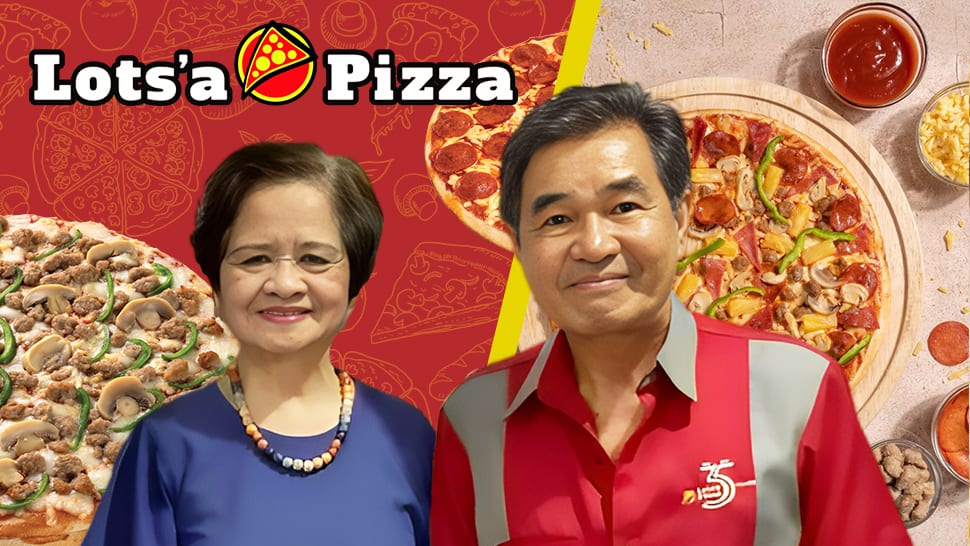
In the fast-paced world of business, success stories often emerge not only from careful planning but also from unexpected twists of fate. The story of Ed and Teresita Ngan Tian, former colleagues at SGV, stands as a testament to their resilience and innovative spirit as entrepreneurs.
Ed and Teresita began their professional journeys as accountants, finding their respective paths in different companies. Ed found employment as general manager in a real estate development firm, while Teresita secured a position as finance director at a school.
One day, while picking up Teresita, Ed spotted an opportunity to set up a food stall outside the school. He proposed to his wife that they could lease the area by dividing it into 12 slots. Initially, their plan was to use only one slot for their snacks and sublease the remaining 11. However, they encountered difficulties in finding vendors willing to lease the space.
Faced with the challenge of meeting their lease obligations, the couple made the decision to take up the space and establish their own stalls. They began selling burgers, noodles, gulaman, and other lunch items. It was during this period that they observed a consistent demand from their student customers for pizza.
To meet this demand, Teresita enrolled in a course at Sylvia Reynoso Culinary School to master the art of baking. Soon after, they introduced pizza to their menu, and it quickly became a hit among the college crowd.
Inspired by the success of their pizza venture, Ed took a bold step and launched "Lots a Pizza" in the 1980s. The business grew rapidly and expanded to 20 outlets. However, it was in the late 1990s that the real breakthrough occurred.
The decade marked a turning point for Lots a Pizza as Ed and Teresita ventured into franchising. The business flourished, expanding extensively to over 200 outlets, solidifying its position as a beloved pizza brand among the general public.
Today, over 35 years since its establishment, Lots a Pizza stands as a food favorite and a testament to Ed and Teresita's entrepreneurial spirit. The business runs three commissaries, churning out approximately 5,000 pizzas daily—a significant jump from the modest start of selling only 100 pizzas.
The journey of Ed and Teresita Ngan Tian from SGV to pizza domination is more than a success story; it's a lesson in adaptability, innovation, and resilience. How did the couple pivot from a challenging situation and embrace the unexpected opportunities? How has Lots a Pizza evolved over the years, and what key factors contribute to its continued success in the present day?
Here are the five business lessons every entrepreneur can learn from Ed and Teresita Ngan Tian, the founders of Lot’s a Pizza:
ALSO READ
1| Know how to spot for opportunities and listen to the market
Recognizing untapped markets or gaps in the existing market can lead to the development of new products, while listening to the market enables entrepreneurs to align products with consumer needs, meet customer expectations and foster loyalty.
Ed and Teresita Ngan Tian demonstrated a keen ability to spot opportunities and listen to the market. Ed identified a gap in the market as he envisioned setting up a stall to address the needs of the bustling student population in Mendiola.
The couple demonstrated adaptability by expanding their product line based on customer feedback. When students suggested that they should offer pizza, they conducted research, embraced the idea, and modified their business model accordingly.
In their attempts to expand to the malls, the couple demonstrated strategic mindset in adapting their business model to align with market feedback and requirements, prompting them to reassess their branding and product offerings.
“The very first job we had was with SGV as auditors,” Teresita says. “Both of us were accountants. That's where we met. We got married months before we left SGV. We did not want to work in the same firm as husband and wife. After SGV, I was employed by Benedictine Abbey school, which is now San Beda, while Ed worked for a realty company.
“When I was employed with San Beda, I was doing two jobs. I was operating the school and I was also in charge of finance of the Community in San Beda Mendiola, so every Saturday I would go there to check their books and transactions.
“One time he came to fetch me. I was in a board meeting and he was going around Mendiola then he saw a spot somewhere in San Beda. This was in Mendiola Street, and sabi niya there's a space there we could develop into a business.”
“It was a gold mine,” Ed says. “I saw the potential. It was three o’clock in the afternoon and you could see students from San Beda, Holy Spirit, Central Escolar, St Jude—they were all converging in the area. It was full of students. I already saw the idea of putting up a stall to sell anything like siopao, candy, mga ganun.
“I told Tessa, 'Why don't we talk to the Benedictine community if we can lease a small area?' Sabi nya, ‘Mahirap’ because she was employed kasi. There would be some conflicts of interest, you know? Sabi nya, ‘Ayoko, ayoko.’ But every time I picked her up, sabi ko, 'The opportunity is there.’ So, because we don't lose anything, let's just try and open up the idea to the Benedictine fathers.
“At that time, there was a group of 35 postulants coming in to study for the priesthood, and their head did not have funds at the time to pay for the education of the postulants.
“They asked me, being in charge of finance, to look for possible funding. When this idea came up, we brought the idea of leasing the space and then I told them this could possibly be the answer to the problem about financing because we are going to rent the space.
“Since we were both accountants, we presented a feasibility study to demonstrate the revenue stream for the next five years. They agreed that it was good enough to finance the postulants.
“So we rented the space which was about 75 square meters. Hinati namin ito a series of stalls, mga six square meters ang isang stall. Sabi ko I will just operate one stall and the rest sublease ko na lang. At that time, walang takers, so sabi ko maraming bakante, lagyan na lang natin ng burger stall and then some sandwiches.
“Nag-expand ako ng products kasi I have to fill up the store eh. Meron na kaming siopao, sandwich, burger. Kulang pa, and then sabi ng mga bata, yung mga estudyante, ‘Kuya, wala ba kayong mga pizza naman para hindi naman nakakasawa. Sabi ko, ‘Oo nga, pizza no.’ At that time, we did some research on pizzas. It was a big industry. Worldwide pala.”
“Imagine, we didn't know anything about it,” Teresita adds. “I had to study how to make burger patties, how to make bread, and other elements like the crust we use here. I even took short-term courses from Sylvia Reynoso, yung mga local short-term courses, ganun lang.”
“We asked our baker, yung gumagawa ng siopao, ‘Kaya mo bang gumawa ng pizza bread? ‘Sabi nya, ‘Kaya ko yun, so nag experiment siya ng mga flour, ganun ganun lang.
“When we noticed that it was really a growing business, we tried to apply with other malls. We were able to take some locations, but there were also questions like, what is your brand? What is your specific product? What are the offerings? So, we say siopao, sandwiches, but there was nothing different or unique. That gave us a challenge that we had to develop something.
“Generic yung store namin sa school. Walang pangalan, we just sold siopao, gulaman, anything. Noong nag apply kami sa mall, sabi ng mall you have to have some specialty.”
2| Know how to adapt and thrive through focus
A focused business distinguishes itself from competitors by emphasizing its unique strengths and offerings. This differentiation is essential for standing out in a crowded marketplace and attracting customers.
Ed and Teresita Ngan Tian’s focus on a single, well-received product became a key element of their success. Despite challenges in sourcing other flavors due to supplier restrictions and the need for minimum orders, they adapted by embracing their constraints.
The couple decided to concentrate solely on perfecting their ground beef flavor, turning a limitation into a strategic advantage. The decision to narrow their focus resulted in higher sales volumes and operational efficiency.
Admiring larger competitors like Greenwich, Ed and Teresita embraced a mindset of continuous improvement. They focused on making their pizza even more delicious, always striving to surpass their own standards.
This commitment to excellence and a single, exceptional product allowed them not only to adapt to market conditions but to thrive and carve a successful niche in the pizza industry.
“When we had a store in Caloocan at Ever Grand Central, yung pwesto namin sa Grand Central, doon ang starting point for everyone heading North, so every Saturday people would buy not only one, but five, 10 boxes at a time,” Teresita says.
“We were offering only one flavor, yung ground beef with tomato sauce, yun lang, kami lang nagluluto. We do it everyday. We were so inspired by it kasi we had very high sales volume.
Itong ground beef flavor, sinubukan lang namin, eh nag-click pala so sabi namin, ‘O eto na, ituloy-tuloy na natin ito.’ And at that time, Nawala na yung mga ibang produkto namin, like yung siopao, kwapao. We just decided to focus on pizza.
“Yung time na yun, we couldn't get other flavors because no supplier would want to accommodate us because they want a minimum order. Sabi ko how can you order 10, 20 kilos eh ang liit pa namin. We could not offer other flavors kasi our suppliers wanted bigger volume and we could not accommodate them because we were only operating small stores. So yun lang nagawa namin, lutuin na lang natin.
“Our first mall store at Grand Central, it was already doing well right from the start because the stall was previously owned by another pizza brand so alam ng tao na may pizza doon, eh siguro nakita nila dyan na our pizza was better.
“Back then, we admired Greenwich, idol namin yan. They were bigger. Yung ka-level namin was 3M and dati, I often visited their branch in Cubao kasi gusto ko yung kanilang pizza and I did not know that later on magiging pizza player pala ako. Yung nasa pizza business na ako, ang gusto ko lagi maging mas masarap, always better.”
3| Know how to build a product and a brand that stands out
In a crowded marketplace, consumers are more likely to choose products and brands that offer something unique or memorable over those that blend into the background.
Uniqueness attracts consumer attention. When a product and brand stand out, they have a higher chance of capturing the interest and curiosity of potential customers, leading to increased brand awareness and consideration.
Recognizing the rising popularity of pizza in the Philippines, Ed and Teresita Ngan Tian focused on addressing a specific issue—common oiliness found in pizzas of the time.
Through experiential experimentation, they crafted a unique pizza flavor that retained sweetness and chewiness without the typical greasiness. Their pizzas stood out not only for their exceptional taste but also for their resilience, remaining delicious even when cold.
Infusing their brand with values resonant with Filipino culture, they emphasized the concept of sharing, adding an emotional dimension to their product. Ed's strategic branding, exemplified by the catchy name "Lot's-a-Pizza," contributed to the product's memorability.
“At that time, nakikita na namin yung potential,” Ed says. “Yung pizza was starting to gain ground. Wala kaming kasabay na makakapareho namin.
“I had to check all their pizzas and their flavors because I needed to see how they were made. What I noticed among the pizza brands at the time was the oiliness. Yung mga big brands puro oily. And I said, we have to develop something that will cater to the Philippine taste.
“We experimented with sweetness and chewiness but without the oiliness. That is what we are known for: our pizza is not oily and it is good to eat even when it is cold. Unlike other big brands, when they get cold, you see oil all around and the crust is no longer as tasty. In our case, you can leave it here, place it there, and still enjoy it the next day, without even refrigerating. Maganda pa rin siya. Masarap. Hindi siya nasisira.
“We could not rely on the supplier because they might use it to our competitors and mawawala lang yung uniqueness. There are so many advantages to pizza. First, its universality. All over the world there is pizza. Secondly, it caters to any kind of person: young, old, middle-aged, whatever. It offers versatility. You can create anything on a pizza like a canvas and it can come into any time of the day. You can use it as a breakfast, snack, dinner, lunch, and more.”
“One of the values that we consider is that, being a pie, pizza is meant for sharing,” Teresita says. “So, there is a concept of bonding and sharing that comes into the product. It's not just about eating, but there is a sense of bonding and sharing, especially with families and groups. Yun ang value na naisip namin for the product. When you eat a pizza, you don't eat it alone, you call your friends, or you bring it as a “pizza-lubong” to your family.”
“At that time, yung nag try kami ng pizza, naisip ko kaagad yang brand na ‘Lot’s a Pizza,’” Ed adds. “It was my brainchild. Magandang pakinggan eh. Maganda yung rhyme so I started making some drawing hanggang sa pinadevelop ko yung brand sa isang student artist na nag-aaral ng fine arts sa UST na pinakilala sakin. Tapos sinabi ko, ‘Gawa ka nga nito’ so nag-evolve na.”
4| Know how to innovate and create quality products
Businesses that drive innovation and prioritize quality are more likely to experience sustainable growth. By meeting evolving consumer needs and maintaining product excellence, they build a foundation for long-term success.
Recognizing the need to raise the quality of their pizza, Teresita attended a pizza technology course at the American Institute of Baking in Kansas. This educational investment equipped her with essential skills and knowledge to innovate their pizza production.
Teresita's persistence in learning and adapting to the complexities of pizza technology demonstrated her commitment to quality. Despite the initial challenges, she continued to refine their recipes and processes, ensuring that their pizza stood out in terms of taste and texture.
The couple innovated their service by preparing the pizza right in front of the customer. This interactive approach allowed customers to witness the preparation process, from selecting the crust to adding toppings, creating a feeling of freshness and authenticity.
“During those times, we found that the way it was being produced did not create value kasi, unang una, hindi sya unique eh,” Teresita says. “There should be something that customers can identify as unique to you; something that cannot be copied by others. Yun ang importante dun eh.
“There was no school here that taught about pizza technology; there were small schools, but hindi sya for commercial. And then I was thinking that, to be able to come up with our own crust, it has to be developed by us because if you ask somebody else to develop it, it becomes generic and the same product may also be offered to others, who will be your competitors.
“One time, we attended the Pizza Expo in Las Vegas, where I saw a pizza technology course being offered. I inquired about the course and decided to travel to Kansas. The American Institute of Baking in Kansas is the largest baking school in America and was the only school at that time offering a pizza technology course. I took the courage to study and went there alone.”
“She took a pizza technology course in the States,” Ed adds. “When she saw the potential of the product, she took a two-week course at the American Institute of Baking. You can't just make pizza out of nowhere. You have to start from the basics and develop a signature sauce, your own crust, and many other elements that go into creating a unique pizza. It's not easy; it's not just about putting sauce and bread together. It has to be your signature. The main thing about the pizza is the crust itself, which should not be imitated.”
“When I entered the class, I was the only Asian; the rest were Americans and they were operating single units.” Teresita says. “When they asked me how many units we were operating, at that time, we already had around 20 units, and they were amazed.
“It wasn't easy; pizza technology is more complicated than we thought. We initially believed it was just about mixing, but there's a lot of science involved that goes into it. I managed to develop the crust and the sauce, but the challenge was adapting the recipe to local materials upon my return.
“Kasi sila, olive oil and then yung flour nila, for every season, iba-iba: may spring flour, may autumn flour, may winter; eh dito iisang klase lang. So when I came back, it took me some time, siguro mga one year din, to adjust the recipe for the pizza, including the sauce and crust.
“We also introduced different sizes like 10, 12, 14 inches, and then we started that concept of preparing the pizza right in front of the customer. So when they order, ‘I want pure beef,” we bring out the crust and then we top it right in front of the customer and then we bake it, so kitang-kita nila. It's being prepared right there and alam nila na sariwa, hindi lang galing sa freezer. Nakita nila sariwa dinala nila sa oven bago binigay sa kanila. Yun ang naisip namin na they should have the feeling of freshness.
“Our customers were willing to wait. They didn't mind because they wanted it fresh. Sinubukan namin na maglagay dun sa display case. Sbi nila, ‘Ma’am, ayoko, gusto ko gawin niyo yan dyan.’ Ayaw nila.
“When we came up with our brand, we applied with other malls until we were able to enter SM, dun na kami nakilala.”
5| Know how to lead by example for the next generation
Effective parenting equips children with essential life skills, enabling them to make informed and responsible financial decisions as they mature. Understanding the value of money, budgeting, and saving instills a sense of financial responsibility that lasts a lifetime.
Moreover, teaching financial prudence contributes to building a strong foundation for economic independence. Children learn the importance of setting financial goals, planning for the future, and distinguishing between needs and wants. These skills empower them to manage their finances effectively and make sound financial choices.
Ed and Teresita Ngan Tian imparted financial prudence to their children through hands-on lessons and a set of guiding principles. They led by example, showcasing responsible financial practices in their daily lives.
The couple engaged their children in discussions about the family's financial priorities, instilling a sense of understanding about needs versus wants. By emphasizing the importance of savings and contingency planning, they laid the groundwork for responsible financial management.
“We are now guiding our son to manage the business,” Teresita says. “I always advise him to always take care of the people because they are the ones that make or break your business eh. I instill in my children the importance of integrity. Our integrity and reputation are what I believe have carried us through these years. and we always managed our finances conservatively.
“We lead by example. We demonstrate to our children how we handle things. Nakikita lang nila. They don’t have to ask. They observe how we do it and they simply imitate our actions. Once in a while, they ask questions.
“For example, before we go into any project, we have to check the viability and ensure that there will be a return. Importante yan. Every expense should yield a return.
“My children are not magastos. Hindi sila ganyan because we were not earning much at that time. We were just earning enough for the family’s expenses and education. They had limited allowances, so they learned to be thrifty. Tipid, tipid so when they grew up and they have their own families na, they already know how to manage their finances. Kailangann may tinatabi ka ng savings and contingency.”
"I come from a humble background, so we've always been prudent,” Ed adds. “Hindi naman kami luxurious living. We live within our means. Importante sa amin is yung cash flow. You always have to match your revenues with your expenses eh. Hindi kami nag o-overspend. Yung mga payables namin, we always pay them on time and avoid any bouncing checks, yung mga ganyan.”
