
Financial Adviser: 5 Business Lessons Everyone Can Learn from Werner Berger, Founder and CEO of Säntis Delicatessen

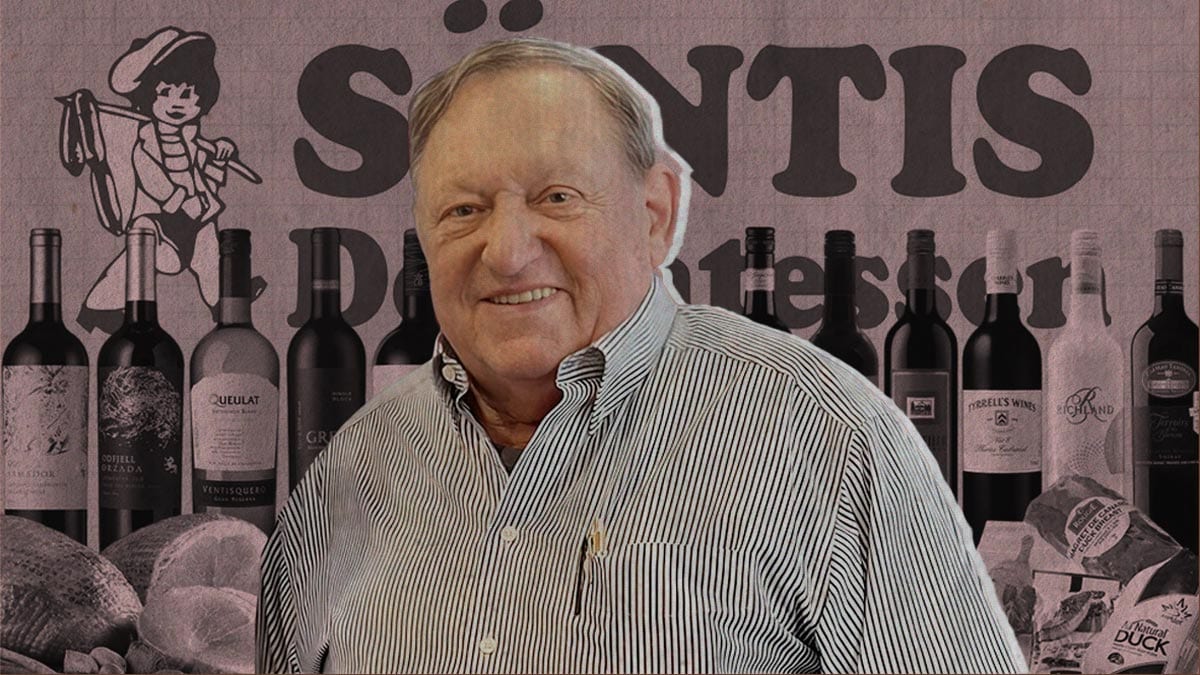
What started as a simple business idea turned into a game-changer for the Philippine food industry. Werner Berger disrupted the local food scene by bringing in premium imported meats, cheeses, and gourmet ingredients, giving more Filipino consumers access to world-class flavors.
Through Säntis Delicatessen, Berger not only introduced authentic European flavors to the Filipino market but also set a benchmark for quality and excellence in the industry.
Berger’s journey from Switzerland to the Philippines began with his work as a chef in five-star hotels across the U.S. and Europe, where he built his expertise in gourmet cuisine. However, a vacation to the Philippines unexpectedly changed the course of his career.
While in Manila, Berger landed a role as executive chef at Philippine Airlines (PAL) and decided to take the leap. While he managed the airline’s culinary operations, Berger noticed a clear gap in the market—Filipino consumers lacked access to authentic European ingredients.
He saw the opportunity, resigned from his role, and went into business for himself and established Säntis Delicatessen. He imported gourmet meats, cheeses, and delicacies to introduce premium European flavors to the local market
As Säntis grew, so did its offerings. Berger secured exclusive distributorships for top-tier brands like Barilla and Pellegrino, which helped expand his business beyond meats to include chocolates, pasta, and more.
Today, Berger has built Säntis into the largest deli chain in the Philippines, with 12 locations across Metro Manila. His commitment to quality and authenticity has made Säntis the go-to destination for top restaurants, hotels, and culinary professionals across the country.
How did Berger transform Säntis from a simple import business into the largest deli chain in the Philippines? What can aspiring entrepreneurs learn from Berger’s vision, execution, and business philosophy in making Säntis a success?
Here are the five business lessons everyone can learn from Werner Berger, founder and CEO of Santis Delicatessen:
ALSO READ
1| Know how to recognize untapped markets and capitalize on them
One of the biggest advantages of identifying an unmet need is the ability to gain a competitive edge. When a business enters a market where few or no competitors exist, it establishes itself as a leader before the market becomes saturated. This early-mover advantage allows companies to build brand loyalty and set industry standards, making it difficult for newcomers to compete.
A business that addresses an unfulfilled demand enjoys high demand with low competition. When consumers are seeking a solution and existing products don’t meet their needs, they are likely to turn to a business that can. This creates an immediate customer base for the company and boosts the chances of rapid growth.
When Berger took on the role of Executive Chef at PAL, he quickly realized a glaring gap in the local food supply. He saw an opportunity where others saw a challenge. Instead of accepting the market’s limitations, he decided to create a solution.
In 1984, he made a bold move: he resigned from his stable, well-paying job at PAL and decided to start a business that would fill this gap. At that time, the only local sausage producer in Manila was already aging, and Berger knew that demand for European-style sausages would only grow.
Yet, business wasn’t as simple as just producing great products. Berger had to build his market from the ground up. When hotel orders didn’t meet expectations, he pivoted his strategy, expanded his product line, and targeted a broader market.
Instead of relying solely on restaurant sales, he expanded his offerings to include imported beef cuts such as tenderloin and striploin. He also started selling his products directly to consumers, which led to a pivotal moment in 1987—the opening of the first Säntis Delicatessen on Yakal Street in Makati.
“I have been a cook since 1961, and I left very early Switzerland, in fact, in 1970,” he says. “Sorry, I left Switzerland for the first time in 1962 as a cook and later as a chef to Holland. Then, five years to Scandinavia—Sweden, Norway. And then, in 1970, I came to Singapore as a chef at the Oberoi Imperial Hotel.
“From there, I was promoted to chef at the Peninsula in Hong Kong. I stayed two years there. From there, I worked with Intercontinental Hotel in Iran for about only eight months because I didn't appreciate the country. So It was a difficult experience for me.
“After that, I moved to Kuala Lumpur, where I became the executive chef of the Regent Hotel. Then, I came to the Philippines. I was originally supposed to go to Brazil for a job, but I ended up staying here.
“Actually, you could say I chose to stay because, at that time, Philippine Airlines was looking for an executive chef for its catering services. The senior vice president of PAL interviewed me and made a great offer with a lot of good travel privileges. So, I joined Philippine Airlines and stayed there for seven and a half years.
“After that, I found things becoming more and more difficult, and in my opinion, many bad decisions were made. So, one day I said, ‘No, I know what's missing in the Philippines. It's good sausages, there's no quality chocolate, there's no wine, there's hardly anything. It’s very hard’. So, I thought, ‘Why don't I start my own little business and try my luck there?
“It was in August 1984 when I resigned from Philippine Airlines, and by October, I had already planned with four friends to put up a small sausage factory. I had just left a well-paying job, and at 37, I thought, ‘I need to start something of my own, so that the money goes into my own pocket—not into the company I work for.’
“In October 1984, we started to produce our first sausages. We built the factory ourselves with our own hands. We constructed, we cemented, we did everything. It wasn’t very big, but it was a good start. Because at that time, Philippine Airlines had to import a lot of foodstuff from Hong Kong and Australia, that includes sausages. There was only one in Manila who made good sausages, but it was already quite old, and we knew it probably wouldn’t be in business much longer. So we started producing sausages and selling them here.
“At that time, we could produce 500 to 600 kilos a day. I was also the president of the Chef's Association of the Philippines at the same time. So, every month, we had meetings with the different chefs of the hotels. I said, ‘Oh, if I start my own business, will you support me?’
“Their response was positive; ‘Oh yeah, we need this, we need that.’ You know, as always, there were plenty of promises. ‘How much would you buy?’ I asked. ‘100 kilos of this per month and 100 kilos of that.’, they said. When it came to reality, it was maybe 10 percent of what they had promised. So, I had to look for other markets.
So I began importing a little bit of beef—tenderloin, striploin. We started selling some of the sausages down here, and then we decided, in 1987, to open the first Santis on Yakal street.”
2| Know how to scale a business by offering what customers want
Entrepreneurs who recognize what their customers want and adjust their strategies accordingly position themselves for long-term growth and sustainability. The difference between a thriving business and one that struggles often comes down to how well a company listens, adapts, and delivers on customer needs.
For many successful business owners, growth starts with paying close attention to customer behavior. Instead of assuming what people want, they observe what sells, what receives positive feedback, and what customers consistently request.
A business that understands its customers makes smarter decisions and lowers the risk of launching products that fail in the market. Every piece of feedback—whether a complaint, a request, or a compliment—serves as valuable data that guides business improvements.
Berger built his business by closely listening to customer feedback and adapting his offerings based on their needs. In the early days, he focused on selling sausages and meat, as they were in high demand. However, when he saw many wealthy customers traveled to Hong Kong for specialty items like chocolate, wine, and cheese, he took the initiative to import these products in small quantities. As demand grew, he adjusted his strategy to keep up with customer needs.
Berger received frequent requests for specific products, which prompted him to expand his offerings. Rather than dismissing these requests, he recognized the demand and sourced the items to meet customer needs.
In 1987, word-of-mouth recommendations drew a growing number of household consumers to Berger’s Säntis store in Yakal. This increasing demand encouraged him to expand by opening more stores. Berger took a deliberate, data-driven approach to expansion. Instead of growing for the sake of it, he carefully evaluated whether an area had enough demand for imported gourmet products before opening a new branch.
“In the beginning, we sold sausages and some meat—yes, meat was in high demand. Customers came here and paid in cash. At that time, there were no credit terms like today, so we always made sure we had enough cash to pay our suppliers.
“Since we were very much European-oriented back then, we focused on bringing in specialty products from Switzerland, Austria, Germany, and Italy. We were the only ones doing this because Filipinos who had money would usually fly to Hong Kong to buy chocolate, wine, and cheese.
“So, I started importing these products for them in small quantities—maybe one container per month. However, stocking up became a challenge. Sometimes we had the products, sometimes we didn’t. You know, it was the typical struggle when you start a business. But over time, demand for more and more products grew.
“A lot of people would ask us, ‘Can you bring in this? Can you bring in that?’ And we would say, ‘Okay, okay.’ Back then, importing wasn’t as complicated as it is today with the Department of Trade and other government offices.
“In the food and beverage industry, demand was always stable because people need to eat and drink. So, at that time, economic instability didn’t affect us much. In fact, demand kept bigger and bigger, which led us to expand and open more Säntis locations.
“In 1987, we started selling to hotels, restaurants, and soon, many housewives became customers as well. Word of mouth spread: ‘Oh, in Yakal, you can find gourmet products from here and there.’ But then, at that time, we only had one small counter, which was not enough.
“By 1988, I decided to open a shop in Forbes Park, San Antonio. It turned out to be a good move. Even today, it remains our smallest store, yet it generates fantastic turnover. The only thing I never did was to open on Sundays.
“Everyone told me, ‘Mr. Berger, you have to open on Sundays. We all go to church in San Antonio.’ But it turned out that the people who go to church only had money for the church, not for shopping. So, after about six months, I decided to close on Sundays. My clients would come on weekdays, but not on Sundays.
“Then in '97, we moved to Timog, Quezon City. It turned out to be a fantastic market—mostly underground economy. Because everybody paid cash. It was our biggest market during the Christmas season.
“Then almost every one or two years we would open a new branch. We only expanded when we felt that there was an area that had enough people who could afford expensive things. Not that our products were expensive, but you know, importing them came at a cost. You had to bring it in, and you know the handicaps you have in doing business in this country.”
3| Know how to source high-quality products and build strong supplier relationships
Securing reliable suppliers of high-quality goods is a fundamental strategy for building a competitive edge in any industry. Strong supplier relationships ensure consistent product quality and provide businesses with a steady flow of inventory that meets customer expectations.
Beyond quality, reliable suppliers provide cost efficiency and bulk pricing. They give businesses access to in-demand products. This ensures competitive pricing while maintaining healthy profit margins.
In highly competitive markets, businesses that establish long-term partnerships with reliable suppliers gain flexibility in scaling operations. Whether expanding product lines or entering new markets, having a stable and responsive supply chain gives companies the agility to adapt to changing consumer demands.
Berger built a competitive edge by carefully selecting high-quality suppliers and ensuring his products met the highest standards. Instead of relying on existing distributors, he traveled extensively across Europe, visiting factories that specialized in premium meats, cheeses, and other gourmet products. This hands-on approach allowed him to establish direct relationships with suppliers and secure exclusive distributorships for many of the products that became staples at Säntis.
Aside from sourcing, Berger maintained strict quality control. Every potential product underwent a rigorous evaluation process before being introduced to the market. He worked closely with his team, which included executive chefs and highly trained butchers, to assess the quality, taste, and marketability of each item. This meticulous selection process ensured that customers received only the best.
Berger’s customer-centric mindset ensured that he continuously adapted his offerings based on market demand, while his commitment to quality kept Säntis ahead of competitors. By securing reliable suppliers and maintaining strict product standards, Berger positioned Säntis as a leader in the high-end food retail industry.
“In the early stages, we did a lot of traveling,” he says. “Whenever I visited Europe, I made it a point to visit different factories who specialize in the products we wanted. I would ask them, ‘Can I be your distributor in the Philippines?’ They would say, "Okay, Okay," and that’s how we started doing business with them.
“Sometimes, friends would recommend products to me and say, ‘You should import this and that.’ So we would approach those companies and tell them, ‘We are Säntis, we’d like to import your goods’. Over time, we secured sole distributorships for many of the items we carry today.
“We were actually hunting down different suppliers, whether for meat in the U.S., wine in Australia, or other gourmet products. We've been to different wine seminars and wine exhibitions to find all these special things.
“When selecting new products, we control the process carefully. We always test everything before deciding whatever we want to buy. We make sure we know what we’re buying. You know, by now, with over 10,000 customers, we know more or less what people are looking for. You have different markets, different tastes, and we understand our market well.
“To ensure quality, I work closely with my team. My assistant is an executive chef, and my master butcher is a highly trained butcher master from Switzerland. Then, I have two more Swiss chefs here, and together with our store managers, we give them the opportunity to verify that the product is good and will be saleable. Only after this process do we commit to bringing a product to market.
“Not every product was a success, of course. Some items didn’t do well so over time, we phased them out. You can’t just keep adding new products—you don’t have enough space to display. Typically, we give a product two to three years to see if it performs well—provided it has a good shelf life. However, in today's world, all these people in Brussels or wherever, the smart people are making short shelf lives for products, which creates unnecessary food waste all over the world.
“Because of this issue, many companies have started rethinking labeling. Instead of ‘Expire by,’ they now use ‘Best before.’ Take cheese, for example. Cheese gets better the longer its aged. If you label it with an August expiration date when it's only four or five months old, you’re ignoring the fact that it’s often at its best after a year when it has more flavor.
“So now, we put mostly ‘Best before’ whenever possible. But then when it's no good, we have to decide ourselves if it's overripe or if it’s not good enough anymore. We have products we import that you can use two years after their expiry date, and they’re still good. But, you know, the issue isn’t just about food safety; it’s about politics and the way people think, and unfortunately, the way things are done today isn’t always healthy for the industry or the world.
“I believe success starts with using top-quality products. You have to be very focused all the time and do not deviate and buy some cheaper products just because you want to save a few pesos.”
4| Know how to stay ahead of the competition with excellent customer service
While businesses may offer similar products or services, the way they treat customers can set them apart. Outstanding customer service builds trust, strengthens brand loyalty, and encourages repeat business. When customers feel valued and appreciated, they are more likely to return and recommend the business to others, which creates a strong word-of-mouth reputation.
In an era where online reviews and social media influence purchasing decisions, businesses that prioritize customer satisfaction gain a competitive edge. Prompt responses, personalized experiences, and problem resolution demonstrate commitment to customers, which make the business a preferred choice.
Additionally, exceptional service can justify premium pricing. Customers are often willing to pay more for a seamless, hassle-free experience rather than choosing a cheaper alternative with poor service. By consistently exceeding expectations, businesses create an emotional connection with customers that turns them into loyal advocates.
Recognizing that service plays an important role in customer experience, Berger made it a priority to ensure that shopping at Säntis was not only efficient but also welcoming.
Unlike many retailers where long queues and indifferent staff create frustration, Berger emphasized speed, attentiveness, and friendliness. He understood that customers value their time, so he trained his employees to be efficient while maintaining a warm and accommodating approach. Smiling was not optional—it was a requirement.
Berger also implemented rigorous employee training to maintain high service standards. New hires underwent rotation across different sections, learning about vegetables, sausages, cheeses, and other products firsthand. They tasted what they sold, ensuring they could confidently assist customers with recommendations.
Berger placed a strong emphasis on quality control across his stores, which ensured that competitors who tried to replicate his model could not match the consistency of service. He observed that while many new stores launched with enthusiasm, their service and product quality often declined over time due to weak management. By continuously reinforcing high standards, Säntis retained its competitive edge.
By creating a business that prioritized customer satisfaction, Berger not only differentiated Säntis from its competitors but also built a loyal customer base that kept coming back.
“Säntis is a well-known mountain in Switzerland, close to my house,” Berger says. “It stands at 2,500 meters (about 8,000 feet) high. However, I have to drive 12 kilometers to see it because another mountain blocks the view from my house.
“At the beginning, everyone thought that I chose the name Säntis because of my partner who was named Sintis, but I showed them pictures of the mountain.
“The Säntis logo originally came from a meat manufacturer in Liechtenstein. I lived just 100 meters from the border, in St. Gallen, in the Rhine Valley. My home was right by the Rhine River, and just across a bridge was Liechtenstein. The owner of that meat factory had a company logo featuring a boy, and I decided to adapt it and altered slightly to create the Säntis boy. In my version, he is carrying ham, like a butcher carrying the meat.
“We have plenty of competitors growing every day. But they are mostly small, and we don’t worry about them. You know, we always tell our employees, ‘We have to be better than them.’ Whether it’s through better service, or a welcoming smile, all these things matter. It is very, very important.
“People are not willing to wait too long when they shop. You go into a shop, you buy, check out, and leave. You go to one of the big department stores here—it takes you forever. If you buy a toothpaste, they make five people check if the price is right and the package is right. People don’t like that, and you don’t get a smile from the sale staffs. So, we make sure that our people are accommodating, smiling, and providing beautiful service. It is part of the success of Santis.
“When we train new employees, we rotate them between different stores under different managers so they can learn various management styles. Training is all done in-house. Smiling is the first priority. Then, we emphasize time management—don’t be late. We cannot delay opening or whatever; its very important. Be ready when the shop opens.
“The store managers are responsible for training their assistants, and after three months, we evaluate the them. We tell them, ‘Oh, you don’t smile enough; you need to improve on this and that.’ We give them another three months, and if they improve, they become permanent employees.
“Before we allow new staff to serve customers, we assign them to different sections—one month in vegetables, one month in sausages, etc.—so they learn all the names and everything. We make sure they taste the product, the cheeses, the hams, you know, so they know what they’re selling. Filipinos are very easy to train, but you have to repeat instructions often to reinforce them.
“It's constant training. Our employees work very well, but very often, we have to check on them to make sure we keep up the same standard. “They easily get into something—like a little bit too much chismis, so I make sure I keep them alert all the time.
“When it comes to customers, I find Filipinos much easier to deal with than foreigners, because they are much easier to satisfy. Filipinos who can afford to go to Säntis usually have a big family at home, so they buy five kilos of good meat, but a foreigner, maybe has only their spouse here, so they buy in small sizes.
“We don’t really worry about competition. A lot of people copy what we do, even the supermarkets. At first they come in beautifully, but after six months, their quality slowly goes down because they lack stable quality control. And the other thing is, they are mostly more expensive than us because they have to import smaller quantities or even buy from us. Since we supply them, they have to resell at a higher price than what we offer in our own stores.”
5| Know how to build a business that lasts a lifetime
A business that stands the test of time is more than just a source of income—it becomes a legacy and a trusted institution. Longevity in business reflects strong fundamentals and adaptability. Companies that endure for decades consistently innovate and manage risks effectively, while staying true to their core values.
Berger built a business that has endured for decades by adhering to strong entrepreneurial principles centered on financial discipline, strategic growth, and market differentiation.
Unlike many businesses that rely on heavy borrowing, Berger ensured that Säntis expanded only when it had saved enough capital. He never took out loans to finance growth, opting instead to reinvest profits back into the business. This conservative financial approach protected the company from debt burdens and allowed it to grow sustainably.
Strategic expansion was another key element of his success. Rather than pursuing aggressive growth for the sake of expansion, Berger prioritized areas where he knew there was sufficient demand for premium imported products. This measured approach helped Säntis remain profitable while mitigating the risks associated with rapid expansion.
Berger also showed a strong understanding of market dynamics. Recognizing that the restaurant industry was volatile, he chose to focus on retail, where profitability and operational control were stronger. He positioned Säntis as a specialty store that provided exclusive imported products, which makes it a unique player in the market. By ensuring that his offerings were not easily replicated, he created a competitive advantage that secured the company’s longevity.
“If you want to become an entrepreneur, you need to know what you want,” he says. “What kind of business are you going into? Who are your competitors? Do you have enough money to survive for at least one year in case it doesn't turn out the way you expect?
“In all my years in business, we never borrowed money. We always expanded when we had saved enough. We never took money out of the company. We always reinvested everything. That is my advice to anyone starting a business: If you want to grow, use the money you have earned. Don't get into loans with the bank.
“So that's my advice. Today, you have to be very careful about what kind of business you want to enter. Look at the competition, understand the government regulations and make sure you know all the details to ensure that you can be successful.
“I'm not maybe the best in finance, but I know what I save is mine, and I wouldn’t spend it on a Rolls-Royce when I couldn’t afford it. Marketing is also important. Make sure you have enough friends you can relate to, and if you have a problem, get advice from them. There are many ways to be successful.
“You must ensure that you have enough of your own capital to sustain your business so that whatever is in there belongs to you. Also, always keep a little bit of breathing room—set aside some reserves that you can use in case of an emergency.
“A retail store is much easier to handle. With restaurants, you have problems with the cooks, you know, and that's a special breed of people. I know that from experience. So if the cook is absent, you have to step into the kitchen yourself. From a business perspective, retail is more profitable and easier to make money. In today’s market, very few restaurants make good profits.
“If you want to give good service, you’ll have high employee costs. If you want to serve high-quality food, your food costs will also be high. And even then, there’s no guarantee that the restaurant will succeed. Maybe after six months, another one opens similar to you and takes 50 percent of your business away.
“So at Santis, I try to be a little bit different. I’m more or less the only one who has the products we sell, except for a few. As I said, I even supply some of my competitors.
“Despite its challenges, the Philippines is the best place to live. Whenever I mention the Philippines to my friends, their response is always the same—this is the place. Not Thailand, not Singapore, not Kuala Lumpur, not Vietnam. One major advantage is language. In many other countries, people have language problems, but in the Philippines, almost everyone speaks English.
“I like this country. I built my family here. The people, the lifestyle—it was good living here in the Philippines, so why would I leave? I visit Switzerland every year for vacation, but I prefer living here.”
