
Financial Adviser: 5 Business Lessons Everyone Can Learn from Sonya Garcia, Founder and CEO of Sonya’s Garden

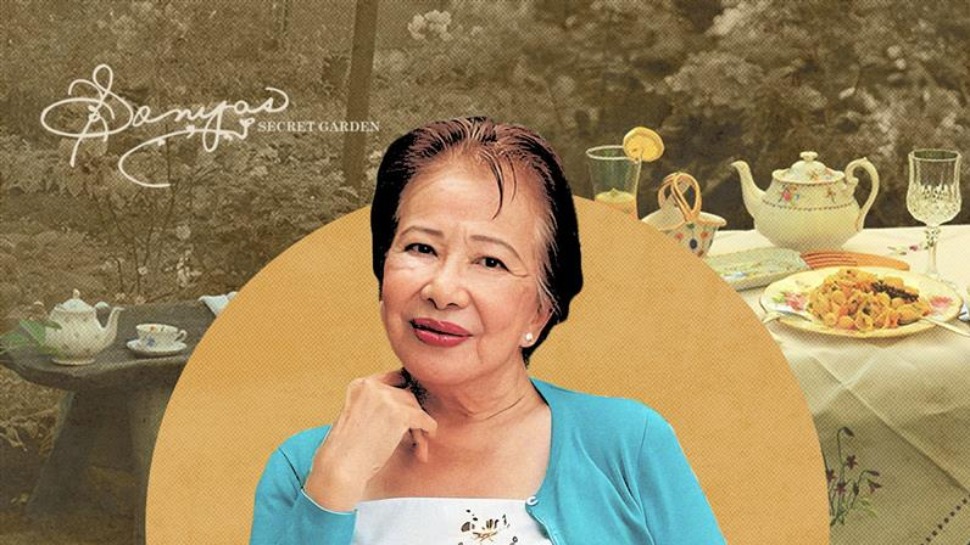
ILLUSTRATION: Igi Talao
Sonya Garcia never set out to be a restaurateur, much less the owner of a full lifestyle brand. What she had was a piece of land, a love for gardens, and the belief that business should feel natural. From those beginnings she built Sonya’s Garden in Alfonso, Cavite, a place where food, wellness, and community came together long before “farm-to-table” became a buzzword.
Garcia’s journey did not begin with a business plan. For over a decade, she worked in banking, a career that gave her stability but little fulfillment. She wanted more than the routine of corporate life, so she left the city in the mid-1990s and bought a one-hectare property in Cavite.
Drawing from her childhood in Capiz, where her grandmother raised her surrounded by gardens, she began planting flowers, herbs, and vegetables. At first, it was simply for herself. But friends who visited enjoyed meals made from her harvest, and soon, her garden became a gathering place.
By 1998, she opened her doors to the public with just a “table for two.” Word spread quickly, and the private retreat grew into Sonya’s Garden, one of the first bed-and-breakfasts in the area.
Today, Sonya’s Garden stands as a landmark for wellness, health, and sustainable living. What began on a bare hectare has grown into one of the country’s most recognized lifestyle destinations. Visitors come not only to dine but also to rest, heal, and reconnect with nature.
How did Sonya Garcia transform a simple garden in Cavite into a place celebrated for wellness and sustainable living? Which values continue to define Sonya’s Garden and set it apart as a model of purpose-driven entrepreneurship?
Here are the five business lessons everyone can learn from Sonya Garcia, founder and CEO of Sonya’s Garden:
ALSO READ
Financial Adviser: 5 Business Lessons Everyone Can Learn from the Founders of Bruno’s Barbers
1| Know how to start small and grow with purpose
Starting small gives entrepreneurs the chance to try out ideas, make mistakes, and improve without taking big risks. It allows them to experiment and build a strong base for the future. Many successful businesses started with just simple beginnings before they grew.
Growing with purpose keeps a business true to its values, not just ambition. Without it, growth can weaken identity. But when guided by principles like quality, community, or sustainability, a business doesn’t just expand—it lasts.
Garcia’s journey began without a master plan. She left banking not to chase a business opportunity, but to search for a more meaningful life. Her small beginnings in 1998 reflects what it means to begin modestly, try an idea, let it grow, and see where curiosity leads. The fact that she didn’t even charge in the beginning shows her willingness to let the concept grow organically.
Unlike many entrepreneurs who start with market analysis, Garcia began with something deeply personal, which was her happiest childhood memory. Planting flowers, harvesting vegetables, and inviting people to eat freshly picked food brought her fulfillment even before money came into the picture. That joy created authenticity, which in turn resonated with visitors. Guests weren’t attracted to grand marketing; they came because they felt the sincerity of her simple offering. Her focus on food “from the earth, not from the industry” highlights how simplicity can become both a personal source of happiness and a business philosophy.
Garcia’s growth was never about scale for its own sake. The expansion came because demand grew naturally. She began charging only when guests insisted, which shows that purpose, not profit, drove her decisions.
“I was working in a bank,” she says. “I was in PNB and I could not balance my books. So I would ask my seatmate, ‘Balansihin mo nga ito, baka i-lunch kita bukas.’ I was not happy being there. It was not for me. It was not my cup of tea.
“But my husband was assigned at that time to several places like London, Germany, and San Francisco. I joined him in his assignments. He headed some of the PNB offices abroad. Then we were transferred to London, where we stayed for five years. That’s when I discovered the garden. I saw how the English lived, and I was inspired by them. That’s where I learned about the English bed-and-breakfast. After that, we spent three years in Hamburg and two years in San Francisco.
“When I came home, I thought of putting up a Filipino bed-and-breakfast. I pioneered the opening of the Filipino bed-and-breakfast here. That’s different from Airbnb, ha. That’s a different platform. With this, you have an engagement with the guest. I get to meet them, and they become my kindred spirit. I was so happy with what I was doing.
“Before I resigned, I had already started looking around, and I found this place. I would come back and forth from Parañaque, spending weekends or a few days here. I was so happy planting and growing.
“I said I wanted to live in the countryside. I bought a property here and just started planting. There was nothing here then. I planted three flowers until they grew and spread all over. It was really a godforsaken place. Then I began to grow vegetables, and people would come. I would tell them, ‘You can harvest your own food.’ I was really into nature and believed in using only what was good for the body.
“I bought it because I wanted to recreate my grandma’s garden in Capiz. Kasi doon ako pinakamasaya sa garden ng grandma ko, who brought me up. Sabi ko, I will do something to recreate her garden. And instead of feeling depressed, I felt so happy because it reminded me of my grandma. But of course, I exceeded it. I did more than just a small garden. I expanded and I grew my own food. From the earth, not from the industry.
“When I started in 1998, it was just a table for two. People heard about it, and I would say it was The Secret Garden. I think that’s what worked, the curiosity, because it was a secret garden. So they started coming, and at first I would not charge them. I would just tell them to experience harvesting and eating food. That is the sweetest, when it’s freshly picked.
“Then they told me, ‘You better start charging because we want to bring our friends.’ So okay, I started with a table for two, then it expanded — naging eight people, then 15, it just kept growing. And I was happy that people enjoyed eating food that was not tainted.
“In the beginning, I had a salad, I made my own dressing. I also had pasta and a few salmon dishes, mga ganon, you know, food that’s good for your health.
“And then they would come here and say I didn’t have a menu. Tony Boy (founder of Antonio’s) used to come here. He would come in the morning and then again in the evening. He was also enamored with the idea. Sabi niya, pwede rin siyang ganon. So I also helped him put up his restaurant. We became very close, and of course iba na yung kanya ngayon. Tony Boy became so successful, but we are still good friends.”
2| Know how to follow market demand and create opportunity
When entrepreneurs listen to the market, they gain insight into what people truly need and value. This prevents them from offering products or services based only on personal preference or assumption, which often leads to failure. Instead, they create something relevant, timely, and wanted.
Building a business around market needs also makes growth more natural. Instead of pushing an idea people are not ready for, demand pulls the business forward. Customers feel heard, and their loyalty strengthens because the business reflects their preferences.
At the same time, market listening encourages flexibility. Tastes and conditions change, and those who pay attention can adapt faster. This responsiveness often separates businesses that thrive long-term from those that fade away.
Garcia’s success grew out of her ability to truly listen to her customers and let their needs shape what Sonya’s Garden would become. She began with no clear plan, only a love for simple, natural food and the joy of serving it fresh from her garden. But what set her apart was the way she responded to feedback.
When guests asked for a menu, when they requested more variety, or when they hinted at wanting wellness services and places to stay, she treated these not as inconveniences but as opportunities. What enabled her to do this was her simplicity of mindset; she was not tied to rigid business formulas, which gave her the freedom to adapt.
Equally important was her empathy and intuition. She cared deeply about her guests’ welfare, whether by offering complimentary dinners, thinking about their health, or making them feel at home.
“When we started, you know, I did not have a microwave. What I did was serve food inspired by the English. Mostly ganoon sila eh. When I was traveling, I was able to acquire some ideas on how to put up something that I would also enjoy. Nae-enjoy ko yung kinakain ko, that’s what I served with edible flowers.
“We didn’t have a chef. Kami-kami lang. We had no professionals. Wala kaming professional chef, wala kaming professional na mga receptionist. They were all simple lang sila. I just taught them to be kind.
“The idea came from me, and I would teach them. So it was simple, wala masyadong fancy. Just simple food you can eat, and you can get well because of the herbs. Pansit-pansitan is good for your knees. You don’t have to eat food that is manufactured. That’s the way God wanted it to be.
“We had ampalaya that you could harvest yourself. Guava from the tree, aratiles that I would climb to pick. We never had money, there was no money at all. Parang the legal tender was what we grew. I didn’t know much about money. I didn’t even have the concept of it.
“So when I started this business and they asked for a menu, I said, ‘There’s no menu. I will tell you what to eat, you cannot tell me what you want to eat.’ And then people would come here and ask, ‘Wala ka bang bulalo?’ I said, ‘No, sorry.’
“A few months later, they would come back and say, ‘Oh, dito kami kakain.’ Why? Because their doctor had told them they needed a different kind of diet plan which are mostly vegetables, plant-based. So that’s what I served. But eventuallly, we evolved. We served mga bulalo also. Of course, the bulalo here comes from around the area, grass-fed, local.
“At that time, there was no cellphone, it was so new. If somebody called, I had to climb a tree just to get a signal. That’s what I went through, but it was fun. Then people heard about it, and somebody wrote about it, so more people came. Then I had the restaurant, okay? And guests would say, ‘We’d like to stay for a massage, like your lifestyle.’
“So I hired people from around the area to do the massages. One of the best ngayon. And I had them trained. Ngayon, they’re professionals, licensed sila. They’re all licensed, and very good. Whenever I travel, I always look for a hotel and ask if they have massage, because I like it.
“Then sabi nila, ‘We don’t wanna go home after this.’ So I built one, then another, and now I have 30 cottages. You spend the night, and then you serve breakfast. But here, because I always think of them, I asked myself: where would they go if they came here hungry? So I gave a complimentary dinner. Libre, oo. Because I always think of their welfare, hindi ba?
“We have so many senior citizens coming, and I’m happy. But then libre yung dinner nyo, and what you really get from here is oxygen — something you cannot find in Manila. With all the trees and the cottages designed with natural ventilation in mind, that’s the real gift.”
3| Know how to grow by reinvesting and managing resources wisely
Money earned can disappear quickly if it is used without care. When part of that income goes into assets such as land, property, equipment, or other productive resources, it builds a foundation that holds value, produces returns, and gives protection even in uncertain times.
Managing resources well also ensures that growth is not reckless but sustainable. It protects against risks like inflation or downturns by anchoring wealth in things that endure. Beyond financial stability, this discipline strengthens both the business and the individual.
When Garcia’s business began to flourish, she resisted the conventional path of storing profits in the bank. Her background in banking had shown her how inflation erodes money’s value, so instead she anchored her wealth in something tangible, which is land.
This decision shows her foresight and discipline. Rather than chasing short-term gains, she sought stability and assets that could sustain her vision long term.
For Garcia, land was more than an investment. It was security and a platform for growth. She saw property not as idle capital but as something that could always be made productive, whether through farming, hospitality, or simply providing food for her table and community. Her mindset was rooted in her belief that land protects against uncertainty, whether inflation, crisis, or even natural disasters.
This reinvestment strategy gave her business resilience. By converting income into assets that endure, Garcia created both a buffer against risk and a foundation for expansion.
“Then more people heard about us,” she says. “Somebody wrote about us, and then people who came here spread the word like wildfire. People kept coming, very curious, out of curiosity. Eh wala kaming professionals dito. We just recreate, we just evolve, we keep on experimenting. And I put edible flowers in my salad. I call it ‘eat your rainbow,’ kasi iba’t ibang kulay nun.
“Maraming bowls of salad were harvested straight from the vegetable plot. I called that ‘fast-food,’ from the plot to the plate. Fast-food din yon, diba? Paradoxically, it was okay. Kasi fast-food, you don’t know where the food is coming from, you can’t see. Here, you see it harvested right in front of you.
“And then the business was flourishing. Dumami ang guest ko. I had no problems with my finances, but I did not put my money in the bank, That was the time I did land banking. Kasi customers would come here, but the road was so bad. They forced me to expand, sabi ko, ‘Okay, if it doesn’t work, I wouldn’t mind because mag-ga-garden pa rin ako.
“If I put money in the bank, it will be eaten by inflation. Land is a hedge against inflation, and besides, I don’t want money in the bank. I want it in property. But if you don’t spend your money, it has no value. I used to work in a bank ha, but I didn’t know about this before. But with land, you never go hungry nga eh.
“Because a lot of the farmers here wanted their children to go to medical school. They would say, ‘Ma’am, magbebenta ho kami ng lupa.’ So people approach me and say, ‘Ma’am, I have this property,’ and I would still bargain. Tumatawad ako, pero pataas. If they said P500 per square meter, I would say, ‘Hindi ba pwedeng P550?’
“This is a true story. I went to the palengke and saw vendors selling talong. Naaawa ako. I asked, ‘Magkano ang kilo?’ Then I said, ‘Ay, hindi ba pwedeng ?100?’ Tumawad ako pataas, kasi typical na mga Filipino tatawaran pa nila. Kawawa naman yung nagtitinda, hindi ba? People just bargain them down.
“So in my land, we plant, we make the land productive. Hind namin pinapabayaang idle, not because of the thought of increasing value, but because I like the property. It had running water. Sometimes serendipity just showed me something, I liked it, that’s all. Hindi naman na may plano, not having any idea what to do with it. I just wanted the property because it had running water. Mga ganon ba? Wala akong plano.
“Yung mga land banking ko, may mga tanim ako na puno. Kapag marami kaming santol na na-ha-harvest, hindi ko hahayaan na masayang siya, so gagawa kami ng paraan na sustainable, hindi yung nagkakalat.
“If you have land, tanim ka ng kamote and you will never die of hunger. Pag nagka-giyera, pag nagbaha, when the lowlands are inundated, kami dito we’re okay. Sabi ko sa kanila, basta may lupa kayo, you will never go hungry. Like Gone With the Wind, si Scarlett ,sabi niya, ‘Weed this land and never go hungry again.’”
4| Know how to adapt and innovate to stay ahead
Markets change and customer needs evolve. A business that adapts recognizes these shifts early and adjusts without losing its foundation. Innovation then takes those adjustments further by introducing new ideas or improved products that stand out and endure.
When a business knows how to adjust and improve, it does not simply chase trends but creates products and services that remain valuable over time. This creates long-term loyalty from customers and positions the business to survive challenges while remaining competitive.
Garcia’s ability to adapt and innovate came from her sharp eye for quality and her willingness to act when she felt something could be improved. The bakery began not because she had plans to diversify, but because she noticed that the bread she bought from outside did not meet her standards. Instead of settling, she decided to produce her own.
What enabled her to grow further was her creativity in transforming the ordinary into something distinct. The Adobo roll, which she later rebranded as “Adobini,” is a good example. She took a staple Filipino dish and turned it into something novel and memorable. Her openness to feedback, combined with her knack for reimagining the familiar, allowed her to make products that stand out.
Even during the pandemic, when many businesses slowed down, Garcia turned constraints into opportunities. With time in the kitchen, she developed bottled products like callos and adobong pusit, deliberately prepared without MSG and with coco sugar as a healthier alternative. Here, her philosophy of wellness and authenticity became a guide for product innovation. Instead of creating something just to sell, she made products aligned with her values.
Garcia’s willingness to experiment without fear of failure and her discipline in execution became central to her success. She was not formally trained as a baker or chef, yet she surrounded herself with skilled people.
“We put up a bakery because we were serving bread,” she says. “I was buying it from outside. Sabi ko, the quality was not good, so we decided to create our own. Then we expanded. When I left for Italy, we had an adobo roll. When I came back, I called it Adobini.
“And then my friends na mga bading said, ‘Hindi yan Adobini, Adoobini. You have to shrug your shoulder when you say it.’ So when they were walking, Adobini! It became one of the favorites. Adobo roll, P30 ang isa. We took our adobo and put it in small buns. That was the adobo roll, and now it’s Adobini.
“Then, we put up pop-up stores. We were in Greenbelt and whenever there’s a food expo, we would join. The government was always helping us. We have a lot of products now like butter products, jam, but the most famous, the most popular, is adobong pusit.
“We call it Chipirones en su Tinta. That came about during the pandemic. Wala kaming magawa sa kitchen, so we started making bottled products like callos. Callos simmered in olive oil, no MSG. I don’t use MSG. If you Google MSG, it’s a chemical. Walang MSG dito. We simmer everything in olive oil and we only use coco sugar instead of white sugar. Coco sugar lang.
“If you have pasta, lagyan mo lang ng taas non, put arugula on top, cheese, chili if you want and that’s it, dinner na yon, complete na. Iniimbento ko lang yan, but I use a lot of olive oil. None at all na artificial. I think I inherited it from my grandma. Yong taste niya, magaling siya. Nage-experiment lang ako.
“Pinakasikat namin Spanish bread. We also have Spanish bread, cheese hopia, Chipirones en su Tinta, callos, and our jams. You know, we join mga food expos, and now we want to target the export market.
“Hindi naman ako marunong mag-bake masyado. I think marami namang marunong, but we use real Italian cheese, Parmigiano. And then also, in our Spanish bread, we use high-class butter. We don’t use margarine, only first-class butter you can taste. We don’t cut corners kasi. I think that’s cheating, I cannot do that.
“I also do sustainable practices. We have this towelette when you enter our restaurant. Binibigyan ka namin ng towel na may scent. After using that, we wash it again and dip it in rose water so it doesn’t end up in a landfill. Sustainable practice yan.
“We also do a lot of recycling. Yung mga egg shells, ginagawa naming fertilizer. Yung mga trees, ginagawa naming seedling tree. You know, it’s so interesting. Lahat sustainable kami, hindi kami nagtatapon ng basura mostly.
“We don’t use plastic for our water. We create water and juices, but we will not put them in plastic bottles. We’re going to put up Sonya’s Tea Water from our own water. Meron kaming plant, I have a place with a natural spring.”
5| Know how to anchor success on gratitude and health
Gratitude keeps leaders grounded. It reminds them that achievements are not built alone but with the support of people and opportunities. A grateful mindset promotes humility and builds trust, which are qualities that matter more than short term gains.
Health, on the other hand, is the foundation that sustains everything else. No matter how much money or success a person accumulates, it loses meaning if their body and mind are weak. A healthy entrepreneur has the clarity and stamina to make sound decisions and to lead through both growth and crisis.
Garcia’s view of success goes beyond profit. Gratitude, for her, is not a token expression but a guiding principle. By constantly reminding herself to “do more, expect less,” she keeps her perspective grounded.
This mindset shields her from the endless chase for more money or more recognition. Instead, it allows her to find joy in what she already has, to value the people around her, and to see her work as a privilege rather than a burden. Gratitude becomes the compass that directs her choices.
Health is the other non-negotiable element in her definition of success. Garcia is clear that money and achievements mean nothing if one’s body fails. Her discipline in eating plant-based food and choosing organic produce is not just about personal wellness but also a reflection of her business philosophy that what is natural and sustainable endures.
By valuing health, both her own and that of her guests, she anchors Sonya’s Garden in authenticity. The business thrives because it reflects her lived values, not just branding.
What allows Garcia to uphold gratitude and health as measures of success is her sense of contentment. She often says she has “more than enough.” This contentment frees her from the pressure to franchise which could dilute her brand or compromise her values.
By refusing to define success by money alone, she ensures that her business remains aligned with her life philosophy which is to live fully in the present and to take care of herself and others.
“A lot of people are begging me to put up Sonya’s Garden in the North,” she says. “Sabi ko, I am not franchisable. Hindi ako pwedeng mag-franchise, because my soul will not be there. There’s only one Sonya’s. It has nothing to do with having more money. For me, I don’t like that. I have more than enough, and I am very contented. Kasi it’s not about money, it’s just a business of bliss, because I’m happy with what I do. I cannot be happy running around like a headless chicken. This is my turf, ito yung aking milieu.
“For me, I never do anything for money. If you go into business, find your joy. Enjoy what gives you spark in your life, even if it doesn’t make money at all. Like ako, kung hindi nag-flourish itong restaurant, okay lang, kasi mage-enjoy pa rin akong mag-garden.
“Also, always be grateful, hindi ba? Ako kasi, I’m living in the present moment. Now, I enjoy this moment with you, and I always say, give time to your child also. And do more, expect less. Always be grateful.
“There is law of personal accountability. You have to take care of your health before anything else. Even if you are successful, even if you have money, but if your health is compromised, it means nothing.
“I’m plant-based. I don’t eat pork. I don’t eat industrial food. My doctor tells me I have to eat at least twice a week, animal meat. Nag-wa-wagyu na lang ako kahit hindi ko kaya. Twice a week we do it, kami. But mostly plant-based and organic. Basta if your health is compromised, wala na. Walang kwenta, nothing else matters. You take care of yourself.
“I like living in the present moment, that’s already enough for me. Don’t worry about the past, don’t worry about the future. I’m here now. I enjoy every moment. So I’m not afraid to die.
“What is my reason for being? To leave this planet better than how I found it. That’s going to be my legacy. I would not live forever, and I wouldn’t want to. Every moment for me is a joy. Every breath that I take is a gift. The miracle of life, diba? Living in the present moment. Like now, present moment tayo, we have all this.”
