

Financial Adviser: 5 Business Lessons Everyone Can Learn from Bobby Claudio, Founder and Chairman of Toby’s Sports

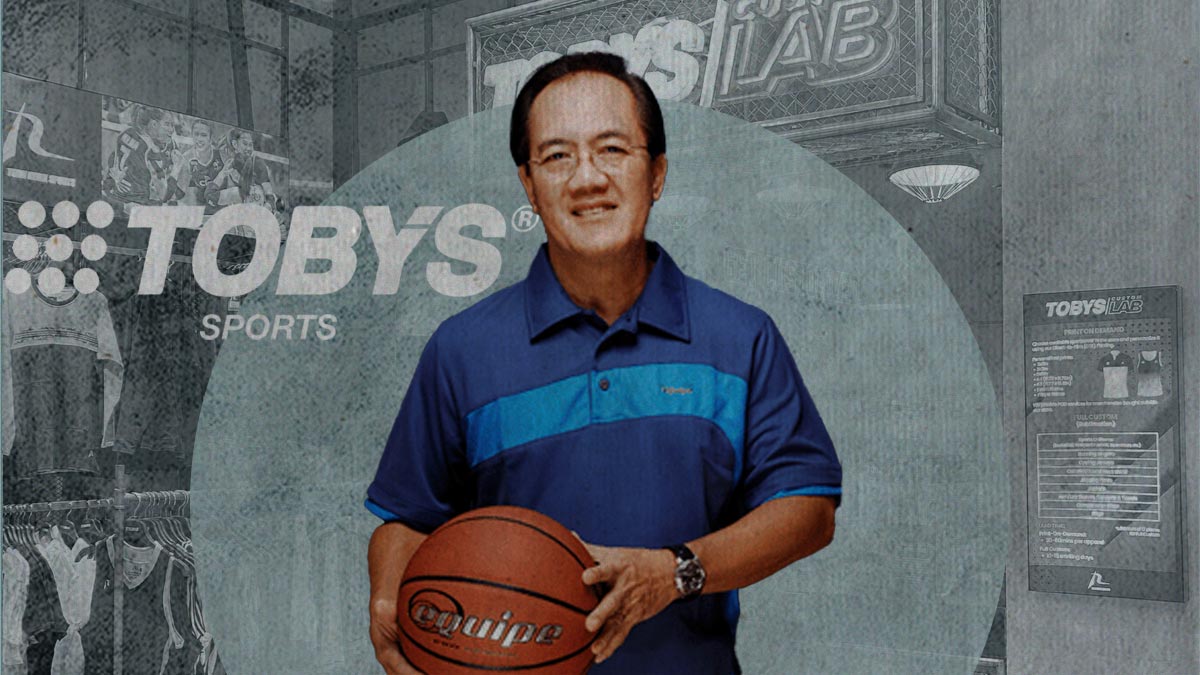
Roberto “Bobby” Claudio is the visionary founder behind Toby’s Sports, the largest sports retail chain in the Philippines. From humble beginnings, Claudio’s journey is an example of how entrepreneurial vision and grit can lead to great success. Toby’s Sports, now a household name, has grown into a well-respected brand known for its quality sports goods, customer service, and strong community presence.
Claudio’s career began in the corporate world after graduating from De La Salle University in 1972 with a degree in Economics and Business Administration. He spent five years working for a multinational company before taking a bold leap into entrepreneurship in 1977. Accepting an opportunity with the Junior Chamber International (Jaycees) to organize the World Congress in Manila, Claudio left his corporate job to travel the world promoting the event.
When the congress ended, Claudio found himself at a turning point. With no job and an amortization to pay for a small stall he had purchased at Virra Mall in Greenhills, he decided to turn the stall into Toby’s Forms and Shapes Toy Store, named after his four-year-old son. Initially, the store sold toys, but Claudio soon pivoted to selling skateboards and darts, which set the store apart.
The real breakthrough came when Claudio recognized the growing popularity of tennis in the Philippines. Seeing a gap in the market, he purchased a stringing machine from the U.S. and began offering specialized services for tennis players. This pivot to sports equipment was a hit, and it marked the beginning of Toby’s transition from a toy store to a sports retail powerhouse.
Throughout the 1980s, Toby’s Sports expanded rapidly, with Claudio opening 10 branches nationwide. The brand became synonymous with quality sports gear, catering to the increasing demand from Filipino athletes and sports enthusiasts. By the 1990s, Toby’s Sports had firmly established itself as the largest sports retail chain in the country, offering a wide range of products and maintaining a loyal customer base through strategic expansion and excellent service.
Today, Toby’s Sports boasts 75 outlets across the country, a far cry from its humble beginnings as a small toy store. Bobby Claudio’s vision, perseverance, and passion for entrepreneurship have turned Toby’s into a multi-billion-peso empire and a symbol of success in Philippine retail.
Claudio’s vision extended beyond just business. He believed in promoting a sports culture in the Philippines and made it a priority for Toby’s Sports to support local sports events and grassroots initiatives, particularly for the youth. His commitment to corporate social responsibility helped strengthen the brand’s connection to the community.
Claudio also continues to stay active in the business and civic sectors even after his retirement. He currently serves as the president of the Philippine Retailers Association (PRA), a position he has held three times—in the late 1990s, early 2000s, and now again in his third term.
Claudio views this as his way of giving back to the industry that helped him grow, and he is focused on supporting Filipino entrepreneurs. He believes retailing is the easiest entry point for Filipinos who want to start a business, and he is committed to helping the retail industry flourish.
In addition to his work with PRA, Claudio is also the president of GS1 Philippines, the organization responsible for issuing barcodes to companies. Under his leadership, GS1 ensures that products have proper identification through barcodes, which are essential for business operations.
How did Claudio’s leadership evolve as Toby’s Sports expanded from a single store to a nationwide chain? What key lessons has he learned from his entrepreneurial journey that he still applies today?
Here are the five business lessons every entrepreneur can learn from Roberto ‘Bobby’ Claudio, founder and chairman of Toby’s Sports:
ALSO READ
1| Know how to transition from corporate life to entrepreneurship
In a corporate environment, employees often have clearly defined roles, with specific tasks and responsibilities outlined by the organization. However, when moving to entrepreneurship, individuals are required to wear multiple hats.
As a business owner, you must learn a variety of skills beyond your expertise, including financial management, marketing, operations, and customer service. This broader scope of responsibility pushes entrepreneurs to grow and adapt quickly.
A key benefit of moving into entrepreneurship is the significant control it offers. Entrepreneurs have the freedom to make decisions that align with their vision and values. They choose the direction their business takes, the types of products or services to offer, and how to engage with customers. This level of autonomy is often not achievable in a corporate setting, where decisions are influenced by corporate policies and hierarchies.
In 1977, when the Philippines won the bid to host the 1978 World Congress for the Jaycees, Claudio saw an opportunity to expand his horizons. Tasked with promoting the event globally, he faced a choice: continue in his stable corporate job or take a risk and pursue the exciting challenge with the Jaycees. Claudio chose to take the risk and resign from his promising corporate career to focus on the congress for personal growth.
When Claudio found himself jobless after the congress, he knew he had to make use of the 20-square meter commercial space in Virra Mall he bought as a real estate investment to cover his amortization. Lacking experience in retail, but driven by his passion for toys inspired by his young son, Toby, Claudio decided to open a toy store.
Despite doubts from his siblings and limited resources, Claudio persevered and made the most of what was available to him. His strong belief that he had to start somewhere, even with no retail background, highlighted his ability to take risks and find creative solutions to successfully launch his business.
"I used to work for a large multinational company, where I was hired as a management trainee,” Claudio says. “At that time, I was an employee. This was way back in 1972. As a management trainee, I was trained in the commercial aspects of the business, particularly in marketing, and they moved me around to the different sections of the operations. My company was one of the largest multinational companies in the Philippines, producing consumer goods. That was my first job. After about five years in that role, I was promoted twice and reached middle management.
During that time, I also got involved with the Junior Chamber, or Jaycees. My intention was just to widen my horizon and increase my business network. It so happened that the year I joined the Jaycees, the Philippines won the bid to host the World Congress in 1978 for the Jaycees. Since I was working in the marketing department of a large multinational, I was tasked with handling the promotions for the Congress to attract participants.
We got the support from different airline companies and hotels, which sponsored our travel expenses worldwide for delegates to come. But during the process of promoting it, my boss at the multinational company told me, 'You've already used up your vacation leave, and it’s only February.' So ubos ko na, February pa lang that year.
“Sabi niya, ‘Ano ba? Gusto mo ba magtrabaho sa amin? Or you want to work with Jaycees?' I told him that I enjoyed working with the Jaycees but it was just civic work. But then sabi nya, 'You've used up your leaves, so you need to decide whether you want to continue working with us or not.'
“After a week, I told him, 'Sir, sayang naman yung opportunity that I can get to see the world because we were asked to promote the event.’ Libre ticket namin anywhere in the world na binigay sa amin ng PAL, with hotel and pocket money yun from the DOT. We were going to travel to Central and South America, the U.S., and Europe, and may tickets na kami. So sabi ko, 'Sir, I don’t want to miss this opportunity to see the world. Bata pa ako nun. I was only 24 years old so I resigned from the company and worked for the conference.
“We had the whole year of 1977 to promote the conference. We kept on traveling. PAL said, 'Oh ayan ang tickets,' even the Manila Hotel sponsored us, and the Department of Tourism. We were tasked to promote the Congress. Sabi ko, ‘I don't want to lose this opportunity.’ “So ayun. We were able to bring 5,000 delegates to the Philippines for that conference, and everything went smoothly.
“But after the World Conference, jobless na ako kasi I resigned from my job. At that time, after I resigned, may konting savings naman ako. I used that to buy a commercial space in Virra Mall Shopping Center Greenhills. My direction was not to open a store or to be a retailer. I just simply wanted to invest in real estate and hopefully resell it once the mall was finished.
“So yung natapos na yung Congress, sabi ko, ‘Anong gagawin ko rito?’ Gusto ko lang maging productive yung space kasi nagbabayad ako ng amortization. So sabi ko I have to start something. At that time, uso pa yung barter trade. Yun yung pinaka duty-free natin nung araw. Everyone wanted to go to Zamboanga to buy imported goods through the barter trade.
“So what I did was, as a first instinct, wala naman akong experience in retailing. I just loved kids at that time. My son was only four years old. I thought, sige, toys na lang so bumili ako ng toys. I bought six boxes in one hand and another six boxes in the other, so I had 12 pieces of toys that I brought back to Manila. Pinaayos ko yung unit sa Virra Mall. It was just a 20-square-meter unit.
“Nilagyan ko ng items, and my siblings were laughing at me. Sabi nila, wala naman laman tong tindahan mo, ang lakas ng loob mo. Sabi ko, I have to start somewhere. So, I started looking at the Yellow Pages—wala namang internet pa nun—to do sourcing. I found people making stuffed toys and other toys kasi toys nga ang naging focus ko. So I started a toy store.”
2| Know how to capitalize on business opportunities with minimal investment
Taking advantage of every opportunity, no matter how small, can lead to larger opportunities in the future. By making the most of these, they gain valuable experience, learn from their mistakes, and begin building a track record of success.
Even with limited financial resources, entrepreneurs can leverage their time, skills, and effort—often referred to as sweat equity—to push their business forward. Through hard work and dedication, they demonstrate commitment, resourcefulness, and the ability to operate effectively with minimal capital.
This approach not only helps them gain hands-on experience but also enables them to build valuable relationships with partners, suppliers, and customers. Over time, these networks and experiences become powerful assets that can new opportunities for growth.
Claudio’s first big break came when Greenhills Shopping Center introduced Mickey Mouse characters to the Philippines. He saw an opportunity to capitalize on this trend and took the risk of approaching the mall to secure exclusive merchandising rights. This decision called for strategic thinking as he recognized that securing exclusivity would give him a competitive edge over other vendors.
Claudio secured stock, such as Mickey Mouse hats, on a consignment basis, meaning he didn’t need to pay upfront for the goods. By negotiating terms that allowed him to return unsold items, he further reduced financial risk.
This showed his ability to use sweat equity—putting in the time, effort, and negotiating to secure deals that moved his business forward without capital. Selling 50,000 Mickey Mouse hats allowed him to raise the capital he needed to continue growing the business.
After the Mickey Mouse promotion ended, Claudio quickly shifted his focus to skateboards, a rising trend at the time. Despite having no prior experience with sporting goods, his adaptability enabled him to recognize that skateboards were consistently selling, even beyond the Christmas season.
Claudio also recognized that the market for sports-related products was potentially larger and more consistent than for toys, which were highly seasonal. This vision for the future, combined with his willingness to take small, calculated risks, allowed him to transition his store from toys to sports equipment gradually.
“I was looking for a name for the toy store, and all I had was the Yellow Pages and a dictionary,” Claudio says. “One night while I was searching and doing research, my eldest son, who was four years old, was going around and nakukulitan ako. Sabi ko, bakit pa ako naghahanap ng pangalan when I could just name it after him? And so I did. That’s how Toby’s was born.
“My first break came in the third month of our operations, when Greenhills Shopping Center decided to bring the Mickey Mouse characters to the Philippines for the first time. So, for better pricing, sabi ko, gawa ako ng T-shirts, gawa ako ng pad paper, mago-order ako ng ballpens, or whatever na pwedeng i-benta for merchandising.
“The first thing I did was go to Greenhills Shopping Center and ask for the exclusive rights to merchandise during the promotion. For a while, nagkaproblema ako—sabi nila, hindi ka pwedeng magbenta kasi may mga licensees din yan dito sa Pilipinas. Ha? Ganon ba? Sabi ko, I didn’t know that.
“But since I had the exclusivity for merchandising, all those with licenses had no choice but to go through me. That challenged me to be more entrepreneurial because of the exclusivity. I was able to get good terms with most of them, and a lot of it was on consignment.
“Since they had no other way to sell, it didn’t cost me anything upfront. I didn’t have to spend on inventory, or I would spend on inventory pero on different conditions—after the promotion, kung anong matira, isosoli ko. And they all agreed, so I started with the Mickey Mouse hats.
“I ordered 2,000 pieces, sabi ko, okay na to, this will last until December. I even thought, sobra pa nga, baka di ko maubos to. But the promotion ran, and it got sold out in one week. Ubos yung 2,000 in one week. So sabi ko, doblehin ko yung order ko, good na yan hanggang December. It got sold out in one weekend. In short, I was able to sell something like 50,000 of those Mickey Mouse hats. That gave me the capital to move forward.
“But then after Christmas, wala na. Nag-alisan na yung mga Mickey Mouse characters eh. So sabi ko anong gagawin ko dio sa negosyo na to? I noticed that we had one item in the store that continued to sell—yung mga plastic na skateboards, which at that time was still just a fad. It was considered a toy back then, not yet a sport.
“So sabi ko, sige, dito tayo. We continued selling skateboards, and it continued to flourish even beyond the Christmas season, so unti-unti, nalagyan na naming ng laman yung store. We were selling skateboards, roller skates, then we started experimenting with tennis rackets, pero yung mga mumurahin lang kasi we weren’t known for that pa, but it opened my eyes.
“Sabi ko, baka the market opportunity was bigger for sports-related products than for toys. Siguro malaki din yung toys, pero very seasonal. So we decided, sige, shift tayo slowly to sports.”
3| Know how to drive business growth with innovative strategies
Innovative expansion strategies help businesses find and take advantage of opportunities that others might miss. Creative approaches can open up new ways to earn money, reach untapped markets, or launch unique products and services.
A lot of innovation focuses on improving the customer experience. As companies grow, they need to keep engaging their customers and meeting their changing needs. By making customer-focused innovation part of their growth plan, businesses can strengthen customer loyalty and drive greater success.
Though expansion involves risks, innovative strategies reduce them by encouraging fresh solutions and smarter decision-making. Companies that embrace innovation are more likely to explore different possibilities and make calculated choices to lower the risk of failure.
Claudio drove business growth by consistently innovating in ways that set his business apart. One of his key innovations was introducing automatic racket stringing machines to the Philippines. This not only solved the inconsistency problem of manual stringing but also elevated the quality of service by customizing the tension based on the player’s style and preferences.
Claudio believed in expanding slowly but steadily, ensuring each store was profitable before opening the next. This careful pacing allowed for stable growth. He also identified opportunities by introducing sports that were unfamiliar in the Philippines, such as darts and billiards, and later capitalizing on the popularity of badminton. His ability to recognize trends and take calculated risks, combined with a focus on customer-centric innovation, were key factors in driving his business success.
“At that time, I accompanied my wife to US,” he says. “She took a course at Stanford so ako, wala akong ginagawa habang nandon, so sabi ko, apply muna ako ng job. I saw a job opening sign at a sporting goods store near Stanford. When I saw the racket stringing machine, it was something I hadn’t seen in the Philippines.
“So during the interview, I said I just wanted to be the racket stringer. Nagulat yung owner, sabi nya, 'With your qualifications, you're good enough to be my store manager.' But I said, 'I just want to be your racket stringer.' Pumayag sya. So that was my job. Nag-string ako ng raketa araw-araw for few months from 8 a.m. to 5 p.m.
“When I returned to the Philippines, I decided to get one myself. We were the first to introduce automatic stringing machines dun sa store ko sa Greenhills. In the past, it was all manual, de mano lang, puro de hila. It depended on the racket stringer—kung inaantok yung stringer o kung bagong gising sya pwedeng sobra naman yung tension. But the automatic stringing machine was always consistent.
“That made us popular in the Philippines because of tennis and the racket service that we offered. It wasn’t just, 'Oh, akin na yung raketa.’ Pupunta yung customer tapos i-string namin then balikan na lang nila. No. We treated the racket like a patient, parang doctor—may index card yan. We’d ask, 'How do you play? Sa front ka ba o sa likod? Baseline player ka ba? Right-handed or left-handed?' Then, we’d devise the right tension for you. So it wasn’t just a matter of, naputol yung string mo and we’d just string it for you.
“We became member of the United States Racket Stringers Association, so we had the technology to guide tennis players on the right tension for their rackets. Should you use nylon or natural gut? What tension? 56? 58? Yung ganon. We really became the go-to place for tennis sports in the Philippines in the '70s and '80s. That’s how Greenhills became known.
“In the first three years, we aimed to open one store per year. So we expanded to Cubao, Harrison Plaza, and Makati in the '80s. I said, 'In our first 10 years, let's crawl, don't walk. Then walk, don't run,' unlike others.
“One store a year kasi my principle was to make sure the previous store you opened makes money before you open a new one. So naka-pacing siya. And it gave us good traction to expand the business in a calculated way. We became popular in tennis. Then my other brother, who was handling it and was also involved with the Darts Council of the Philippines, kami naman ang nag-introduce ng darting here in the Philippines. Wala namang nag da-dart dito dati. It's a very European and British sport. Kami una nag-introduce nyan dito.
“As part of our strategy, hindi lang yung mga nakikita namin nilalaro ng Filipino ang inaasikaso namin. We started to innovate, and then Efren “Bata” Reyes started to get into the picture, winning against Europeans and world champions. However, we didn’t have professional billiard cues at that time—yung made out of Maple and cut into two parts. Yung atin nun, homemade kahoy lang at hindi pa diretso.
That became our cycle—introducing and bringing in new sports. From then on, we also brought in scooters, yung mga bata na nagsu-scooter, nagpepedal lang. Toby’s din yun. Then, when the badminton craze came, we really pushed it. We took that opportunity to push badminton as a sport, and it became the sport of the masa, the average family—yung mga sekretarya, mga office employees, families. Badminton became popular because it’s a great family sport—your wife, your children, everyone can play.”
4| Know how to use sales data to make data-driven decisions
Sales data helps businesses understand what their customers prefer. By tracking which products sell the most and which are underperforming, businesses can decide where to focus their resources. This insight allows businesses to tailor their offerings to better meet customer needs.
With accurate sales data, businesses can manage their inventory more efficiently. They can ensure they have enough stock to meet demand without overstocking, which ties up capital. This data-driven approach prevents lost sales from stockouts and reduces the costs associated with excess inventory.
Sales data can show the impact of marketing campaigns. By comparing sales before, during, and after a campaign, businesses can assess whether the campaign drove results and if it targeted the right audience. This allows for better planning and allocation of marketing budgets in the future.
Claudio used sales data to make better business decisions by closely monitoring customer behavior and sales trends. When he noticed that customers who bought tennis rackets at his store had to go elsewhere for tennis shoes, he saw a missed opportunity. This realization led him to expand his product offerings to include not just rackets but also performance shoes for tennis, basketball, and soccer. By analyzing what his customers needed, he effectively captured more of their business under one roof.
Claudio’s use of advanced inventory management systems allowed him to automate stock replenishment, making the process more efficient. This approach meant he could make decisions based on real-time data without the need for manual tracking or guesswork. The system also provided sales reports and trends on a weekly basis, allowing Claudio to identify which products were in demand and adjust his orders accordingly.
Claudio’s use of data played an important role in his decision-making process. By recognizing trends in the market, such as the rise of sneaker culture, he didn't just rely on intuition. He used sales data and market insights to understand that there was a growing demand for lifestyle shoes.
Additionally, Claudio’s pragmatism in closing underperforming stores was driven by data as well. Rather than holding on to stores out of sentimentality, he reviewed sales data and profitability reports to assess their performance. His decisions were based on facts and trends, ensuring that his business stayed efficient and future-focused.
“When we started bringing in shoes in the early '90s, we realized two things: One, yung customers namin na bumili ng raketa pero because he is a new tennis player siya, he had to go to Adidas to buy tennis shoes para makapag-tennis siya. So sabi ko, andito na sya sa store, bumili na siya ng raketa eh, wala tayong sapatos. Sayang yun, benta na dapat yun. So sabi namin, let’s expand our product offerings to include what other products these athletes need.
“Over the last 20 years, we’ve been strong with performance shoes. If you play tennis, basketball, or soccer, lahat dito sa Toby’s ang punta. Pero pag gusto nila pamporma, yung pang-brag nila sa mga kaklase o barkada nila, they would go to another fashion store. Sabi namin, bakit pa namin papakawalan yun? So we opened a new concept store called Urban Athletics. It's basically a store for lifestyle shoes. We already have six stores. It’s really for pang-porma. Yung mga bata ngayon, sneaker culture.
“We have almost 50,000 SKUs—stock keeping units. We have a good I.T. system, very advanced. Our point-of-sale system is very deep, and we have software on inventory management. So, from the time an item is sold, it triggers the computer na, ‘Oh, bawasan mo yung imbentaryo mo ng isa. Kung 100 na yung nabili, the computer triggers the supplier. Oh, kulang na ang Toby’s ng 100 or 1000 shoes of this model, start producing. Automatic na yun. So they are able to prepare.
“It doesn't mean kukunin namin agad, may confirmation process naman yan pero everything is fully integrated, so our people don’t have to go back to history and say, ilan ba nabenta natin dito? Ano bang saleable dito? Tapos dun ka pa lang magko-compute. Ilan ang o-orderin natin? It's the system that will tell.
“Matagal na siyang pinapractice as part of our inventory management. Kaya sabi ko, pag ka-scan pa lang ng produkto sa store, it gives us the sales report, and also updates the inventory report na. So, for example, if you’ve sold 1,000 units for the month, it tells you na bumaba na. Then it shows you the trend on a weekly basis, whether sales are going up or down. From there, you have a minimum and maximum order limit that you set. The computer also tells you, oh, order ka na ng ganito karami because it takes 2 or 3 months to deliver, even lead times are taken into consideration.
“Yung mga early years, hindi kami makakuha ng track record sa bangko so we relied mostly on internally generated funds. We were practically not giving salaries to ourselves. Siguro enough to lang na pampakain. For almost the first 10 years namin, hindi kami dumi-dibidendo, talagang sweldo lang.
“We're not hesitant to close stores if they are losing. There are others who are sentimental, and don’t want to close stores because they say it's part of their legacy, or that they’ll miss it. But for us, we're not like that. We say it's all about survival. You need to work on future opportunities, not dwell on the failures of the past. If there's a failure and you did your best, but it didn’t work out, I can let that go. But if I see a big opportunity that you missed or ignored, I’ll hold that against you. That's how I deal with my people.”
5| Know how to be the architect of your success
When you take responsibility for your success, you hold yourself accountable for your actions, decisions, and results. This mindset helps you stay focused and motivated, knowing that your efforts directly impact your progress.
When you own your success journey, you’re better equipped to handle setbacks and failures. You learn from your mistakes, adapt, and keep moving forward because you understand that success is a process that requires persistence and growth.
Taking charge allows you to set clear goals and create a plan to achieve them. By being intentional about your actions, you avoid distractions and stay focused on what matters most to your success.
Claudio drove his own success by taking personal responsibility for his actions and adopting a hands-on, resourceful approach. He believed that success is something you must achieve yourself, rather than relying on others.
This mindset of "What is to be is up to me" guided his decisions and pushed him to take initiative, even when resources were scarce. For example, when he couldn't afford consultants, he turned to sweat equity—doing the hard work himself by researching in libraries and persevering through difficult times.
He emphasized these principles to his son and team as well. Claudio taught his son that personal responsibility and initiative are key to leadership. He also stressed the importance of maintaining a good reputation, pointing out that no level of expertise can compensate for a tarnished reputation.
Claudio valued pragmatism in decision-making. He advised his team to base their actions on thorough analysis and data, but also to have the guts to take the leap when necessary. While many entrepreneurs hesitate, Claudio believed that courage is essential to move forward, especially when faced with uncertainty.
"I always emphasize a few key things to my son, Toby,” he says. “First, I tell him, 'What is to be is up to me.' If there’s something you desire or want to pursue, don’t count on others to do it for you. You will have to do it yourself. That is the first principle. Kasi para sa akin, if that is present in your quest for success or future achievements, that has to be there. Kung wala kang initiative, gather yourself to be a leader or it will never come. So that’s always my message to him.
“Second, I tell him that reputation comes before expertise. So kung may mga kalokohan kang ginagawa, kung may mali kang ginawa or immoral things, that precedes your reputation. You’ll never gain the trust of people you want to partner with or engage in business with. That applies to everyone, from the consumer to the supplier in our business.
“Lokohin mo yung consumer by giving false prices or fake products, hindi ka aasenso. Be guided by moral principles. Wag kang manloko ng mga suppliers. That's always first and foremost, because your reputation will be more important than saying, 'Ito experience ko, tanggapin mo ko,' or something like that. Your reputation is something that you build and maintain.
“And when you're already there, things are not always rosy. There will be hard times, difficult times, and you just have to ride it out. One of my ways of getting through is, wala akong pera. We couldn’t afford a consultant, hindi kami makagawa ntio kasi ganyan-ganyan, so I said, pagtyagaan mo.
“Punta ka sa library, mag-research ka. In any aspect, I call that sweat equity. Kung wala kang pera, sweat equity muna. And that keeps you going. You’re able to manage to pull through. For me, that's a key to success.
“Kaya nga sabi nila, usually sa mga entrepreneurs, yung first several years mo, kailangan mo sales and marketing people to bring you the revenue, di ba? Pag medyo maganda na yung revenue ng dating mo, next kailangan mo bookkeepers and accountants to make sure you're getting the right figures. And then pag medyo 10 years and above ka na, and complex na yung operation mo, ang kailangan mo na dyan lawyers kasi may mga kaso ka na.
“So don't attempt to learn everything. Kasi in new businesses, chances are wala ka namang mga legal problem pa dyan. Wala ka pang demand for a highly trained accountant dahil manageable pa naman ang bookkeeping mo kaya pwedeng bookkeeper lang. So if you try to do everything kaagad, mao-overwhelm ka. Pwede kang sumuko. Sabihin mo, ‘Ay ayoko na, suko na ko.’
“With regards to money, I always advise, wag mong paghaluin ang business and personal money. If you want to start a new business, you will have to raise new money. Don’t use the money from your existing business unless it’s already a conglomerate effort. But if you're still doing one business at a time, stay within the limits of what you can finance. But then, of course, be wise.
“So if you want to achieve more, you may want to use some borrowed money. Pero sabi ko nga, borrowed money should be used for something that will give a higher return than your borrowing cost. That’s my approach. At the same time, sa future investments, that’s where many leaders or top management face problems.
“Puro sila, ‘Project study tayo, project study tayo.’ Kuha tayo ng consultant, kuya tayo ng ano-ano. But after everything is done, you’re at a crossroads, and di ka maka-decide. Tutuloy ba natin? Then they start doubting, 'Ay naku, baka hindi ako naniniwala dun sa consultant.'
“You already have the numbers, but most entrepreneurs walang lakas ng loob. For me, one of the key traits of an entrepreneur should be guts. There comes a point after all the project studies and consultations when you have enough data to make a decision. You might be in that gray area—pwedeng hindi, pwedeng oo, it could succeed or fail—but all it takes is guts.
“A lot of good concepts and projects don’t move forward because people chicken out. For me, that’s a talent every entrepreneur should have: knowing when to take the leap. Kasi kung hindi, walang decision, walang mangyayari. But of course, you’ve got to make sure that based on the figures, your probability of success is high. Hindi naman yung obvious na malulugi, itutuloy mo pa.
“I always advise my team to always have a reserve, never to go all in. But also, aim high. You can reach for more. For me, an important element of success is knowing how to dissect issues and problems, and understanding your probabilities. Maraming hindi alam yun. Some are too gung-ho, sige pasok tayo dyan without proper pencil work or planning. Then there are others who have already done the pencil work pero hindi maka-jump.”
