
How Universal Robina Is Turning Waste Into Energy and Savings

As the impacts of climate change grow increasingly evident, coupled with escalating energy costs and mounting global waste, the need for corporate responsibility toward the environment has never been more critical.
In response to these challenges, Universal Robina Corporation (URC), one of the largest branded consumer food and beverage product companies in the Philippines, has been implementing a comprehensive sustainability initiative, demonstrating its commitment to conserving energy, minimizing waste, and sourcing sustainably.
For its significant environmental, social, and community contributions, URC’s “La Carlota Solar + Biomethane” project received the top honor in the Sustainability Category at this year’s Pride in Performance Awards, an annual recognition ceremony that celebrates the remarkable achievements of Gokongwei Group’s employees and teams.
Securing second and third place were the RRHI-Food Segment’s “Food Rescue Program” and the Gokongwei Brothers Foundation’s “Juan Kapatid Learning Remediation Program,” respectively.
This year’s theme, “Celebrate Meaningful Breakthroughs,” reflected innovation, performance, courage, and collaboration—qualities that continue to drive the Group’s long-term growth.
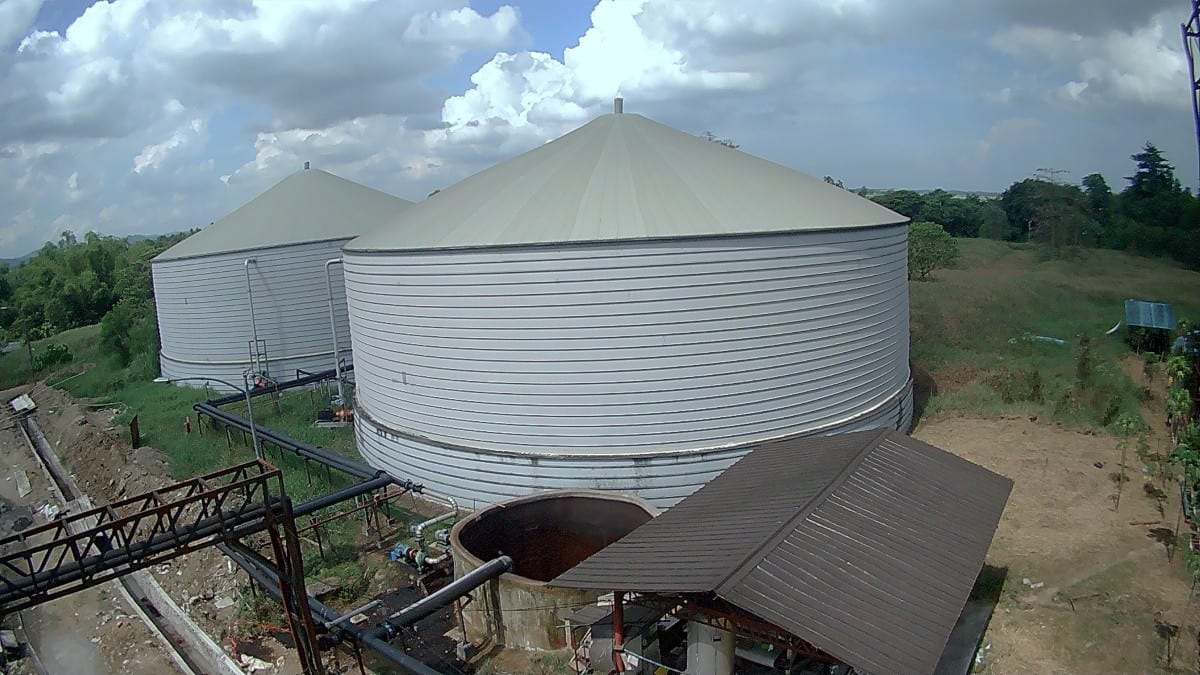
La Carlota Distillery's wastewater treatment plant
Triple-Pillar Approach to Sustainability
URC’s sustainability program combines three essential projects: Solar Photovoltaic (PV) Facility for Renewable Energy; Biomethanation for Waste-to-Energy Transformation; and Biomass Utilization through the use of bagasse, chipped wood, napier grass, and coco shells.
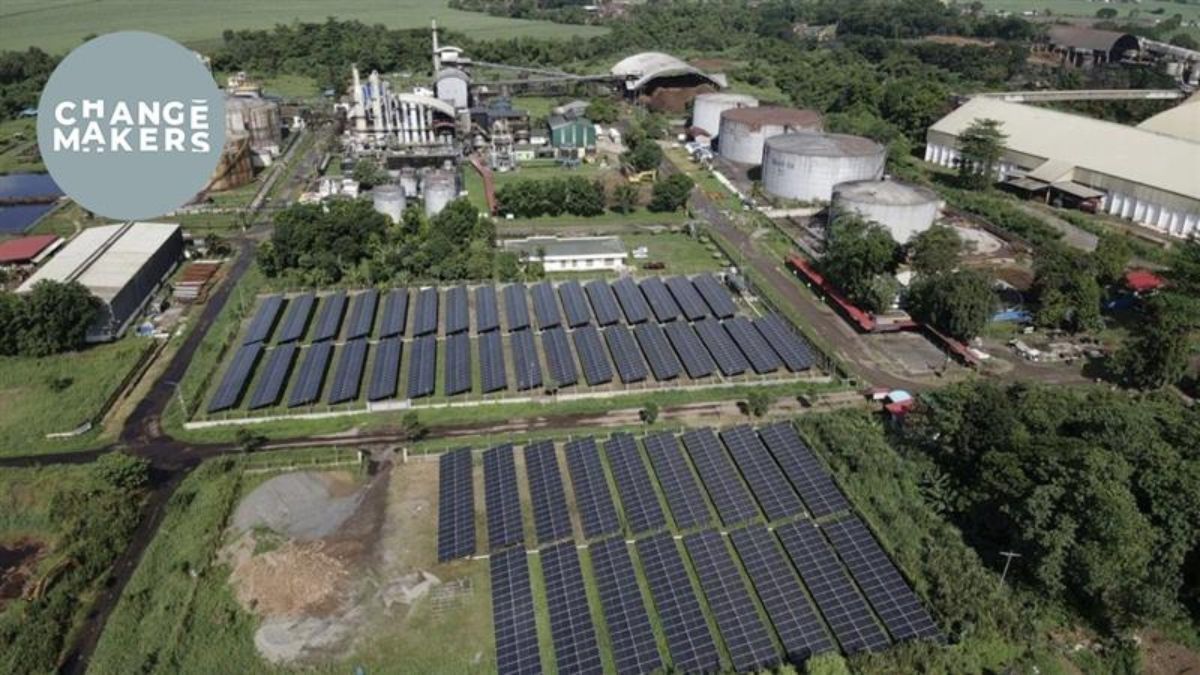
The idea to build a Solar PV facility at La Carlota Distillery in Brgy. Nagasi, Negros Occidental came from URC's top management. “Since we were having issues with power supply, our leaders suggested that we explore solar energy to save on energy costs,” shared Engr. Noli Segovia, the Plant Manager for the distillery.
The power generated is intended for the plant's internal use. "Although it is not sufficient to fully meet the entire power requirements, it’s still a big help. Since its operation began in July 2024, it has significantly contributed to reducing our energy costs," he observed.
From July 2024 to December 31, 2024, the solar plant successfully generated 546 MWh of clean energy, according to Sheila Lou Amor, the Environment, Health, and Safety (EHS) manager at URC-La Carlota Distillery. This achievement led to significant energy cost savings for the company, totaling P4,377,729. Beyond the financial benefits, the plant also played a crucial role in environmental sustainability by reducing carbon emissions by 273 tons.
Disposing wastewater is another area that URC addressed through a process called Biomethanation. “The government has specific requirements that must be met before waste disposal. There are certain parameters that need to be adhered to. At La Carlota Distillery, our waste treatment is a biological process. We use bacteria to reduce the pollutant content in our wastewater,” explained Segovia. “Through this process, the microbes digest these pollutants and produce methane, a flammable gas that can be used as fuel. We use the methane as fuel for the boiler, which helps reduce the need for other fuels like bagasse or wood chips. This methane is essentially free because it's a byproduct of our wastewater treatment process."
La Carlota Distillery's Biogas Plant
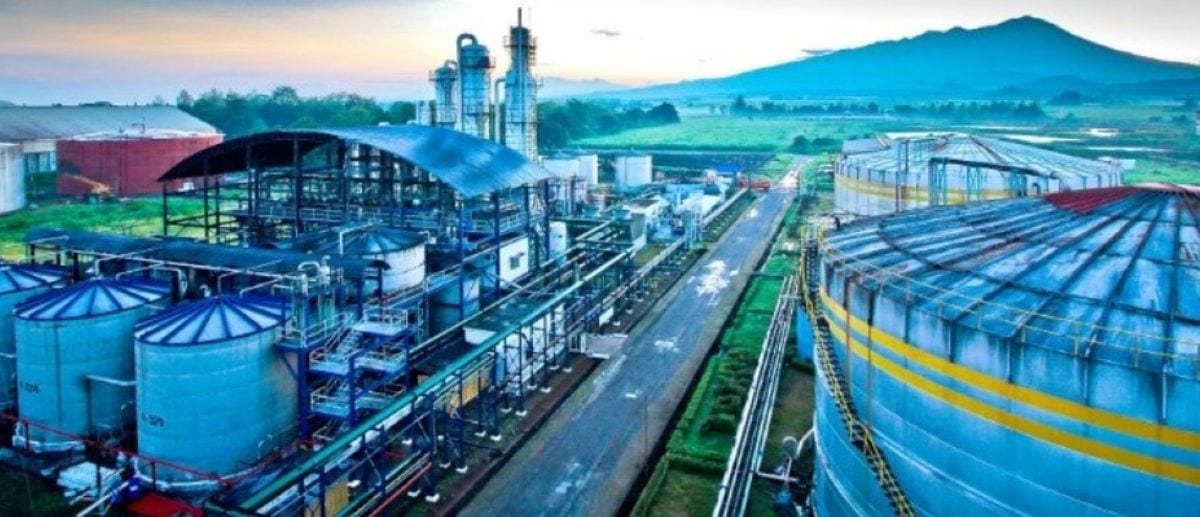
The Biogas Plant, utilizing biomethanation, has led to a significant reduction in URC's procurement of solid fuels. In 2024, the plant generated 11,838,727 cubic meters of biogas. This production resulted in total fuel savings amounting to P59,903,500, said Amor.
In addition to generating biogas that is used as fuel for the boiler, the biomethanated spent wash is also used by farmers as liquid fertilizer. “We distribute this fertilizer to sugarcane plantations for use by farmers, helping them reduce their fertilizer costs. The feedback has been positive, with many planters actively participating in this fertilization program. It is economically beneficial for the community, particularly for the planters,” said Segovia.
The third sustainability initiative that the company has been implementing for many years now is Biomass Utilization, which promotes the use of renewable biomass such as bagasse, chipped wood, and coconut shells, as a sustainable alternative to coal. "Instead of relying on liquid fuel such as gasoline, we use biomass. It's a renewable power source since we obtain bagasse from sugarcane,” said Segovia. Replacing fossil fuels with biomass helps reduce carbon emissions and reliance on non-renewable energy sources.
By adopting a phased implementation strategy, along with continuous monitoring and stakeholder engagement, the three sustainability projects collectively prevented the emission of 978 metric tons of CO2 annually and resulted in total cost savings of P64.3 million in 2024, as stated in a document submitted to the PIP Awards.
ALSO READ
What The Country’s CEOs Really Think About Sustainability
A ‘Secret Garden’ is Only the Beginning of This Luxury Boracay Resort’s Sustainability Efforts
Overcoming Challenges
Implementing these sustainability initiatives is not without challenges, said Segovia, but the benefits cannot be discounted. “The challenges with solar are minimal. For biomethanation, because it's a biological process relying on bacteria, you really need to ensure that the bacteria are healthy and robust enough to react to the wastewater. There are times when disruptions occur, like when the bacteria sometimes aren't functioning optimally. We just have to be extra careful to ensure all parameters are met every day. There's absolutely no room for errors because if there's an upset, things could become very difficult,” he said.
As for biomass, the company simply has to ensure that it has ample supply for boiler use. These come either from the local lumber mill or from other URC sugar milling plants.
Segovia said URC has systems in place to sustain and continue operations, adding that biomethanation is still one of the best methods for treating wastewater and disposing of waste. “We will continue to maintain this approach until we find a potentially better way of doing these things,” he said.
URC plans to expand its biomethanation plant in line with the expansion of the distillery’s facility and production capacity. Given the extra capacity of the company's solar facility and the savings realized from the existing solar plant, it is likewise possible to add more solar panels.
Winning the PIP Awards was both a surprise and an honor. “While winning was a goal, it wasn't our main focus. What truly mattered was the opportunity to share ideas that could enhance the operations of other plants,” said Segovia.
This forward-thinking approach not only reflects URC’s commitment to eco-friendly practices but also sets a powerful example within the industry. Their innovative strategies drive change, demonstrating that corporate success and environmental stewardship can go hand in hand.
Esquire Philippines is published by Summit Media, which is also a unit of the Gokongwei Group.
