
Queen Máxima of the Netherlands Seeks to Improve Financial Inclusion in the Philippines

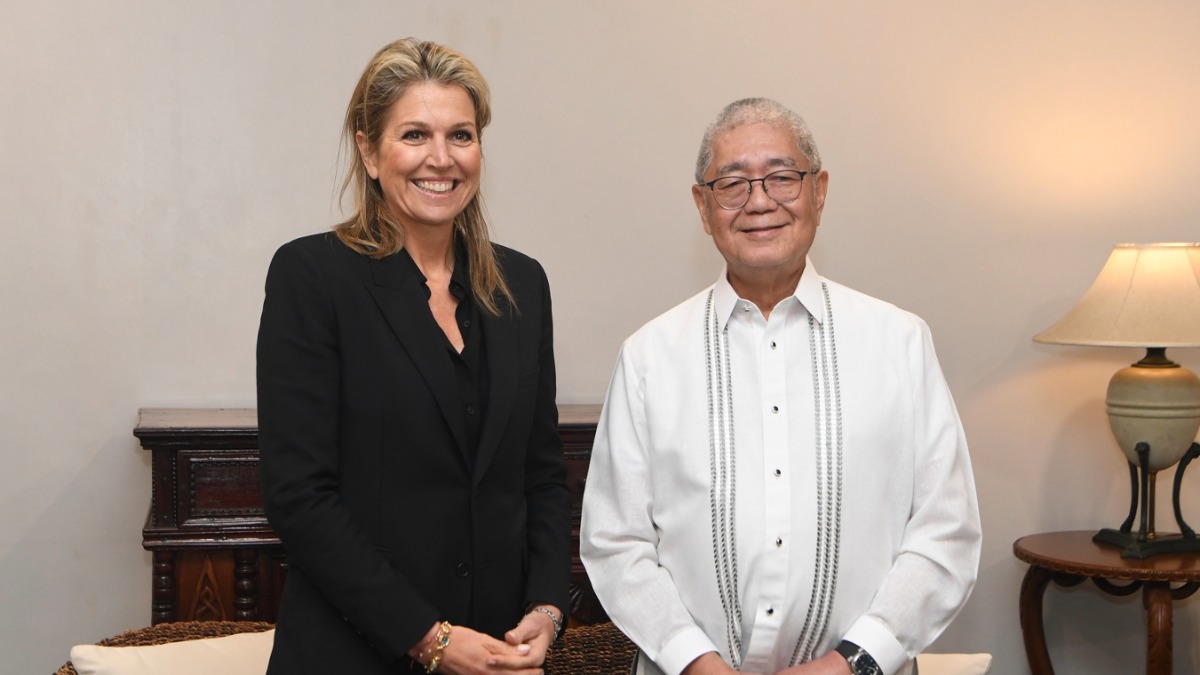
Queen Máxima of the Netherlands, concurrently the United Nations Secretary-General’s Special Advocate for Inclusive Finance for Development, is not wasting any chances to help bring better financial services to more Filipinos. In her latest visit to the Philippines, she highlighted that while there are efforts to advance financial inclusion in the country, these are still not enough.
ALSO READ
A New Instant Payment System Will Allow Banks to Reduce Transaction Fees to P1
Could the Philippines Really Become a Trillion-Dollar Economy in the Next Decade?
Financial inclusion in the Philippines was only at 17 percent when Queen Máxima visited the country in 2015, which, as she said, was “very low.” Unfortunately, not much has changed. The Bangko Sentral ng Pilipinas (BSP) reported that 56 percent of Filipinos had bank accounts as of 2021, up from 23 percent in 2017. However, a total of 34.3 million adults were still unbanked. The BSP is hoping to hit 70 percent in overall financial inclusion this year.
“My visit actually resulted in a lot of work by the predecessors of [BSP Governor Eli] Remolona and from government officials to actually change the regulatory environment to make a lot of things possible,” said Queen Máxima.
Apart from financial inclusion, more steps should be taken to make credit and insurance accessible, with both the government and private sector leading the way, according to Queen Maximá. Big banks disbursed P11.8 trillion in loans in March, marking a 9.4-percent growth year-on-year. But the Philippines’ credit growth is still projected to decline in the coming months due to external headwinds.
“A lot of MSMEs (micro, small, and medium enterprises) and [high-sized] enterprises do not have the access to credit they need to actually make investments,” Queen Máxima said. “There's also very little access to insurance; to real saving mechanisms.”
The BSP, in its talks with Queen Máxima, said it will work to fully digitalize the payment system in the Philippines to cater to the masses.
“We talked about something called open finance. That might be something new to many of us, but it’s a very promising way to get more and more people involved in the financial system for purposes of not just financial inclusion but also financial health,” Remolona said.
Open finance enables the sharing of consumer data among financial institutions and third-party providers. To make this possible, the BSP is designing an application programming interface (API).
“So, we’re starting with [Personal Equity and Retirement Account (PERA)], for example. We’re going to create an API for that and ask all the banks to connect to PERA, so account holders can do their pensions through [it],” Remolona explained. “Besides PERA, we’re thinking of APIs for insurance — life, property, [and] accident [insurances].”
