The Philippines Is Now the 'Fastest-Growing' Economy in the ASEAN, Says WEF President

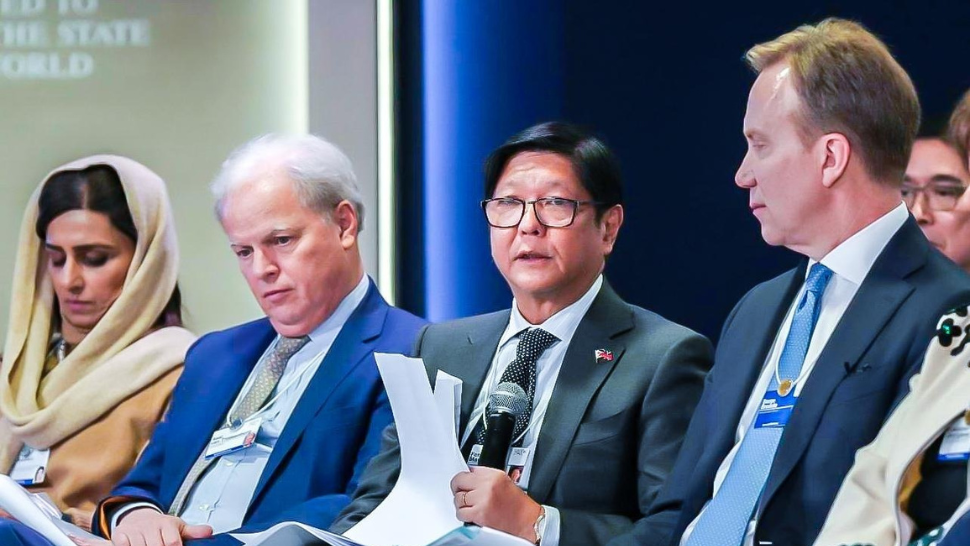
Even as the rest of the world faces threats of a looming recession, the Philippines seems to be trending in the right direction, if we were to ask World Economic Forum (WEF) President Børge Brende.
During a one-on-one discussion with President Ferdinand "Bongbong" Marcos Jr. at the WEF meeting in Davos Switzerland, the president said: “It is incredible… I think now, Philippines is the fastest growing of the ASEAN (Association of Southeast Asian Nations) countries.”
It is believed that the Philippines could potentially be the "next big thing" in the region. Marcos pointed to the country's demographic focus in the workforce for its steady gains, which is younger and has less dependents. "You might be surprised to know, to learn that the average age of Filipino worker is 23 and a half years old. So that is a huge [source of] demographic dividend,” Marcos said. “But demographic dividend is not paid out just as a matter of course. You have to develop. You have to develop now. Some of the concepts that we keep hearing about is upskilling and reskilling and that we have concentrated on."
ALSO READ:
In First 100 Days, President Bongbong Marcos Flexes His 'Functional Government'
Who Is Lucas P. Bersamin, Bongbong Marcos' New Executive Secretary?
The Philippines' economic prospects were highlighted as part of a talk that consisted of topics like the impending global recession, energy crises, and the increase in living costs.
For Marcos, he championed the country's proposed Maharlika Wealth Fund, structural reforms, and the forces that were harming trade, including tensions in the South China Sea. The president has also been vocal about his administration's measures to improve local food production and the farm and fisheries industries to improve the agricultural value chain.
He also explained how his government is looking at micro, small and medium enterprises to boost the economy. This, together with the low unemployment rate, should offer up some resistance against "recessionary forces," he claimed.
The administration expects our 2022 gross domestic product (GDP) to exceed the target range of 6.5 to 7.5 percent, with momentum continuing in 2023. Among some local challenges to this, Marcos admitted, is our infrastructure, education, and research, among others. He, however, assured Brende that a focus on public-private partnerships and digitalization should help mitigate these concerns.
"Our strong macroeconomic fundamentals, fiscal discipline, structural reforms and liberalisation of key sectors instituted over the years have enabled us to withstand the negative shocks caused by the pandemic and succeeding economic downturns and map a route toward a strong recovery," Marcos said in a statement.
Meanwhile, the International Monetary Fund expects global economic growth to slow down to 2.7 percent, from 3.2 percent last year and six percent in the year before that.