Why China Is Irked by US-Philippine War Games This Year

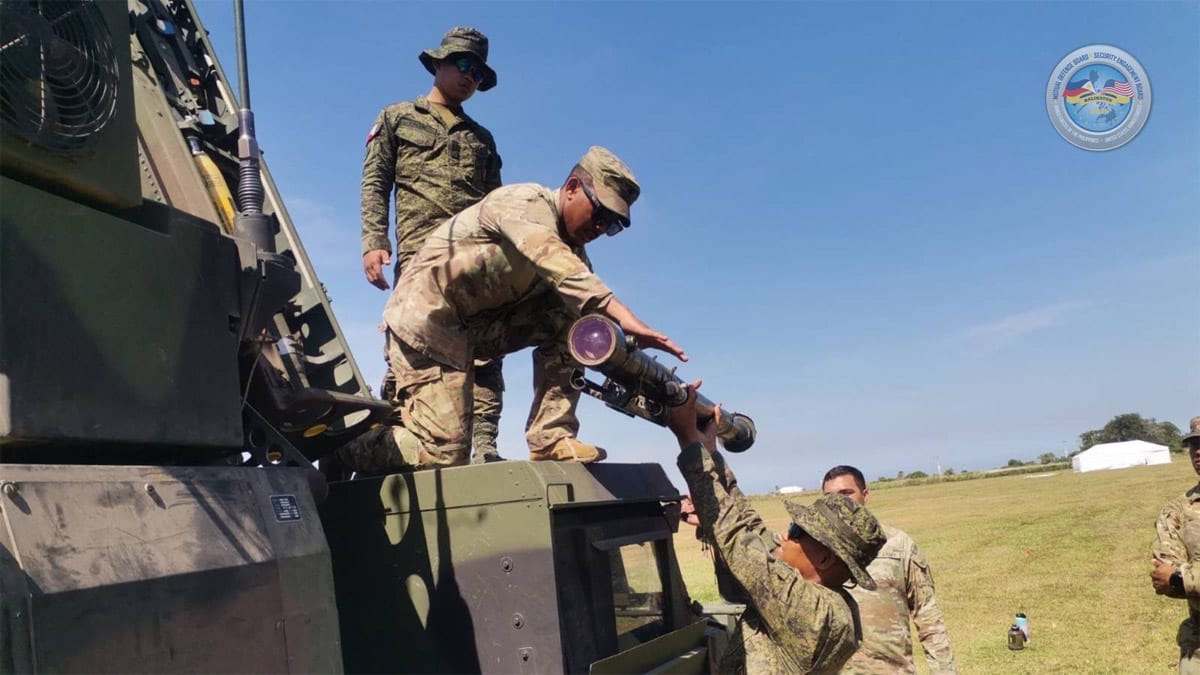
As the United States and the Philippines kick off their yearly Balikatan (shoulder-to-shoulder) combat drills, China’s foreign ministry has once again accused the Philippines of jeopardizing of regional peace and economic ties as tensions over the West Philippine Sea continue to heat up.
Guo Jiakun, spokesperson of the Chinese Foreign Ministry, late Monday called the large-scale joint exercises with Washington as something that could hurt regional peace.
“Against this backdrop, the Philippines chose to conduct the large-scale military drills with this country (the US) outside the region and brought in strategic and tactical weapons to the detriment of regional strategic stability and regional economic prospects.”
ALSO READ:
A Brief Explainer on the West Philippine Sea
Are We Finally Standing Up to China?
Without mentioning the US, the official cited threats of protectionism and bullying against the international community.
China earlier chided US President Donald Trump’s decision to impose tariffs or heavy duties on its trading partners, calling it economic bullying from its rival. Despite dialing back these rates on most countries for 90 days to pave the way for negotiation, Trump decided to raise new tariffs on Chinese goods to 125 percent from 84 percent.
More than 14,000 Filipino and American troops started the annual combat drills in the Philippines on Monday (April 21), which is happening amid rising tensions with Beijing in the disputed waterway.
The Armed Forces of the Philippines had announced that military forces from Australia, Canada, France, Japan, and South Korea and the United Kingdom would participate in the joint exercises. The yearly war games began in 1991 and are being carried out at a critical period as both China and the Philippines continue to assert their sovereign rights and claims over water features located in the West Philippine Sea.
Earlier this month, Google began identifying the waterway as the West Philippine Sea rather than South China Sea in its Maps platform, which many experts see as a move that could support the Philippines’ claim over the waterway.
China’s foreign ministry has implored the Philippines to stop being a mouthpiece for the US as both countries attempt to strengthen their defense and security cooperation initiatives as tensions continue to escalate in the region. These exercises are happening close to flashpoints in the disputed waterway and Taiwan, which China sees as a renegade state.
But Malacañang has asked China to respect the Southeast Asian nation’s decision to deepen its military ties with the US and for its neighbor to stop meddling in its diplomatic affairs.
“The Philippines is no one’s chess piece; we are an independent country,” Presidential Communications Office Undersecretary Claire Castro said.
China has asserted that it owns more than 80 percent of the South China Sea, citing maps from the 1940s, which it sees as its historical claim over the waterway that sees more than $3 trillion worth of global trade flow through it.
The United Nations-backed Permanent Court of Arbitration in 2016 ruled in favor of the Philippines as it said China’s claim over the waterway for violating the United Nations Convention on the Law of the Sea.
Southeast Asian nations such as Malaysia, Indonesia, and Vietnam also have claims over the South China Sea.
Flourishing Defense Ties With the US
Under the Marcos administration, security aid and commitments between Washington and Manila have grown as advanced missiles, jets and other military equipment have been extended to the latter.
Earlier in April, the US Department of State greenlit a potential sale of F-16 fighter jets and ammunition worth $5.5 billion to the Philippines. The move is seen to beef up the country's aerial defense and combat capacity amid constant clashes involving Chinese aircraft and ships in the South China Sea.
The US and the Philippines are bound by a Mutual Defense Treaty, which requires both nations to defend each other in the event of armed conflicts and attacks.
An advanced multipurpose Typhon missile system from the US, which was left in the country in April during last year’s Balikatan drills, has been moved from Laoag airfield to an island in Luzon.
Marcos had expressed willingness to withdraw the missile system if China decides to scale back its aggressive activities in the South China Sea.
The Taiwan Question
Chinese Foreign Ministry spokesman Guo at Monday’s news briefing said his country is against any country using the Taiwan “question” as an excuse to ramp up the militarization in the Asia-Pacific region, which would escalate tensions and confrontations.
“We urge relevant sides not to make provocations on the Taiwan question. Those who play with fire will perish by it,” he added.
China’s military earlier this month staged its own war games around Taiwan that involved maritime blockade drills and live-fire drills to deter “separatist forces” from advocating for Taiwanese independence.
Manila adheres to the One China Policy, which only recognizes one official Chinese state after China and Taiwan split after a civil war.
But the Philippine Presidential Communications Office on Monday announced that the Philippines has relaxed restrictions on travel to Taiwan for economic, trade and investment initiatives by government officials.
Based on Memorandum Circular 82 signed by Philippine Executive Secretary Lucas Bersamin on April 15 but released to the public on Monday, state officials that want to visit Taiwan for economic purposes are allowed to do so using their ordinary passports, but are prohibited from using their official titles.
Before this, the 1987 Executive Order No. 31 barred all Philippine officials from visiting Taiwan and receiving their Taiwanese counterparts to the Philippines.
The new memo now allows them to receive Taiwan delegations for the previously mentioned purposes, provided that they course their requests through the Manila Economic and Cultural Office in Taiwan.
In January last year after Taiwan’s presidential elections, Philippine President Marcos caught the Chinese foreign ministry’s ire after he congratulated Taiwan President William Lai Ching-te’s victory.
Marcos had expressed hope toward “close collaboration and strengthening mutual interests, fostering peace and ensuring prosperity for our peoples in the years ahead” with Taiwan’s leader.
The Philippine Department of Foreign Affairs responded by saying that the Philippines intends to continue following the One China Policy, even as it cited the estimated 200,000 overseas Filipino workers in Taiwan.
In 1975, former President Ferdinand Marcos Sr., the sitting president’s father, signed the joint communiqué with former Chinese Premier Zhou Enlai, which established Manila’s diplomatic ties with China.
Beijing still sees Taiwan as part of its overall territory as a breakaway province and has considered annexing the self-ruled country home to 23 million people. Taiwan, which has been independent from China since 1949, boasts one of the most advanced, state-of-the-art semiconductor industries and factories in the world.
The Philippine military has ordered its soldiers stationed up north near Taiwan to start crafting plans in case the so-called renegade province of China is invaded, but said that it was only to prioritize readiness for “potential scenarios” and the evacuation of civilians.