How The War In the Middle East Shakes Up The Philippine Economy

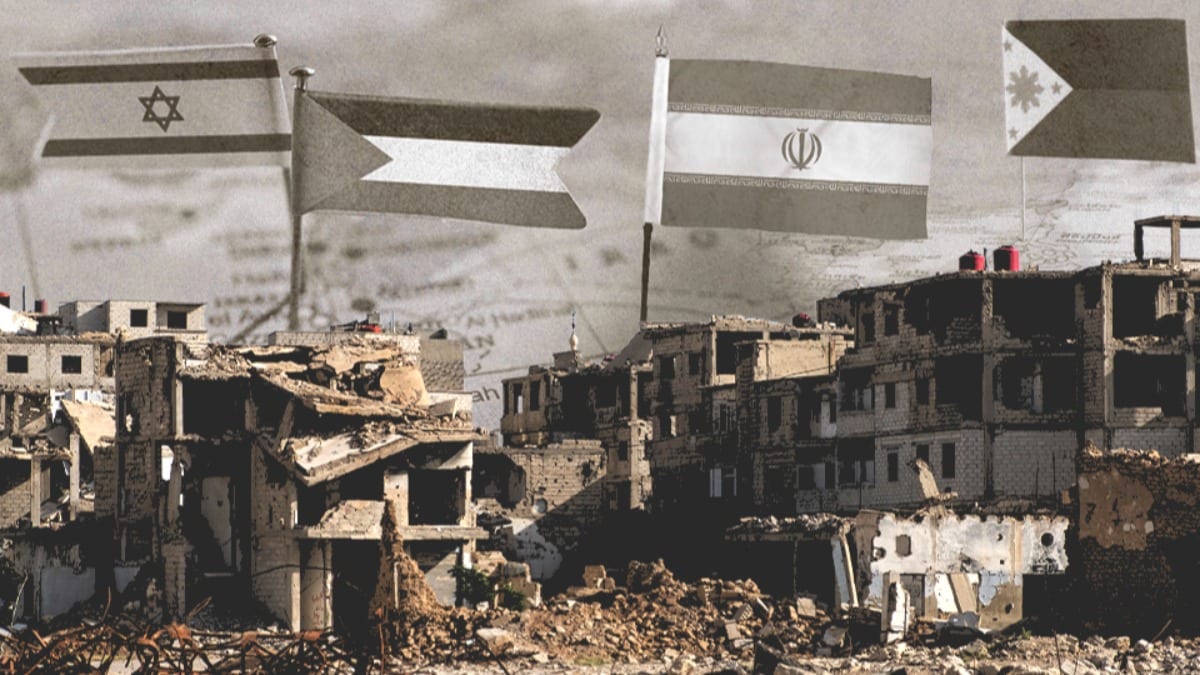
Now that Israel and Iran have declared war and launched missiles at each other and as tensions in the Middle East reach new levels, questions remain on how all this will affect the Philippine economy and what Manila's next steps are to cushion ill effects.
Philippine President Ferdinand Marcos, Jr. on Tuesday, June 17, ordered government agencies to brace for potential hikes in global oil prices considering the volatile situation in that part of the world.
At a news briefing at Malacañang, Presidential Communications Office Undersecretary Clarissa Castro said the President ordered the Department of Energy to coordinate with oil firms to ensure enough stockpiles and to stagger fuel price adjustments to cushion the war’s impact on consumers.
“The Middle East crisis is a clear reminder that the Philippines must reduce its reliance on imported oil,” Reyes Tacandong & Co. Senior Adviser Jonathan Ravelas told Esquire Philippines in an interview.
Castro noted that the government is mulling over procuring more aid packages in case oil prices surge due to the burgeoning war in the Middle East.
ALSO READ:
The Philippine Economy Is the Least Competitive in Southeast Asia, Report Says
How Trump's Tariffs Will Affect the Philippine Economy
Reuters earlier reported that even if the war has yet to hitt Iran’s crude oil production and export facilities, Brent futures have increased almost six percent because of higher risks.
Terry Ridon, a public investment analyst and convenor of the think tank InfraWatch PH echoed the need to expedite the renewable energy transition or the government’s adoption of electric or hybrid vehicles.
“The power sector should also endeavor to build generation facilities that are not dependent on imported fossil fuel sources, " he said in an online exchange. “The RE sector should be fully supported with more incentives, more investments and more government support.”
Bienvenido Oplas, founder of the free market think tank Minimal Government Thinkers, said in an online exchange that it is crucial for the government to step up and boost the approval rates for permits in building new toll roads, power plants, telecommunications towers, and more rural roads to boost rural productivity. He noted that the government should also quickly work on extracting Filipinos from Israel and Iran to spare them from the deteriorating peace in the region.
“The Bangko Sentral ng Pilipinas should also hasten the reduction in interest rates, cut government borrowings to reduce interest rate pressure, and to build more transmission lines and rural roads to improve productivity,” Oplas said.
Israeli leaders have said thet it has neutralized several Iran military and intelligence leaders, including intelligence chief Mohammad Kazemi, armed forces chief Mohammad Baheri,and the commander of the Islamic Revolutionary Guard Corps. Hossein Salami.
On Wednesday, June 18, President Marcos said that the government is ready to give fuel subsidies to stakeholders that are most vulnerable to a spike in oil prices amid worsening tensions in the Middle East. He told a news briefing that Manila had extended fuel subsidies during the coronavirus pandemic and could do so if the regional tensions spill over to the country’s economy.
“We will have to do the same for those who are severely affected —stakeholders — by any instability in the price of oil. Yes, it’s a serious problem,” Marcos said.
The Department of Energy had said the state is ready to provide fuel subsidies to transport operators and farmers to cushion the border impact of high fuel costs on the prices of basic goods and services.
Philippine oil companies are required under law to keep a minimum of 30-days worth of fuel inventory to stabilize local supply. Automatic fuel subsidies for public transport drivers and fishermen are also mandated if global crude prices go over the $80 per barrel threshold.
On Thursday June 19, the Philippine Embassy in Jordan said it “successfully received and facilitated the border crossing” of 21 Philippine officials. Seventeen of the officials were in Tel Aviv because of a short course in the country and were set to come back to the Philippines last weekend, according to the Philippine Foreign Affairs Department.
Iran’s leader Ayatollah Ali Khamenei had said that his country would never surrender, even as it launched hypersonic missiles at Israel on the sixth day of the war. This comes after Tel Aviv destroyed Iran’s internal security headquarters in Tehran via targeted missile attacks at storage sites. Israel’s Defense Minister Israel Katz had mentioned that air force jets attacked Tehran’s internal security headquarters after reports of powerful explosions across the city.
The Quest To Boost RE To Reduce Fossil Fuel Reliance
The Philippines is trying to boost the share of renewable energy in the country’s energy mix to 35 percent by 2030 and to increase it further to 50 percent by 2040 from the 22 percent share the energy source currently represents.
“The only immediate response is providing emergency assistance to the poorest and most vulnerable families and to farmers and fisherfolk,” IBON Foundation Executive Director Sonny Africa told Esquire Philippines in an interview.
Marcos earlier said that the Philippine government was considering exploring gas reserves in non-conflict areas in the South China Sea amid Manila dispute with Beijing.
“However the government should realize that it's long overdue to reduce dependence on volatile global markets and build a more resilient domestic economy with greater food and energy self-sufficiency,” Africa said.
Marcos has signed into law a measure developing and promoting the Philippine natural gas industry as Manila seeks to diversify its power mix and to expedite its transition to green forms of energy. The country is hard-pressed to make this transition work as the Malampaya gas field, which is the Philippines’ only source of indigenous gas, is likely to run out of easily recoverable fuel via conventional technique by 2027.
The Department of Energy has said that battery technology is evolving quick enough to achieve the country’s renewable energy targets on time.
“While fuel subsidies help in the short term, we need to fast-track renewable energy, improve public transport, and build energy resilience,” Ravelas said. “Rising oil prices will likely push inflation up, so long-term solutions are critical.”