

How Trump's Tariffs Will Affect the Philippine Economy

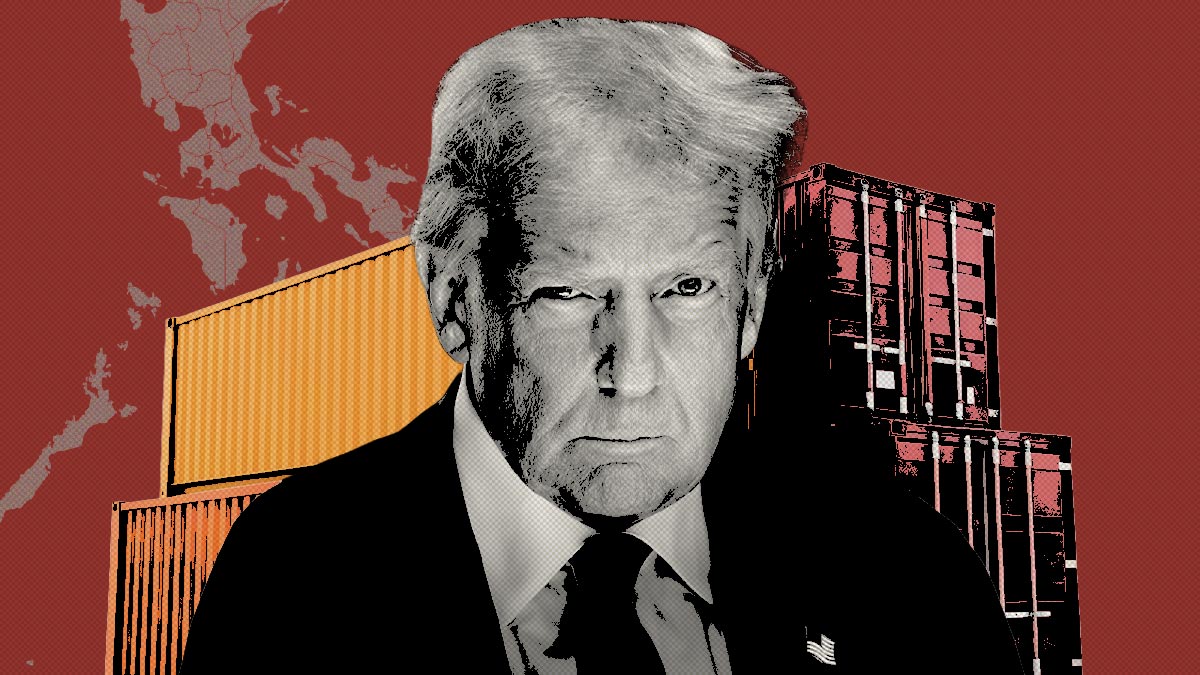
The Marcos government on Monday expressed optimism about its planned negotiations with the administration of US President Donald Trump on his imposition of 17 percent reciprocal tariffs on Philippine commodities, with the state seeking an ideal zero rate on Manila's goods.
During a regular press briefing at the Malacañang Palace, Presidential Communications Office Undersecretary Claire Castro said the Presidential Palace remains optimistic that a favorable compromise on the tariffs would be achieved when Philippine officials and US trade representatives negotiate the duties on April 29.
“Of course, we want to be optimistic; we should not be pessimistic like others. Let's see what will be beneficial for the Philippines and, of course, for our relationship with the U.S. That is what we will aim for,” she said.
When he assumed office in January, President Trump announced the reciprocal tariff scheme that would impose high duties and levies on the US's trading partners. The US President decided to pause these duties after Wall Street panicked and investors started to sell off shares, tanking the stock market.
Philippine Trade Secretary Cristina Roque and a delegation of economic officials are set to fly to Washington on April 29 to meet with US Trade Representative Ambassador Jamieson Greer and Commerce Secretary Howard Lutnick to address issues surrounding the tariffs and how they could affect Philippine exports.
The Trade chief expressed the Marcos government's intention to prioritize boosting domestic demand despite their openness to expand market access for US goods.
“It’s useless to negotiate if (these) will kill (local industries). It’s wrong, it’s impossible. We will always protect Philippine industries," Roque said.
Also Read
U.S. Tariff Impact: Philippines May See Gains, but Growth Prospects Still Face Challenges
The Philippines Is Set to Become the Fastest-Growing Economy in ASEAN, IMF Says
Castro did not expound on how the Philippine government plans on convincing the Trump government to lower the 17 percent tariff rate, which is still the second lowest in Southeast Asia after Singapore’s baseline 10 percent.
Malacañang earlier called on Philippine industries to double their efforts to boost the competitiveness of local products and services to raise exports.
Special Assistant to the President for Investment and Economic Affairs Frederick Go had told the Palace to wait for the results of the dialogue before it issues a definitive statement on the tariff scheme.
The Presidential Communications Office Undersecretary and other economists have said that the relatively lower tariff rate slapped on the Philippines compared to its regional peers could lead to more countries setting up shop in Manila to export to the US at lower costs.
Leonardo Lanzona, who teaches economics at the Ateneo de Manila University, said it is crucial to establish a credible framework to ensure negotiations lead to this favorable outcome for Manila.
“Trump believes that the US has a comparative advantage over everything, so we should always import from them. Any trade deficit with the US is due to some exploitation by the exporting countries, ” he said.
The economics professor also advocated for giving the World Trade Organization more credibility to stabilize global trade amid this so-called "economic bullying" from the polarizing US President.
“Clearly, we should develop the agriculture sector but it cannot be for the purpose of trade given the current distortions that the Trump government is creating.,” Lanzona added.
How Manila's Neighbors Stack Up
The White House earlier announced that the Philippines would be slapped with the 17 percent “discounted reciprocal tariff” after the Philippines imposed a 34 percent on US goods, which was based on estimates made by US trade officials.
Trump had earler slapped a 10 percent baseline tariff which would affect all of its trading partners and a scheme that would entail higher rates for countries that have high tariffs on US goods.
Broken down, Cambodia was set to face the steepest tariff at 49 percent, followed by Laos at 48 percent, Vietnam at 46 percent, Myanmar with 45 percent, Thailand’s 37 percent, Indonesia at 32 percent, Malaysia at 24 percent and Brunei’s 24 percent.
Economic ministers from the Association of Southeast Asian Nations (ASEAN) had expressed concern over Washington’s imposition of unilateral tariffs. The US last year was the regional bloc’s largest source of foreign direct investment and second-largest trading partner.
ASEAN members had decided against imposing their own retaliatory tariffs on the US, as it seeks to prioritize diplomatic talks to mitigate worsening tensions.
Based on Philippine Statistics Authority data in 2024, Manila imported about $8.17 billion worth of products from the US and exported $12.14 billion.
The ASEAN+3 Macroeconomic Research Office (AMRO) in a report last week said Trump’s 90-day pause on most tariffs resulted in otherwise mild repercussions on markets on the region.
AMRO added that the pause has kept markets volatile and investor confidence remains fragile.
On Monday (April 28), World Bank Lead Economist and Program Leader for the Prosperity Unit for Brunei, Malaysia and the Philippines said Manila should work on reforms that would open up domestic trade, domestic transport sectors that could keep the economy growing amid the reciprocal tariffs.
“That’s why I was mentioning streamlining regulations, so that you reduce the costs of foreign and domestic investment in the Philippines. It’s something that is going to help offset that.” he said.
The World Bank official added that the Philippines is likely to achieve upper middle-income status by 2027
The Philippines is still a lower middle-income country considering its gross national income per capita $4,230 in 2023, well within the World Bank’s range of $1,146 and $4,515 GNI.
A country is considered an upper-middle income economy if its GNI per capita is from $4,516 to $14,005.
“Big economies should stop Trump’s bullying by giving the WTO more credibility and enforcement powers,” said Lanzona, the economics professor from the Ateneo.
“In today’s fragmented world, the WTO has been sidelined by protectionism and a great power regime.
Asian Develpoment Bank President Masato Kanda on Tuesaday warned that Asian economies should expand their pool of trading partners and to increase demand for their local products to ride out the global trade war spurred by US perisisting with its high tariffs.
John Paolo R. Rivera, a senior research fellow at the Philippine Institute for Development Studies, cited the need for the government to stay proactive in negotating for exemptions or preferential treatment for industries such as electronics or semiconductors.
"The government needs to enhance trade and investment agreements with other partners such as in ASEAN and the European Union, and strengthen the domestic manufacturing ecosystem to attract firms relocating from high-tariff countries," the economist said.
"If tariff rates stay elevated, local industries, especially semiconductors, electronics, automotive parts, and some agricultural exporters (like coconut, processed fruits) will be affected by reduced competitiveness."
