
Oil Spill From Capsized Tanker Reaches Hagonoy, Bulacan

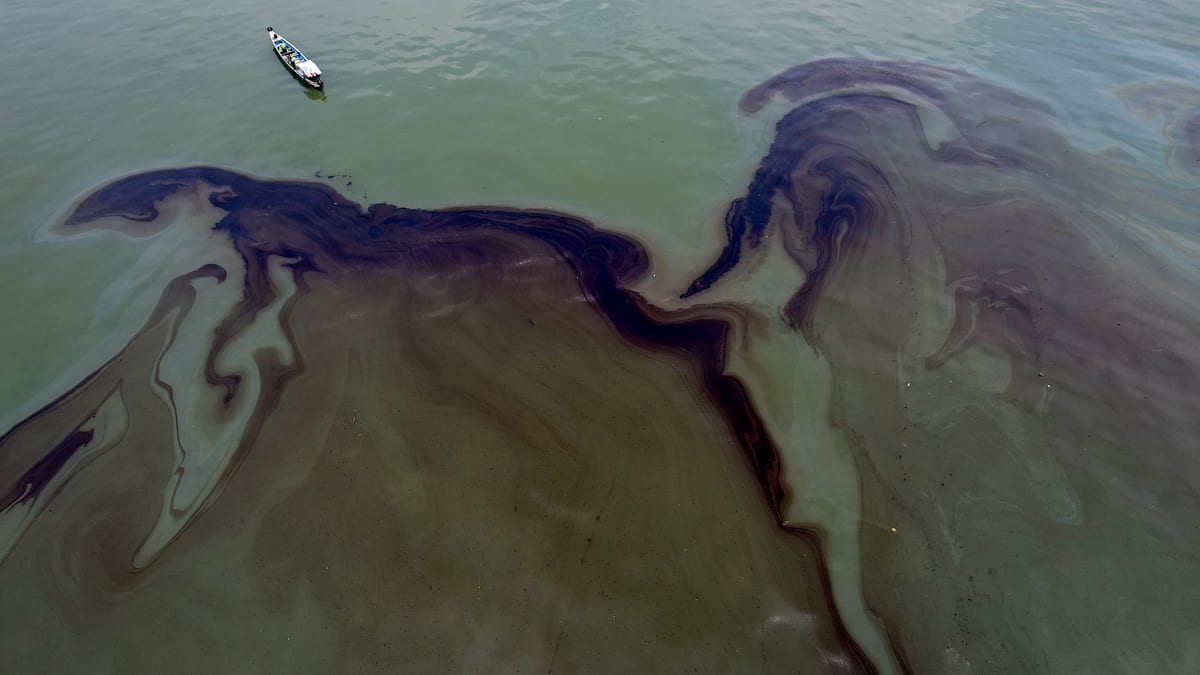
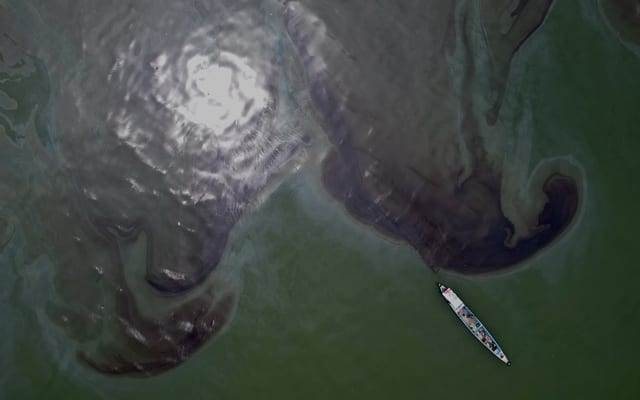
A thick layer of industrial fuel oil from a submerged tanker off the coast of Bataan has reached the municipal waters of Hagonoy, Bulacan, which recently suffered severe flooding due to strong rains caused by Typhoon Carina. Photos by Greenpeace Philippines show the oil slick approximately four kilometers from the town's coastline, with coordinates Latitude 14°43’14/310”N and Longitude 120°45’11.922”E in Manila Bay.
Updates on the Oil Spill in Manila Bay
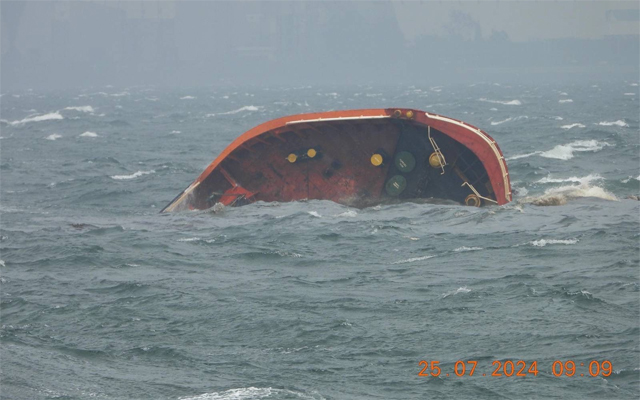
Philippine-flagged Motor Tanker (MT) Terranova was reported to capsize 3.6 nautical miles east off Lamao Point, Limay, Bataan, on July 25 at around 1:10 a.m. The vessel was carrying 1.4 million liters of industrial fuel oil and was bound for Iloilo. The Philippine Coast Guard's (PCG) initial response was the deployment of three 44-meter multi-role response vessels to start the application of oil dispersants in the area.
MT Terranova in Limay, Bataan, on Thursday morning, July 25
On July 26, PCG Spokesperson and CG Rear Admiral Armando Balilo said in a statement: "Base sa pag-aaral ng ating mga MEP personnel, considering na 34 meters deep ang pinaglubugan ng barko, kayang matapos ang siphoning within seven days. Walang dapat ipag-aalala, pero hindi kami nagpapakampante. We are still preparing for the worst-case scenario to address the potential negative impact to the marine environment."
Submerged tanker as of July 28
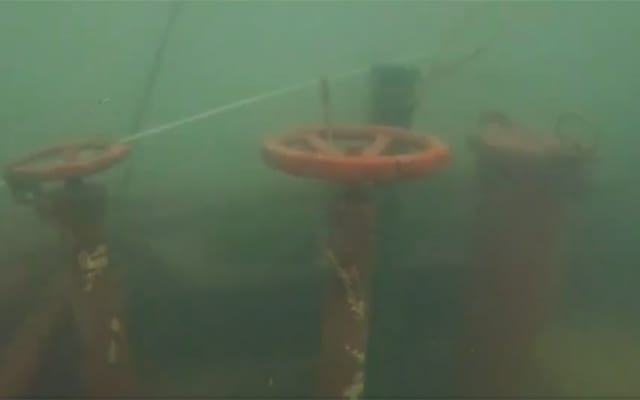
PCG reported on Sunday morning, July 28, that Harbor Star divers—who are part of the ongoing response operations—confirmed the presence of nine leaking valves of tanks. The divers finished the application of the second layer of sealant at around 10:42 a.m.
ALSO READ: Why the Submerged Oil Tanker in Manila Bay Should Be Contained ASAP
Negative Impact of the Oil Spill
In a July 25 interview with Esquire Philippines, Dr. Charina Lyn Amedo-Repollo—University of the Philippines Marine Science Institute (UP-MSI) Deputy Director for Research and Development and Assistant Professor of Physical Oceanography—expressed that "an oil spill in Manila Bay would have devastating effects on both the marine environment and the surrounding communities." The fact that this is happening in a semi-enclosed body of water "exacerbates the impact" and may lead to "significant degradation of water quality and harming marine life."
Hagonoy is located in the northern part of Manila Bay, which has a total coastline of 190 kilometers spanning Cavite, Metro Manila, Bulacan, Pampanga, and Bataan. The municipality is still reeling from the floodwaters caused by Typhoon Carina, which inundated over 52 villages in seven towns of Bulacan.
Aerial images reveal the extensive spread of the oil spill from sunken tanker MT Terranova
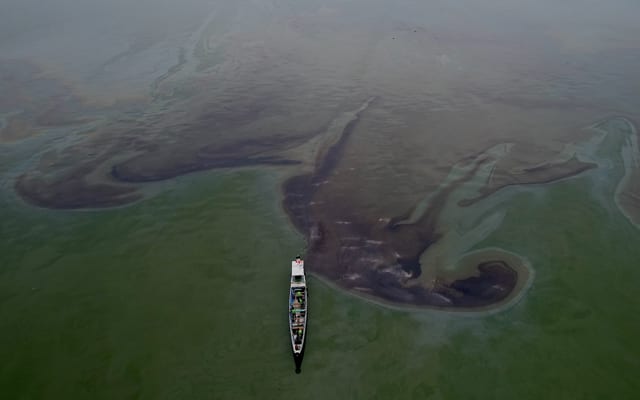
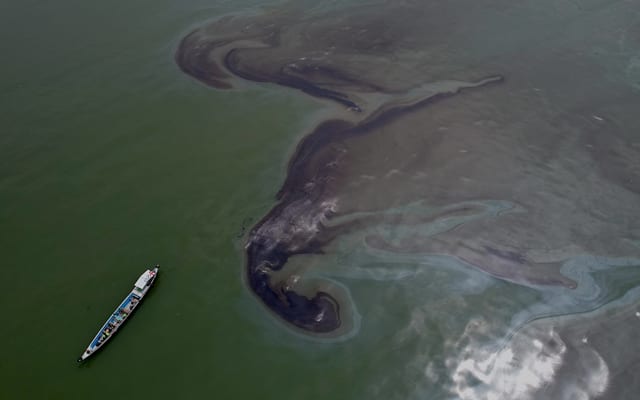
"As the oil spill from the MT Terranova reaches Hagonoy and other areas, it is expected to severely harm the marine environment and the livelihoods of local communities. The oil will contaminate coastal and marine ecosystems, causing long-lasting damage to habitats and marine species. This fossil fuel nightmare will directly impact the livelihoods of residents who rely on fishing and other marine resources for their sustenance and income. The pollution will render the waters unsafe for both wildlife and human activity, leading to significant economic losses and threatening the well-being of the affected communities. And we have to consider that these communities are bracing for these impacts while still recovering from extreme floods due to Super Typhoon Carina," Greenpeace Philippines Climate Campaigner Jefferson Chua told Esquire Philippines on Sunday afternoon, July 28.
Department of Environment and Natural Resources, through a diagram from the Biodiversity Management Bureau, identified coastal and marine resources and marine protected areas that might be affected by the oil spill. Possible contamination could happen in Pampanga and Cavite, aside from Bataan and Bulacan, according to Environment Secretary Maria Antonia Yulo-Loyzaga during a situation briefing on July 27.
Yulo-Loyzaga recommended that the surrounding municipalities should already put down spill booms, especially the organic ones built from coconut husks. Similar materials were used during the Mindoro oil spill in 2023.
The environment secretary also cited that commercially available spill booms are "limited in quantity," to which Marcos added, "are too expensive."
Regarding the best practice that should be done by the government, Chua told Esquire Philippines:
"[They] must take swift and comprehensive action to address the oil spill crisis. This includes deploying resources for immediate containment and cleanup to minimize environmental damage and holding the responsible companies accountable for the costs and compensation to affected communities. It is crucial that the government ensures the full weight of our legal system is applied to secure justice for the people of Hagonoy and other affected areas.
This incident also highlights the lack of sufficient information needed to prepare communities for such disasters, a problem also evident in last year’s Mindoro oil spill. Therefore, the government must prioritize transparency, providing timely and accurate information to enhance community preparedness. Additionally, a swift and just transition to renewable energy is essential to reduce the country's dependence on fossil fuels and mitigate the risk of future disasters.
Greenpeace calls for decisive and urgent action to prevent future oil spill incidents by ending the reliance on fossil fuels and holding oil and gas companies accountable for damages. We need a swift and just transition to renewable energy sources and the adoption of comprehensive climate justice policies. We would like to emphasize the need for stringent government regulations and enforcement to ensure that such disasters are avoided in the future. The Marcos Jr. administration must make oil and gas companies pay for the damages they cause and take responsibility for the climate crisis their destructive businesses have been fueling for the longest time."
Fisheries and aquaculture remain to be among the major sources of livelihood in Manila Bay. Pambansang Lakas ng Kilusang Mamamalakaya ng Pilipinas (Pamalakaya) in January 2024 said that fisherfolk in Navotas and Cavite have lost over 80 percent of their daily income because of reclamation projects on their coast. These include the Bulacan Aerotropolis Project of San Miguel Corporation, the Bacoor and Diamond Reclamation Project, and the Manila Waterfront City Project. Manila Bay is also a complex ecosystem with mangroves, wetlands, coral reefs, and seagrass beds that are home to biodiverse plant and animal communities, which all have ecological and socio-economic functions.
