
Why the Submerged Oil Tanker in Manila Bay Should Be Contained ASAP


A motor tanker carrying 1.4 million liters of industrial fuel oil capsized off the waters of Bataan on Thursday morning, July 25. The Philippine Coast Guard is currently assessing the extent of the damage, but experts are already worried about the immediate impact on marine life and local communities in the area should this cause a major oil spill.
ALSO READ: Oil Spill From Capsized Tanker Reaches Hagonoy, Bulacan
What Happened to Oil Tanker Terranova
According to an incident report by the Philippine Coast Guard (PCG) on Thursday noon, Philippine-flagged Motor Tanker (MT) Terranova capsized 3.6 nautical miles east off Lamao Point, Limay, Bataan, at around 1:10 a.m. on July 25. The vessel, which sunk 34 meters, was carrying 1.4 million liters of industrial fuel oil and was bound for Iloilo.
MT Terranova in Limay, Bataan
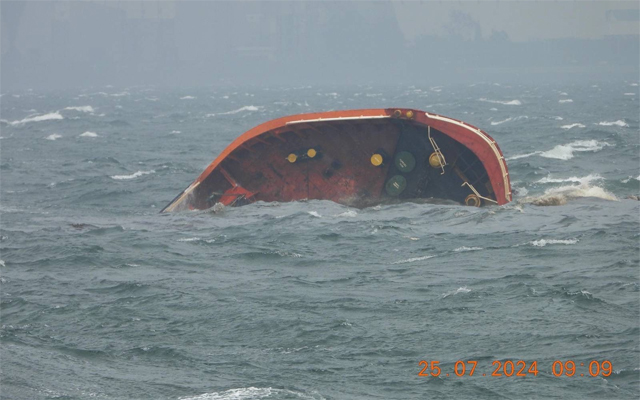
There were 17 crew members on board, but only 16 were rescued as of the report at noon. BRP Melchora Aquino located the body of the missing crew in the vicinity waters off Limay, Bataan, at 3 p.m.
An initial aerial survey done by the Coast Guard Aviation Command has monitored an oil spill 5.6 nautical miles east of Lamao Point. The estimated coverage or length of the oil slick is two nautical miles, which is between three and four kilometers.
While most of Luzon was experiencing the onslaught of Typhoon Carina from Tuesday to Wednesday, PCG spokesperson and CG Rear Admiral Armando Balilo said that there was no Public Storm Warning Signal raised over Bataan when the vessel left the port of Limay. This meant that MT Terranova "did not violate rules and regulations pertinent to the movement of vessels during heavy weather," according to the spokesperson.
PAGASA's Tropical Cyclone Bulletin on Tuesday night, July 24, at 11 p.m. indicated that the center of the eye of Typhoon Carina was estimated based on all available data at 335 km North of Itbayat, Batanes. It had a southwestward movement at 15 km/h with maximum sustained winds of 175 km/h near the center. Tropical Cyclone Wind Signal (TCWS) No. 2 was declared over Batanes, and TCWS No. 1 over Babuyan Islands, portions of Cagayan, and the northern portion of Ilocos Norte. However, Southwest Monsoon (Habagat) enhanced by Typhoon Carina brought moderate to intense rainfall over the western portion of Luzon.
PAGASA's bulletin in the evening of July 24 also warned: "In the next 24 hours, CARINA and the enhanced Southwest Monsoon will bring rough seas over the seaboards of Northern Luzon (2.5 to 4.0 m) outside Gale Warning areas, and the western seaboard of Central Luzon (2.5 to 4.0 m). Moderate to rough seas are also expected over the western seaboard of Southern Luzon (1.5 to 3.5 m) and the eastern seaboards of Central and Southern Luzon (1.5 to 3.0 m) Mariners of small seacrafts, including all types of motorbancas, are advised not to venture out to sea under these conditions, especially if inexperienced or operating ill-equipped vessels."
Race Against a Major Oil Spill
PCG has also deployed three 44-meter multi-role response vessels (MRRVs) to start the application of oil dispersants in the area of the submerged tanker, while siphoning is yet to start.
"These vessels will start the application of oil dispersants to immediately mitigate [the] impact, especially during the period where siphoning is being prepared. The PCG sets an operational target of seven days to finish siphoning the oil from the sunken tanker to stop further spread," PCG Commandant CG Admiral Ronnie Gil L Gavan said in a statement.
ALSO READ
Manila Bay Is Alive, Not a Lifeless 'Sewer of Mud' That a DENR Official Claims It Is
Everything You Need to Know About the 'White Sand' in Manila Bay
Foreseen Impact of an Oil Spill in Manila Bay
"We are racing against time and we will try to do our best to contain it immediately and stop the fuel from leaking. There is a big danger that Manila will be affected, even the shoreline of Manila, if the fuel will leak, because it is within Manila Bay," Balilo said during a briefing, as reported in local media.
The Philippine islands last experienced a major oil spill when MT Princess Empress, which was carrying 800,000 liters of industrial oil, capsized in the waters off Naujan, Oriental Mindoro, last February 28, 2023. The Mindoro oil spill spread to parts of Batangas, Palawan, and Antique, causing widespread environmental destruction and disrupting the livelihoods of local communities. The Verde Island Passage, which was referred to in a 2005 published study as "center of the center of marine shorefish biodiversity," was also affected.
MT Terranova is carrying 1.4 million liters, which is 600,000 liters more than MT Princess Empress' load. Terranova sunk at 34 meters deep, while Princess Empress was located at 389.1 meters. The latter's oil spill expanded to around six by four kilometers in less than 24 hours. It took four months for PCG to announce the completion of the oil spill removal and recovery operations from all eight cargo tanks of the vessel, but by then, the damage had already been done. Up to 23 marine protected areas were affected just in the first week of the oil spill.
Manila Bay, especially the part along Roxas Boulevard, is known for its sunset.
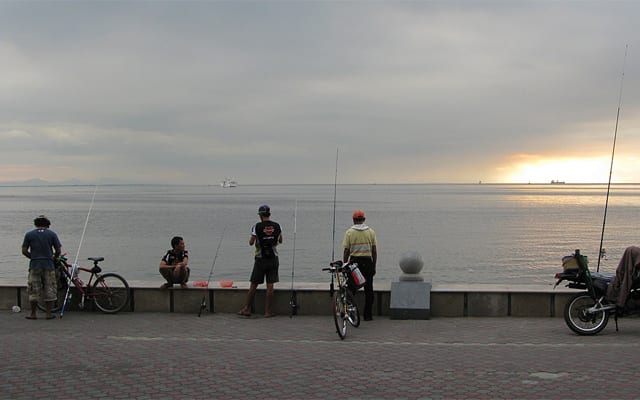
Given the possibility of another major oil spill, Esquire Philippines reached out to experts at the University of the Philippines Marine Science Institute (UP-MSI) regarding its effects.
"An oil spill in Manila Bay would have devastating effects on both the marine environment and the surrounding communities. The bay's semi-enclosed nature exacerbates the impact, leading to significant degradation of water quality and harming marine life, including fish, birds, and sensitive ecosystems like mangroves and coral reefs around the bay," Dr. Charina Lyn Amedo-Repollo, Deputy Director for Research and Development and Assistant Professor of Physical Oceanography at the UP-MSI, told Esquire Philippines in an e-mail exchange.
Manila Bay is bounded by Cavite and Metro Manila on the east, Bulacan and Pampanga on the north, and Bataan on the west and northwest. More than 19,000 birds were observed in various parts of the bay, with most of them migratory birds. Mangroves, wetlands, coral reefs, and seagrass beds in Manila Bay also serve as natural habitats for a biodiverse ecosystem, which also still supports a substantial fishing industry.
"Cleanup efforts in Manila Bay will also be more challenging due to its semi-enclosed nature, which limits water circulation and allows oil to accumulate and persist for longer periods. Additionally, the high density of urban and industrial activity around the bay increases the complexity of cleanup operations and the potential for further contamination," the professor explained.
The Las Piñas–Parañaque Critical Habitat and Ecotourism Area is adjacent to Manila Bay.
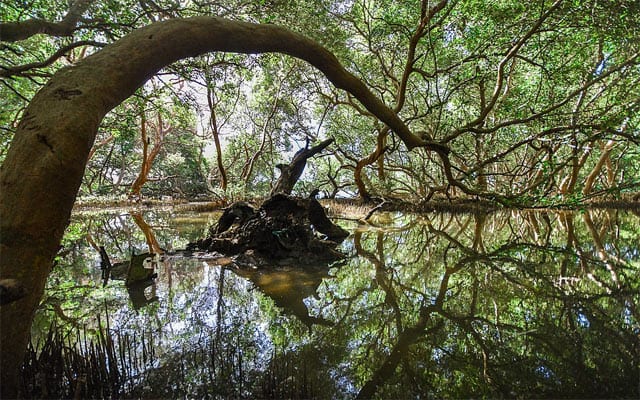
A worst-case scenario would mean "adverse effect on marine habitats, health problems for residents around the bay, and substantial economic losses for fisheries and tourism," given that an oil spill can lead to contamination of fish stocks. This also makes them "unsafe for consumption," ultimately causing economic losses for local fishermen.
PCG has promised a seven-day siphoning of the industrial fuel oil inside the submerged tanker, including a preliminary deployment of oil dispersants.
Amedo-Repollo explained that an oil spill like this could be cleaned up by "rapid containment using booms and skimmers, applying chemical dispersants, and conducting long-term environmental monitoring and restoration to rehabilitate affected ecosystems. Additionally, addressing the potential impacts on water quality, sediment contamination, and the health of sensitive habitats like mangroves and coral reefs is crucial."
It should be noted that this is not an isolated incident. The Philippines has a long history of oil spills that have caused extensive environmental damage and posed serious health risks to those living in affected areas. Natural disasters, such as rough waters likely experienced by MT Terranova, cannot be avoided. Still, incidents of capsized tankers can be prevented, and the impact of oil spills can be lessened.
"We need strict safety rules for oil tankers, better disaster response plans, and strong emergency preparation. This includes regular practice drills and cooperation between the government and businesses," Amedo-Repollo said.
As of press time, the PCG is working with several Oil Spill Response Organizations (OSRO), including oil companies, PCG Auxiliary, and LGUs. Operations are conducted based on the National Oil Spill Contingency Plan (NOSCOP).
