
DFA: Philippines Won’t Yield To China in Pag-Asa Island

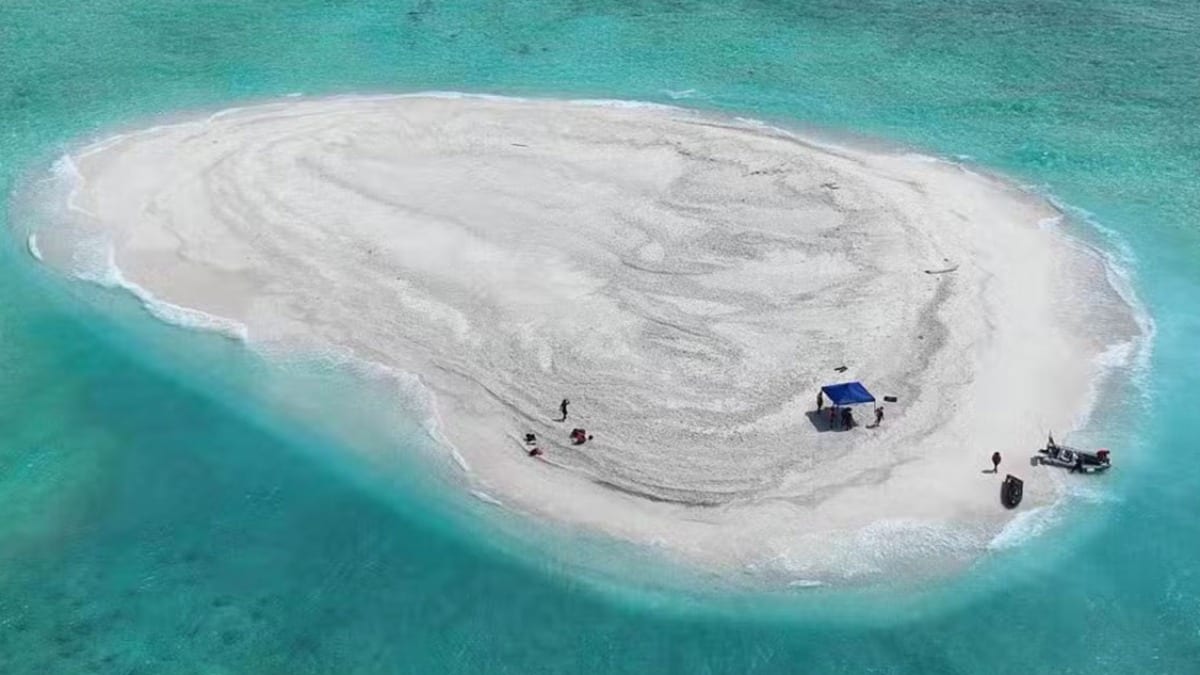
Amid escalating tensions in the West Philippine Sea, the Department of Foreign Affairs (DFA) on May 29, Thursday, asserted that the Philippines would continue its maritime security activities in the features of Thitu Island, locally known as Pag-Asa Island, even amid China’s contending claims of the waterway.
On May 22, Manila accused Beijing of endangering the lives of Filipino researchers aboard two civilian vessels at Sandy Cay, which is found on the northern edge of the Spratly Islands. The cay is near a Philippine military outpost in Thitu Island, that is host to a small Filipino community that has lived there since 1971.
The Chinese Embassy in the Philippines did not immediately respond to a request for comment.
“The fundamental fact is that Pag-asa Island and the Pag-asa Cays form part of the Kalayaan Island Group (KIG), which is an integral part of the Philippines over which it has long standing sovereignty and jurisdiction,” the DFA said in a statement, commenting on the Chinese Embassy in the Philippines saying Filipino researchers illegally conducted scientific exploration in the cay.
Sandy Cay is known in Chinese as Tiexian Jiao, while the Chinese name for the Spratly Islands is Nanshao Qundao.
Also Read
Why Marcos Wants a Code of Conduct on the South China Sea
Why the Philippine Coast Guard is Worried About Chinese Research Vessels
“The Philippines is clearly within its rights to conduct routine maritime operations and scientific research in and around these features, and will continue to do so,” the Philippine Foreign Affairs Department asserted.
DFA Spokerson Ma. Teresita Daza said that China has no right to object to, and interfere with Manila’s actions within its sovereignty under the 1982 United Nations Convention on the Law of the Sea and a 2016 ruling voiding China’s claim on the South China Sea.
The UN-backed Permanent Court of Arbitration had ruled against Beijing’s claim of nearly the entirety of the waterway for violating the 1982 UNCLOS.
“We urge China to respect the Philippines’ sovereignty and jurisdiction, even as we continue to pursue peaceful and legal means to manage differences and the situation at sea,” Daza added.
A Look At Why China Claims Pag-Asa Island, the South China Sea
In a statement published on May 26 and sent to media members via a Viber group chat, Beijing’s embassy in Manila accused the Philippines of illegally conducting the research activities in the cay, citing the 2002 Declaration on the Conduct of Parties (DOC) in the South China.
Under Article 5 of the DOC, parties must “exercise self-restraint in the conduct of activities that would complicate or escalate disputes and affect peace and stability, including refraining from inhabiting presently uninhabited islands, reefs, shoals, cays and other features.”
On May 28, a Philippine civilian ship of volunteers reached Pag-Asa Island without any reports of harassment from Chinese vessels, the Philippine Coast Guard said in a statement.
The M/V Kaptan Felix Oca was scheduled to hold a “peace concert” at the military outpost in the island to assert Manila’s claim in the area.
Pag-Asa Island or Thitu is situated about 500 kilometers west of the Philippine island of Palawan.
Last year, a similar civilian mission failed to sail close to the Scarborough Shoal to avoid risking a clash with Chinese vessels in the area.
The Philippines and China have had tensions worsen in the past year after the Chinese Coast Guard repeatedly blocked Philippine resupply missions to nearby outposts in the South China Sea. There have also been instances of Beijing’s vessels firing water cannons at civilian and fishing vessels.
Beijing does not recognize the 2016 arbitral ruling that voided its claims over the waterway and has continued its island building activities.
The country's sweeping claims over the South China Sea (West Philippine Sea) is based on maps from the 1940s that China sees as its historical claim.
About $3 trillion in global trade flows through the waterway and is believed to be abundant in gas and oil deposits.
“The underlying intentions behind such activities are self-evident. It is clear which party initiated the provocation and which is engaging in deception,” the embassy said.
“China will continue to take resolute measures to safeguard its territorial sovereignty, maintain Tiexian Jiao’s status of ‘no personnel or facilities,’ and steadfastly uphold the sanctity of the DOC,” it added, referring to China’s name for Sandy Cay.
