
Apparently, an Asteroid Burned Up in the Philippines' Atmosphere

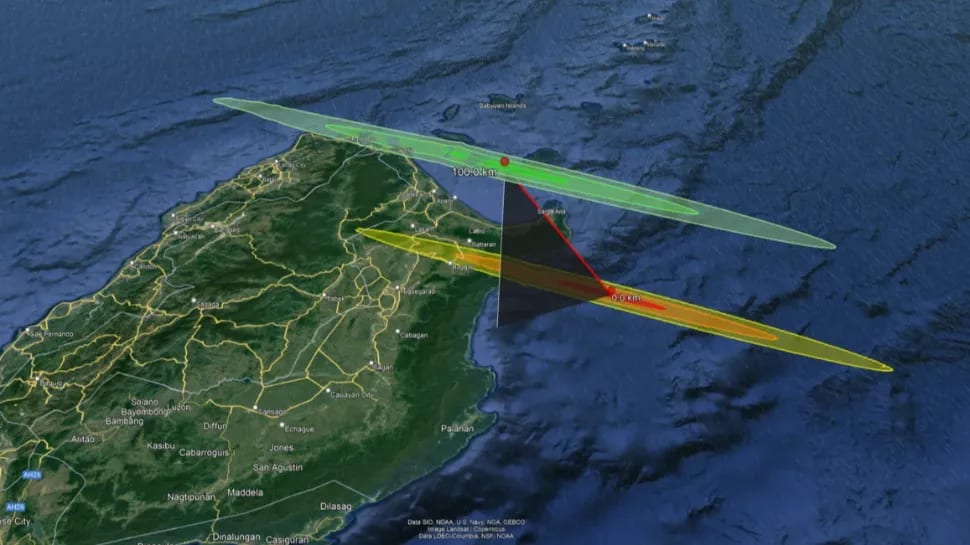
On Wednesday, September 5, a rare asteroid was spotted burning up in the Earth's atmosphere. It was found near Luzon at around 12:39 p.m. ET (4:39 p.m. UTC), based on satellite images from the National Aeronautics and Space Administration (NASA) and European Space Agency (ESA).
This sighting is as rare as it gets, as this has only been the ninth asteroid we have ever spotted before impact. Measuring three feet in size, "2024 RW1," as it is named, was reportedly spotted by some residents in Cagayan province, particularly in Tuguegarao City, before the Mt. Lemmon Survey. Residents described seeing a "greenish fireball" over Lal-lo.
“Based on ground reports we have received, the short-duration brightening of the sky was observed as far south as Metro Manila and CALABARZON, but the best shots of the fireball were mostly from Cagayan Valley,” ScienceKonek added in a Facebook post.
2024 RW1's discovery is credited to the University of Arizona's Catalina Sky Survey, which is sponsored by the agency. NASA's definition of asteroids are ''rocky, airless remnants left over from the early formation of our solar system'' that are around 4.6 billion years ago. The agency's Asteroid Watch had earlier forecasted the arrival on the east of the Philippines.
????Incoming!
— European Space Agency (@esa) September 4, 2024
A roughly 1 metre asteroid will strike Earth’s atmosphere over the Philippines near Luzon Island at 17:08 UTC today, 4 September.
The object is harmless, but people in the area may see a spectacular fireball!
Discovered this morning by the Catalina Sky Survey,… pic.twitter.com/UjQLbh3fFr
ALSO READ:
Manila Trench May Contain Rich Natural Gas Sources, UP Scientists Say
Scientists Turned Dead Birds Into Zombie Drones to Spy on Humans
''Most asteroids can be found orbiting the Sun between Mars and Jupiter within the main asteroid belt. Asteroids range in size from Vesta—the largest at about 329 miles (530 kilometers) in diameter—to bodies that are less than 33 feet (10 meters) across. The total mass of all the asteroids combined is less than that of Earth's Moon,'' it said in a release.
But Wait, Will This Asteroid Do Any Harm in the Philippines?
Both the International Meteor Organization and ESA reassured the public that the impact of such an asteroid on the atmosphere is harmless.
However, parts of the asteroid may find themselves reaching land or water. We can still expect to see large quantities of dust in the atmosphere after an asteroid burns up. If pieces hit the seas, water vapor should increase. Worse cases usually result in landslides or mudslides.
Traveling at a speed of 17.6km (10.9 miles) per second, or 63,360km (39,370 miles) per hour (as recorded by the New Scientist magazine), asteroids like 2024 RW1 are rarely detected by sensors. Usually, asteroids in space are massive and would cause significant damage when they head into planets. The good news is that these kind of asteroids are far and few in between, and shouldn't be considered as threats.
