The U.S. Deploys Its Nuclear-Powered Carrier to the South China Sea Amid Rising Tensions with China

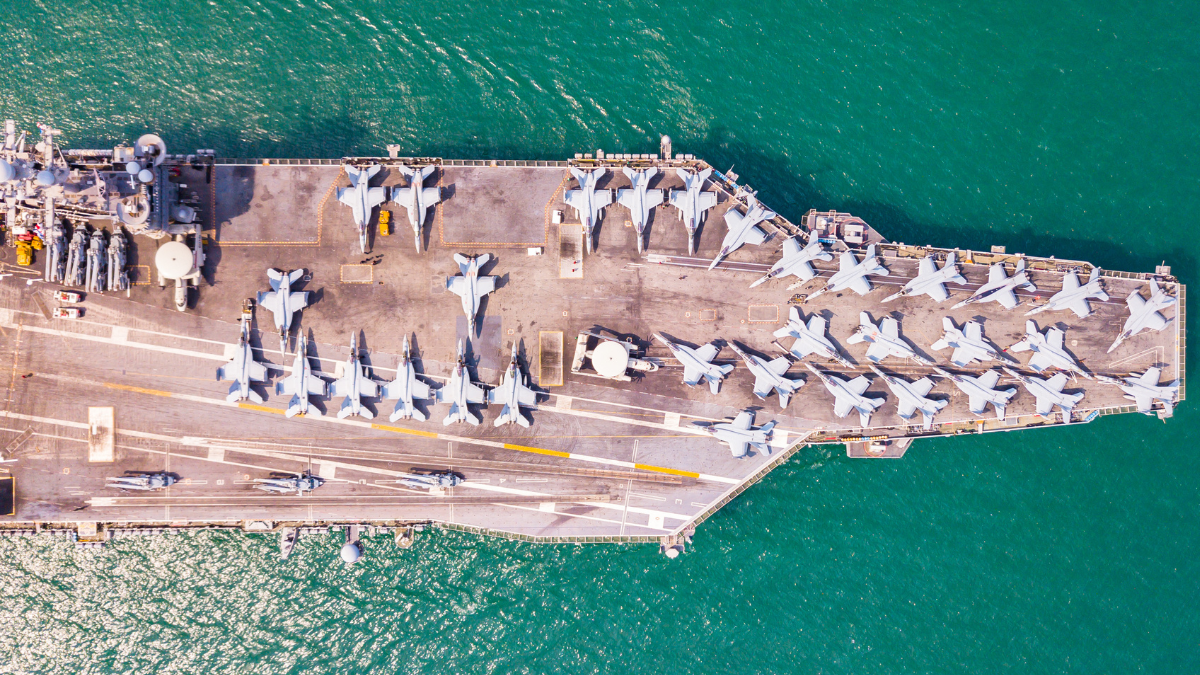
Weeks after repeatedly sending warplanes into Chinese-controlled airspace, the United States is now amping up the pressure on China to back off from Taiwan by deploying its Nimitz-class nuclear-powered supercarrier, the USS Ronald Reagan, to Taiwan.
“USS Ronald Reagan and her strike group are underway, operating in the South China Sea following a successful port visit to Singapore,” Commander Hayley Sims said in a statement to Reuters.
ALSO READ:
The U.S. Just Flew Its Warplanes in Chinese-Controlled Airspace
Two Massive Carrier Strike Groups from the U.S. Are Now Flexing in the Philippine Sea
According to the U.S. Navy Institute, the Ronald Reagan Carrier Strike will conduct maritime security operations and coordinated tactical training between air and surface units. The carrier strike group is composed of the aircraft carrier USS Ronald Reagan (CVN-76) with embarked Carrier Air Wing (CVW) 5, cruiser USS Antietam (CG-54) and the destroyer USS Higgins (DDG-76).
The deployment was made as China warned the U.S. about sending House Speaker Nancy Pelosi to Taiwan. The White House responded that Pelosi is going to Taiwan on her own accord, and will not be an official visit. Nevertheless, sources told the Associated Press that the U.S. will significantly increase military activity in the region if Pelosi does travel to Taiwan.
In recent months, China has been more vocal about its claims over Taiwan and has increased military activity around the island, particularly by sending warplanes into Taiwan’s air defense identification zone or ADIZ. Taiwan is technically part of China based on the One China Policy. Although the U.S. recognizes this policy, it maintains robust diplomatic relations with Taiwan and has even provided military equipment to the island for defense against an invasion from the mainland.
ALSO READ:
A Powerful U.S. Warship Will Be Named After a Filipino Hero
U.S. Firm Moves to Buy Massive Shipyard Near the Former Subic Naval Base
In May 2022, China sent 30 warplanes into Taiwan’s air defense identification zone, prompting the island to scramble its own fighter jets to intercept the warplanes. It was the largest incursion by China into Taiwanese air space. This came after U.S. President Joe Biden
Although the U.S. does not officially support Taiwan’s aspirations for independence, it does support maintaining the status quo of Taiwan having an independent government. Back in May 2022, the U.S. warned of “especially stark” consequences if China decides to alter that status quo.