

Refusal, Invisibility, and the Indigenous Question

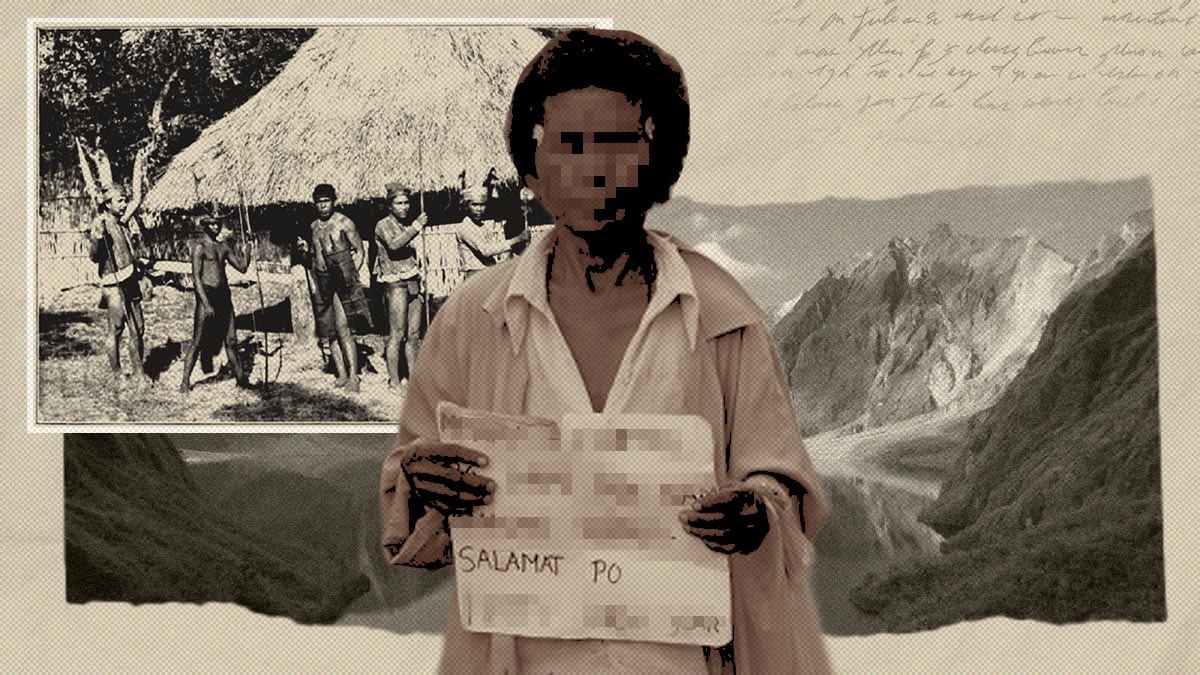
Every now and then, we come across news that challenges our stereotypical views of indigenous communities—especially when indigenous people engage in actions that seem unimaginable within the dominant assumptions that society holds about indigeneity.
In the Philippines, being indigenous is often reduced to a hyper-performative identity, limited to dancing and ritual displays meant for tourist consumption. In a country that relies heavily on tourism for economic growth, the recently invented annual festivals for every town and city provide a platform to recreate these performances as symbols of indigenous life. This constant conflation has become so normalized that indigenous communities are often seen as worthy of attention, and therefore visible, only when they conform to these expected images of indigeneity as a communal life steeped in authentic cultural practices and traditions.
The events of the past few days, however, force us to reflect on the stereotypical image of the quintessentially performing indigenous body. In a now-viral post on a social media platform, a local tourist describes how members of the Aeta community in Capas, Tarlac, refused to allow their group to proceed with a tour to Mt. Pinatubo on Good Friday, April 18, 2025, despite having paid all the necessary fees to the tour operator.
The post goes on to describe how members of this indigenous community erected a temporary barrier, blocking access to the famous volcano, and explained their refusal. According to the post, the decision to deny entry stemmed from the community’s claim of an unequal distribution of financial benefits derived from the use of their ancestral land. The post further explains that this unequal distribution has been a recurring issue, and that by refusing entry to tourists, the Aeta community seeks to draw attention to this ongoing unequal arrangement with the tour company.
The subsequent reactions to the event have been mixed, ranging from messages of sympathy to disparaging comments accusing the community of selfishness for prioritizing monetary benefits from their ancestral land by refusing entry to tourists. What is striking about this event is how it presents a departure from the stereotypical image of an indigenous community—that one that quintessentially performs rituals and dances, and is showcased in annual festivals to attract tourists. Instead, this event offers an example of an indigenous community engaging in open refusal, demanding a fairer financial arrangement and a better economic situation. But how is this an act of refusal? And how can we possibly make sense of it?
Almost five months ago, while I was conducting research on Aeta communities in Capas, a colleague informed me of a somewhat similar event. This incident also involved Aeta communities, who had been invited to showcase their jungle survival skills before an audience composed of government officials and private individuals.
Documentation of the event shows Aeta people—mostly men wearing G-strings—demonstrating indigenous practices such as making fire in the forest using materials gathered from their surroundings. However, in contrast to the open refusal at the foot of Mt. Pinatubo, the Aeta participants in this event were all smiling and appeared happy to meet their guests. I later learned that this was a recurring performance held for tourists interested in learning the survival skills of the Aeta communities.
All these demonstrations point to the same kind of popular imagination about indigenous communities that we often see in official public events, where such practices are framed as visible signs of indigeneity. For indigenous people to command presence, that is, to occupy public attention, even briefly, they are expected to embody predetermined stereotypes of communities steeped in tradition and existing an enviable idyllic life in their quaint villages in the mountains, free from the maddening stress of urban life.
What these stereotypes ultimately do, however, is create a form of visibilization—a way of making indigenous people legible or recognizable to the larger Philippine public. In other words, an indigenous person in the Philippines can only appear as indigenous by performing expected forms of cultural intimacy and a spectacular ability to survive despite limited means. Anything outside these stereotypes becomes unimaginable—and, therefore, negligible.
So, despite the possibility of visibility, there is also the risk of rendering indigenous life invisible by framing and reducing it to predetermined representations of spectacular survivability and cultural intimacy. What these representations produce—at the same time as creating visibility—is a kind of concealment that effaces the difficult experiences of indigenous life. Questions of access to a basic standard of human dignity, for example, do not figure in, as the frames of engagement with indigenous communities are already predetermined by stereotypes that represent only a small fragment of the everyday experience of indigenous communities in the Philippines.
ALSO READ
Today I Learned: The Indigenous Cultures of Western Visayas
This Indigenous Tribe in Mindanao Could Teach Us All a Lesson About Living With—Not Against—Nature
We have seen time and again how Philippine society struggles to confront these other difficult facets of indigeneity, precisely because its engagement with indigenous communities is framed within specific scripts. Any attempts to deviate from this script are often met with a mix of ridicule, amazement, and disavowal. From the rise of a young, beautiful Sama woman—from begging on the street to becoming a short-lived celebrity—to stories of young Aeta individuals who are the first in their communities to complete university studies, all of these are seen as exceptional feats. And why is that? Precisely because, even though they break the stereotypes society has created and used to pigeonhole indigenous people, these stories are treated as extraordinary occurrences—something that happens once in a generation. They are not celebrated as success stories per se, but rather as spectacular aberrations to the stereotypes that society has so far created to box indigenous people in.
In many ways, the recent event at Mt. Pinatubo is not simply a refusal to bar tourists from entering their ancestral domain. Rather, it is a rejection of these unquestioned assumptions and stereotypes about indigenous people—notably, that they do not need money because they have an innate predilection for survival despite limited means. It is a call for public recognition of the difficult circumstances that have long accompanied indigenous lives, despite society’s persistent idealization of them as an idyllic community attuned to nature, hardship, and constant survival.
ABOUT THE AUTHOR: Macario Lacbawan is an Igorot anthropologist from the Cordillera. He writes about indigeneity and its entanglement with climate change and environmental conservation. He is currently affiliated as a research associate with the University of Hamburg in Germany.
