
The MTRCB Has No Idea Who It Is Anymore. And Neither Do We.

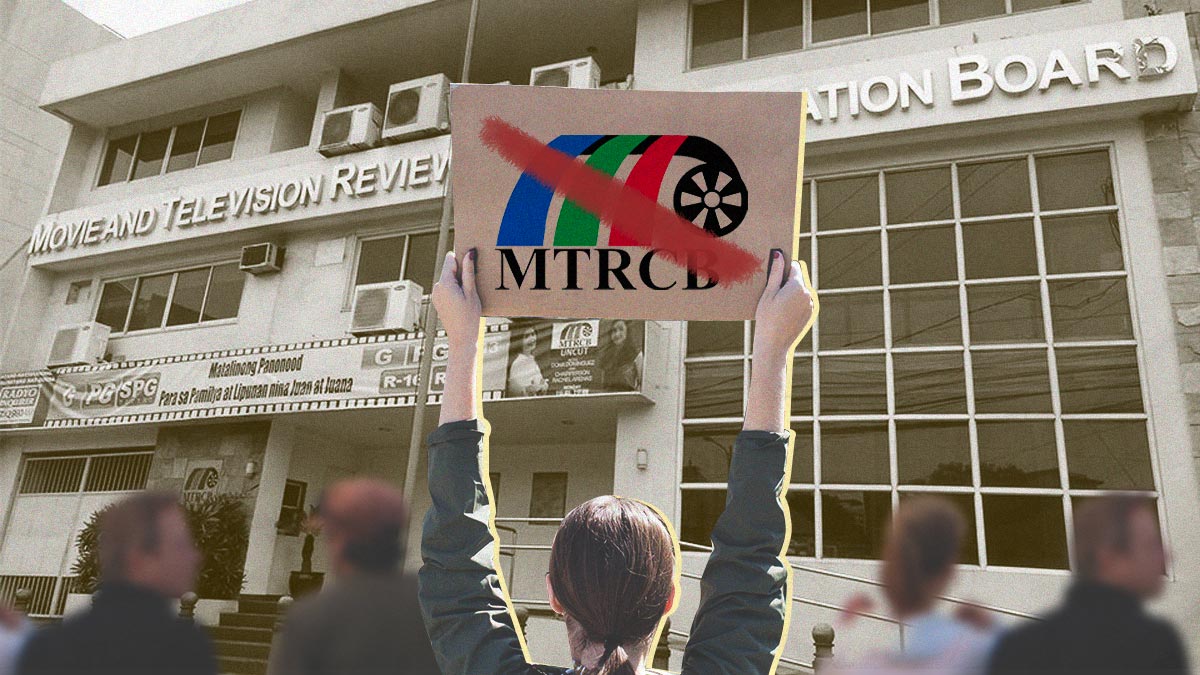
The Movie and Television Review and Classification Board (MTRCB) is having an existential crisis—one that's lasted from the post-EDSA years up to the present day. It doesn't know how to help itself either. I'm not the first one to say or think that nor will I be the last.
From trying to dip its toes in streaming to questionable policing that reeks of petty and contrived double standards, its true functions are just too muddy to say at this point. And the public is reminded of this again in light of the recent Ion Perez and Vice Ganda controversy.
In a Notice to Appear and Testify to the producers of the noontime variety show It's Showtime, the board asked producers to respond to complaints about certain scenes. The segment in question involves hosts Vice Ganda and Ion Perez during the "Isip Bata" portion. Here, Ganda and Perez shared a lighthearted moment, where the couple licked frosting on a cake. This apparently depicted alleged "immoral" acts. The memo, dated July 28, says that the scene was "in violation of Section 3(c) of Presidential Decree No. 1986."
Section 3-C states:
"To approve or disapprove, delete objectionable portions from, and/or prohibit the importation, exportation, production, copying, distribution, sale, lease, exhibition, and/or television broadcast of the motion pictures, television programs, and publicity materials subject to the preceding paragraph, which, in the judgment of the board applying contemporary Filipino cultural values as standard, are objectionable for being immoral, indecent, contrary to law and/or good customs, injurious to the prestige of the Republic of the Philippines or its people."
ALSO READ:
Is MTRCB 'Playing God'? Why Netflix Might Be in Danger of Censorship
15 TV Shows Summoned by MTRCB for Controversial Scenes
The hearing date was set last Monday, July 31, 2023, at the MTRCB Office in Quezon City. A justifiable outrage from critics (like me), ensued.
An investigation... Really?
Watching the video, I see nothing wrong with what was shown on air, except for how two long-term partners were having a little fun with some cake. The MTRCB, on the other hand, saw something "immoral" here, something to protect the kids from. Why that's the case is beyond me. Maybe it's just some homophobic biases.
Hilarious, considering that far worse, more condemnable, socially irredeemable acts have been allowed on noontime television over the years. We've seen people kiss a bunch of times. We've watched a dozen male hosts make lewd and suggestive comments about dancers and contestants right to their faces on variety shows. We've seen racist segments (Filipino blackface never gets old). Just for laughs, I suppose. Ha. Ha.
The selective outrage is annoying, to say the least. People were also quick to pull up the receipts. And there are plenty. MTRCB chairperson Diorella “Lala” Sotto-Antonio (with the whole E.A.T., Showtime, and Eat Bulaga TV wars, how is this not a conflict of interest?) was even pressed about taking action on Tito Sotto and wife Helen Gamboa’s kiss on E.A.T. It was never an issue, she says. Ha. Ha. When gay people display even the tiniest bit of public affection in media, they're indecent and we're to hide the children. But when cisgender people do it, they're cute and in love, and the whole world should believe in romance again!
We see many forms of affection between heterosexual couples on TV, and never blink an eye. Iba ba talaga ang standard kung ano ang disente at katanggap-tanggap para sa madlang LGBTQIA+?
— Chel Diokno (@ChelDiokno) August 1, 2023
Let's look at the bigger picture and ask the bigger questions. Of all things, how did we entrust this body to be the arbiter of morality? What once was a tool for censorship during Martial Law is now supposed to speak for what's good, what's right, and what's just in Filipino lives, as if it came from a place of truth and sincerity.
Sure, at the very least, what we do know is that the MTRCB is supposed to be a mechanism to protect minors and some key interest groups, which is a good thing on paper. Ratings keep audiences, namely the innocent and young, safe. It keeps the content put out clean by sifting through what's indecent or immoral. The board has a monopoly on approval on that front. That's the baseline of sorts; and while we have some fair questions about its legal basis, we know that's a different conversation.
This idea of the MTRCB reinforcing "contemporary Filipino cultural values" (who gets to dictate these? The state?) is laughable to me. Truth be told, it finds itself in a peculiar position: it doesn't know what it's supposed to do anymore. And we don't know either.
What's the use of regulatory boards like this in today's age? Is the MTRCB going for platform regulation or content regulation? Or is it going for both? Who knows. This big cloud of vagueness has followed the organization since 1986.
The Philippines is the only country in the world (well, except for maybe North Korea; so, not exactly the best company) that still censors movies and television. And with greater accessibility to modern technology and platforms by the dozen, the body is rendered pointless. Not unless, of course, it expands its jurisdiction. Last year, I remember reading that the MTRCB was looking into the idea of regulating streaming services. If that's the case, it should go after social media platforms and the like. Why stop there? Go after YouTube for crying out loud. Good fucking luck.
Producers know better than to show programs that are out of line. We can say, as a matter of fact, that the industry understands the importance of self-regulation and so does most of the public (I want to believe this; please let me). And of all things, the state should never have been granted the power to tell the people what they can or cannot see. That much I know to be true. That much I know about the sacredness of freedom of expression.
A lazy Google search of the MTRCB's role will tell you that it's an agency under the Office of the President that has been "mandated to regulate and classify movies, television programs, related publicity materials and/or promotional materials thereof." When we put it in the context of all these content streams, the MTRCB's primary function is something straight out of a world nobody recognizes anymore, just loudly prehistoric, only to come up whenever the next "immoral" segment airs. In the meantime, the MTRCB is there, silently waiting to be relevant again, as rumblings for its abolition become more deafening by the minute.
