

Opinion: Where Has the Glorification of Our Heroes Taken Us?

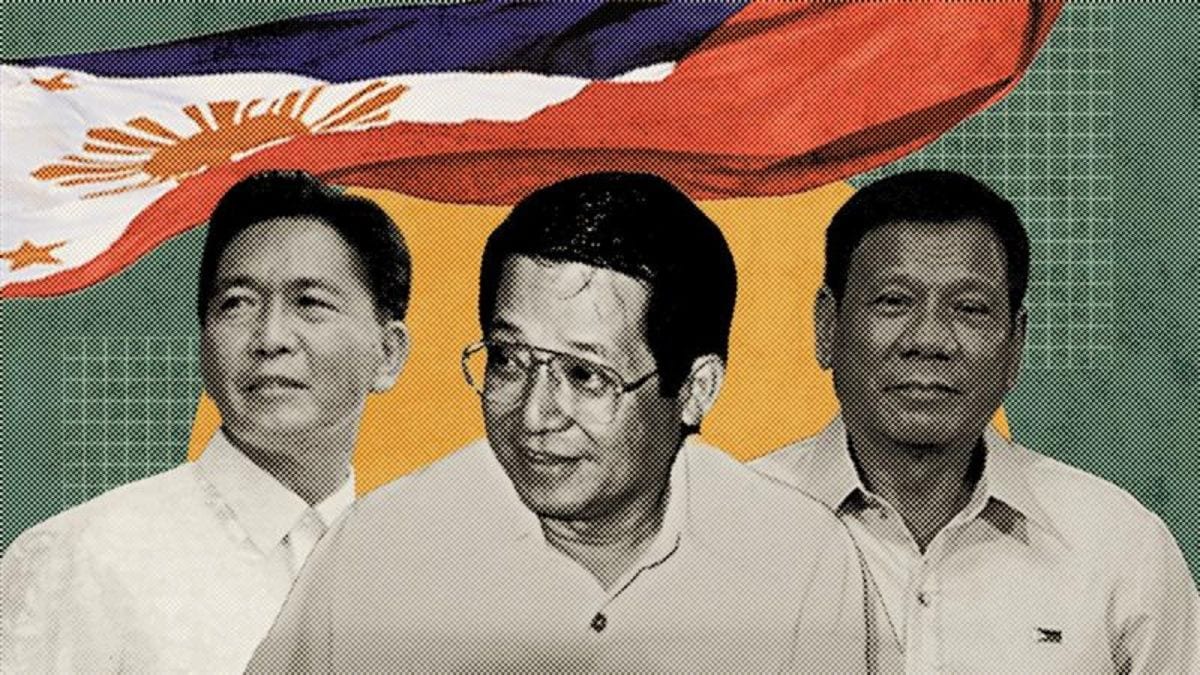
I always take a firm line on the commemoration of any public figure, and that line is this: we often seem to be content, the intelligentsia to be specific, to dislodge or even abnegate our current dysfunctions upon the redeemers, saviors, and prophets. I see the open fervent veneration of figures such as the Marcoses, Aquinos, and Dutertes as obstacles toward any path to national renewal, and the further their legacies are openly cast aside, the better it is for the country, I always opine.
There is a difference between learning from the past and applying these learnings to our present tasks and challenges, and seeing the past as a dead ritual and abstraction. I have noticed that, in the three broad camps of sociopolitical opinion today—that is, the left, right and center, which includes the liberals—negative emotions often dominate their view of the world, and all of them are corrosive and, sometimes, even inadvertently arrogant.
These are the vices of melancholia, nostalgia, and exhaustion. These three outlooks all draw from history as a sermon, lament or as a tale, instead of as rocket fuel to propel this country forward and attain a measure of self-respect. There is also a collective suspicion and even fear of the future in all three; none of them, for the moment, can stand up to reality's travails. And I don’t believe any of them will prevail in this epoch where, to affirm life at its totality—be it tragedy or comedy—is of the essence.
In Southeast Asia, save for Myanmar, which is in the midst of a brutal civil conflict since the mutation of the Jasmine Revolution, the Philippines is being left behind. Its potential lies barren, its economy stagnant, its political life gridlocked. In addition, there’s an entire litany of sociocultural pathologies from which, some of us, at least, can escape from time to time. There is a prevailing sentiment that we seem to have inherited certain qualities from our colonizers, namely Hispanic mediocrity and Yankee bombast. Merged with our fragmented and petty squabbles, the result is a giant quicksand that continues to swallow everyone unlucky enough to get caught in it.
ALSO READ
8 Unsung Regional Heroes Who Deserve to be Celebrated
Introducing These Dashing but Lesser-Known National Heroes
For as above, so below; whatever destructive habits that those in the bottom have rendered as a means to get by, is matched by the decadence and impotence of those at the very top. And if nothing changes, the only logical conclusion is the slow but certain descent into the abyss.
Amidst the troubles plaguing our country, it’s worth noting that some of our neighbors in the region, particularly Singapore and Vietnam, seem to have successfully navigated their way out of challenges, even if they’re still facing certain discontents at their table. Both have cited the history of our country as a shining beacon, yet both have effectively surpassed the Philippines in nearly every measure imaginable. Hanoi, for instance, defeated three superpowers in the 20th century, refused to be dragged into the dustbin that was the Soviet Union by making its Marxism living, adaptable and virile, and, as of this writing, it has surpassed Manila in terms of GDP per capita.
On the other hand, Singapore needs no further explanation; aside from the fact that it remains the envy of the region, we Filipinos praise its discipline, thinking that it is only what matters—even if strategy is also required for that discipline to work as intended. So far, I cannot see the Philippines being prepared to do what Singapore did from the outset of its independence and Malaysia’s rejection of being in a continuous union with them. This includes nationalizing land usage to lower income taxes, defeating the rentiers and allowing the state to plan for its development, which includes a ruthless anti-corruption campaign that saw massive purges through and through, and all of these practices concentrated around the institution of “Temasek.” Do Filipinos have the guts, ambition, and the will to follow through on even half of these measures? For now, I think not, and some may even declaim and denounce these actions as communistic and radical, especially to those whose heads have never made peace with the end of the Cold War.
It was Singapore’s visionary leader, Lee Kuan Yew, who delivered a harsh but accurate rebuke that seems as timely now as when he first uttered it some years ago–that we Filipinos are a soft and forgiving culture, and that we continue to relish our own suffering, and justify it as being Christian, even if the Christian doctrine never mistakes suffering for despair. We can say whatever we want to the American imperialists and how they engineered, manipulated, and even paid various factions across our history against the other to do their bidding, but their fault here is only half, even a quarter of where we find ourselves today. In truth, they simply exacerbated an inherent weakness that continues to be unresolved, which is our inability to scale.
It’s no wonder then, that, despite the hesitation and the coping, Nick Joaquin's “A Heritage of Smallness” will always be a specter that haunts the land, and we are yet to take up the wager to finally emerge from its judgment. When the National Artist for Literature wrote the essay over half a century ago, it was the talk of the town, as he lambasted the mediocrity around him and pointed out the reluctance of the Filipinos to be more daring and take on larger-scale projects. And while there are criticisms of the piece due to his apparent sympathies with the Spanish, his ruminations continue to stand the test of time. From how the state handles its defense, to preparedness for calamities, the same pattern of ineptitude and short-sightedness lingers.
To which one can only mutter: how long can we bluff our way into comfort? How long can we run away from our turmoil? Unfortunately, that time is running out.
Which way, Philippines? Where is the plan? What now?
