

Opinion: Why Charlie Kirk’s Death Matters More Than You Think

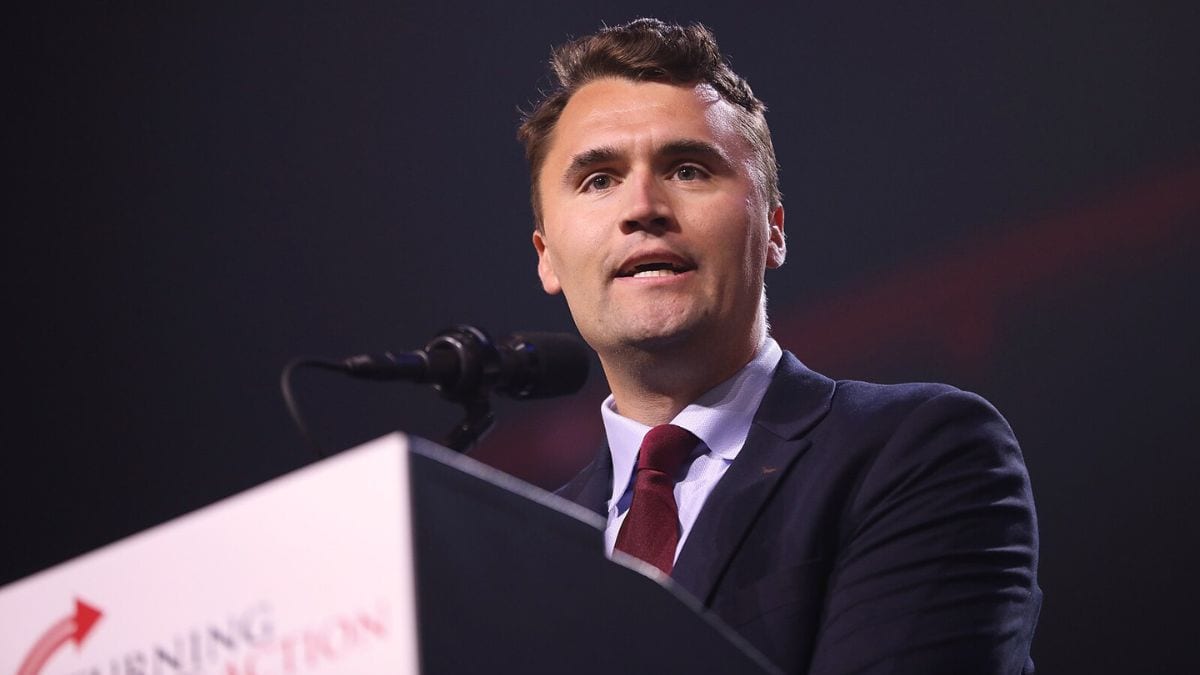
Death is always a tragedy, especially for those left behind. This is why my response to the news that Charlie Kirk was shot is neither celebration nor mourning, but a cold acknowledgment that his passing is just one in a long line of afflictions plaguing the social life of the once-proud United States of America. What do I mean by this? Allow me to share a personal anecdote about how I came to know who Charlie Kirk was.
My personal interaction with Kirk, or his activities, was mostly limited to memes and a few videos I saw of him “owning the libs” on camera. Owning the libs was a phrase he popularized, in which he toured college campuses not simply to have conversations with students, but also to provoke and ruffle feathers along the way. In the digital media era of the 2010s, this was cutting edge. Kirk’s entire shtick was therefore not far from the kind of ragebait churned out by outlets such as Vice or BuzzFeed. As for Kirk himself, I always saw his aesthetic as resembling that of a coiffed but much younger partisan that America’s progressives and conservatives would rally behind.
But here’s the kicker: am I surprised by his sudden demise? Not really. The writing has been on the wall for a decade, maybe even 15 years. I remember, as early as my teenage years, I’ve believed that the world was headed for a reckoning—one it would fight against, yet one inevitably born of its own past sins and ambitions, most visibly within America.
Kirk belonged to the milieu that emerged after 2008, when the banks crashed and were handed bailouts by their governments, often without accountability for why the 2007 crisis had occurred in the first place. During that short-lived period, Obama’s campaign crushed what remained of Bush-era neoconservatism—the same machine that had bled American citizens dry in Afghanistan and Iraq. A great deal of hope was pinned on him and his acolytes. But contrary to the expectations of many—that he would deliver universal healthcare, not just expanded access to insurance, and that he would end foreign interventions—none of this came to pass. In fact, his administration only deepened those tensions.
This was the moment when the GOP clawed its way back into office. Obama’s internet presence, while useful in 2007 to 2008, was dismantled as the administration relied on the mainstream media. An opening was thus unraveled—a vacuum that needed to be filled. Using aggressive rhetoric, paired with more technologically advanced methods of dissemination and mobilization, Republicans were able to outflank Democrats first at the local level, then within Congress. By 2015, the once-fresh Obama had become little more than a sitting duck, with John Bolton acting as the country’s de facto prime minister.
ALSO READ
Opinion: Where Has the Glorification of Our Heroes Taken Us?
When Did Democracy and Liberalism Become... Cringey?
Yet most—Kirk included—were surprised by the emergence of a populist momentum that targeted both parties: Sanders on the left and Trump on the right. By rallying those disillusioned with recent economic shifts, such as the endless outsourcing of jobs to third countries, unregulated migration, and the rising costs of healthcare, these figures broke the taboos that polite consensus had avoided since the 1980s. The rest, as we know, is history.
Aside from this recollection of Kirk’s timeline within the broader fabric of what the American state has become, it is also essential to have some grasp of information theory. Since the 1990s, specifically once the internet slowly crept into our daily lives, information, as we know it, has become increasingly independent from the social values that once held towns and cities together. Its form and content can now influence people across vast distances, regardless of time zones or other constraints. All you need is the infrastructure of the web, and you’re good to go.
Hence, from this premise, Kirk’s use of social media must be understood within this context. Information has become warfare itself. What the internet has equipped people with is the ability to bypass mainstream institutions with ease. This is, for all intents and purposes, a progressive evolution that can no longer be reversed. The internet’s impact is more or less equivalent to a thousand nuclear bombs, with effects felt across both the physical and virtual realms. No amount of “touching grass” or turning off one’s gadgets can stymie this momentum. Put more starkly, the future has already taken possession of the present and the past.
Where does American decay figure into all of this? The answer is obvious, even if we can only intuit its perspective. The Anglo-American establishment, as Carroll Quigley once put it, has been in deep crisis since the mid-2000s, following the collapse of the neoconservative consensus—a consensus born of America’s supposed triumph in the Cold War. But unfortunately, this is no longer 1992. The boom years are over, and the party is running out of liquor.
It is therefore tragic and comic to see a nation that still claims to be the shining beacon, the city upon a hill, continue its “forever wars,” while its people wallow over the fact that 80 percent of them live paycheck to paycheck and 40 percent are on fentanyl. From a rational perspective, it makes little sense for a country to keep churning out armaments while a quarter of its population goes to bed hungry each night. And finally, the very notion that America continues to snoop on everybody else’s business while failing to tend its own garden and put its own house in order is not just an indictment of its hollow, bankrupt establishment, but also a testament to its inability to reckon with its own diminishing prospects.
Take Covid, for example. From 2020 to 2023, it became a culture-war talking point for both the Democrats and the GOP. The reason for this is simple: neither party wants to admit the truth that in the early days of the pandemic, America no longer had the manufacturing capacity to produce its own face masks and protective equipment, to the point that Trump had to invoke the Defense Production Act to kickstart production.
It flopped on pandemic leadership, prioritizing PPE for hospitals, which was indeed the more logical move. But because it lacked the means to communicate this deficiency with frankness, it instead turned to the red meat of cultural flashpoints as the battleground, be it BLM, election denial, wokeness, or QAnon. This was a reversal from a 2019 poll that had placed it at the top of pandemic preparedness.
The contrast between America and Cuba, a nation just 90 miles off Florida that managed to develop its own vaccine, and the social confusion that reigned in Washington is like night and day. And Havana achieved this despite sanctions and other constraints. If the world’s policeman can no longer take care of its own citizens, why should anyone take its word seriously?
America today is not so different from a crackhead wielding a shard of glass, threatening everyone in his path, with potholes dotting what was once a thriving metropolis. Kirk’s assassination is not an isolated incident, and his death is neither the first nor the last. It is part of the slow-motion collapse of a nation that once shone as an icon, now struggling under the weight of its own decline. This agony will only end if the Empire is finally dragged into the mud and the Republic restored to its pedestal. And in today’s America, that sentiment is no longer fringe; it is something everyone feels, yet it has rarely been put into speech or writing, at least for the time being.
