

Can the Baro't Saya Ever Return as an Everyday Filipino Fashion Staple?

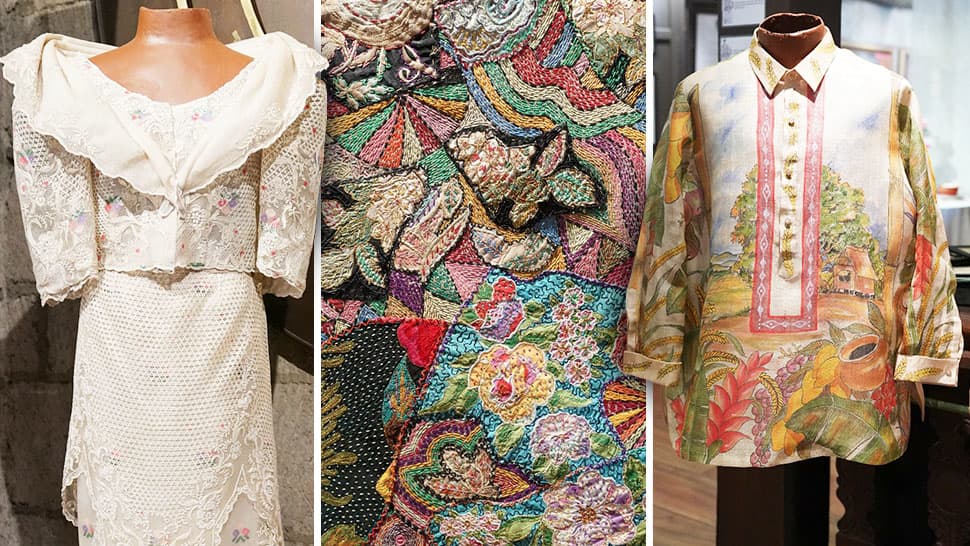
Is it possible for the baro’t saya, which is made from piña, to take on a modern twist and become an everyday women’s fashion piece? Balik Saya is a project headed by the Department of Tourism with hopes to modernize the baro’t saya to serve as a piece of culture women can wear that represents the evolution, attitude, and demure of the Filipina.
To many individuals, Maria Clara is both the idealization of the Filipino woman and the dress she wears. Her name is firmly entrenched in Filipino culture as the muse of Crisostomo Ibarra. She's widely portrayed as a sophisticated woman whose gentle nature belies a passionate heart. Her name has also become synonymous with the
Lately, however, the dress isn't enjoying the popularity it once had. Once the formalwear of choice among Filipino women, the Maria Clara has taken a backseat to more contemporary styles, and now it’s often seen in museums rather than on people. Balik Saya, a competition to redesign the baro’t saya with today’s fashion sensibilities in mind, aims to reinvigorate interest in the Philippines’ national dress.
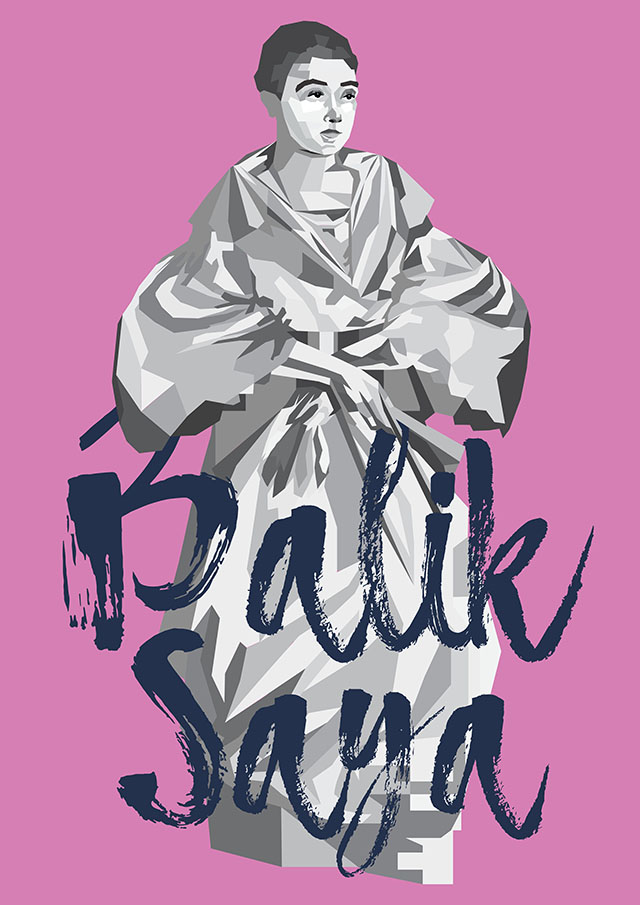
Balik Saya is a project of the Department of Tourism and the Intramuros Administration, with the support of Manila’s 5th District Representative, Cristal Bagatsing. Fifteen designers—students, residents, and professionals from the 5th District of Manila—were given the chance to modernize the
“The
“This time,” he adds, “We want it modernized. We want to see some innovations. There are no hard rules on that, except that the finished garment should look like and be identified as a
A modern take on the
On Equal Footing
The

Illustrations of prototypical baro’t sayas from the Boxer Codex.
It was only during the Spanish occupation—in the early days of which the Spaniards
Elegant, Conservative, and Demure
Throughout the 16th to 19th century, Christian standards of modesty and European fashion trends would shape the
The
It was during this period that the dress came to be known as the Maria Clara, named after the female protagonist in Jose Rizal’s Noli Me Tangere. Like the character in the book, the dress represented the ideal Filipina of the time: elegant, conservative, and demure. The dress continues to be associated with the name and the character to this day.
A “Modern” Woman
Shortly after colonial rule shifted from the Spanish to the Americans, the Maria Clara became more daring. Sleeves were shortened, silhouettes became slimmer, and the
In a 2003 interview with the Philippine Daily Inquirer, writer Gino Gonzales noted that women began to remove the
The changes coincided with a growing movement towards the general liberalization of women. Just as the American flappers of the 1920s began wearing their hair and skirts shorter, the more conservative Filipina started exploring more shape-flattering forms of formal dress. Eventually, the
The Picture of Beauty
From the '50s to '70s, designer Ramon Valera popularized the removal altogether of the
This was also the time that Imelda Marcos became an unofficial ambassador of the
With its wide international exposure, the
Maria Clara Today
Through Balik Saya, the DOT and Intramuros hope to bring the
Bagatsing hopes to find a contemporary take on the
“It would be nice to remind people that it’s okay to be liberated, but still keep your values intact.”

From left to right: Intramuros Administration Guiller Asido, Fashion Designer and Project Mentor Jojie Lloren, Manila’s 5th District Representative Cristal Bagatsing, and National Museum Director Jeremy Barnes.
The finalists’ works are currently on display at the Destileria Limtuaco Museum in Intramuros until May 26, 2018. On May 28, five winners will be awarded at the National Museum of Natural History, receiving cash prizes, an apprenticeship in Rustan’s, an overnight stay at the Bayleaf in Intramuros, a workshop from SoFA Design Institute, and a possible place in Philippine cultural history.
The

Balik Saya finalists’ early sketches

A Manton de Manila in orange silk, neatly embroidered in satin stitch with elaborate, multicolored floral patterns that catered to the Spanish taste.

Handwoven fabric made of piña-seda , a blend of fine liniwan piña, and silk fibers .

Handwoven fine abaca cloth, or sinamay, that was a casualty of a disastrous flood that hit Kalibo, Aklan many years ago.

This set of vintage hand-embroidered placemats, napkins, and coasters was made in Lumbang, Laguna in the '70s and '80s.

A 1930s vintage dress of pina, hand-embroidered in the French style.

A baro’t saya with panuelo or kerchief and a tapis or apron entirely made of fine piña cloth decorated with pinili floral patterns and embroidered with calado or drawn work.

A baro’t saya entirely made of sinamay or fine abaca material, hand-painted and embroidered.

Left: A piña barong tagalong hand-painted with unusual landscape design. Right: A b aro’t saya with a panuelo or kerchief and tapis or apron. The saya or skirt made of finely striped cotton or rayadillo has a cola or train.

Destileria Limtuaco President Olivia Limpe-Aw, Sen. Nancy Binay, Manila’s 5th District Rep. Cristal Bagatsing, Patis Tesoro, and Intramuros Administrator Atty. Guiller Asido

