
ArticulatePH: Preserving the Voices of Filipino Art Legends

Whether you're an aspiring artist, a collector, or simply an art enthusiast, learning about the artistic journey of Filipino art luminaries offers a wealth of knowledge. Discovering their unique styles, techniques, influences, philosophies, and motivations can fuel our creativity and deepen our appreciation of art.
While it's great to read about these in books and art records, oral histories capture history as it is being lived, expressed by the individuals who experienced it. This offers a unique sense of authenticity, allowing listeners to hear the nuances of voice, emotion, and perception that are lost in text. Oral accounts can also reveal the emotions, intentions, and personal stories behind the art, offering a richer, more holistic understanding than visual analysis alone.
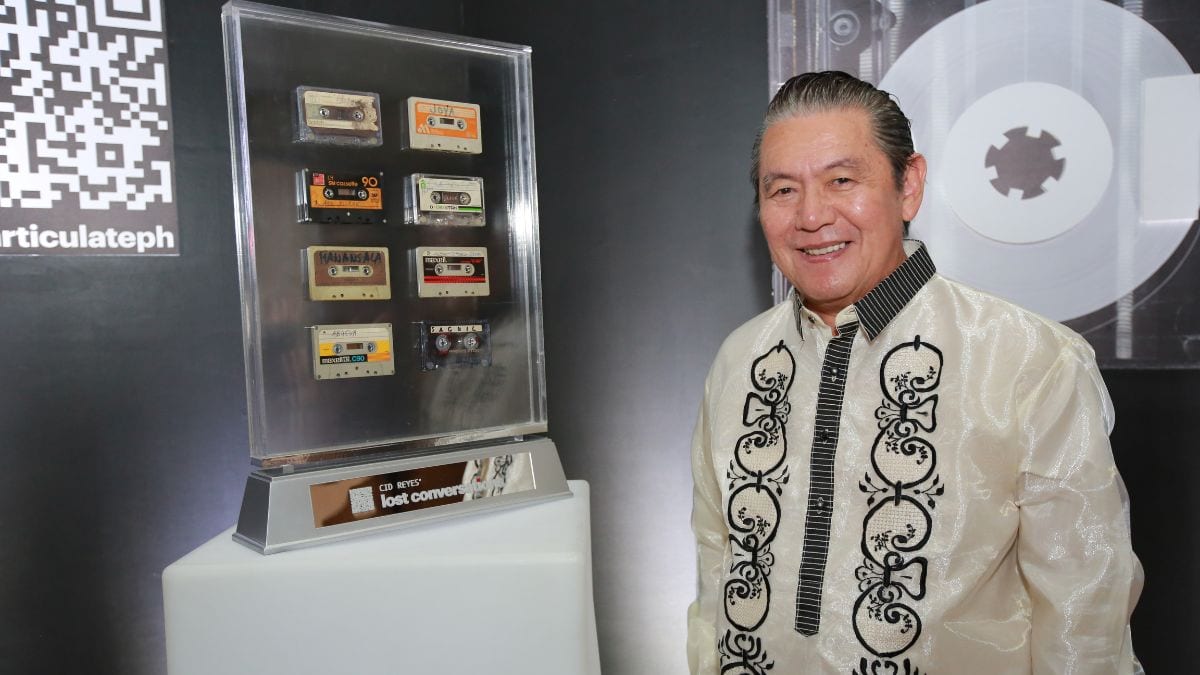
This value is embodied by ArticulatePH, a YouTube channel dedicated to preserving the oral history of Filipino visual art. It was launched in time for Art Month at the National Museum with the title "Lost Conversations." The event's title refers to a compilation of tape-recorded interviews conducted by the noted art historian, critic, and celebrated author Cid Reyes, featuring some of the greatest artists the Philippines has ever produced. These tapes served as source material for Reyes’ book, "Conversations on Philippine Art," published in 1989.
Among the interviews featured in the "Lost Conversations" series include those with National Artists Victorio Edades, Ang Kiukok, HR Ocampo, Napoleon Abueva, and Jose Joya, and other renowned artists like Nena Saguil, Anina Magsaysay-Ho, and Mauro Malang Santos.
On ArticulatePH, these remastered audio interviews can be listened to in their entirety, providing inspiration, insight, and even practical tips for future generations of artists. This comes at a time when Philippine visual art is very much on the rise, and Filipino art is selling at record prices both here and abroad.
Reyes, who has been a dedicated chronicler of the emerging Philippine visual art scene since he was a young man in the era of early Filipino artists such as Fernando Amorsolo and Victorio Edades, gushed about how far art has come: "The emerging audience and market for Philippine art is overwhelming... The generation of Edades and Amorsolo would be amazed at how much art has been accepted by the Filipino audience. The level of acceptance in the Philippine auctions, for masterpieces that during their time could not be sold for P50 but are now in the multi-millions, was totally unheard of in their day," Reyes continued.
Reyes also pointed out that great Filipino art has become a blue-chip investment, sharing that National Artist Jose Joya’s painting “Space Transfiguration,” which was done in 1959 and recently sold for 112 million pesos, originally sold for around 350 pesos. “If you had put 350 in the bank all those years ago, there is no way it would have grown to millions of Pesos. It is now unquestionable that art is a blue-chip investment,” he said.
In this Q&A, Reyes shares invaluable insights from his extensive experience engaging with some of the most influential visual artists in Philippine art history.
How do you choose the artists to feature?
I chose the artists based on my personal interest in their work and their historical significance. For example, Victorio Edades was a crucial choice because he was instrumental in introducing modernism to Philippine art. After that, I wrote about other important artists such as BenCab, Arturo Luz, J. Elizalde Navarro, and Napoleon Abueva. More recently, the Amorsolo family commissioned me to help write a book focusing on Fernando Amorsolo's landscapes, portraits, and nudes.
Were there any challenges you encountered in interviewing the artists?
The challenge is how to enter their particular space and how to earn their acceptance. You want the artists to feel comfortable enough to generously share personal information about themselves as a human being, as a family man, and as an artist. Remember that when you interview an artist, you are trespassing into their personal space, and you are also trying to solicit information that may be trade secrets for them. So it really is a challenge to gain their respect.
It doesn't seem as easy as it may appear... Remember that I was interviewing artists who had considerable stature in the community, and asking for a couple of hours of their time was really an imposition. And I did not want to waste two hours of their time because I didn't want them to be thinking, "I would rather go back to my painting and get rid of this young man." So I made sure that I was going to make this worthy of their time.
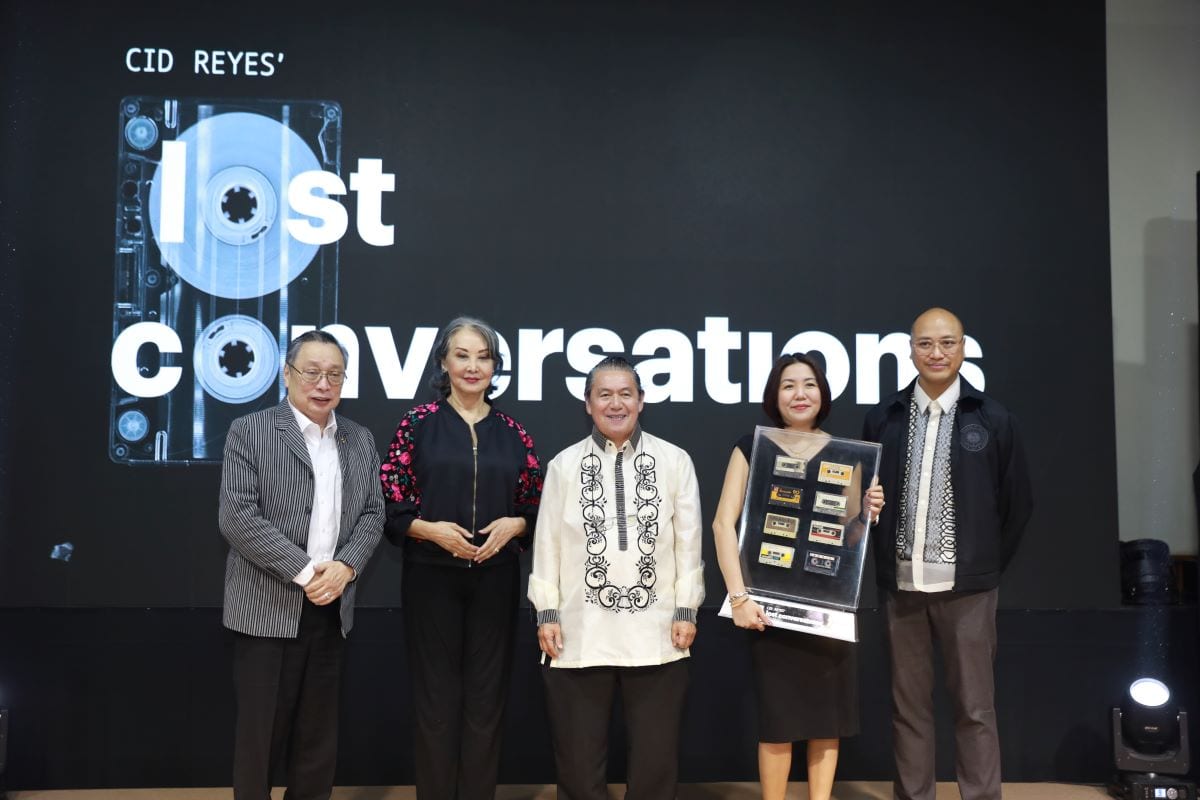
Cid Reyes (center) at the National Museum of the Philippines' (NMP) formal turnover of the original "Lost Conversations" cassette tapes. Also in photo are (from left) Danny Jacinto, president of the Museum Foundation of the Philippines; Gemma Cruz, former director of the NMP; Teng Ropa of the TBWA\SMP; and Jorell De Guzman, the new Deputy Director-General for Museums of the NMP.
How old were you when you started those conversations?
I started doing interviews in my early 30s, so I was relatively young. But I didn't see my age as a detriment; instead, I viewed it as a personal challenge I had to overcome because you're intimidated by the stature of this artist and also by your capacity to interview them properly. You have to come prepared and know about their art because they would sense immediately whether this young man who is wasting my time knows what he is talking about.
It's both a privilege and an opportunity, as well as a challenge, to make the most of the time they've given me. My goal is to create valuable material by intelligently drawing insights from them; otherwise, it would be a total wasted exercise.
Did you give your interviewees the questions in advance?
Interestingly, there were no advanced questions. In hindsight, I should not have done it that way. It helps to prepare questions in advance and send them to the artist, allowing both parties to prepare. But I was really driven by enthusiasm and I came prepared knowing what their art is all about. My motivation was to gain as much insight as the artists were willing to share. The challenge lies in the fact that these artists are very particular about their time and life experiences. They will not entrust to me information that they may feel is just wasted. So for me, it was really a responsibility to create an interview that would be reflective of their own excellence.
Did anyone you interviewed not want to answer any particular questions?
I think in retrospect my being young at that time gave me the privilege of being forgiven for asking questions that may have been sensitive to them. But I sincerely believe my honesty came through, and they sensed a young man who was genuinely interested in their art. I believe I proved myself worthy by asking the proper questions. The proof of this was their willingness to be honest, sincere, forthcoming, and very generous with information about their work process—information traditionally not shared with the public. An artist often prefers to keep the creation of their work shrouded in mystery. But I believe I was able to break through that barrier of artistic privacy, and I was generously rewarded. History is now rewarded by their frankness, candor, and sincerity, and I gathered a wealth of tremendously rich material that forms part of the foundation for contemporary and future art history.
ALSO READ
Benedicto Cabrera, Filipino Artist in Flux
Manuel Ocampo and the Carnival of Monsters
How important is oral history is preserving our culture?
I have always believed that oral history is of paramount value. While we have what's called written history, compiled by historians after the fact, oral history is unique. It's history being lived in the moment—it's, as we say, straight from the artist's mouth, and that cannot be changed. Even if the information stems from a faulty memory, you cannot deny that at that moment in history, the artist was sharing their truth.
We take advantate of the fact that Filipinos enjoy talking, discussing, and sharing their thoughts, a key aspect of oral history. But this only happens if they can trust the person they are talking to. So for me, oral history is the start and the foundation of writing real, truthful, genuine history.
What do you hope aspiring artists can gain from the 'Lost Conversations'?
With Lost Conversations, I want young Filipino artists today to realize the rich tradition that has been handed down to them—a legacy they are obliged to continue and a level of excellence they must pursue and aspire to. Long before their time, Filipino artists worked in the same way and endured the same struggles they are currently facing. They triumphed over these difficulties and challenges and achieved success despite these problems. They created excellent works of Philippine art that continue to inspire young artists today.
If you could go back in time to interview masters you didn't get to meet, who would they be?
I have always expressed my disappointment at having missed conversations with Fernando Amorsolo and Botong Francisco. Unfortunately, during the peak of their careers, I wasn't yet familiar with the art world, which is ironic because Amorsolo lived only four streets away from me. Botong Francisco, however, was practically an impossibility; he was a very isolated figure living in Angono, which at that time was remote provincial territory. So I consider it a significant loss—both for myself and for history—that I failed to interview Amorsolo and Botong Francisco.
