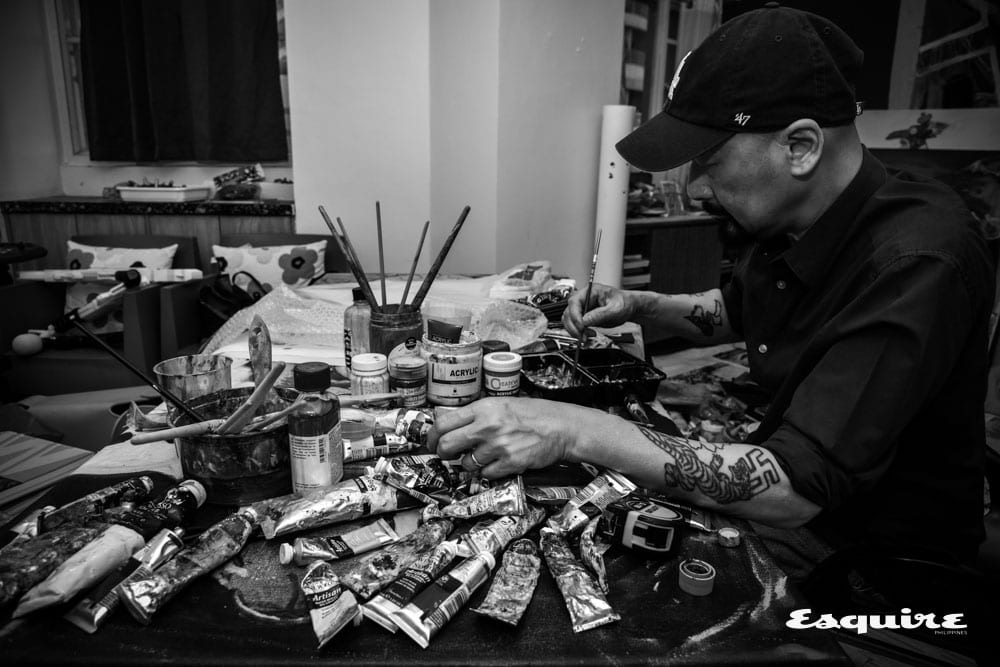
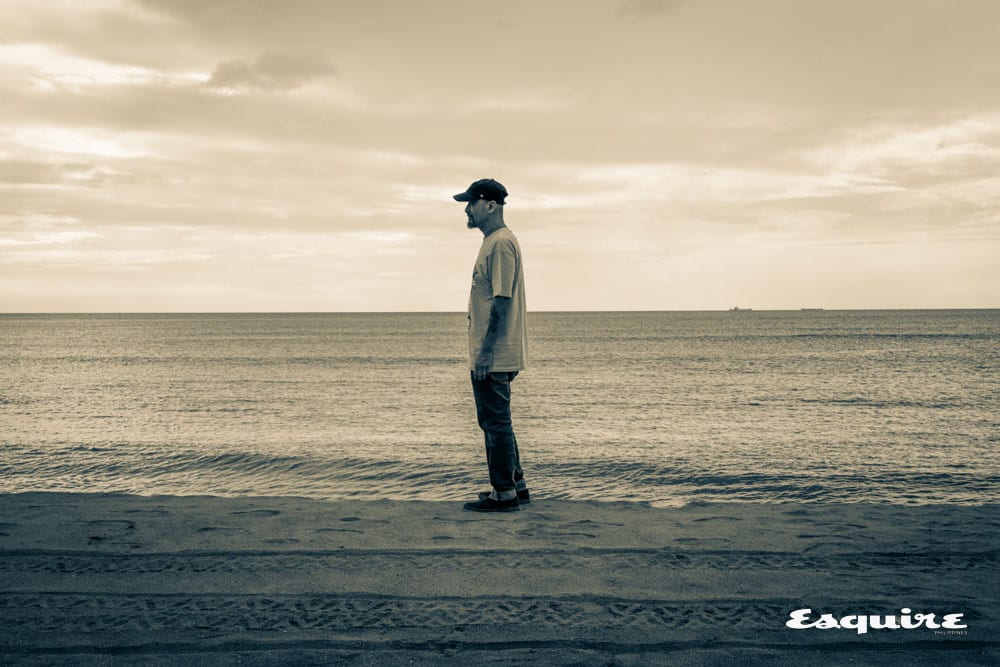
If there was anyone in the art world who understands the con, it's Manuel Ocampo. The artist has yet to fold to the weight of the scene's empty theatrics and sanitized expectations. He’s one of contemporary art’s last true rebels—disconnected from the polite white walls of museums or the transaction-heavy gloss of blue-chip galleries. He belongs to the margins, where the sacred and the profane converge. Subversion is a permanent state of mind.
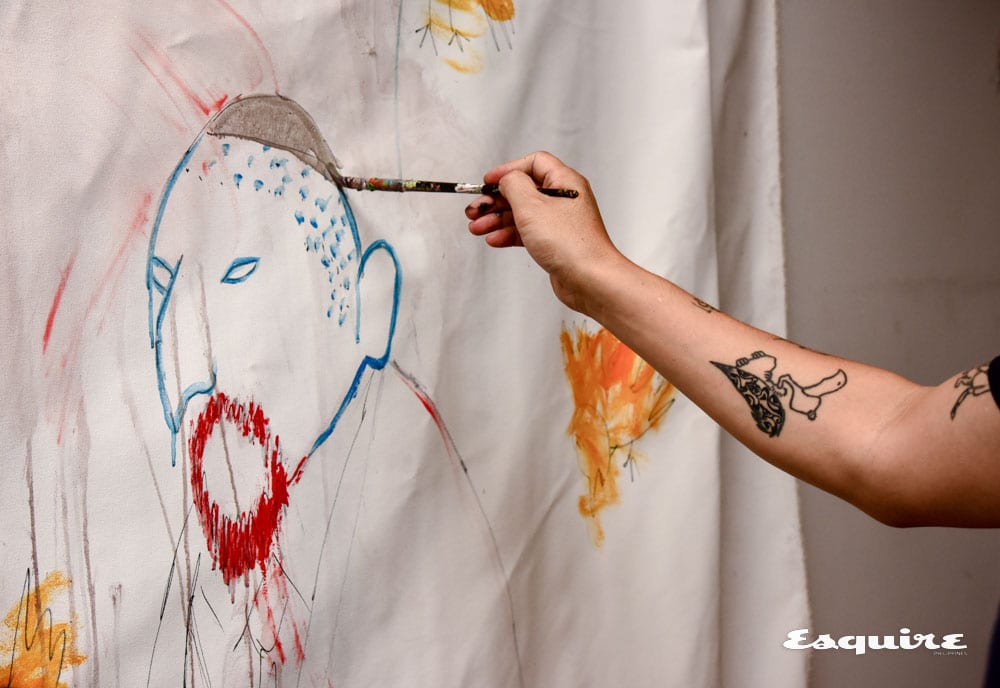
Ocampo paints like how Georges Bataille (referencing in the monograph Fear of a Kitsch Existence (2017)) writes: raw, grotesque, and defiantly unholy. The provocateur paints like a man possessed, a child vandalizing the walls of burning cathedrals. His body of work is a punchline delivered with a shiv, a carnival of contradiction where saints and swastikas, vomit and virtuosity, all merge into a single writhing organism.
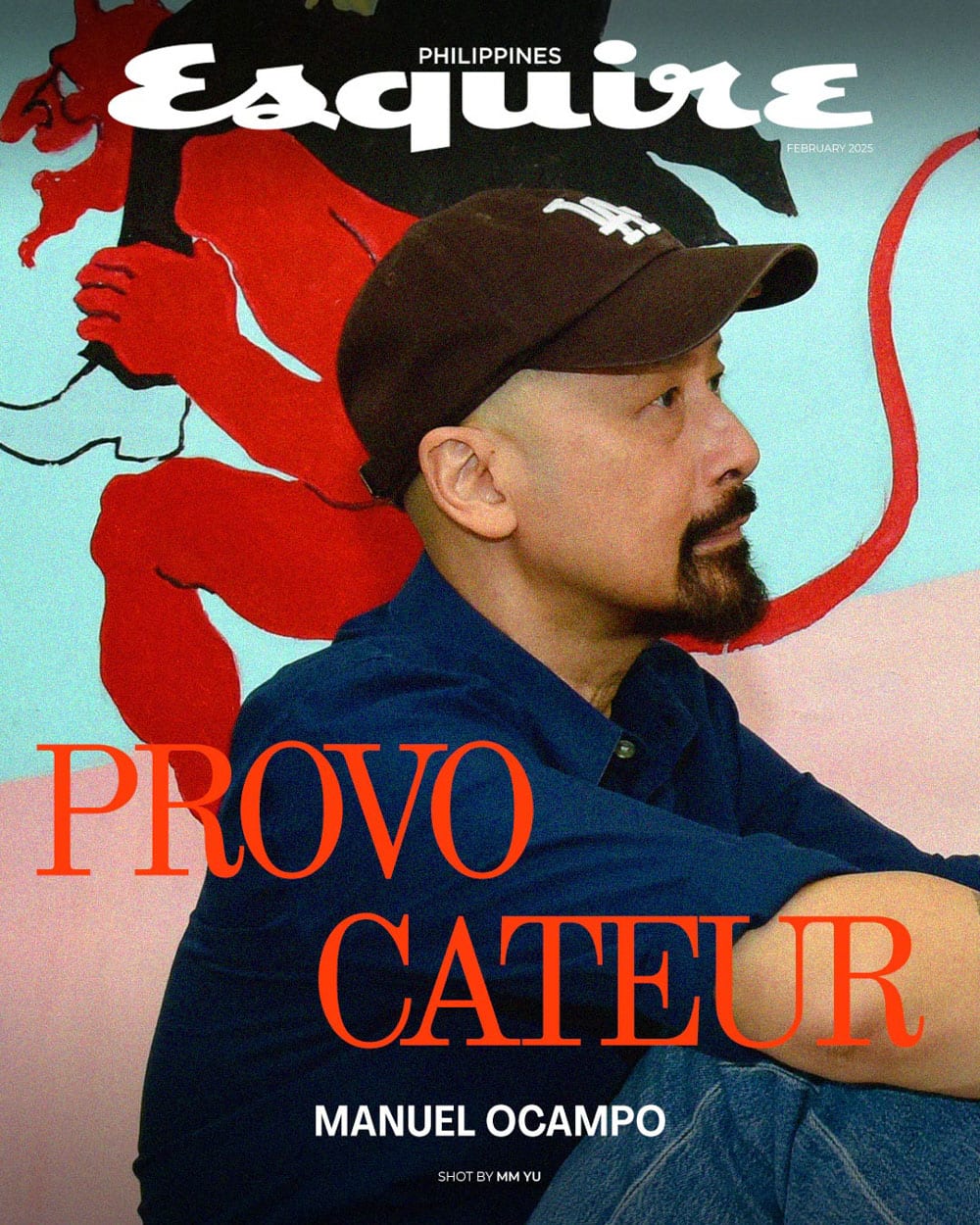
Esquire Philippines' February 2025 Cover:
Manuel Ocampo
ALSO READ:
Inside Esquire Philippines' Exclusive Event for the February Cover
What I've Learned: Boots Herrera
It’s funny. For about three decades, the artist has made a career out of rejecting good taste and dodging the grasp of polite curation and the auction-centric machinery, yet somehow—against all logic—he is celebrated in three continents. He has presented at the Venice Biennale and Documenta IX. His pieces have made it into the halls of the Museo Nacional Centro de Arte Reina Sofia in Madrid, the Museum of Contemporary Art in Los Angeles, Fonds National d’Art Contemporain in Paris, and Mudam Musée d’Art Moderne Grand-Duc Jean in Luxembourg.
Now residing permanently in the Philippines, he continues to channel monsters. This young nation of ours is in the thralls of its own coming-of-age, and is still greatly undefined, still volatile, still capable of surprise. Celebrating his 60th birthday, Ocampo remains a pleasant shock.
"I don't think artworks are honest."
The gospel, according to the tricksters
Unsurprisingly, Ocampo thrives in chaos. He’s an artist whose work is steeped in critique but doesn’t necessarily align with any one ideology; hell, not even a national identity. Calling him a Filipino artist feels almost reductive, not because he denies his roots, but because he refuses the limitations of imposed being.
"Artists having a national identity—I think artists should challenge that. Because identity is a construct, I think. The artist should challenge the very notion of national identity," Ocampo muses. "It's something that we learned in school, what a Filipino is. It's sort of like indoctrination through the culture. Maybe there shouldn't be just one national identity. Or something that's prescribed to us. Maybe that's the role of the artist."
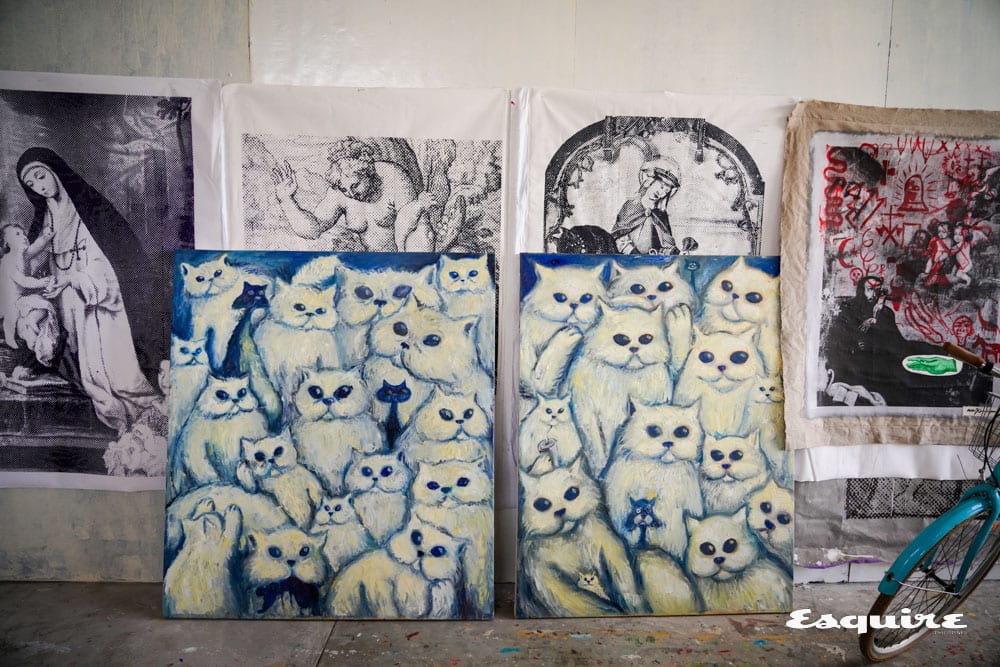
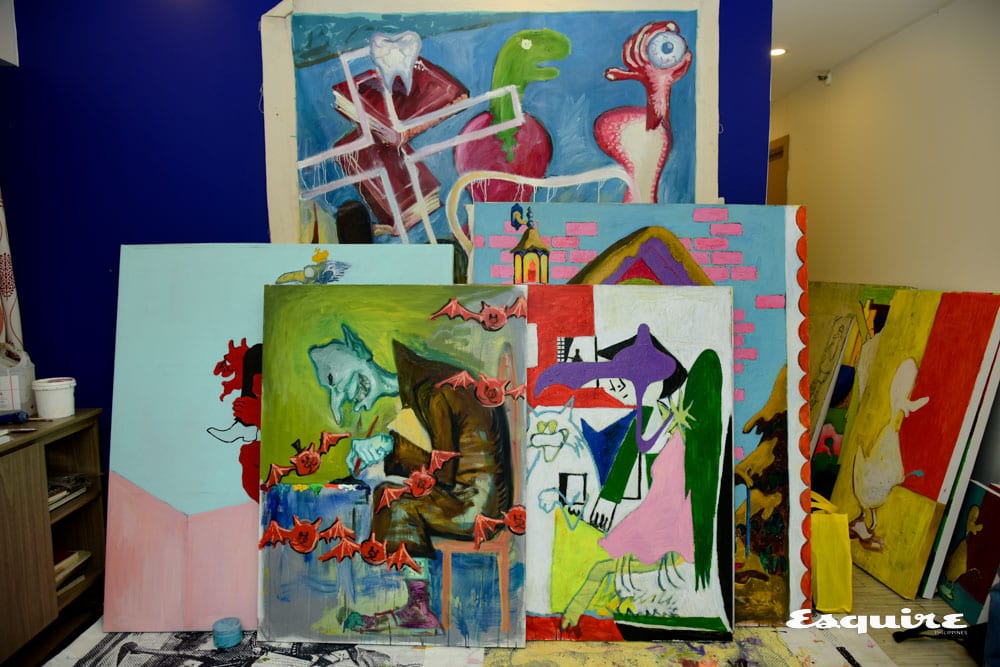
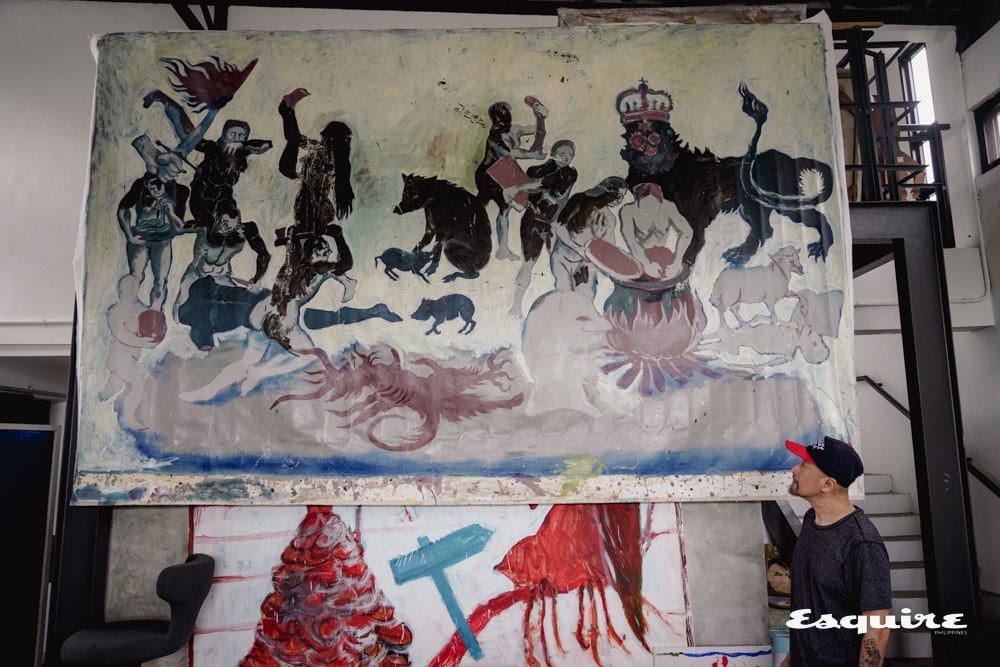
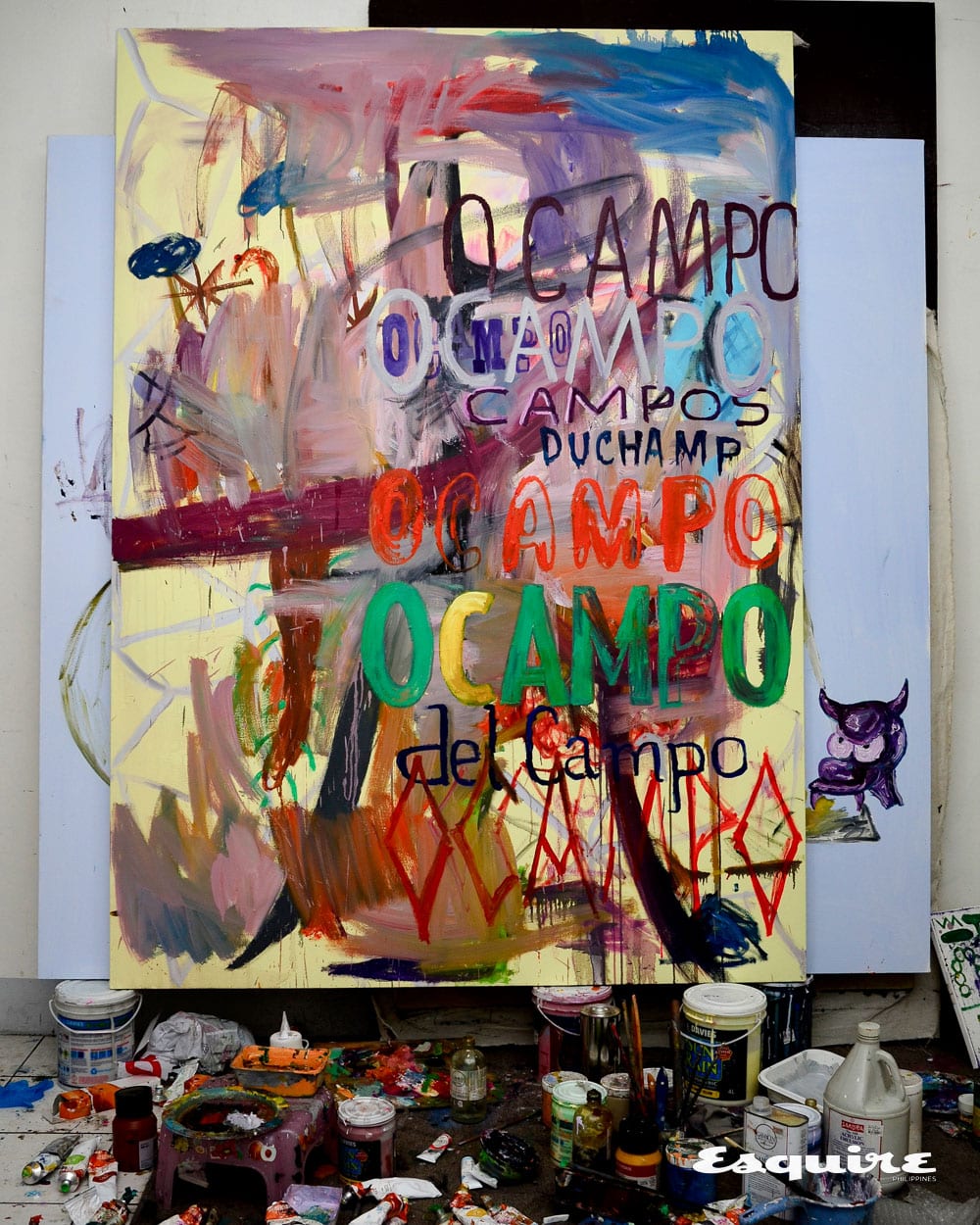
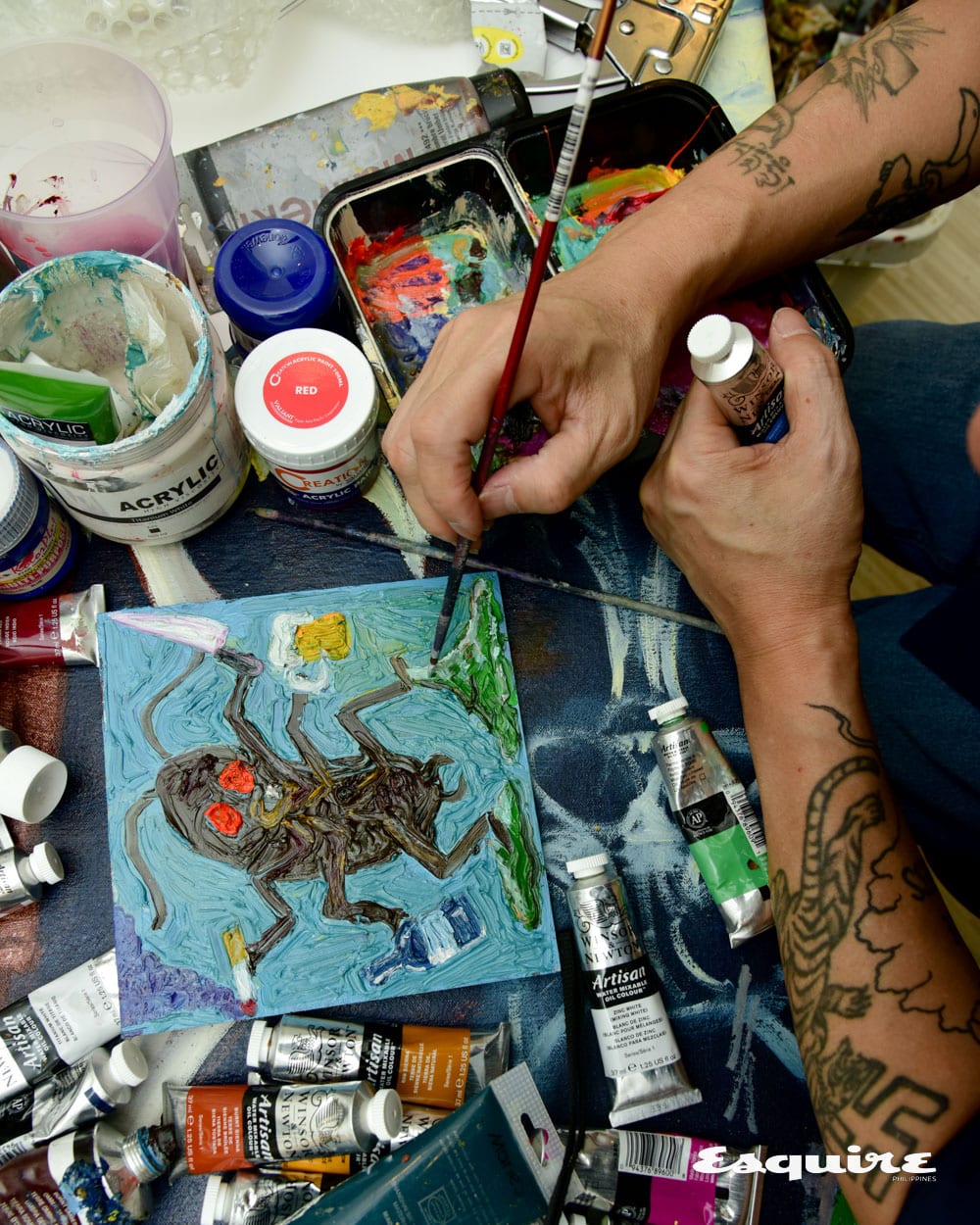
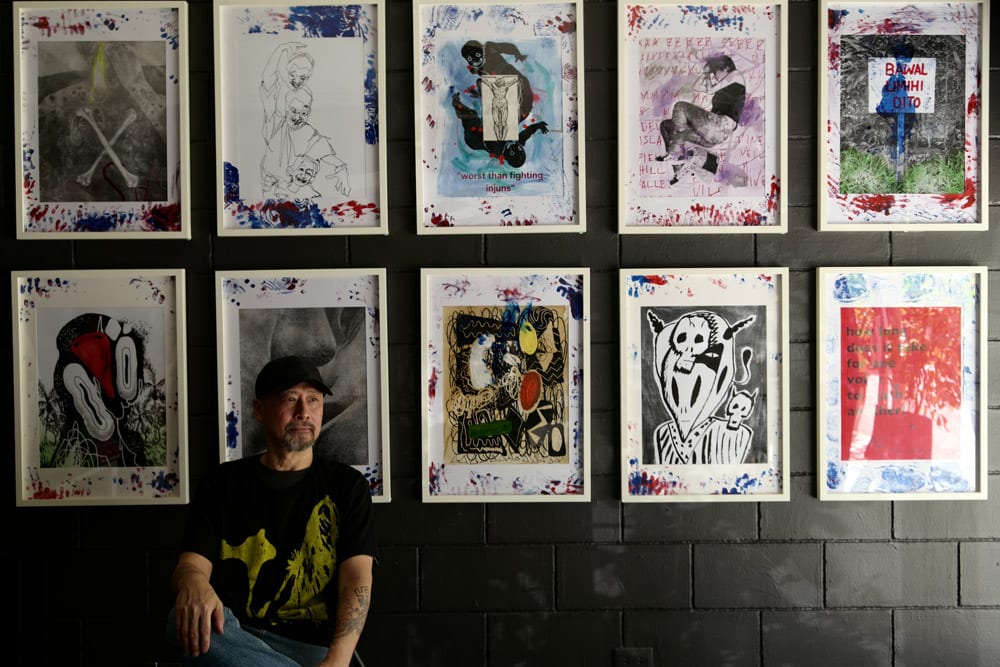
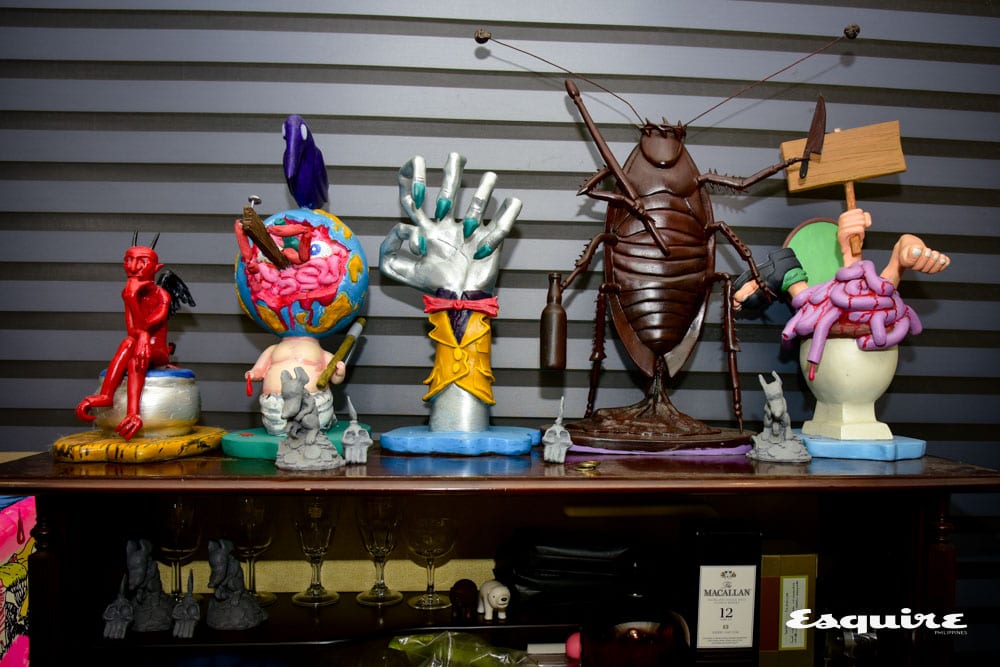
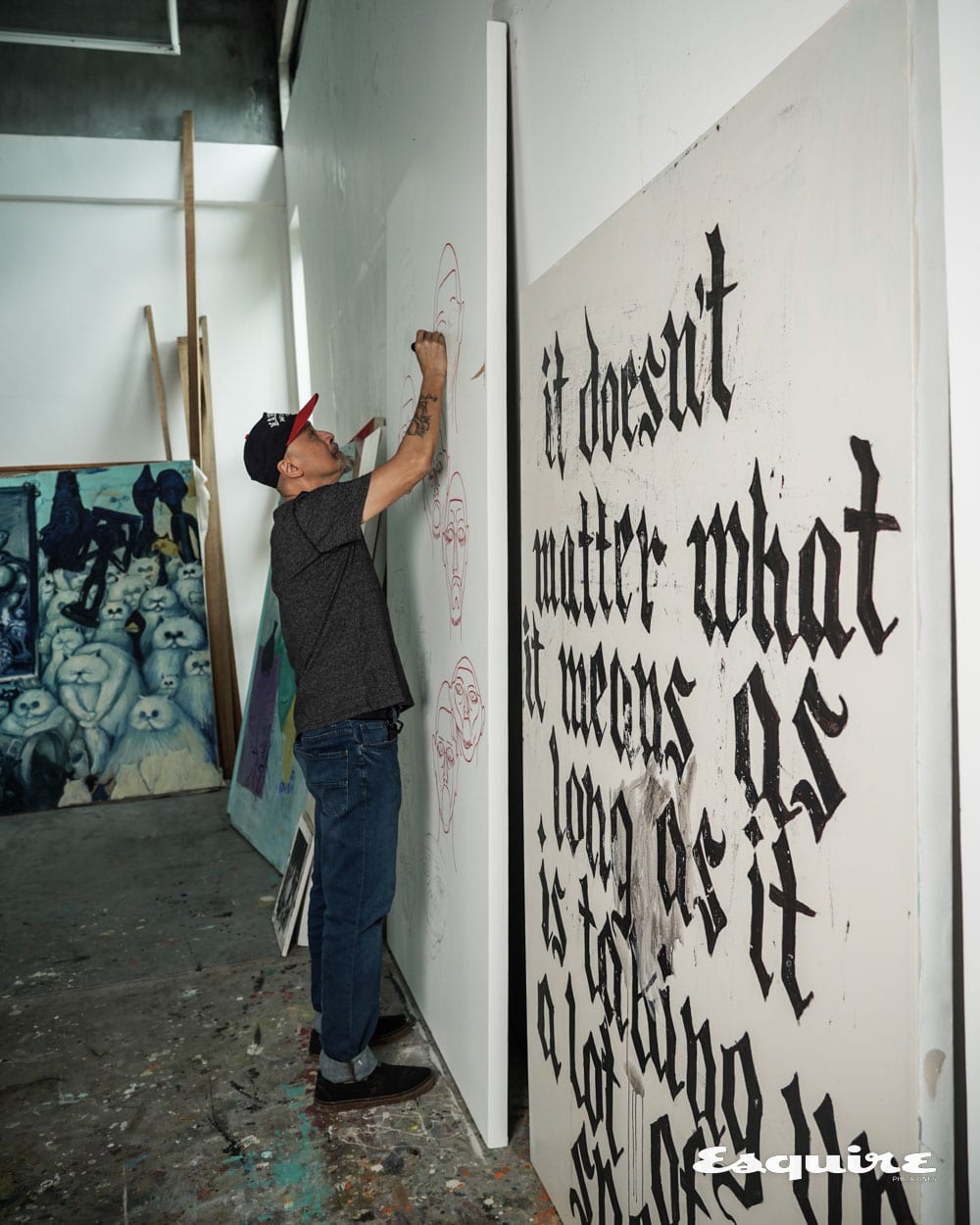
Looking at an Ocampo painting is sifting through cacophonous landscapes of "ugly" characters, Catholic iconography, colonial symbols, and crude, childlike drawings, all colliding in a delectable visual cariño brutal (try to look at this term through a Bataille-esque erotic lens). There’s a hysteria and irreverence to them. They reject aesthetic purity, swapping in the vulgar and monstrous for the common fluff and conceptual garbage.
Ocampo’s anti-aesthetic sensibility is a callback to art’s great tricksters, such as Francis Picabia, Martin Kippenberger, Claus Carstensen, and Curro Gonzalez. Ocampo doesn’t just reference these artists. He ends up embodying their radical defiance.
Picabia, the shape-shifting Dadaist, remains one of Ocampo’s clearest forebears. Picabia rejected artistic consistency, jumping between styles and movements with gleeful irreverence. His works mixed classical painting techniques with industrial motifs, caricatured figures, and nonsensical compositions. Sounds familiar
"I think once you hang a work in a commercial gallery, it’s already within that scope: it’s already Westernized… You’re selling it as contemporary art, as made by an author."
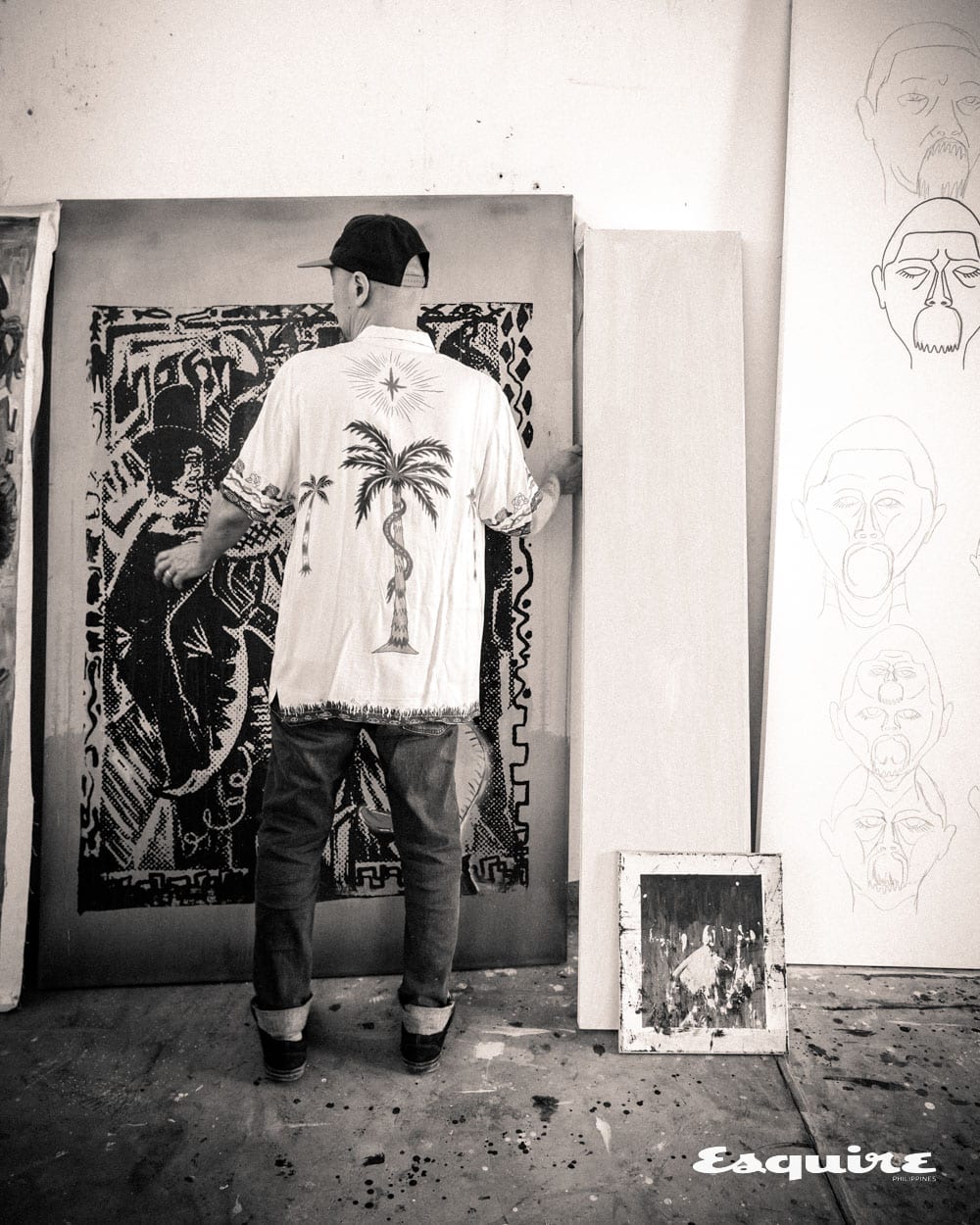
Ocampo echoes this approach in his stylistic mutability—his ability to swing between meticulous Renaissance-inspired oil painting and graffiti-like scrawls. Like Picabia, Ocampo resists the notion of authenticity in art.
"Well, I don't think artworks are honest. I think when you're a young artist, you keep it honest, because you don't know the rules of the game yet," he explains. "But as soon as you get into the system and you know how to play it, I don't think you're... You're trying to hack the game to your advantage. Maybe what I see as honest is like... naivete."
The recognition of the art world’s "game," this deliberate sabotage of artistic sincerity, is pure Picabia. Fellow provocateur Karstensen, meanwhile, shares Ocampo’s distrust of artistic sincerity. Karstensen’s works reject refinement, favoring crudeness as a political stance.
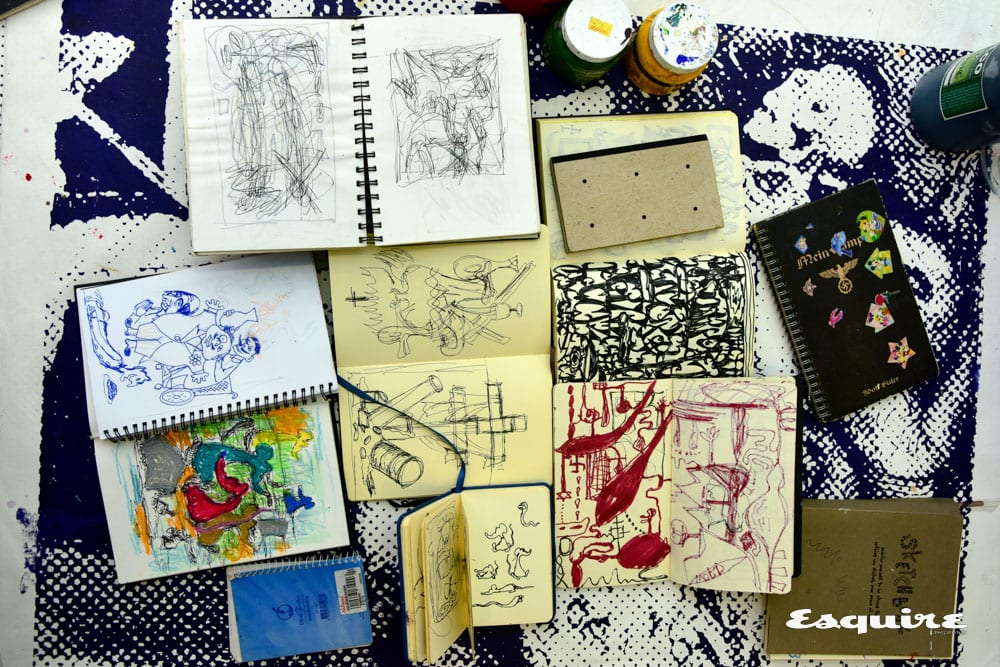
On the other hand, Gonzalez’s influence on Ocampo lies in his commitment to the intersection between horror and humor. His compositions, much like the Filipino art provocateur’s, often exaggerated to the point of monstrosity, share a spiritual kinship with Ocampo’s disfigured saints and nightmarish caricatures. To hell with taste, to hell with beauty and cohesion. Punk as they come.
Recognition is a trick mirror, call it a funhouse of distortions of intent. Despite this resistance to institutional or critical validation, Ocampo has permitted himself some quiet moments of recognition. "As far as being vindicated by the public, I sometimes resist it, I reject it," he quips. "But there were two occasions when I felt like, 'Okay, what I did was correct.'"
The first was when the German artist Albert Oehlen invited him for a collaboration, while the second was when Julian Schnabel asked him to visit his studio. Affirmations, sure. Such doorways are where new systems of exchange rearrange power. Beyond the glitzy star-maker machinery and show ponies of the auction world, true collaboration finds a way to fester and ferment.