
The PICC Has Now Been Declared a National Cultural Treasure

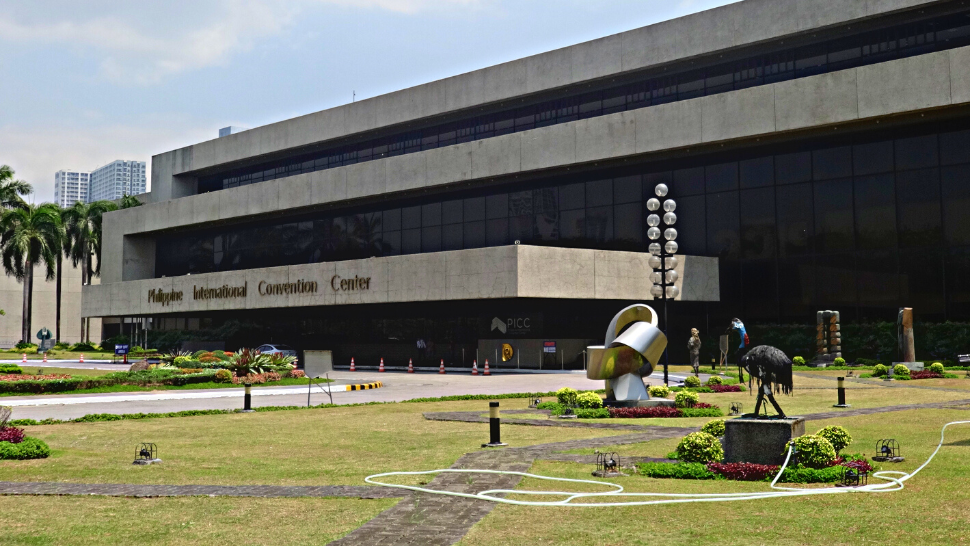
Often cited as National Artist for Architecture Leandro V. Locsin's magnum opus, the Philippine International Convention Center (PICC) in Pasay City is one of the most celebrated buildings of its time. Its bare concrete, distinctive design gestures, and structural balance have endeared it to architects, artists, and the rest of the public since its completion in 1976. Now, in its 46th year, the facility has just been named a National Cultural Treasure.
The National Cultural Treasure marker was unveiled, together with the certificate of turnover and acceptance on Tuesday, September 27. It also coincided with the PICC's anniversary month.
View this post on Instagram>pALSO READ:>pA Peek Inside the Coconut Palace, A Reminder of Imelda Marcos' Edifice Complex>pThis Instagram Account Is Dedicated to Capturing Brutalist Architecture in the Philippines>pThe PICC traces its roots to the brutalism principles that arose in the '50s, which had been born out of the early 20th century modernist movement. These structures are known for their monolithic appearance and the way their spaces flow and connect, with an emphasis on texture and striking forms.>pFormer President Ferdinand Marcos Sr.'s regime saw the rise of brutalist styles in Philippine art and design. The period's concepts had been associated with the Marcoses' "edifice complex," which brought about structures that were meant to signal prosperity. Marcos had also wanted to turn Metro Manila into a financial center at the time. Thus, the PICC, together with buildings like the Cultural Center of the Philippines and the Manila Film Center, came to be.>p
View this post on Instagram
Composed of five building modules, the facility also possesses works from some of the country's great modernists. Scattered all around are examples of artistic collaboration and micro-cultural exchanges.
We get to see Jose Joya's grand abstract "Ang Pagdiriwang" painting in the Delegation Upper Lobby and Napoleon V. Abueva's carved wood furniture in the complex's halls. In the courtyard and Plenary Hall, we have Anito and steel sculptures, too. These have also been declared National Cultural Treasures.
ADVERTISEMENT - CONTINUE READING BELOWAs of 2022, we currently have 161 tangible and intangible heritage objects and spaces in the Philippines that are declared National Cultural Treasures. Among some notable ones are works by Carlos “Botong” Francisco, Vicente Manansala, Félix Resurrección Hidalgo, Jose Rizal, and Juan Luna. The Metropolitan Theater, Las Piñas Bamboo Organ, and The Nuestra Señora de la Asuncion Church Complex, among others, are included on the list, too.
National Cultural Treasures are selected by committees from the National Commission for Culture and the Arts and cultural agencies like the National Museum of the Philippines, National Library of the Philippines, and National Archives of the Philippines. They are recognized for their “outstanding historical, cultural, artistic and/or scientific value which is significant and important to the country and to the nation.”
CONTINUE READING BELOWwatch nowADVERTISEMENT - CONTINUE READING BELOW
