

Lokalpedia Fights For the Endangered Ingredients of Filipino Cuisine

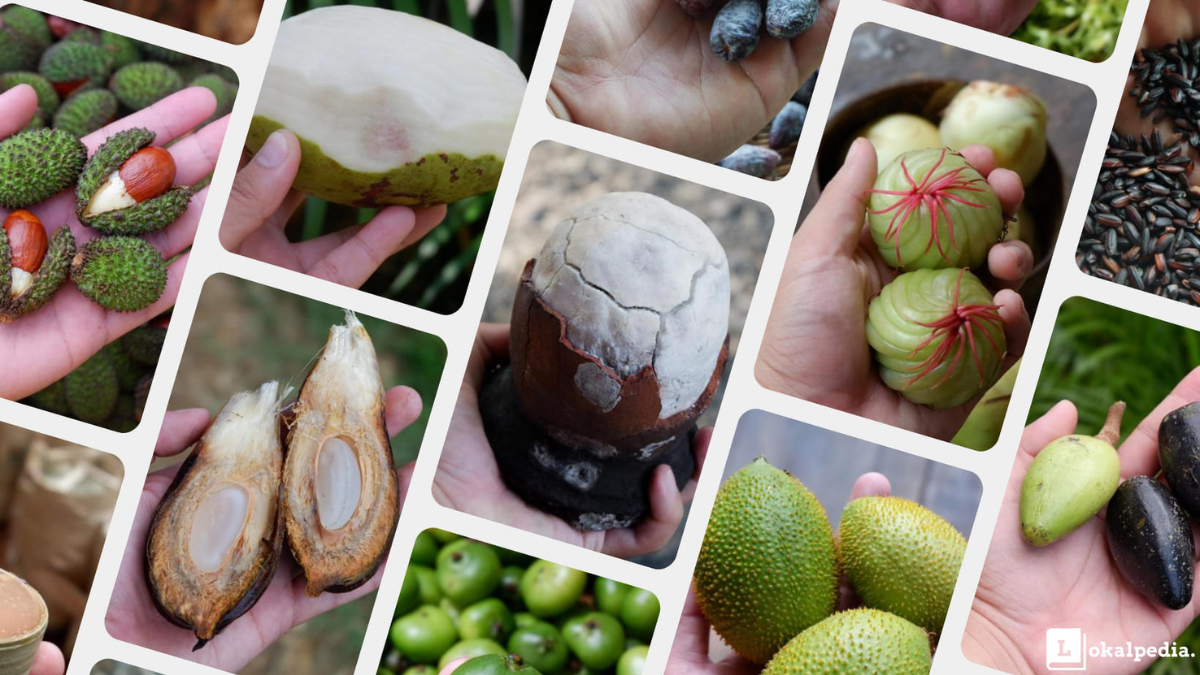
Beyond adobo and sinigang, Philippine heritage cuisine is largely overlooked and neglected. This is evident in the lack of knowledge of many Filipinos about their local ingredients, many of which are alien to them.
Lokalpedia features overlooked, endangered, underutilized, artisanal, heirloom, and local ingredients and food items of the Philippines. It aims to be the biggest visual archive of Filipino food heritage.
“It is my passion project, and perhaps my love letter to Philippine cuisine,” John Sherwin Felix, founder of Lokalpedia, tells Esquire Philippines.
John Sherwin Felix, Founder of Lokalpedia

Felix travels around Luzon, Visayas, and Mindanao, just to document these ingredients, most of which are native or indigenous to the country, Felix says. “But I also document introduced food items that are culturally relevant to us.”
ALSO READ:
I'm Still Eating Kinalas, the World's Worst Filipino Dish, Whatever Taste Atlas Might Say
The Crazy History of Filipino Spaghetti
According to Felix, there were a lot of things that pushed him to create Lokalpedia, foremost of which is the continued neglect of local ingredients, resulting in the gradual disappearance of these items in local dishes. For example, many Filipinos mistake the long, slender red chilis from Taiwan as siling labuyo, which are actually shorter and rounder.
“It is alarming that even mainstream media, big brands, and supermarkets ay hindi alam ang tunay na siling labuyo. Ang pagtatama ng maling impormasyon ay isang pamamaraan ng pag protekta ng ating food heritage,” said Felix on Twitter.
Asin tibuok is also a very rare heritage ingredient with roots in Bohol. Felix helped rekindle public interest in the strange-looking ingredient, which appears similar to a dinosaur egg.
“I usually feature traditional and reconstructed Filipino dishes. I do a lot of research about our cuisine in my free time. I noticed that many people don't know that we have a lot of unique ingredients,” he says. His research led him to a seller from Alburquerque, Bohol, where the dying practice of making asin tibuok is making a last stand.
The sad thing is that many Filipinos are more familiar with imported or foreign food. For example, in the case of fruits, people are more familiar with apples, oranges, grapes, etc. instead of our native fruits such as mabolo, talakatak, ibuli, galo, kalumpit, etc.
"In the Philippines, kung ano 'yung sariling atin, iyon pa ang na-marginalize at naging 'exotic'," Felix says.
Tabon-tabon (Atuna racemosa) is a fruit traditionally used for the preparation of kinilaw in Northern Mindanao.
The True Siling Labuyo

Lubi-Lubi

Not Monggo But Tapilan

Ominio Rice

Yantok

Asin Tibuok

Heritage Blindness
One of the goals of Lokalpedia is to raise awareness about native Philippine ingredients. “We can't love and protect things we do not know. Awareness is the starting point of action,” says Felix.
The page also wants to address what Felix likes to call “heritage blindness.” Many of Lokalpedia’s readers are surprised to find out that many of the flowers, fruits, and greens found in their backyards are edible and have been in the culinary consciousness of their Filipino ancestors for hundreds of years.
“Once the information enters their consciousness, it is hard to ignore our food heritage. Siguro kapag pumunta sila sa palengke, bakuran, o kagubatan, kilala na nila or at least familiar na. It also promotes food security and food biodiversity.”
One of the main goals as of now for Lokalpedia is to have a published book on local ingredients, covering those used by different ethnolinguistic groups of the Philippines. As of this writing, Felix is still pooling funds for the project and hopes to start in mid-2023.
