
Looking Back at the History of Oktoberfest in Manila With the German Club

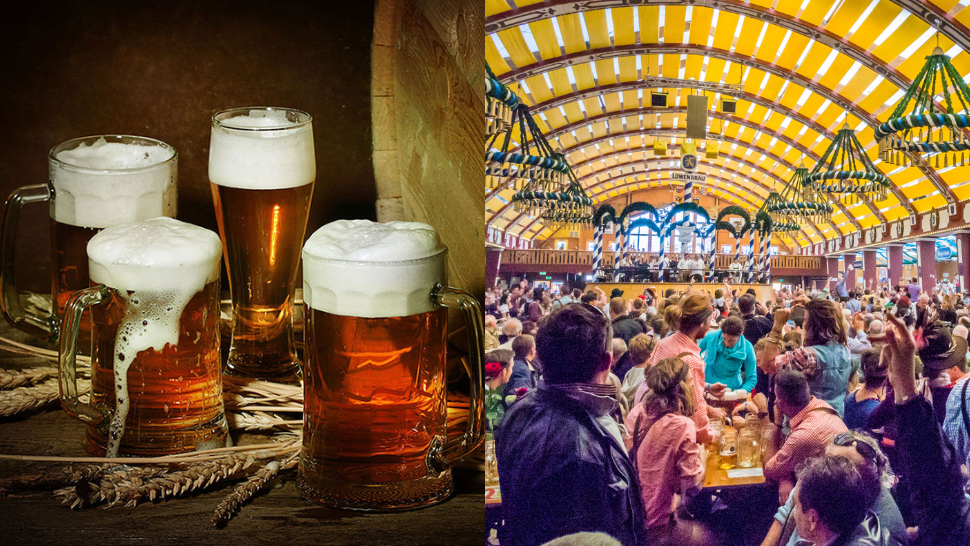
In and around these tents, sauerkraut, schnitzel, pork knuckles, bratwurst, and free-flowing beer fill the tables. People in traditional Bavarian outfits (in dirndl and lederhosen) are rolling around by the hour, looking even more jovial by the next. Brass bands to the left and gun salutes to the right are part of the celebration's grand carnival, too. We are bombarded by chants of "prosit" in the distance and flanked by thousands of drunk voices singing polka folk. This, we know, is Oktoberfest.
With origins in Munich, the festival is a cultural phenomenon that is celebrated all around the world, including by us Filipinos, too. We've had 187 of these by now. Meanwhile, Oktoberfest Manila has been around longer than official Philippine-German relations. That's 82 years versus 69. How did that happen?
"About four million people visit annually the Oktoberfest from all parts of the world," Intercountry Committee (ICC)-Philippines and Germany Chairman Gunter Matchuck quips. "It is a big logistical problem for Munich."
A welcome one at that. Matchuck came to the Philippines about 42 years ago. German Club Manila came even earlier, in 1906 to be exact. It would move from its original location in Paco to Legaspi Village in the '80s.
Oktoberfest 2014 in Munich. Looks fun.
.png)
ALSO READ:
This Filipino Craft Beer Tastes Like Biscuit, And We Can't Get Enough of It
Looking for Free-Flowing Beer? Oktoberfest Returns to Solaire Next Month
The first Oktoberfest Manila, on the other hand, started back in 1930. Matchuck remembers a time when he first arrived that his first Oktoberfests here started with roughly 800 people, long before gargantuan tents in Sofitel Manila and Solaire stood. "From then on, it grew and grew and grew. It became a massive input. Sofitel made the first tents, and tents and Oktoberfest go together."
Those numbers are "humble," he says. But that was the past. It's about the next generation now, so he says. On the forefront of this is German Club Manila Oktoberfest Chairman Tobias Rast, who is tasked with pushing the Oktoberfest forward.
During the 75th celebration of Oktoberfest Manila back in 2013. It was also a celebration of the 60th year of German-Philippine relations. In 1954, then-President Ramon Magsaysay appointed Consul General Policronio de Venecia, MD to establish our consular representation in Hamburg.

"Things have changed," he states. "Sofitel was a big step for the German Club. The change to Solaire was another big step. We were able to have 30-percent more tent capacity. We are looking at 500 people this year. It's been 80 years since starting at a cellar at the Holiday Inn."
For this year's iteration of Oktoberfest, German Club Manila is partnering with the Philippine Rotary in Emergency Preparedness and Response (PREPR) Foundation, as well as the Intercountry Committee (ICC)-Philippines and Germany, and Rotary Districts 3780, 3810, 3820, and 3830.
Proceeds of the project will go to its End Polio Program and their Disaster Relief and Response. Paintings from the Magkaisa Mabini Art Collection and artist Ivan Acuña will be raffled off as well. Acuña says that it was a favor for one of his good buddies, PREPR President Julius Chanco, who he went to school with.
German Club's Oktoberfest sampler with sausages, roasted potatoes and Weihenstephan beers.
.jpg)
This 2022 Oktoberfest at Solaire Resort & Casino will be serving, of course, German beer. Visitors will also get to drink the oldest brewery in the world, Weihenstephan from Bavaria, which is the only place in the world where people can study brewery technology. "Be careful. They're a little bit stronger than San Miguel. So drink wisely," Rast notes.
Interestingly, there isn't really such a thing as "German beer," Matchuck stresses. Well, okay, we can call it that. But the thing about beer culture in Germany is that there are roughly 7,000 varieties of beer brewing in the country, across more than 1,300 breweries. A fifth of these breweries come from the southern part of Bavaria, where Munich is. Hence, Oktoberfest mania.
Engraving of Weihenstephan Abbey (the old Benedictine monastery) by Michael Wening in Topographia Bavariae, around 1700. It is now part of the district of Freising.
.png)
He adds: "I never discuss taste. People have different tastes.... We have more than 500 different tastes of beer and it depends on the season, on the time of the day. There is a beer for every occasion. German beer became famous because, historically, we were the first one to brew."
Let's keep this in mind when we're working on our third or fourth steins.
The Rotary Club's Oktoberfest project will be held on October 13, 2022, with the main events happening on October 14 and 15. For more information on Oktoberfest tickets and sales, visit the website here. German Club Manila members also get exclusive ticket sales.
