
Gelatin, Gin, and Green Mangoes: Quiapo's Art Deco History Comes Alive on a Plate

When I was about eight years old, my mother brought my brother and I to Quiapo to seek the help of a manghihilot. My mother was born and raised in Manila; familiar with the ins and outs, and the seedy underbelly of this gloriously animated city—and for some reason, when my brother sprained his ankle, she sought the help of the experts of those busy streets to heal him quickly.
Looking back at it now, a manghihilot might not have been the most rational choice to help with my brother’s injury—he writhed in pain as the manghihilot pressed down hard circles on the tender bump on his leg—but thankfully, he made it through with no long term consequences.
Also read:
At This Culinary Event in Crimson Boracay, Art Is on a Plate—and All Around
At Pardon My French, Fine Cuisine and Nostalgia Are on the Menu
The manghihilot (or mambubuga, mambubulong, manggagamot—they have many names) of Quiapo aren’t your ordinary physical therapists or masseuses. They are folk healers who claim to heal not only physical ailments, but even maladies of the heart or mind. It is such a Manilenyo thing to do, but my mother trusted them more than a quick trip to the doctors. As for me who did not spend enough time in the city, I was more of an observer of the whole ritual, worried and curious, but also pleased that I was brought along to experience this part of the capital I had never seen before. My memory is hazy on account of how long ago that moment was, but I still remember glimpses of it: the busy noonday crowd my brother and I had to weave through while clutching our mother’s hand, the manghihilot’s old white sign with his services and rates listed down in faded red paint, and the sheen of the oil he used to massage my brother’s ankle.
The district is much larger to me now. I’ve learned that this land full of mystery to me is so much more to other people too: It is a hotspot for marketplace bargain hunting, a witness to turning points in political history, and even a place of worship to many, as both the Quiapo Church and the Masjid Al-Dahab, the largest Mosque in Metro Manila, can be found here.
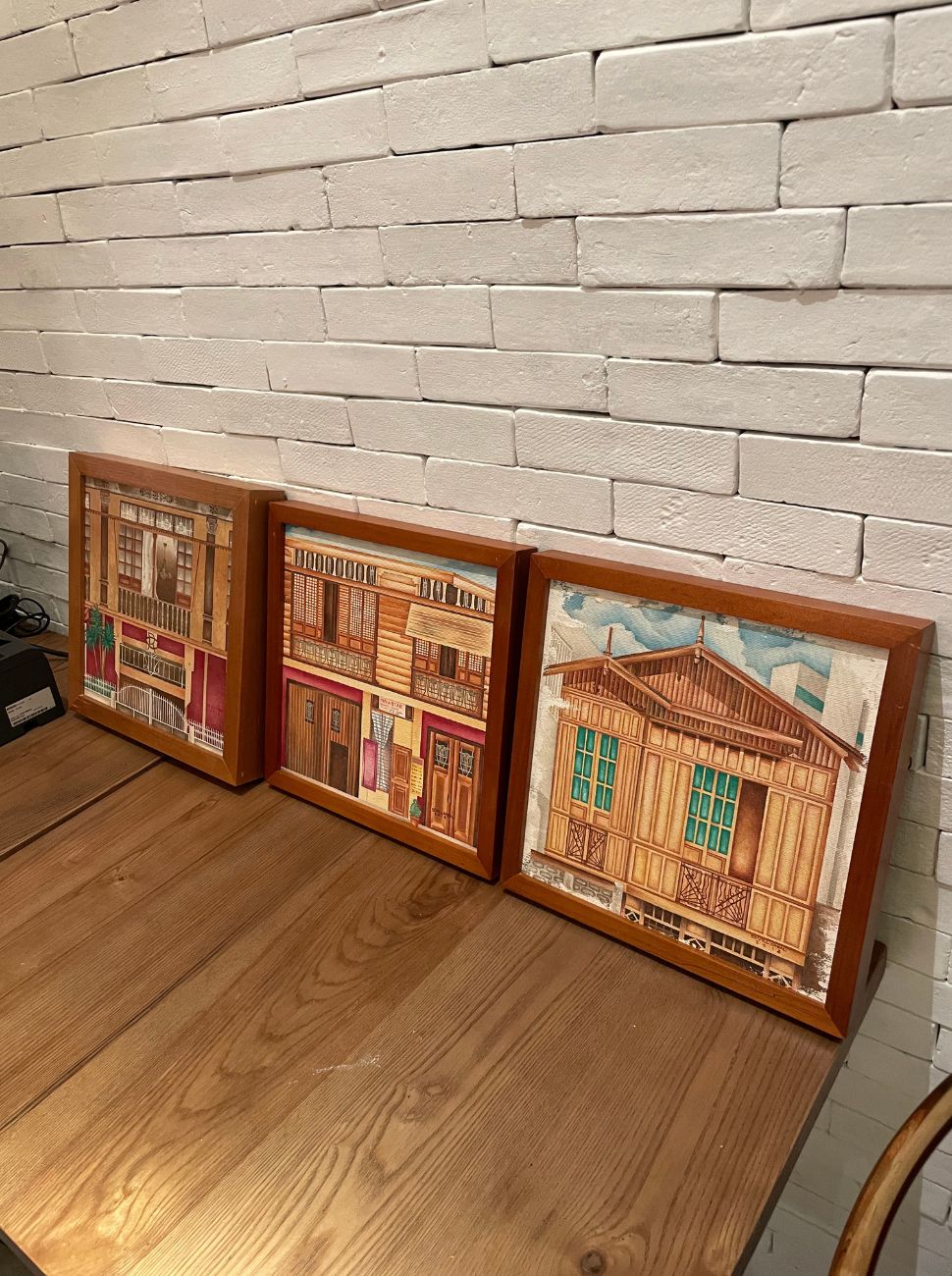
Paintings of Quiapo home facades by Brian Villareal
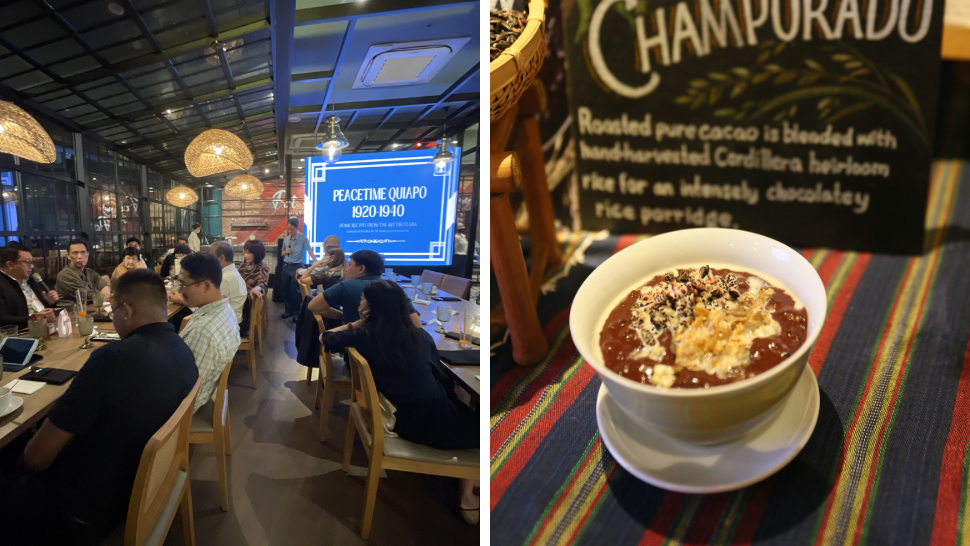
For Dr. Fernando Zialcita and his students from the Ateneo de Manila University, this district holds memories through its food. With the help of renowned food writer Guillermo “Ige” Ramos Jr. and Chef Myke “Tatung” Sarthou, they prepared a dinner that takes people back to the glory days of Peacetime Quiapo through home style recipes reimagined for a more sophisticated setting. Last November 5, I attended this dinner organized to help keep this district’s culture, history, and heritage protected.

I arrived merely expecting great food to be served, but Ige and Chef Tatung’s curation lit up parts of the district I had never known about before. It was like I was eight again—pleased to observe, to simply be there and learn from people who knew this historic part of the city more than I did.
I was served with a little bit of history across all the dishes I tried that night, from the refreshments to the dessert that capped off the dinner. Sometimes, the plates were inspired by a particular place—like with the Quinta Market Surprise cocktail or the Sebastian’s Green Mango Sorbet with Chili and Bagoong Sugar. But, my curiosity was more drawn to the dishes inspired by real people who lived in the 1920s to the 1940s.
Sebastian’s Green Mango Sorbet and the Araneta Jewel Salad

The Araneta Jewel Salad was an appetizer that perfectly encapsulated the curiosities in cuisine during that era—in gelatin, that is. Its recipe was lent to the team by Patricia Araneta, whose last name rings a bell even as far back to the Art Deco era. For this dish to be a home recipe speaks to the prominence of the Araneta family in Quiapo food history and culture, as the ingredients and techniques used were rare to find at the time.
That night’s Nakpil-Style Fettuccine with Liver Paté highlighted an old Nakpil family tradition to make handmade fettuccine noodles during Christmas time. A short anecdote came with it: Apparently, Gregoria de Jesus-Nakpil (Andres Bonifacio’s widow who soon married Julio Nakpil) loved to observe guest chefs who were hired for special occasions, and it is said that her nose was so skilled that by smelling a dish, she could tell what ingredients made up the recipe.
The Nakpil-style Fettuccine with Liver Paté

After these dishes, I moved on to the most tender Lengua I’ve ever had (it was bathed in gin. Gin.), and a serving of Mama Sita’s Balatinaw Rice Champorado, complete with a sprinkling of salty danggit.
Mama Sita’s Balatinaw Rice Champorado

Ige and Chef Tatung are storytellers at heart. With food as both their subject and medium, they took us guests back in time through the home style recipes they’ve adapted. Behind this dinner is an advocacy to have Quiapo recognized as a heritage zone so that it is given priority by government agencies in restoring, preserving, and maintaining their historical and culturally relevant sites and structures.
As the night ended, Congressman Joel Chua, who was born and raised in Quiapo, treated the guests to the classic Mongo Hopia from the Master Hopia Factory, a family-owned establishment that has not changed its recipe since it opened in 1969. Congressman Chua has also played a crucial part in pushing for the conservation of Quiapo’s history as the place is dear to his heart. When he was given the spotlight to speak at the dinner, he shared his own fond stories of growing up in the district.
I hadn’t thought about that old memory of Quiapo and the manghihilot for years until that dinner. If Dr. Zialcita and his team sought to inspire more visits to the district too, then they were successful. The next time I come by Quiapo will be a more mindful visit. I’m guessing that much has already changed with the area. The crowds of people are probably still there, but could the manghihilot and her faded sign be there too? Probably not, but I’ll have to see it for myself to really know for sure.

