

The Art Behind Cordillera Whiskey Is the Science of Haunted Houses

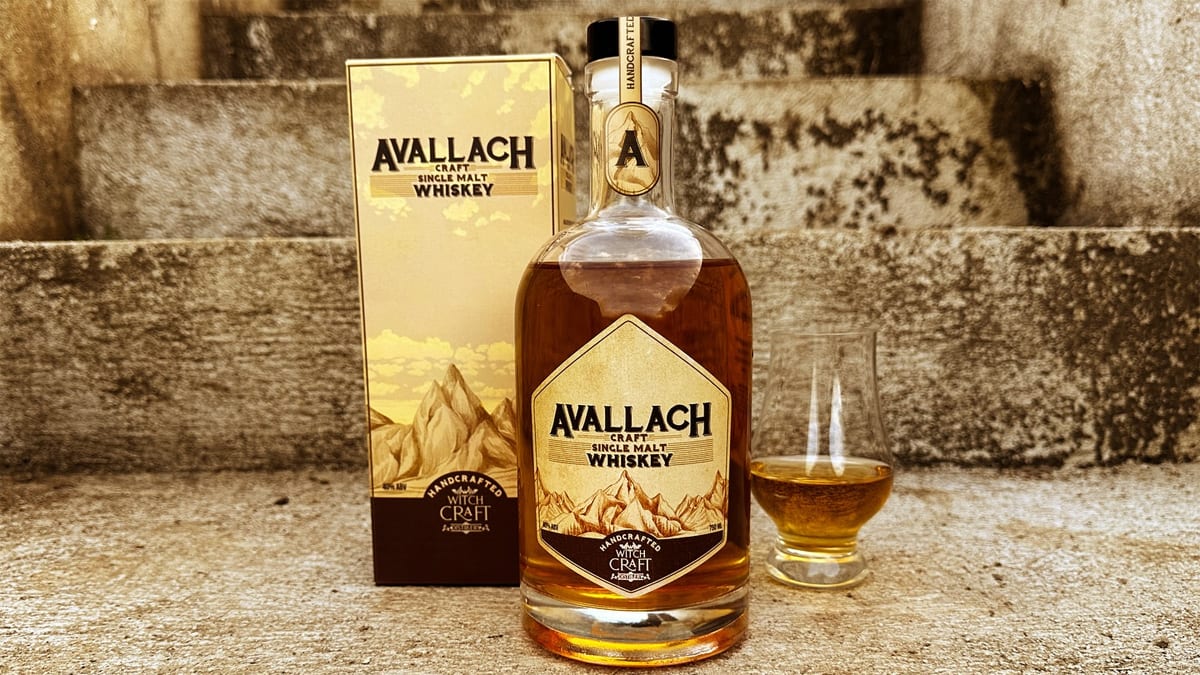
Back in February, Esquire Philippines ran a story by Mari-An C. Santos introducing readers to Jackson So—chemist, hotelier, and, in a twist no one saw coming, the man behind Witchcraft Distillery in Baguio. He was the soft-spoken alchemist turning imported barley and virgin oak barrels into something he called "distinctly Filipino." The feature ended with his growing lineup of Avallach, Spectre 431, and Phantom—a trio that promised both refinement and a hint of mischief.
Eight months later, Frank Kona Shrope and Leonard de Guzman of the Whisky Society of the Philippines hosted a Witchcraft Whiskey Masterclass at The Spirits Library in Poblacion, glass in hand. If Santos gave us the origin story, this was the sequel—the part where the whiskey steps out of the barrel and tells its ghost story.
ALSO READ:
This Baguio Distillery Makes Whiskey That Is 'Distinctly Filipino'
Michter's Retains Top Position in World’s Most Admired Whiskeys for 2024
What Makes a Whiskey Filipino?
It isn’t the barley. That comes from abroad. It isn’t even the barrels, which were imported too. The water, at least, is local. But from what casual drinkers might understand, terroir is French for “land.” So what makes a Witchcraft whiskey Filipino?
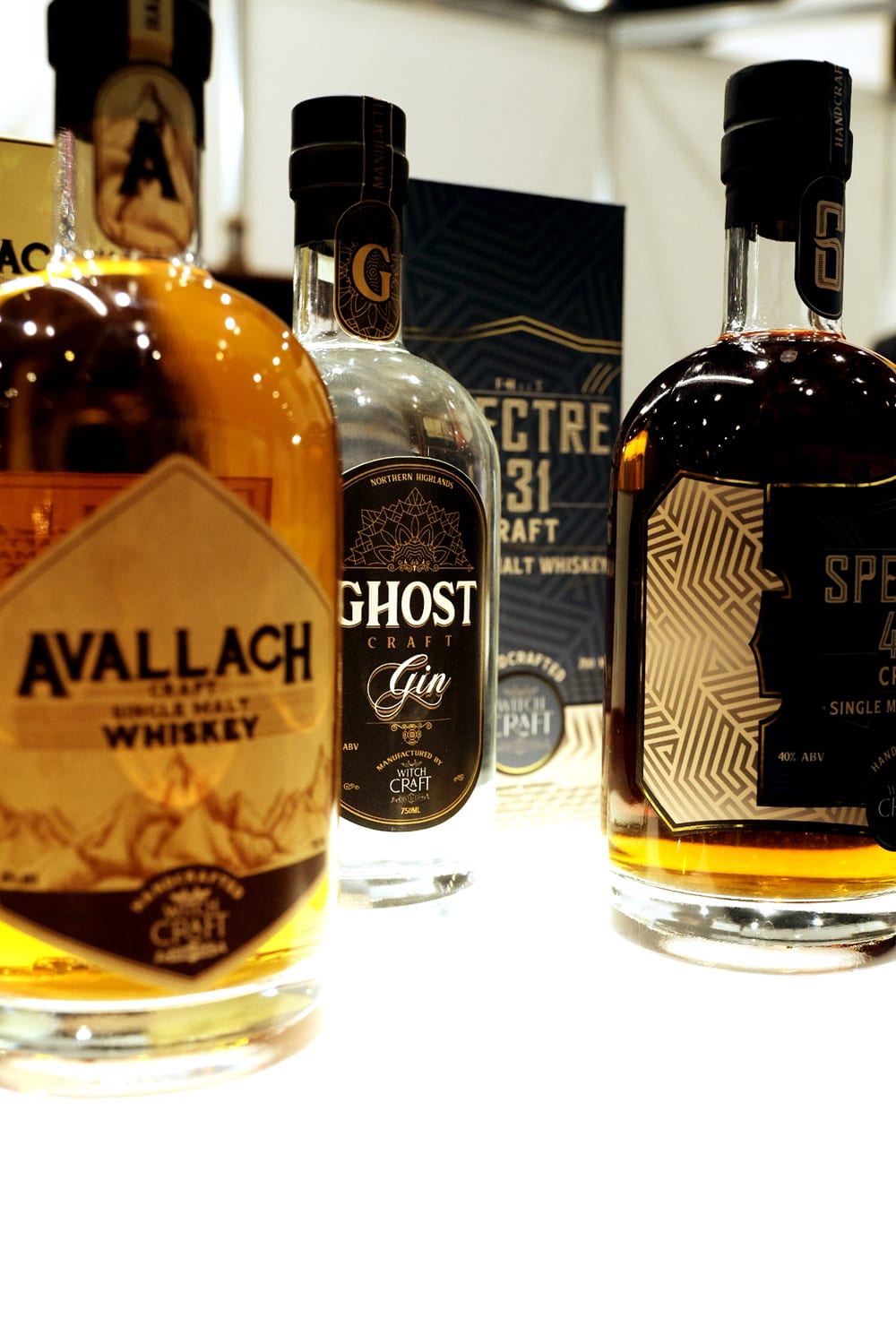
Avallach (Single Malt Whiskey), Ghost (18-Botanical Gin), and Spectre 431 (Single Malt Whiskey) from Witchcraft Distillery
What makes it Filipino, Frank explains, is the climate—the same cool, steady highland air that has defined Baguio as the summer capital for generations.
But as Frank and Leo unpack it, the science—and the superstition—come alive.
In Scotland, whiskey ages through seasons. Cold winters contract the wood; warm summers expand it. The liquid moves in and out of the oak, extracting flavor and color, breathing in sync with the weather. In Kentucky, heat does the heavy lifting—faster cycles, deeper char, bolder flavors.
But in the Cordilleras? The air barely flinches.
Despite having similar wind velocities and humidity to Scotland or Kentucky, Baguio’s temperature hovers between 17 degrees Celsius and 24 degrees Celsius all year. The barrels don’t breathe through seasons; they breathe through the day. Morning sun warms the wood just enough to open its pores, and by evening, the mountain chill tightens it again. Expansion. Contraction. Every day. Every night.
And if that sounds familiar—it should.
The Ghost in the Barrel
Haunted houses are one of Baguio’s favorite urban legends. You hear them before you see them—the creak of wooden floors, the slow sigh of doors, the whisper of a structure alive in its own memories. Scientists have long explained those sounds as the natural expansion and contraction of wood responding to temperature shifts.
That’s your terroir—but we all love a good pun, so we can’t help but arrive at: that’s also your terror.
The same ghostly creaks locals blame on tortured soldiers and vengeful elementals are the same movements that shape Witchcraft’s whiskey. The barrels groan and breathe like old houses at night. If terroir refers to the land that gives a drink its soul, then perhaps terror refers to the way that soul makes itself known—creeping, cracking, and haunting the flavor.
They named themselves Witchcraft, after all.
Three Spirits, One Spell
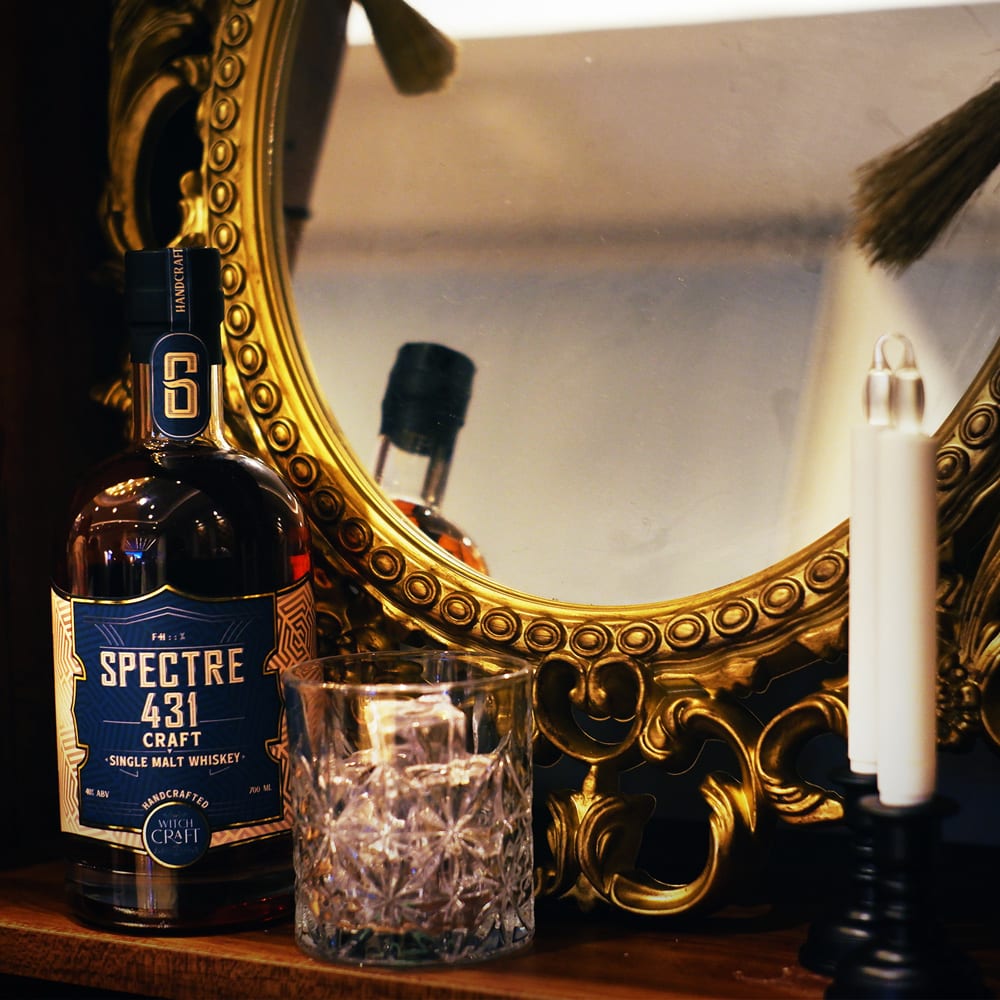
Avallach, the flagship, was aged in virgin American oak—light, honeyed vanilla, and whispering of coconut—a kindly woodland spirit inviting you into their home. Spectre 431, its darker sibling, came from heavily charred barrels, full of chocolate and fruit—fire and smoke. Then there was Phantom, a gallery-exclusive spirit aged in European oak, with coffee and dried fruit notes and a mouthfeel that can only be described as—deliciously haunting.
But most importantly, Frank and Leo asked, “Did you like it?”
They didn’t hand out flavor maps or stress tasting notes heavily because that might plant ideas in your head. Instead, they posed the simplest, hardest question in the room:
“Did you like it?”
It’s a disarming question for people trained to analyze. We’re used to identifying peat, spice, oak, and vanilla. We like to talk about the nose and finish, to measure experience in adjectives. But the Whisky Society of the Philippines’ approach felt more Filipino in its directness.
Because maybe tasting whiskey isn’t about knowing what to say. A typical Filipino might never get to smell heather or eat a peach that didn’t come in a can. But this approach is about knowing what you feel.
As the conversation drifted from flavor to philosophy, one’s mind naturally turned to whether Witchcraft’s use of imported ingredients diluted its Filipino identity. But everything comes from somewhere—the Americans built summer villas, the Japanese left internment camps, but the people of Baguio made it their home again.
It’s what happens here that makes it ours.
That “here” lingers. It doesn’t just mean the coordinates of a distillery, but the altitude, the humidity, the rhythm of days that contract and expand like the wood itself. Terroir, in this case, isn’t a postcard of the Cordilleras—it’s the daily pulse of the place.
The Spirit of the Highlands
In a world where whiskey often chases provenance—Islay, Speyside, Kentucky—it’s refreshing to find one that chases personality. It has character—the kind that grows in quiet places and cold nights, in barrels that whisper rather than roar.
The idea of terroir-as-terror stopped feeling like a pun and started feeling like a truth. There really is something haunting about the notion that a place can leave its mark not through ingredients, but through the slow, steady conversation between wood and weather.
In Baguio, that dialogue happens every day: wood breathing, air cooling, spirits aging in rhythm as mist creeps down the mountainside.
And so, yes—this Cordillera whiskey might not use native barley (yet) or Ulayan, the Philippine oak. But it has something rarer: a sense of time, patience, and playfulness that could only come from a city that listens to its ghosts.
Because in the end, what Witchcraft Distillery bottles isn’t just whiskey. It’s weather. It’s wonder. It’s a little bit of terroir—and a little bit of terror.
The Spirits Library is at 4963 Guerrero Street, Población, Makati. It is open daily from 6 p.m. to 3 a.m. For future Whisky Society of the Philippines activities, follow them on social media.
