Today I Learned: The Story Behind Sentro 1771’s Corned Beef Sinigang

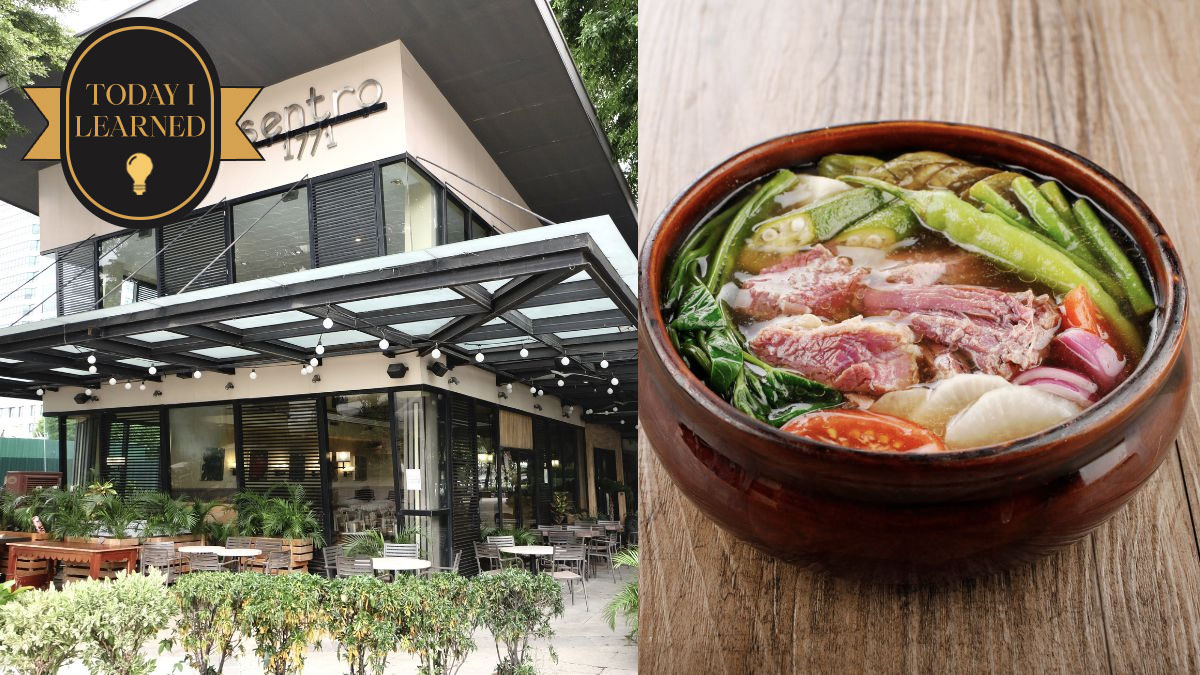
Vicky Rose Pacheco can be considered one of the pioneers of modern Filipino cuisine in the Philippines if we go by the year Sentro 1771 was conceptualized and opened in 2002.
The Le Roche Switzerland-educated chef admits that she did not plan for Sentro 1771 to become a Filipino restaurant, but simply a place that serves food Filipinos love. “Chateau 1771, the first dining concept we opened, was French. So what we want is to maintain the same standard of service in the way the food is prepared, but make the flavors akma sa panlasang Pinoy,” she explains.
But since a big chunk of its menu consisted of Filipino food, customers started calling it a Filipino restaurant. This, in effect, shaped the direction the restaurant eventually took. “I didn’t want our food to be lutong bahay kasi hindi naman lahat ng luto sa bahay masarap,” she thought back then. “Of course, we want to present food that’s beyond the ordinary—something more elevated and memorable. I was also thinking back then, why are the nicest restaurants always French, Continental, or Italian? Why can’t it be Filipino?”
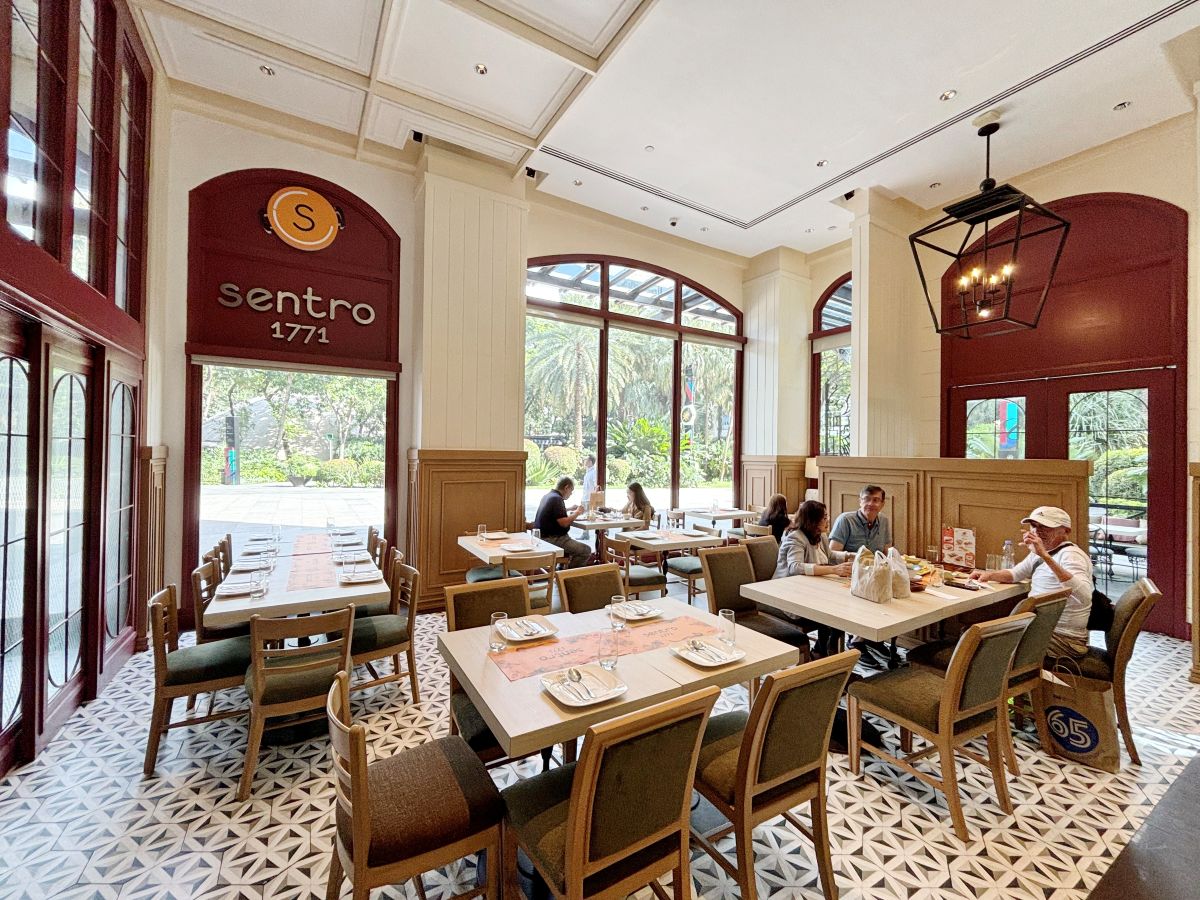
Sentro 1771 Greenbelt interiors
She kept changing the menu for the next six months, and finally decided to make it modern Filipino cuisine, which Pacheco defines as “Filipino food that has been influenced by different techniques, ingredients, and presentation, while retaining a distinctly Filipino flavor.”
Pacheco says she and CEO and partner Ricky V. Gutierrez chose the name Sentro 1771 because they envisioned it as “the center of good Filipino food.” Fittingly, the first branch was right in front of the Greenbelt 3 fountain—literally at the center where everyone passed by. (Now, it's located at the ground floor of Greenbelt 5.) “I also wanted a name that was simple, easy to pronounce, and easy to understand,” the chef adds.
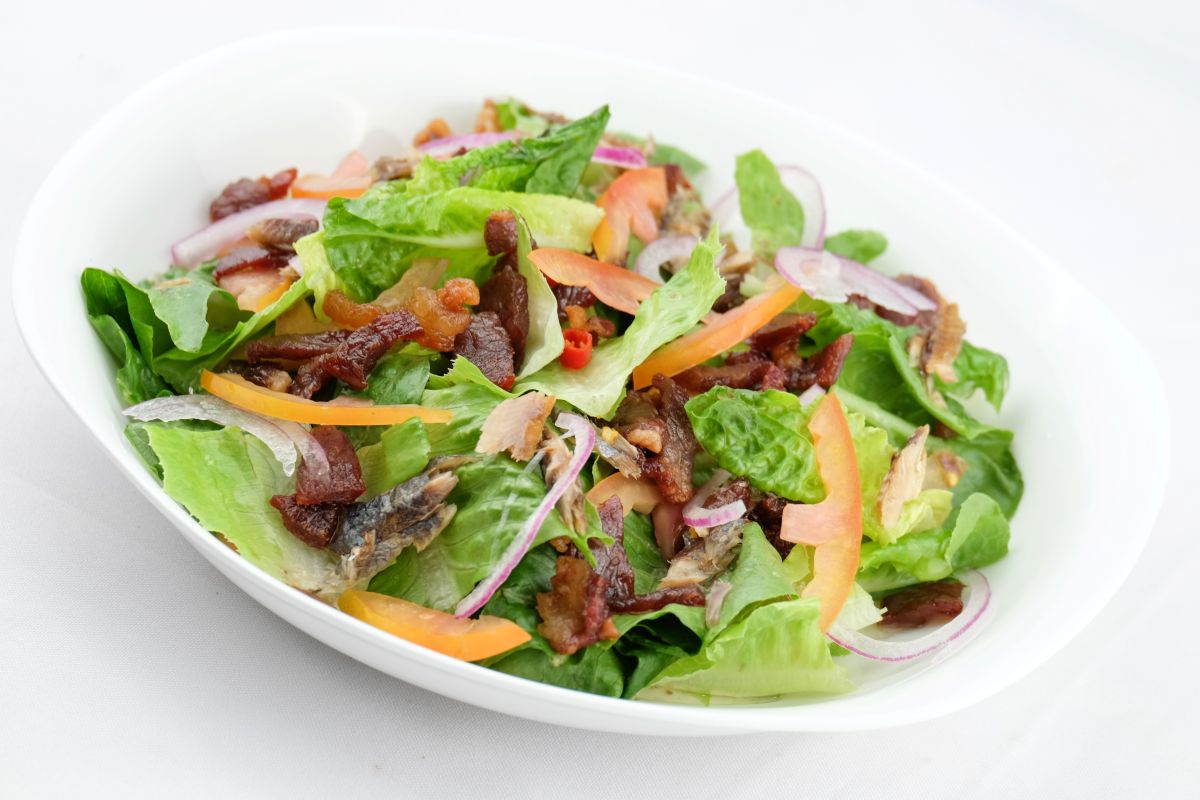
Pinoy Beef Tapa Salad with Tuyo Vinaigrette
Sentro 1771’s Corned Beef Sinigang
The restaurant is known for its Corned Beef Sinigang. And if you think using corned beef as the meat just came out of nowhere, you’re mistaken. The dish actually has a bit of history. According to Pacheco, they used to serve Corned Beef and Cabbage at Chateau 1771. “Chateau is no-borders cuisine, so I had the license to put anything on the menu. We had French, Italian, Spanish dishes. Corned Beef and Cabbage has an Irish origin—it’s their version of nilagang baka,” the chef explains.
Pacheco's team would make their own corned beef in-house—prepare a brine solution, cure the beef for four days in the chiller, then tenderize the meat in water with leeks, carrots, and celery. “Parang Pot-au-Feu siya ng French,” she explains.
Sometime in 1996, as she passed by the Chateau kitchen, she saw a big pot of broth. “Ay, sayang, itatapon,” she thought to herself. Curious, she tasted it—it was, as expected, salty since the beef had been brined. She then thought of adding a souring agent, and the flavor resembled sinigang. When she added the corned beef and usual sinigang vegetables, the broth came together and tasted unmistakably like sinigang.
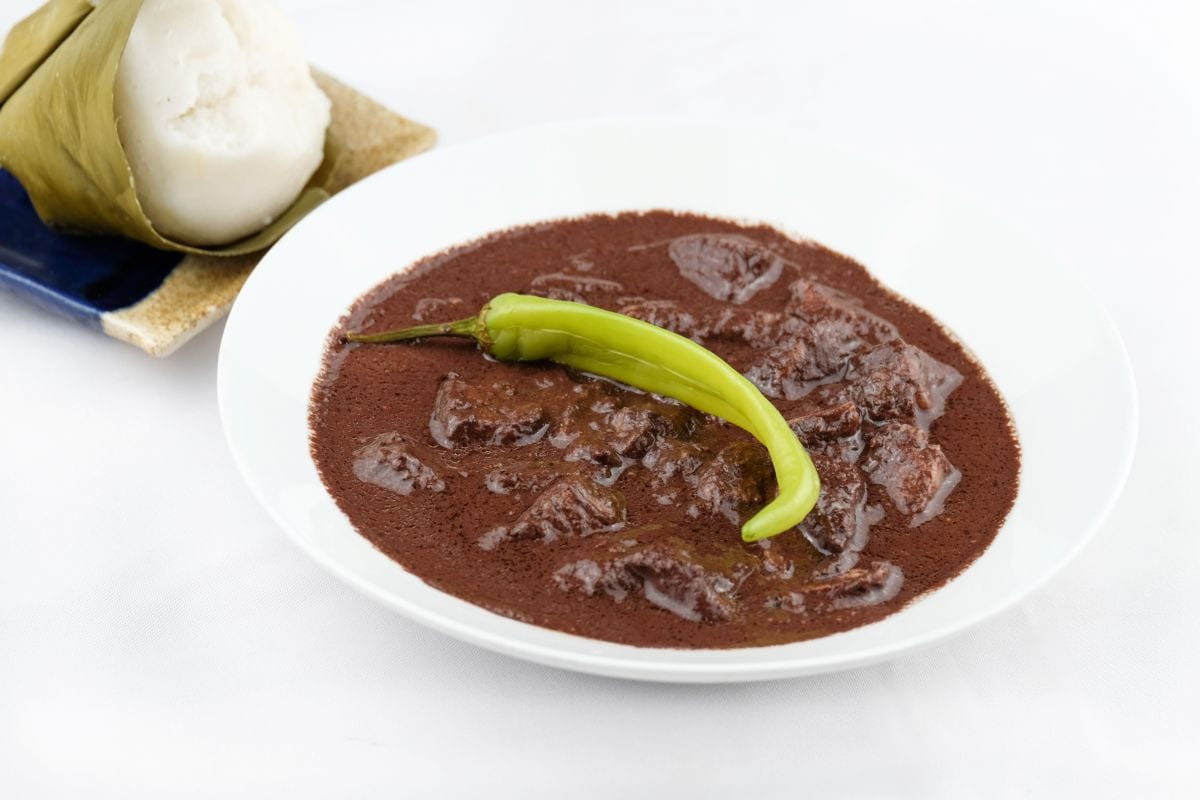
Dinuguan sa Sampalok
“That started it,” says Pacheco. “But then I tweaked the recipe. I didn’t use beef brisket. Instead, I used cuts for sinigang like kamto (beef flank) with fat, litid, and the like. It’s like sinigang na baka, but cured and then tenderized.’”
Their team served it at Sidebar, a Filipino and Asian-Italian fusion restaurant under the 1771 Group, but it didn’t quite fit the concept. “Kasi bar siya. Who would order sinigang in a bar? We also offered it at Portico 1771 in Malate, pero hindi rin tumakbo. So I just parked it for a few years,” recalls Pacheco.
Then came the year the team started planning for Sentro 1771 and its specialties. When they served the dish, it became a big hit and eventually became one of its signature dishes. “There’s a timing to everything, and the timing isn’t dictated by you. Sabi ko, ito ’yung gusto ni Lord, ito ’yun,” she says, smiling. “I also thought, any chef could have done it. But maybe it was a gift that I thought of it at that point in time.”
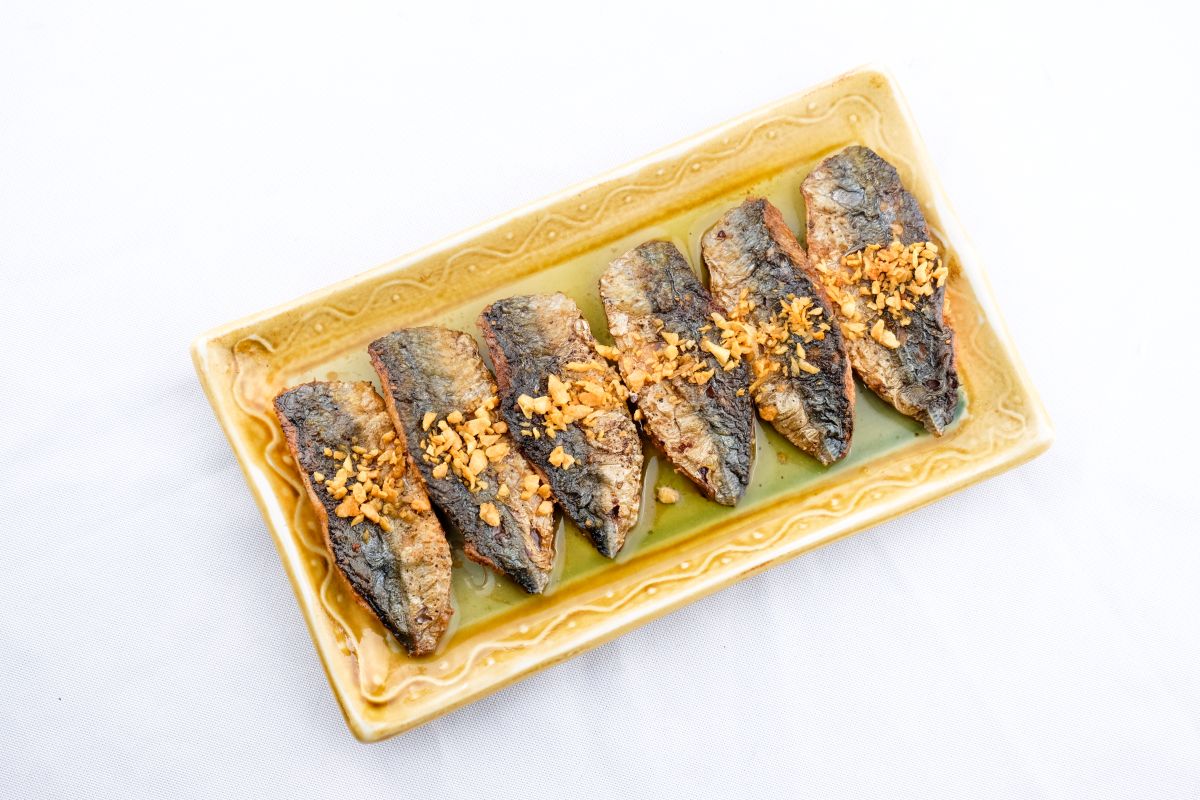
Rated GG or galunggong fillets fried in garlic oil and topped with browned garlic.
What’s in a Name?
Timing and flavor are important—and so is the name. In the case of another Sentro 1771 bestseller, Rated GG, Pacheco believes the name plays a big role in why it continues to stay on the menu.
Pacheco likes to say, “it’s really just pritong galunggong,” but that isn’t completely true, because her version is far more special. The fish is deboned and seasoned with salt and pepper. And instead of using regular cooking oil, she fries it in extra virgin olive oil infused with garlic. “Basically, I just brown the garlic in the extra virgin olive oil, then strain the garlic. You fry the fish there. Tapos, paghango ng fish, doon na igigisa konting garlic that you’ll put on top of the fish. Hindi Pinoy ang method and sometimes, hindi na rin locally sourced ang galunggong or round scad. But when you eat it, it’s lasang Pinoy.”
Fried Suman and Mangoes, rolled-out suman fried to a light crisp, topped with ripe mangoes, and served with sweet coco jam.
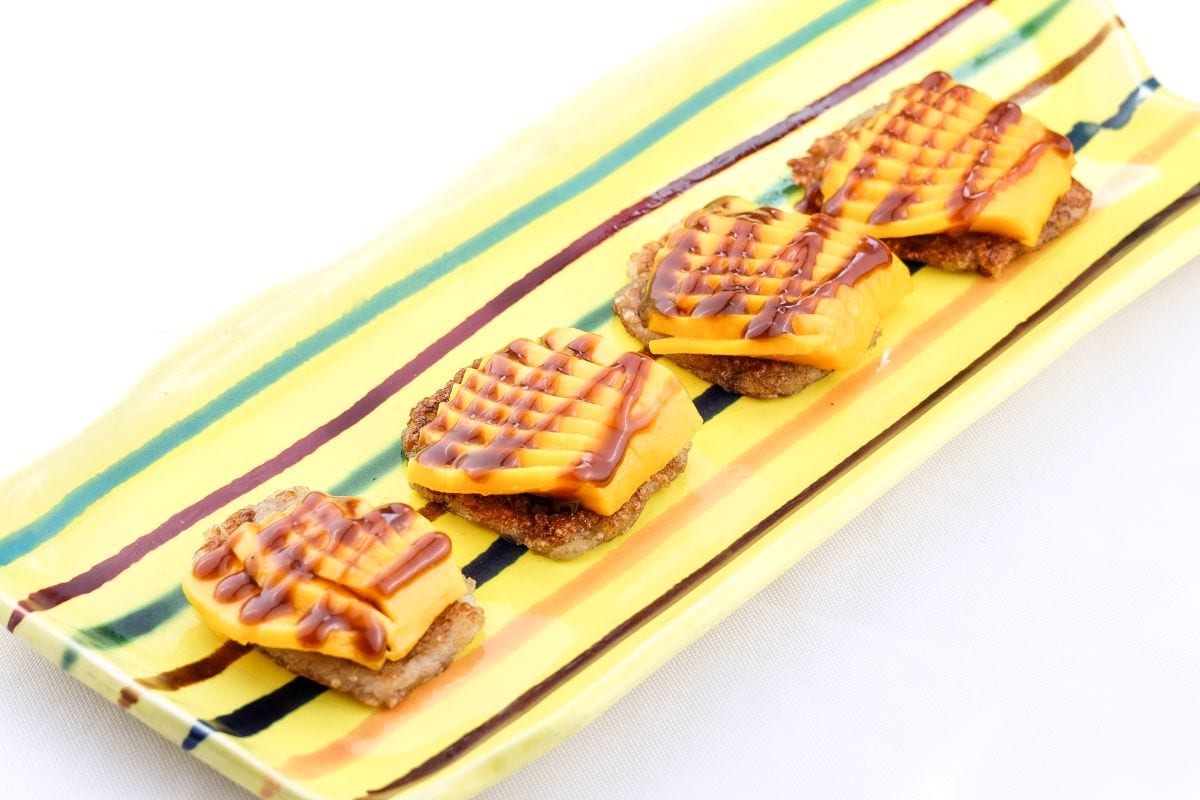
Pacheco says she always looks for creative ways to make a dish more delicious. This is true in the case of the resto’s Fried Suman and Mangoes. For some, the suman-and-mango combination is quite ordinary. We also see this among the Thais, with their Mango Sticky Rice. But when someone told her they fry their suman, she thought it was interesting.
“Ang sabi ng taong ito, in their house, they fry their suman—pinapa-crisp daw nila yung sides. So what I did was combine it with the concept of the Thais: I fried the suman in butter, then put a mango slices on top and drizzled it with muscovado sauce. The syrup was cooked with gata. It’s still very Pinoy, but the way it’s done is a bit different,” she says.
The creative tweaks can also be seen in the restaurant’s other dishes, such as Dinuguan sa Sampalok (which uses sampaloc as the souring agent instead of vinegar); Fried Kesong Puti (native white cheese breaded and deep-fried until golden brown, served with sweet chili guava sauce and garlic dip); and Tomato-Kesong Puti Salad (with cheese served two ways—fresh and deep-fried—alongside tomatoes, romaine lettuce, and garlic anchovy dressing); Beef Pinoy Salad (green salad with dried tapa bits and served with tuyo vinaigrette), and many others.
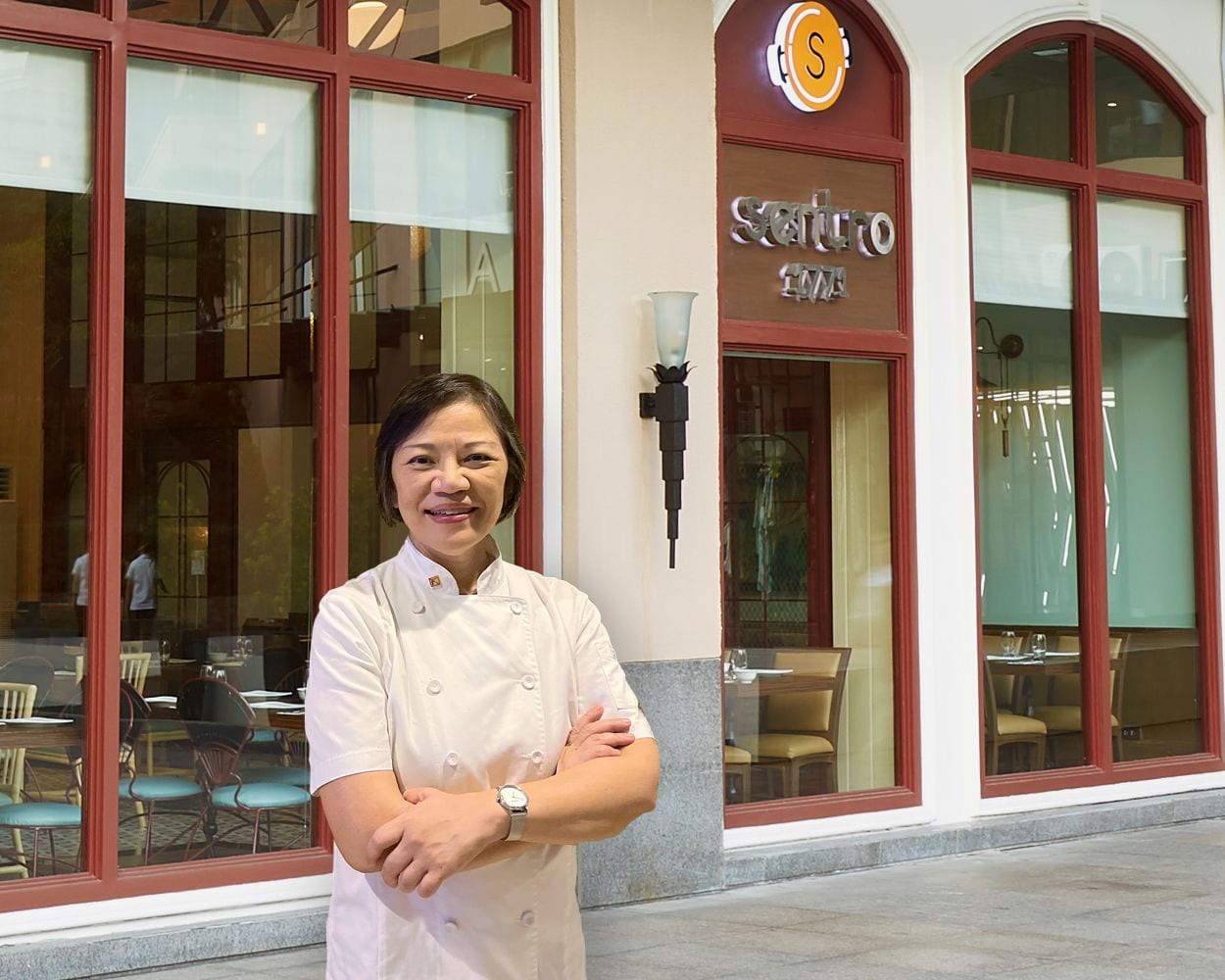
Pacheco is the founder of Sentro 1731 and the Chief Operating Officer and Executive Chef of the 1771 Group of Restaurants
Bottomline: ‘It has to be masarap’
Pacheco says that in running a modern Filipino restaurant, it’s important to keep pushing culinary boundaries—whether through creativity in the concept of the dish or in its presentation. But most important of all is the taste.
"The flavor has to be masarap—to me, to you, to my parents, to the driver. Dapat lahat tayo masarapan. Not just me, just because I’m sosyal. We may come from different social backgrounds, but when it comes to taste, there are only two kinds: masarap or hindi masarap. It’s an equal playing field for everyone. When I was testing recipes before, while creating the menu of Sentro, I would cook at home. 'Pag nasarapan yung maid namin tsaka daddy ko, ayos na ’yan. Sigurado na ’yan.’”
ALSO READ
Durian, Santol, and the French Connection at Coquette by Miko Calo
Francis Ang’s Abacá Offers Novel Ways to Experience Filipino Food
She also stressed the importance of authenticity and integrity of ingredients. “Now everything has truffle—even potato chips and fries—but I don’t use truffle because most of what’s available in the market are fake. (They don’t come from real truffles.) Same with honey: when I learned that many are diluted with syrup, I pulled our honey ginger lemonade from the menu and limited honey to just one dish, the honey garlic spare ribs. Sabi ko magso-source tayo ng totoong honey for that one dish, kahit mahal yan. Maybe the customer will not know it or don't care about it, but I care about it. For me, it matters,” she insists.
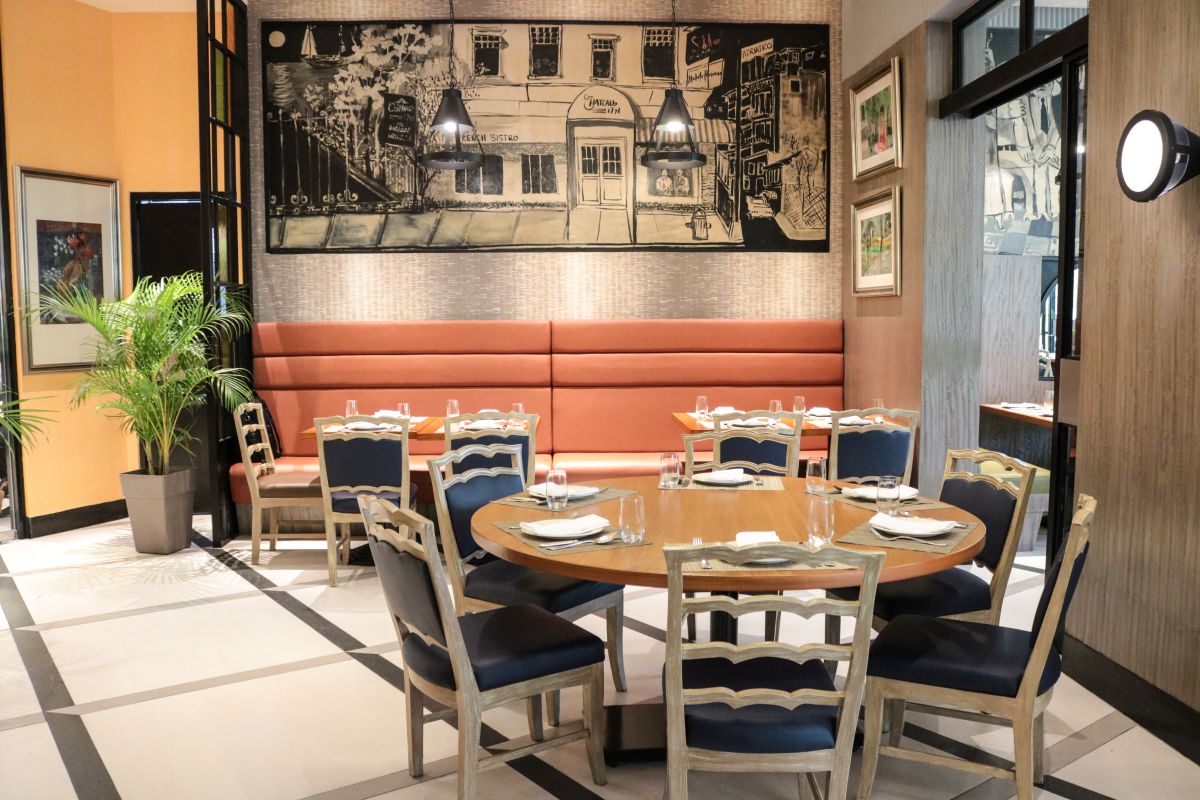
Sentro 1771 BGC interiors
Sentro’s Staying Power
How has Sentro adapted to the changes in Filipino dining culture since it launched in 2002? Pacheco says it’s important to know and accept who their market is. “Hindi ko alam kung mali ito, pero hindi ko masyadong tina-try na magpakabata. Kasi alam kong at one point in their lives, maghahanap ’yan ng place where they will feel comfortable—where they can celebrate with their family, eat well, be served well, and not worry about fancy things. May market na mahilig sa fancy meals, at medyo hindi ko sila tina-target kasi I don’t follow trends,” says Pacheco, who’s also the Chief Operating Officer and Executive Chef of the 1771 Group of Restaurants, which includes Chateau 1771 in Greenbelt 5; Sentro 1771 in Greenbelt 5; Capitol Commons, and Bonifacio Global City; and Café 1771, Winebar and Sidebar in El Pueblo, Ortigas.
Pacheco shares that her next dream for Sentro 1771 is to "move out of the mall and into a house of its own, like an elegant Filipino home that can host parties," she says.
On the menu side, she’s weighing which traditional dishes to keep and which new creations to add. While she’d like more room for original recipes, classics like kare-kare and crispy pata will stay. “People look for them because they’re hard to cook at home,” she says, smiling.
At the heart of it, Pacheco’s wish is simple. When diners walk out of Sentro 1771, she hopes they leave with full hearts and satisfied palates, already thinking about their next visit. “I want them to say, ‘Babalik kami. Dahil masarap,'” she says.