
Back to the '90s: The Toys of Our Youth

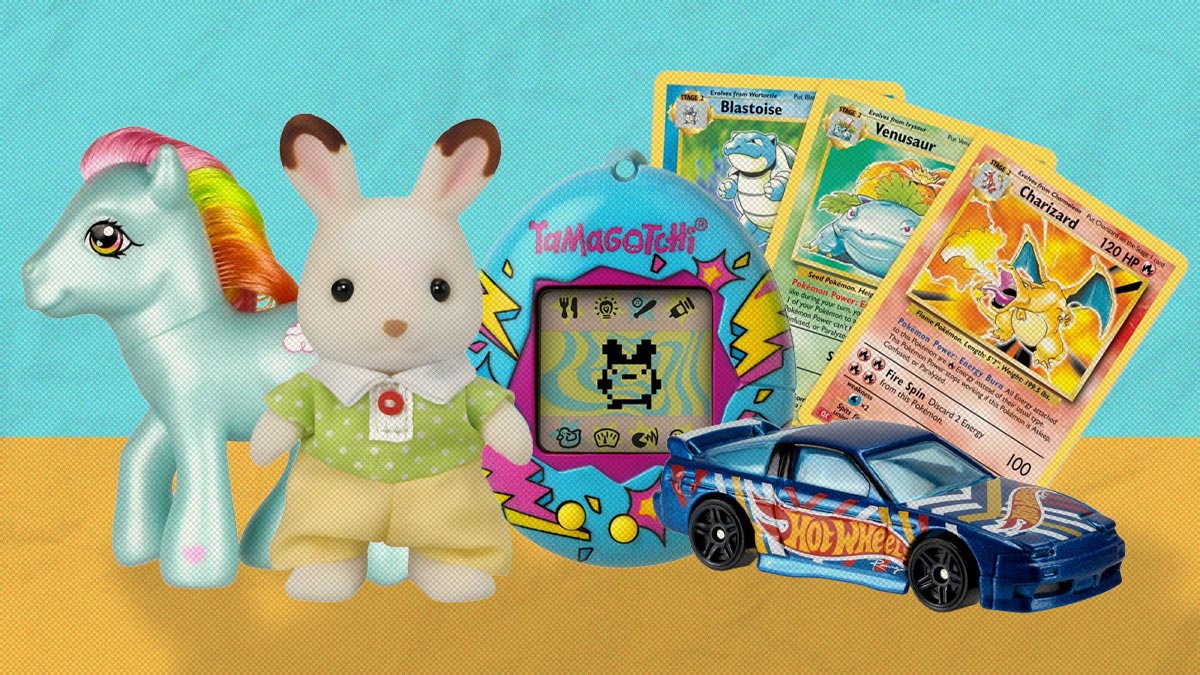
It seems Gen Zs and millennials are on a mission to heal their inner child–primarily by using their hard-earned adult money on collectibles, toys, and plushies. For a lot of people, especially twentysomethings who are longing for the warmth of childhood toys, the lure is simple: nostalgia. For one, the comfort brought by the instant gratification of purchasing a childhood dream is enough to forget that there are wars happening all over the world.
Toys used to be carefully kept in the privacy of children’s bedrooms, but now adults proudly display their collections, commanding premium shelf space and being featured prominently in their social media feeds. Today, some of the notable items Gen Zs and millennials are collecting include the Labubu, Jellycat, Squishmallow, and Sonny Angels.
To understand this current obsession, let's revisit the playroom floor of the ‘90s. Here are the toys and collections we had back then:
Tamagotchi Connection V1, released in 2004.
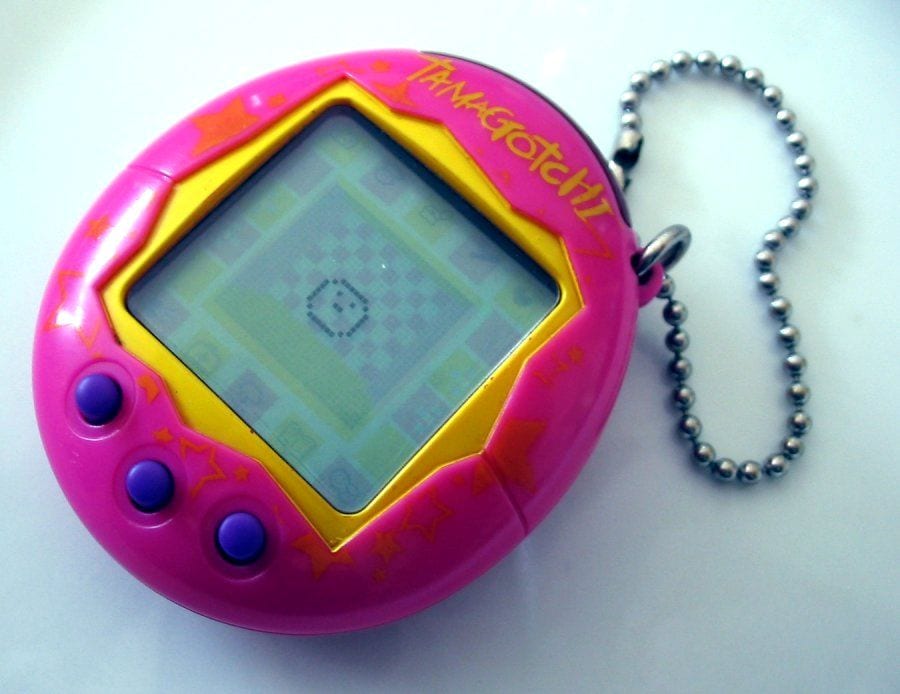
Tamagotchi
The year was 1996 when Bandai introduced the world to a new concept in toys: the virtual pet. Designed by Aki Maita and Yokoi Akihiro, the Tamagotchi (a portmanteau of the Japanese words "tamago" meaning egg, and "uotchi" meaning watch) began as a simple premise—an alien species sent to Earth to observe human life, contained within a small egg-shaped device with a primitive pixelated screen.
Like a living pet, the Tamagotchi has a hunger meter, happy meter, and training meter, while also going through a life cycle. You have to constantly watch over it and make sure it stays healthy as your pet can “die” because of sickness, old age, neglect, etc.
At the height of its popularity, 15 Tamagotchi units were sold every second in North America. By 2017, its 20th anniversary, it had already sold 82 million units worldwide. By March 2023, their total sales reached about 91 million units.
Of course, Tamagotchi eventually evolved over time. In 2004, they released Tamagotchi Connection with a built-in infrared communication feature, and nearly 20 years later, the first Wi-Fi model was launched, the Tamagotchi Uni. And with the metaverse, “Tamaverse,” you can now meet Tamagotchis all over the world.
Care Bears plushies at a London museum
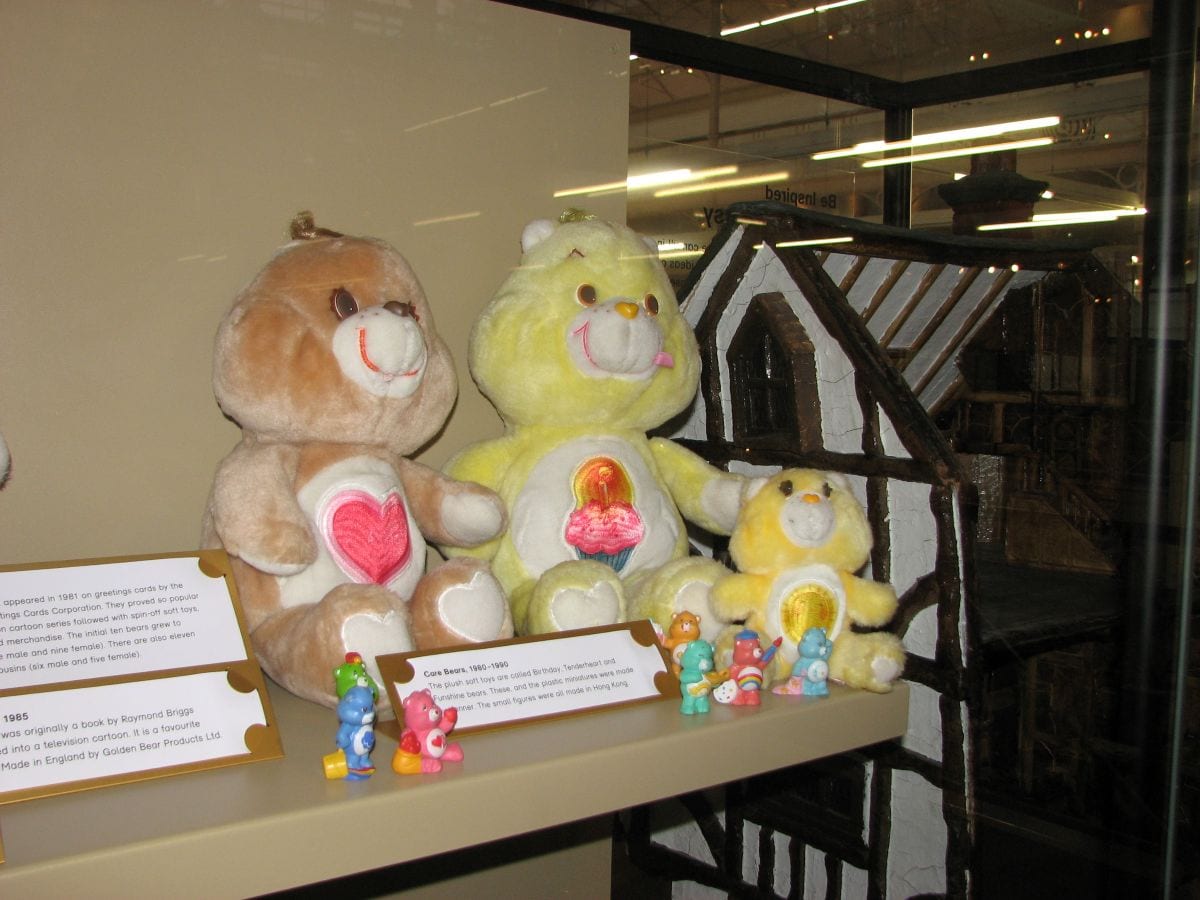
Care Bears, Trolls, and Teletubbies
This plush trinity spawned films and television series that would captivate our young minds and hearts. It began in 1981 with American Greetings’ introduction of the Care Bears, originally created for greeting cards before being developed into plush toys by toy company Kenner in 1983. Similarly, Troll dolls, first created in 1959 by Danish designer Thomas Dam, experienced a massive resurgence in the early ‘90s.
Completing this triumvirate of cuteness, the Teletubbies burst onto the scene in 1997 as a BBC children’s television program featuring four colorful aliens with television screens in their “tummies” or stomachs. The show became a massive hit worldwide, and they quickly materialized as stuffed toys in children’s rooms.
They were not just adorable toys; they became a cultural phenomena. Care Bears alone sold more than 40 million toys between 1983 and 1987, not to mention the 70 million Care Bears greeting cards sold in the ‘80s. On the other hand, the Teletubbies were awarded “Toy of the Year” by the British Association of Toy Retailers in 1998 and overseas merchandise sales in the ‘90s reached over €136 million. Lastly, at the height of the Troll dolls, around 38,000 trolls were sold per day.
With such a success, media expansion proved inevitable: Care Bears spawned multiple animated television series and a film; Trolls eventually received the DreamWorks treatment with successful animated features in 2016 and 2020; and the Teletubbies television show was broadcast in over 120 countries.
The PSA 10 Pikachu Illustrator
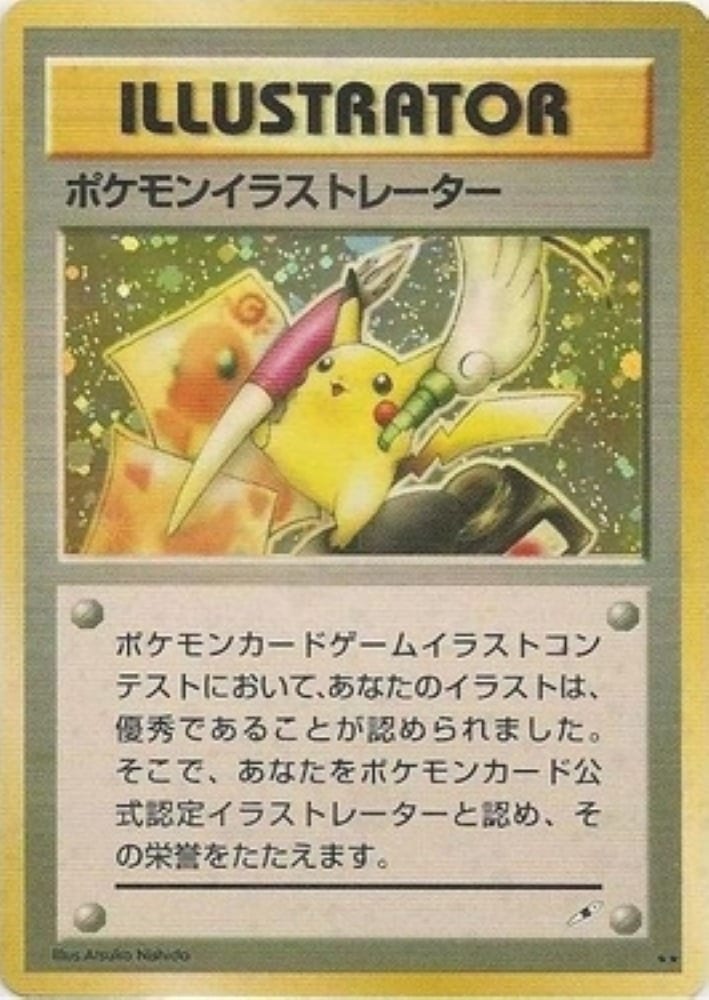
Pokémon Cards
What began in 1996 as a pair of relatively modest Game Boy titles—Pokémon Red and Green in Japan, later Red and Blue internationally—quickly expanded into what the Guinness World Records would recognize as the most successful RPG franchise of all time. Created by Satoshi Tajiri, who drew inspiration from his childhood hobby of collecting insects, Pokémon (short for "Pocket Monsters") has endured to this day, even spawning mobile games Pokémon Go and Pokémon Unite.
The trading card game, launched in October 1996, became an instant hit. By the end of March 1997, around 87 million Pokémon cards were shipped—a month behind the debut of the eponymous anime. By 1998, nearly 500 million cards had already been produced. Pokémon trading cards are also experiencing a resurgence, especially after the Covid-19 pandemic.
If you’re not a ‘90s kid who grew up with the Pokémon craze, the good news is, with this revival, you can experience it all over again. Pokémon Unite World Championships are rising to the esports competition level of Mobile Legends and Dota, and purchasing and trading Pokémon cards is now more popular than ever, with some cards’ values rising 20 percent up to 150 percent more.
City Mouse Family
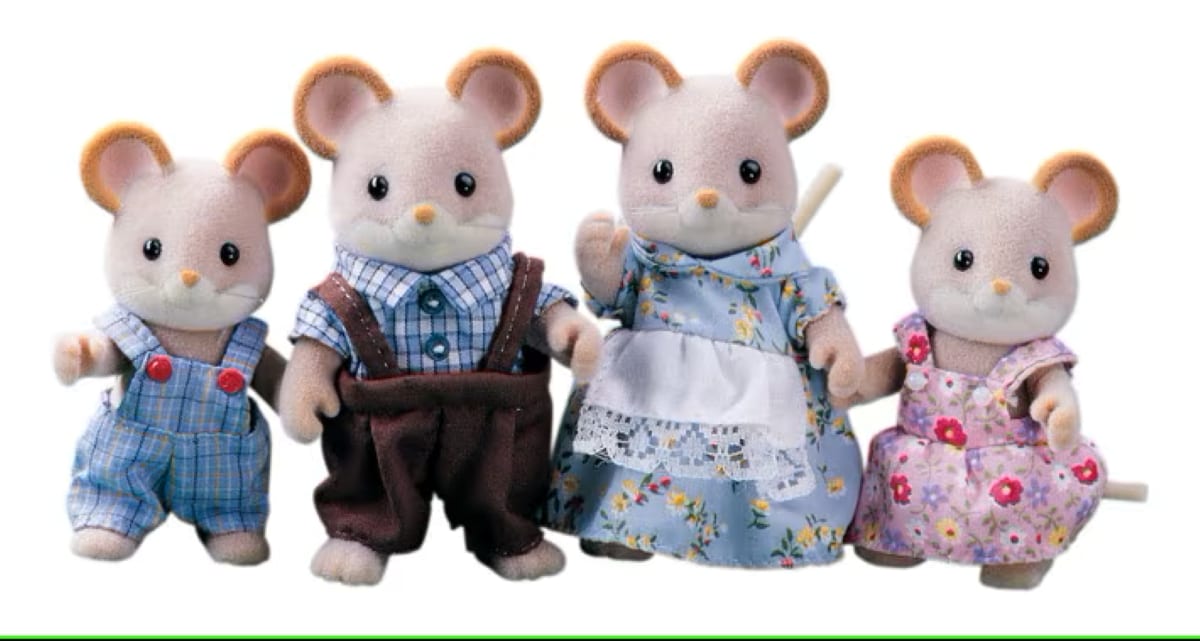
Sylvanian Families
Another charming creation from Japan, Sylvanian Families was released by gaming company Epoch in 1985. These cute animals—mostly rabbits, sheep, bears, etc.—with human-like characteristics lived in Victorian-style dollhouses set in the fictional village of Sylvania. Not only did they showcase life at home, but these adorable toys also had their own jobs and businesses and engaged in various leisurely activities.
Sold in over 50 countries, the Sylvanian Families aimed to encourage children to fuel their imaginations with storytelling and world-building play. Over 100 million Sylvanian Families have been sold all over the world as of writing. These dolls held their own against the electronic toys that began to dominate the market in the ‘80s and ‘90s.
Sylvanian Families, much like Care Bears, also had an animated television series that was particularly popular in the United Kingdom and Spain. They even had a film adaptation released in 2023, and an anime on Tokyo MX. Lastly, the franchise also spawned seven Epoch-produced video games.
ALSO READ
MG Toys and Collectibles Founder on the Rise of Art Toys to High Art
40 Things From Your Childhood That Could Make You Money Now
Beanie Babies
They may look like regular stuffed toys to Gen Zs now, but way back in the ‘90s, these were pellet-filled gold mines. Probably the most expensive Beanie Baby out there is the 1997 Princess Diana Beanie Baby, with one outrageous eBay listing going for a whopping US$900,000. This was created by Ty Inc. in commemoration of Princess Diana, just several months after her death. Featuring a white rose on its chest, the proceeds from the sale of the purple bear were donated to the Diana, Princess of Wales Memorial Fund.
Beanie Babies, created by Ty Warner in 1993, sparked a collectible craze that you can liken to the craze for Pop Mart collectibles today. These, however, didn’t come in blind boxes, but their popularity—mainly driven by artificial scarcity—fueled a fad that had people rushing to stores to horde and collect these lovable stuffed animals. There were even reports of theft, stampedes, couples fighting over their Beanie Babies collection during divorce proceedings, and even murder. It was that insane.
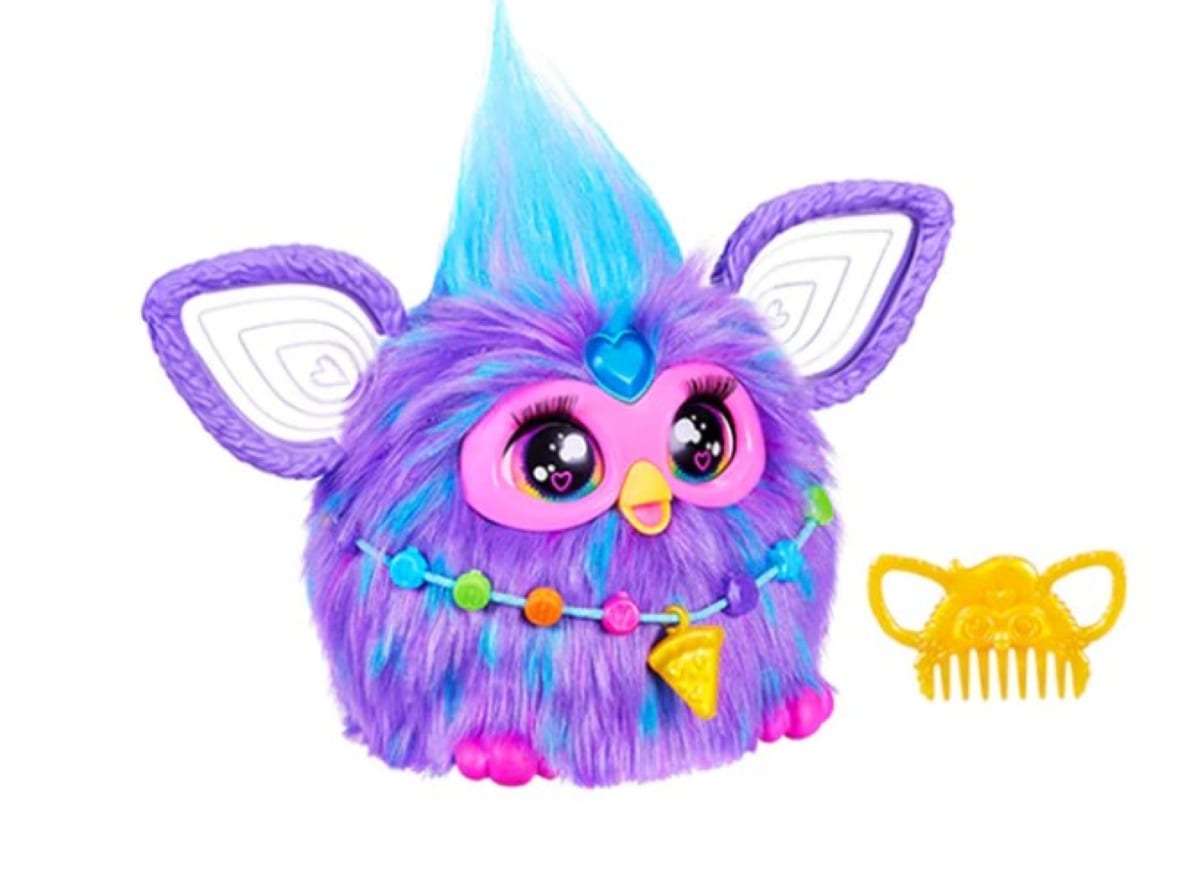
Furby
These owl-like electronic toys were invented by Dave Hampton, Caleb Chung, and Richard Levy, and were released in 1998. It had basic animatronic movements—ear wiggles, eye expressions, and speech—which endeared the “ball of fur” to children. Unfortunately, it’s also this feature that had children getting creative with how to turn off or “shut up” their Furby who would cry, sing, and even “turn evil.”
These Furby toys were programmed to speak in their own language, Furbish, but eventually, they could say English words and phrases. It also knew other languages, such as French, Italian, Swedish, Portuguese, Spanish, German, Japanese, and Greek. In the first three years since its original release, over 40 million units were sold worldwide. Much like Beanie Babies, it was a frenzy that sparked crazy price hikes and ridiculously long lines in toy shops.
Because you can “talk” to the Furby and they can also “talk” and interact with other Furbies, there was a brief period of time when these toys were banned from several federal buildings in the United States, fearing that a Furby could repeat sensitive details and leak confidential information. It became a national security concern in 1999, but eventually, the ban was lifted by the National Security Agency (NSA) when the toy manufacturer clarified that they were not capable of doing such things.
My Little Pony Princess Unicorn Cartoon Stuffed Animal Plush
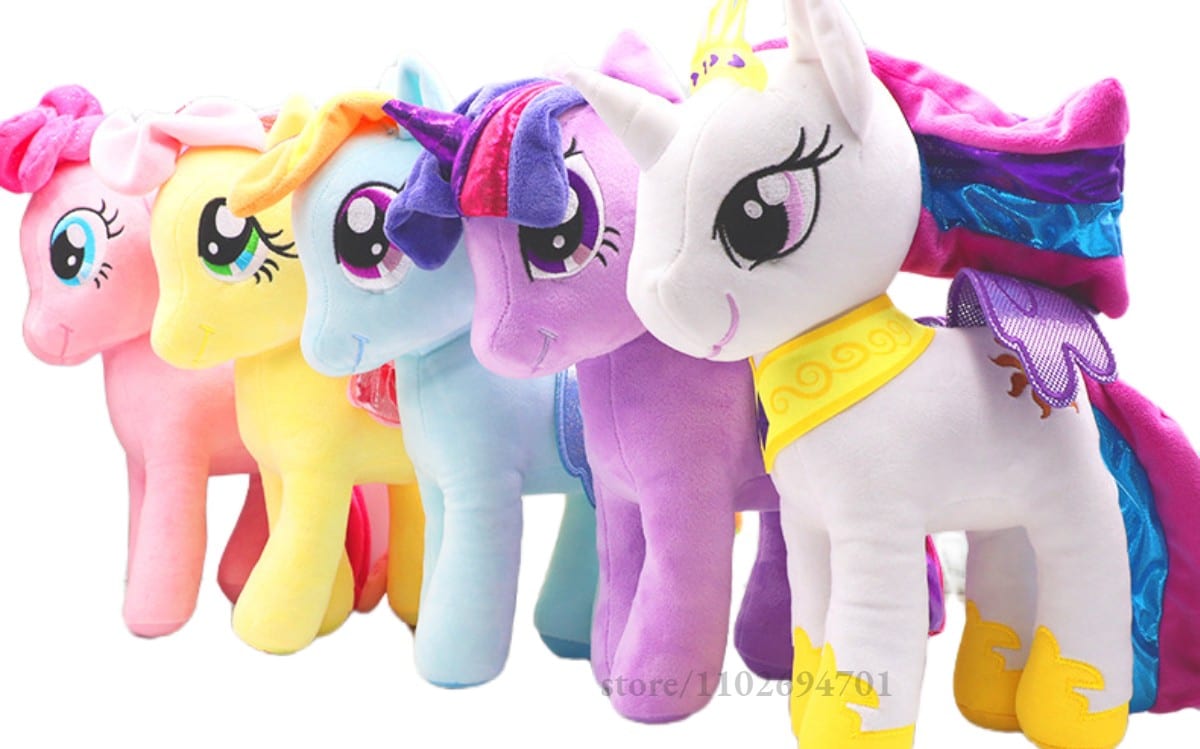
My Little Pony
Another popular franchise from toy company Hasbro, My Little Pony was released in 1981. These colorful ponies had their ups and downs, unlike the other toys that had a steep rise in popularity almost immediately after their launch. When it was launched from 1982 to 1992 in the United States, they peaked in 1990 and was eventually discontinued. It was revived once again in 1997, before being pulled off the shelves again two years later. Eventually, its most popular “revival” was in 2003, selling approximately 100 million units by 2010.
Much like the Care Bears and Troll dolls, these charming ponies also have their own animated series (which you can still watch on Netflix to this day) and a movie. Emily Blunt, Kristin Chenoweth, and Liev Schreiber lent their voices to the 2017 film which earned $61.3 million at the box office. They even have their own YouTube page and Spotify channel.
While these weren’t at their height in the ‘90s, we can still recall how these ponies charmed us with their dazzling design and varying personalities. They had thousands of little girls begging their dads for their own “pony,” and fortunately, these ponies were easily available in toy stores—unlike a live, actual pony.
Barbie Gala Collection Pink Premiere Doll
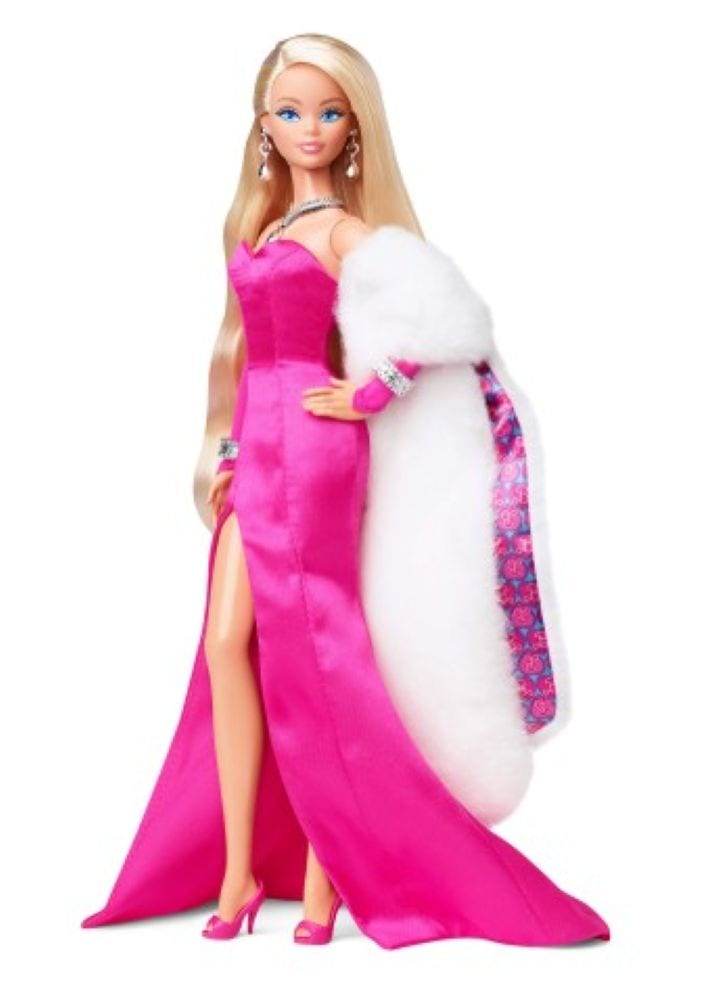
Barbie and Polly Pocket
The ‘90s represented a period of significant evolution in the doll category, and these brands each had their own appeal—Polly Pocket’s miniature nature and Barbie as a vision of what young girls could be when they grow up.
Created by Ruth Handler, Barbie is a fashion doll modeled after an adult—which, at the time, was a stark contrast to the “infant” or “young girl” dolls in the market. Released in 1959, Barbie propelled Mattel to fame. The doll, named after Ruth’s daughter Barbara, eventually became a feminist icon, helping young girls visualize joining the careers of their dreams someday, particularly in male-dominated fields. There was an astronaut Barbie, a doctor Barbie, a future leader Barbie, and much more. Despite the plethora of criticism she received, one of which was her unrealistic body, plenty of girls grew up adoring Barbie nonetheless. Since its launch, over 1 billion Barbie dolls have been sold worldwide, or three dolls every second.
As the most famous doll in history, Barbie is no stranger to media spinoffs. It had numerous animated films—Barbie in the Nutcracker, Barbie of Swan Lake, Barbie as the Princess and the Pauper, and of course the Academy Award-nominated 2023 live-action Barbie film starring Margot Robbie and directed by Greta Gerwig. It earned nearly $1.5 billion in the global box office and earned eight Oscar nominations, winning Best Original Song.
Polly Pocket dolls, founded by Chris Wiggs in 1983, were less than an inch tall and had an equally small house as big as a makeup powder compact. As the most portable game on-the-go, plenty of little girls boasted their Polly Pocket dolls and their various tiny homes. It was eventually bought by Mattel, who still sells the dolls to this day. These tiny dolls also have their own films and television series, the latter currently streams on Netflix.
While not as huge a fad as Barbie, Polly Pocket’s influence endures to this day. In celebration of the doll’s 35th anniversary, Cider revealed a collaboration collection that fits the Gen Z aesthetic, same goes for Los Angeles brand Lisa Says Gah. Some fashion designers even cite the doll as their inspiration for their spring collection, such as Loewe.
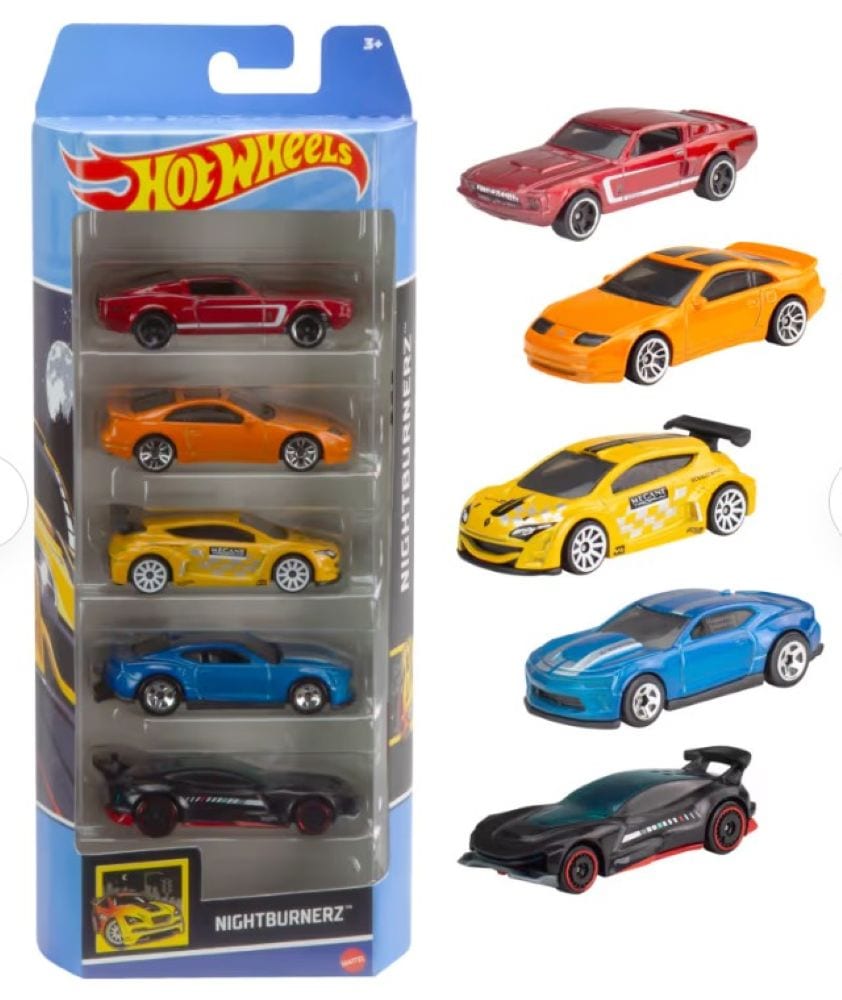
Hot Wheels Cars
Hot Wheels
These toys fulfilled every child’s need for speed. While they were launched way before the ‘90s, as Hot Wheels was launched by Mattel in 1968, these wheels endured until the ‘90s and beyond.
Hot Wheels, invented by Elliot Handler, released scale-model cars, allowing children—and even adults—to enjoy tiny versions of their dream cars. Many car brands and manufacturers have licensed their cars to Hot Wheels, ensuring their toy version is as accurate as can be. These exploded as a collectible item when in 1989, Mattel released HW cars with collector numbers, and in 1995, they launched the “Treasure Hunt” series.
Until today, collectors still hunt down “Chase” (#0 cars in a set) cars, STH (Super Treasure Hunt) cars, and HTF (Hard to Find) cars. For every full set of Hot Wheels case containing 72 cars, odds are one of them is a Treasure Hunt. And while no official odds have been confirmed by Mattel, collectors believe that you can likely find one STH for every 20 or 30 cases. The rarest Hot Wheels car in the world is the 1969 Volkswagen Pink Rear-Loading Beach Bomb Bus which is currently valued at US$175,000—there are only two in existence, with one owned by devoted Hot Wheels collector Bruce Pascal.
