
Review: Dev Patel’s Monkey Man is Hyper Violent Social Commentary That Transcends Simple Revenge

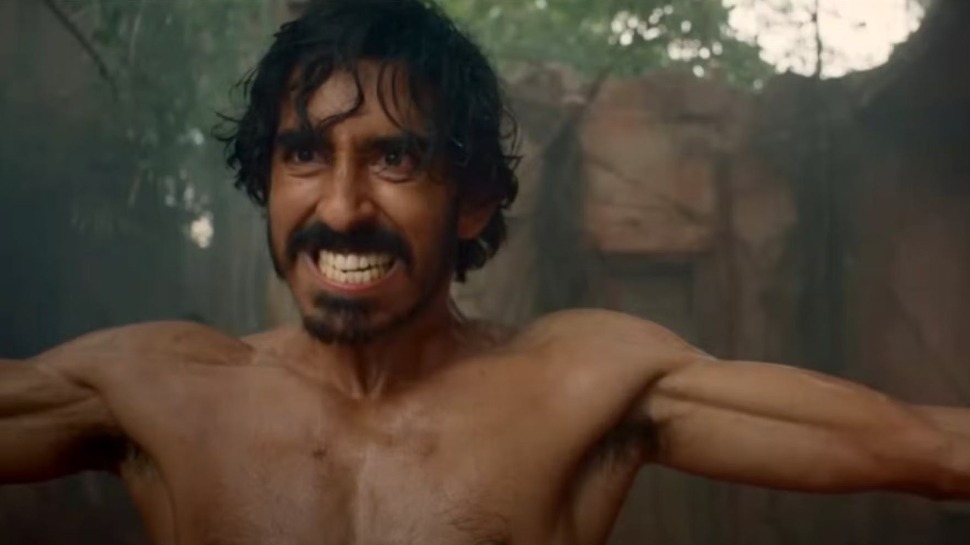
Mahatma Gandhi said of revenge, “an eye for an eye will only make the whole world blind,” pointing out the essential flaw of all revenge stories: they never end. That’s why John Wick’s violent overreaction to the killing of his dog spanned four films and the near-total eradication of an entire criminal organization. At some point, it’s too much, and all the gratuitous violence, as exhilarating and adrenaline-pumping as they might be, ultimately loses all meaning.
Dev Patel’s audacious directorial debut, Monkey Man, is a quintessential revenge story but is the furthest thing from meaningless. It is, in fact, so full of meaning that it sometimes teeters on careening off the rails with its own scope and ambition.
Calling Monkey Man ‘John Wick in Mumbai’ is a serious disservice to a film that deftly touches on the social ills and deep-rooted corruption of a country that seems content to look the other way. Despite being set in a fictionalized version of Mumbai, Monkey Man has yet to receive the green light for a theatrical release in India. Once billed as a Netflix original, the streaming giant bumped off Patel’s pet project from its yearly releases twice before dropping it entirely, reportedly because of its political themes. When Patel’s deliberately underwritten character, named only as Kid, plows through goons, corrupt police officers, and self-serving religious leaders, he’s not just exacting revenge, he’s delivering justice.
ALSO READ
Review: The Fall Guy is the Unsung Hero of Action Rom-coms
Review: Shogun is a Masterclass in Slow Burn Storytelling
Monkey Man was shot in Indonesia and financed with American money, but the heart and soul of the film is Indian through and through. Patel’s story begins in the jungle, where’s Kid’s mother tells him the story of the vanara or monkey god Hanuman. The film interweaves flashbacks from Kid’s past and draws parallels between its central characters and figures from Hindu mythology. Monkey Man employs raw and visceral imagery of Mumbai’s slums and its teeming poor contrasted with the excesses and hedonism of the rich and powerful, represented by a high-class brothel called Kings. Patel’s symbolism is unsubtle, such as the Kings’ crown logo or the name of its owner, Queenie Kapoor (Ashwini Kalsekar), but it serves its purpose. When Kid laments, “they don’t even see us,” referring to the upper class whom he services, it’s pointed commentary at a caste system that renders its human refuse invisible by design.
“They’re up there living,” he continues, “while we’re stuck here in this.” Patel has sugar-coated his bitter truth pill with the trappings of a revenge story, but it draws attention to a social divide that just keeps getting wider.
Monkey Man is not John Wick because its hero, Kid, is not a deadly assassin or feared bogeyman. He is, plain and simple, just a nobody with a single-minded desire to exact revenge on the man who killed his mother. That Patel didn’t bother to give him a name is essential to the character. Kid isn’t even important enough to have a name. When he goes by ‘Bobby,’ it’s a throwaway identity gleaned off a can of bleach, an implement used for cleaning. Kid is sloppy with a poorly thought-out plan for revenge that goes sideways in very un-John Wick-like fashion, and he ends up in a filthy, polluted river where he’s fished out by some unexpected rescuers.
Kid wakes up to the sight of an amalgamated statue of Shiva, the god of destruction, and Parvati, the goddess of devotion, his wounds tended to by Alpha (Vipin Sharma), the leader of a community of transgenders called Hijra. There’s a deliberate irony in naming a transgender character Alpha at a time when some men use terms like alpha and beta to denote some form of patriarchal hierarchy. As the Western world copes with the use of pronouns and transgenderism has become some sort of ideological battleground, India meanwhile has embraced the third gender for over two thousand years. India, Nepal, and Pakistan recognize the Hijra as a third sex and include them as options in official documents such as passports. Monkey Man incorporates the Hijra into Kid’s story, as an essential part of his struggle for redemption. When Kid plans to leave their haven, Alpha advises him to stay. “The police are looking for you all over town. But not here,” he says, “they find us too … unsettling.”
The Hijra, like the displaced lower class where Kid hails from, are among the invisible and neglected whom India’s moneyed elite would prefer to ignore. The Hijra once served some shamanistic purpose in Hindustan history but are now mostly relegated to sex work, so there’s a bit of poetry in their role as Kid’s allies in taking down a high-class prostitution ring. But Monkey Man also tends to stumble from its own ambition, taking wide aim at a myriad of India’s ills from the class divide to the maltreatment of the third gender, to systemic corruption, to the hypocrisy of religious leadership. It’s a lot, and from intent alone Monkey Man elevates itself above your average revenge-driven action flick, but not everything is resolved neatly. One can only get so much satisfaction from violent ends.
There’s some sort of homage to Bruce Lee’s Game of Death in the manner by which Kid progresses from one level of Kings to the next, each floor with its own sort of challenge or mini-boss. From the corrupt chief of police Rana Singh (Sikandar Kher), the imposing, brutal adversary largely responsible for setting Kid off on his personal vendetta; to the final boss, Baba Shakti (Makarand Deshpande), the corrupt spiritual leader whose yogi scenes subconsciously hearken to Kareem Abdul-Jabbar in the fifth and final level of Game of Death’s pagoda, Kid’s ascent up a building filled with his enemies and his eventual triumphs in the underground fighting arena where he mastered the art of taking a fall trace the spiritual journey of a man who had served little purpose beyond revenge.
The desire for vengeance is blinding, but Kid undergoes a spiritual transformation and awakening that lets him see his true purpose. Some subplots feel unresolved, such as Kid’s John Wick-like relationship with a dog or the story of Sita (Sobhita Dhulipala), the prostitute with whom Kid seems to share a connection. One character, Alphonso (Pitobash), is geared to be the comic relief sidekick but fades away towards the end. But these are tiny threads in the grander tapestry that Patel weaves, which is ultimately cathartic and satisfying. Monkey Man is a triumphant and powerful directorial debut, an immersive and eye-opening cultural deep dive filled with primal imagery and hyper violent action sequences. Monkey Man is one of the best and most meaningful action films in years.
