
Peacemaker Season 2 Sets up the Future of the DCU

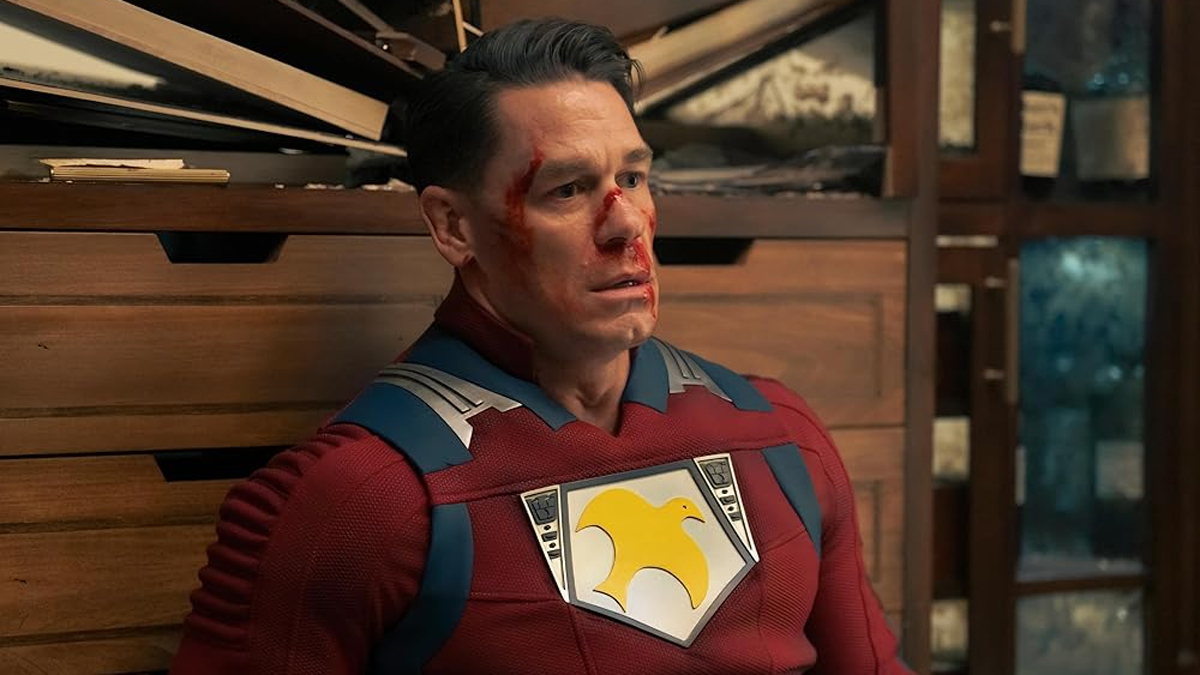
The finale of Peacemaker Season 2 on HBO Max dropped last week, and it’s been one hell of a Peace-Cycle ride. Writer and director James Gunn, who has parlayed his mastery of the most esoteric comic book lore into hugely successful superhero movies, included a little-known, D-lister antihero briefly popular in the '80s in The Suicide Squad and then spun him off with a solo show on HBO Max. Today, the white pantsed, red-shirted, silver-helmeted champion of peace — who doesn't care how many men, women, and children he needs to kill to get it — is one of the most recognizable superheroes and now John Cena’s most iconic role outside of wrestling.
ALSO READ:
The Infinity War Writers Know How to Fix the DC Universe
'It's a New Era in the DC Universe,' Says Black Adam Actor Dwayne Johnson
Gunn has played loose and fast with the new DC Universe (DCU) continuity, unbothered by concerns about what’s canon and what’s not, given that The Suicide Squad was technically part of the Zack Snyder-era DC Extended Universe (DCEU). The first season’s finale actually featured cameos from Jason Momoa’s Aquaman and Ezra Miller’s The Flash, but in the recap that precedes the Season 2 opener, Gunn simply and neatly retconned it into a cameo by the Justice Gang, who appear in Superman. In Gunn’s mind, continuity is slave to the story, and that’s exactly how it should be.
John Cena in 'Peacemaker'
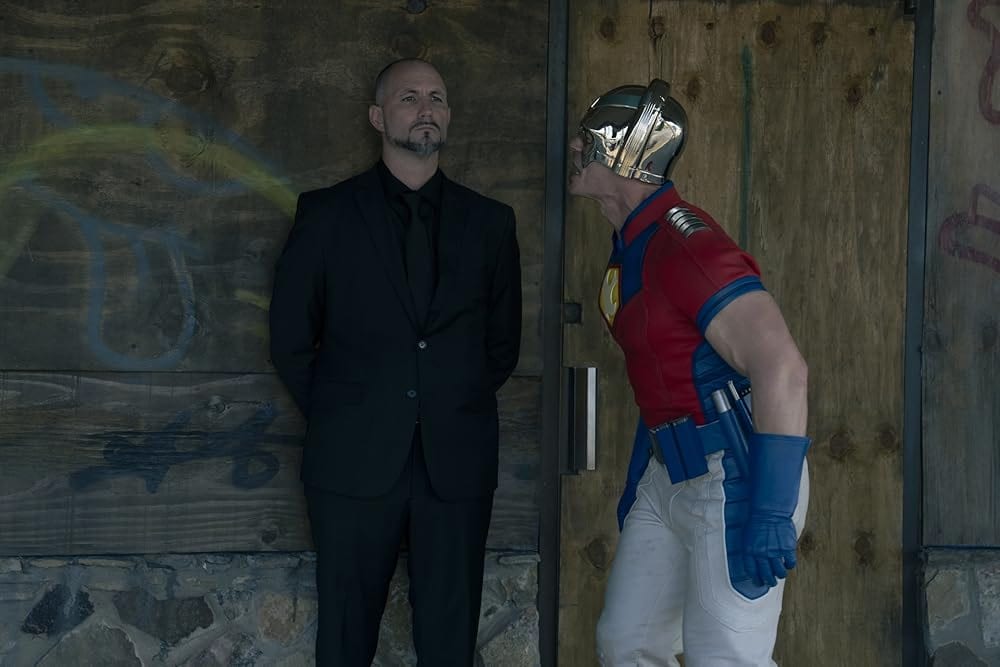
As far as stories go, Peacemaker Season 2 takes concepts from the first season and this year’s Superman and just runs with it. Peacemaker’s dad, Auggie (Robert Patrick) a.k.a. The White Dragon, a white supremacist supervillain, had a Quantum Unfolding Chamber (QUC) inside his closet, where all his tech came from. It turns out, the QUC was a gateway that led to alternate universes and alien worlds, and most of the season followed Chris as he shuttled between his world and a seemingly perfect parallel universe where his dad and brother, Keith (David Denman), are still alive.
Peacemaker 2 is a show that takes full advantage of the weekly format, with the end of almost each episode building up to the next. Although you can binge the full season on HBO Max today, James Gunn wrote the series to be consumed in parts, and it works best when the story is given space to breathe. Spoilers ahead — Peacemaker is an excellent show, and if you haven’t seen it yet, there’s no better time than to get up to speed with the DCU — the entirety of Peacemaker’s two seasons is all about Christopher Smith’s redemption from an amoral killer who simply follows orders to a man who is at peace. This is the genius of Peacemaker. While Peacemaker is the name of the hero and a reference to a famous single-action revolver of the same name, the whole show’s run is actually about one man’s journey to come to terms with his own sins and failings, or a man making peace with himself.
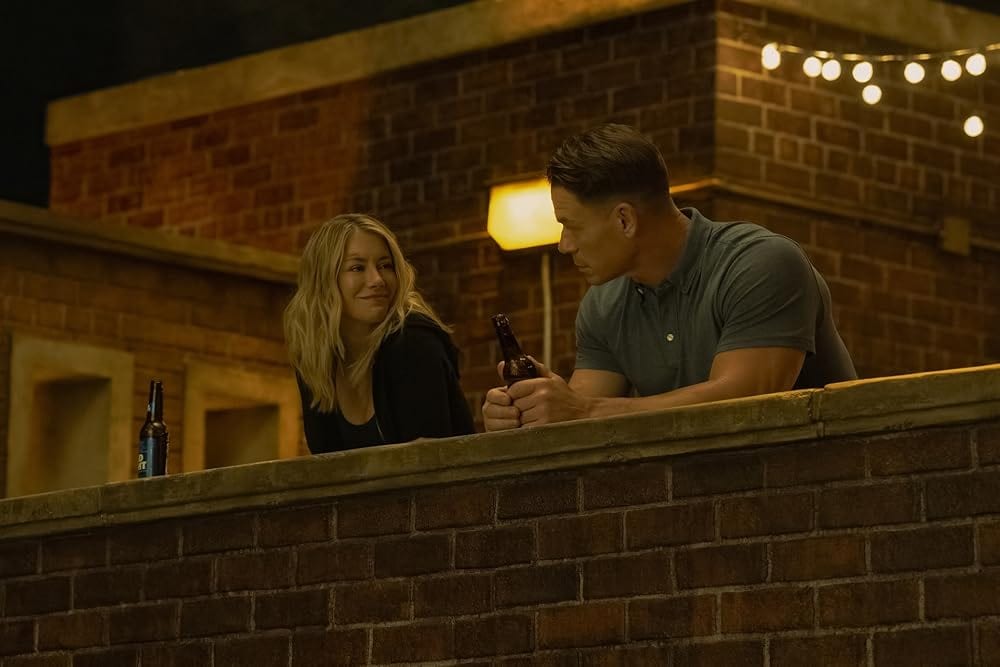
The first season dealt with Chris’ guilt over killing The Suicide Squad’s mission leader, Rick Flag, Jr. (Joel Kinnaman) at the orders of Amanda Waller (Viola Davis). We also learn that he was responsible for the death of his brother as a result of his father’s questionable parenting skills. He later ends up killing his own father as he fights to stop The White Dragon’s racist gang from wreaking havoc, further encumbering his bedraggled conscience. In Season 2, Peacemaker discovers that one of the doorways in the QUC leads to a strangely better mirror universe where not only is his family alive, he and they are celebrated heroes, and Chris receives the public adoration and respect he’s always longed for. It’s also a world where he has the affection of Emilia Harcourt (Jennifer Holland), with whom he has a complicated relationship in his own universe.
Jennifer Holland as Emilia Harcourt and John Cena as Peacemaker
But all is not as it seems, as the world is eventually revealed to be Earth-X, an alternate universe Earth where the Nazis won World War 2 and there are no minorities or POCs in sight. This is another way in which Peacemaker is brilliant. Most people won’t realize what’s wrong with the seemingly perfect world of Earth-X, particularly Chris, who’s too elated with a better life to notice the fact that the only people in this world are white. It’s Gunn’s subtle critique of white privilege, and an eye-opening depiction of a world where life can seem great if you can turn a blind eye to the people who suffer. Peacemaker never bothers to delve deeply into the atrocities of the Nazis, and the only indication that something is deeply, deeply wrong is when Chris’ friend Leota Adebayo (Danielle Brooks) walks the streets of Earth-X and is suddenly pursued by a rabid, racist mob, yelling, “one got out!”
It’s enough. By Gunn’s reckoning, the Nazis are evil and that’s that. History already teaches us this. Racism and bigotry can never be the foundations upon which any good society is built, no matter how great it might appear to be. In Peacemaker, there’s no heavy-handed moral lesson, and when Chris and the gang finally escape Earth-X, that’s the end of itand Gunn moves on with the story. This results in an uneven, slower-paced series finale (Gunn has indicated that there will be no more forthcoming seasons of Peacemaker) that focuses on closing its major characters’ arcs instead of some major showdown with a supervillain as one might expect from a superhero series. In a way, Peacemaker ends with a whimper rather than a bang, but it satisfactorily concludes Chris’ story arc and teases the future of Gunn’s brand-new DCU.
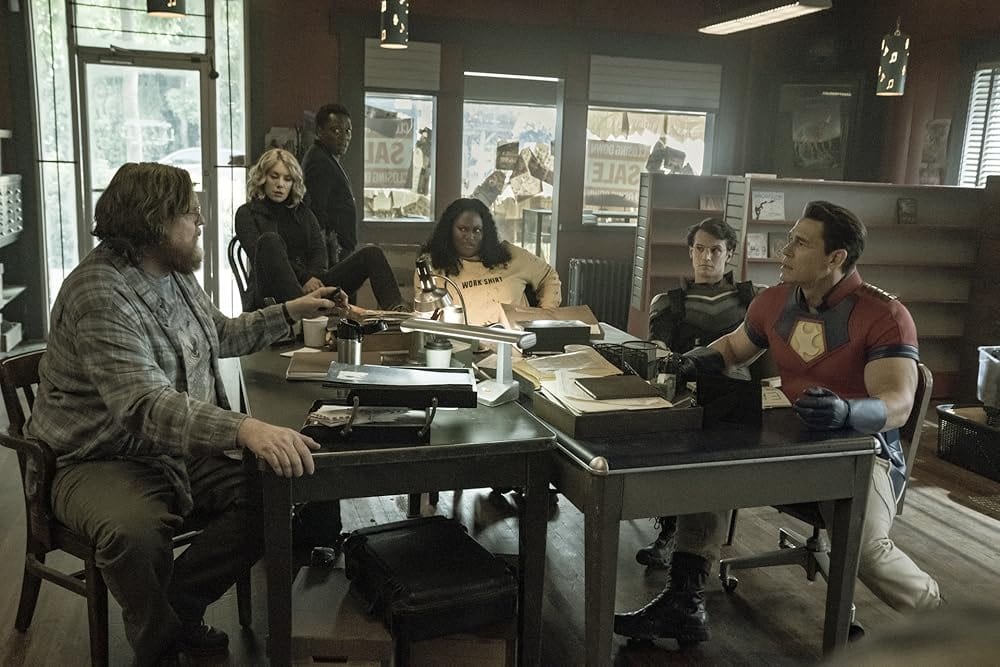
Some fans have expressed disappointment in the finale, with a few noting that Gunn’s tease of a major cameo was nowhere to be found. But the bands Nelson and Foxy Shazam (who reprise the intro song) probably count as major cameos, especially if you’re a big fan of their music, which Gunn, master of the needle drop, certainly is. Peacemaker resolves the most important story arc by giving Chris a happy ending … sort of. The government unit ARGUS, which sequestered the QUC upon Peacemaker’s return from Earth-X, expectedly uses the alien technology for questionable purposes, in this case to find a habitable world where governments can dump metahumans. At the end of the series, Rick Flag, Sr. (Frank Grillo) kidnaps Chris and exiles him there. The end.
Or is it? Even if Gunn says there’ll no longer be any more Peacemaker, Chris’ fate will ultimately be revealed in later stories set in the DCU. The way the series ended, it appears that Gunn will be adapting the Salvation Run storyline from the comics, which sees governments imprison metahumans in some distant world from which they can’t return, like an extra-dimensional El Salvadorian Terrorism Confinement Center. In the comics, it was mostly villains who were sent off-world, but with Peacemaker being planet Salvation’s first Earth inhabitant, it’s inevitable that heroes will be in the mix. Meanwhile, Adebayo, Harcourt, and the rest of the 11th Street Kids set up their own agency, Checkmate, which is another organization from the pages of DC comics. DC Studios has a roadmap that includes Clayface, a body horror movie featuring the shapeshifting Batman villain; Lanterns, a television series with the Green Lantern Corps; and Supergirl in 2026. But unlike Marvel, which works backward from announced project dates and sometimes works with unfinished scripts, Gunn and Peter Safran of DC Studios work with finished scripts and chart the DCU’s direction from there. Although Checkmate isn’t on the current roadmap, don’t rule out a new TV show on HBO Max featuring this crimefighting agency and familiar faces from Peacemaker. Gunn seems to understand that story is king and if there’s a story to be told, you can bet the DCU will tell it.
