
The Fantastic Four: First Steps Is Flat-Out Fantastic

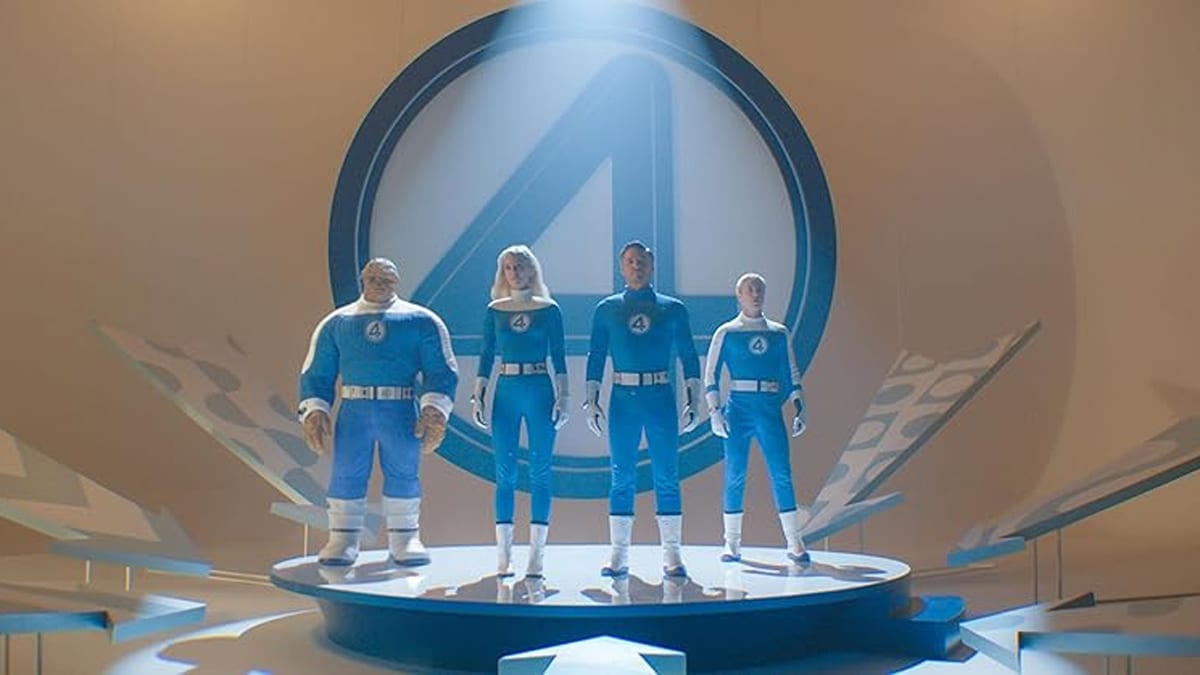
Marvel’s new Fantastic Four is set on Earth 828, a different continuity from the MCU’s main universe, where most of its movies take place. This is made clear from the opening frame and reinforced by a retro-futuristic setting that’s part Jetsons and part 1960s design chic. But perhaps the most telling quality of the Fantastic Four’s Earth that sets it apart from the main continuity 616 — the earth that most resembles our own reality — is that there appears to be some sort of actual world peace. The Fantastic Four, intrepid space explorers-turned superheroes, are the champions of humanity, a beloved quartet who inspire the entire world to better itself.
In several scenes, aside from the party-pooping Latveria, a fictional monarchy famously ruled by the Fantastic Four’s archnemesis Dr. Doom, nations appear to work together in harmony. In fact, one key plot point demands that the world work together in total cooperation to stave off impending destruction. It’s an inspiring sequence that makes us wonder, painfully, that if our world were slated to be the next course in the world-devouring Galactus’ (Ralph Ineson) menu, we probably won’t stand a chance because our world leaders would never get their act together in time.
ALSO READ:
DC’s Supergirl: Everything We Know So Far
This is the beauty and freedom that Marvel has given director and co-writer Matt Shakman: a fresh new universe to play with, free of the constraints of past continuity that seems to have weighed down some of the MCU’s stories. With Earth 828, a loving homage to the Fantastic Four’s co-creator Jack Kirby, who was born on August 28, Shakman has created a nearly perfect world unburdened by real-world politics and division. At the very least, that’s what he’s chosen to show us, and it’s what helps make The Fantastic Four: First Steps such a solid, beautiful tale of triumph against seemingly insurmountable odds.
At a time when the world feels more fragmented than ever, Shakman paints an idyllic world oozing with space age style and evoking a bygone era’s optimism and hope. A world worth saving. A world worth fighting for.
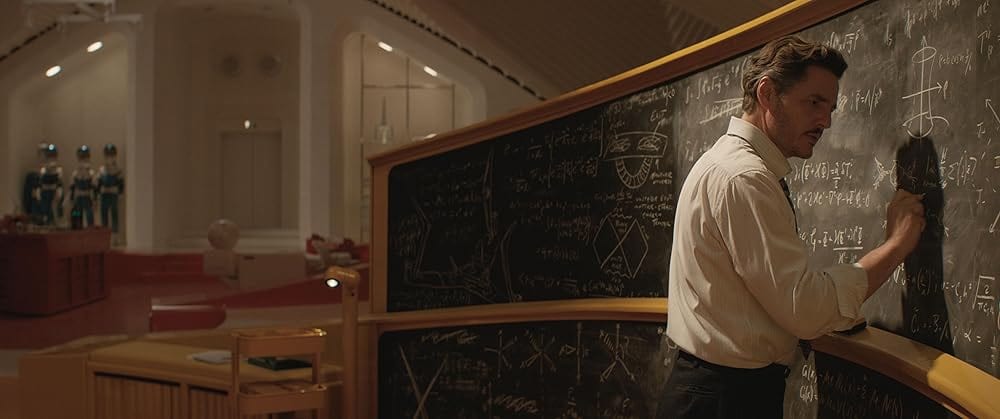
In Shakman’s Earth 828, the Fantastic Four — husband and wife Reed and Susan Richards (Pedro Pascal and Vanessa Kirby), Sue’s younger brother Johnny (Joseph Quinn), and family friend Ben Grimm (Ebon Moss-Bachrach) — are leaders and luminaries, public figures who use their powers and vast resources for the betterment of humanity. They’re a superhero team, but also, and more importantly, they’re a family. Shakman centers the story around Reed and Sue’s parenthood, as the story opens with Susan finding out that she’s pregnant and Reed’s consequent spiral into obsessively trying to baby-proof the world. There’s an entertaining montage that begins with putting protectors on all the electrical outlets in the Fantastic Four’s headquarters, the Baxter Building, that culminates in Reed policing all of New York in his near-pathological overprotectiveness.
Pedro Pascal as Reed Richards
One can only go so far in keeping one’s child safe from the world, of course, and when a cosmic being of untold power just shows up one day and says your world is marked for destruction, no amount of plug protectors is going to help. The appearance of The Silver Surfer (Julia Garner) is one of the most powerful moments in the MCU, and it’s not simply because of the lines she recites heralding her master but because of what she says outside her mandated missive. The Surfer tells the people of Earth 828 to hold their loved ones, to tell them the words unspoken, and to spend all their remaining time with the ones they hold dear. It’s chilling, haunting, and sad; resonant words that shouldn’t just apply to Armageddon but to each of our days.
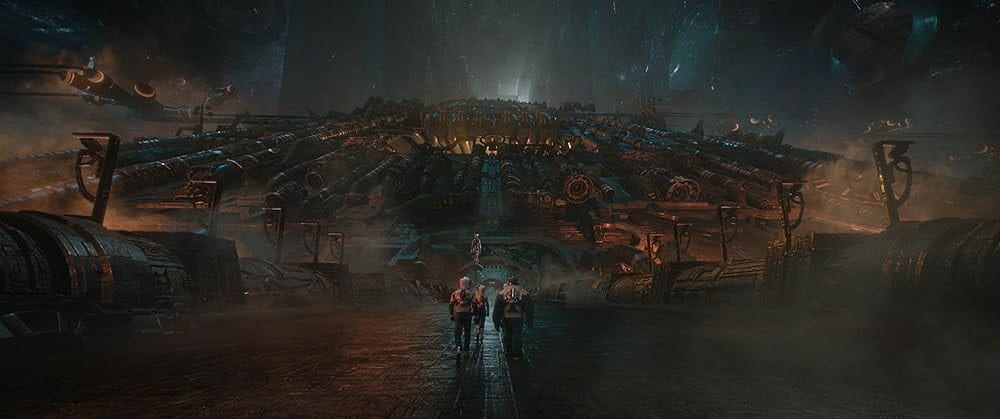
How far would you go to save the world? Shakman poses this question and answers it both literally and figuratively as the Fantastic Four travel from one end of the universe to the other to try and defeat Galactus, who inexplicably demands for Sue and Reed’s son Franklin in exchange for sparing the planet. It’s an impossible choice for parents, but also, as Reed puts it, an ethically, mathematically available solution.
Vanessa Kirby as Susan Richards
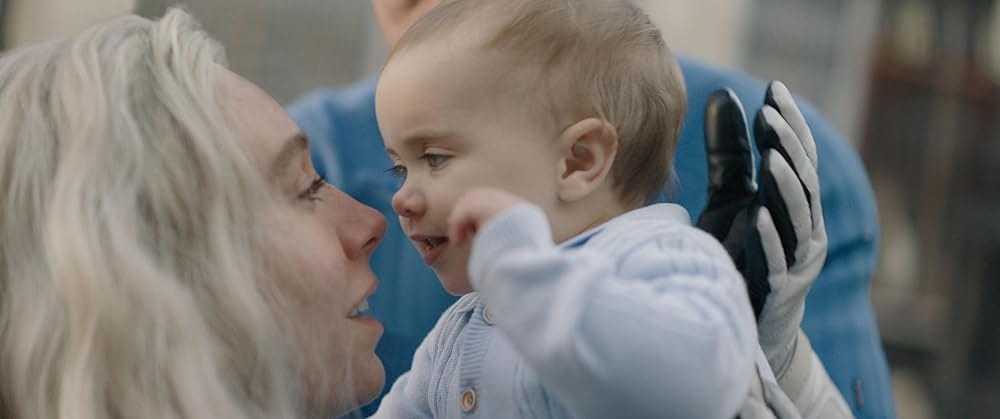
It’s important that First Steps is set on Earth 828 because in one pivotal, important scene, adding yet another one to the MCU’s best moments, Sue introduces Franklin to a frightened, angry mob who don’t understand why the Richards simply won’t make the exchange of one life for billions. In Earth 616 (and by extension, our own reality), what Sue says might have fallen on deaf ears. “I will not sacrifice my son to save all of you,” she says, “but I also won’t sacrifice all of you to save my son.” It is profoundly defiant and absurd, a choice that flies against all logic and obliterates one of sci-fi cinema’s most iconic lines, uttered by Spock and James T. Kirk in Star Trek: The Wrath of Khan: ‘the needs of the many outweigh the needs of the few, or the one.’
Sue’s answer is the right answer. It’s a hero’s answer. But critically, the people of Earth 828 listen. They listen because they have unerring faith and trust in the Fantastic Four, who have earned it. The Fantastic Four represent the best of humanity, a family that puts their own interests on equal footing with the best interests of humanity. Susan Storm is a world leader we can only wish for, a leader so beloved and trustworthy that she can turn actual enemies into allies.
The Fantastic Four: First Steps is one of the best MCU films in a long time, a much-needed shot in the arm for a flagging franchise that sometimes feels like it doesn’t know what to do with itself. Last May’s Thunderbolts* was an incredible film that sadly underperformed at the box office, and First Steps deserves a far better fate. Much like James Gunn’s Superman, Shakman’s bold vision is what the world needs: a bright and hopeful dream of a world that could be. Michael Giacchino’s score is the best and most iconic MCU score after the Avengers’. Ironically, one of the weakest parts of the film is a predictable and underwhelming mid-credits scene, an obligatory tease into the next phase of the MCU that only promises a return to a bloated and convoluted continuity that Earth 828 had already freed us from.
First Steps is fantastic, full stop. Shakman, the architect of Disney+’s Wandavision, has managed to finally capture the core of Marvel’s first family. Pedro Pascal drops an inspired performance that encapsulates Reed Richards’ obsessiveness and all of his neuroses, paranoia, and self-flagellation; while Vanessa Kirby, incidentally now an expectant mother, exudes a maternal wisdom and protectiveness, a bright mirror to Wanda’s descent into madness.
First Steps is loaded with powerful performances and solid storytelling, with numerous easter eggs for comic book fans — from an homage to Stan Lee with the Fantastic Four’s ship Excelsior, to the first live-action cameo appearance of the late Jack Kirby (is that Oliver Platt?), to a scene identical to the cover of the Fantastic Four’s first appearance in 1961 — to geek out over. How wonderful is it that we live in a time where we get truly fantastic comic book movies back to back? Our real world may be an oppressive, sometimes terrible place, but films like The Fantastic Four remind us that there’s still some brightness left in our corner of the universe.
