
Why Stories Will Always Matter to Writer-Director Benedict Mique

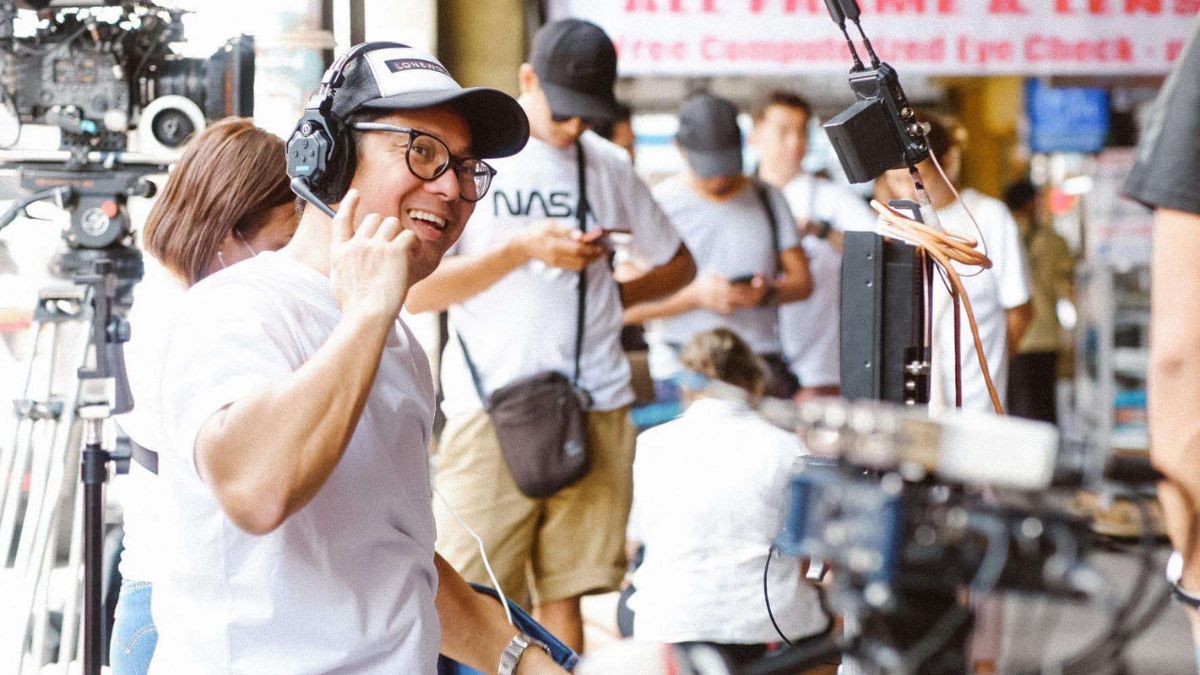
Writer-director Benedict Mique has been working in the entertainment industry for almost three decades now, starting as a script continuity writer for movies and a brainstormer for TV series in the late 1990s and early 2000s. He has written top-rating TV programs such as the Nadine Lustre-James Reid teleserye On The Wings of Love, the fantasy children’s anthology Wansapanatym, and the drama anthology Maalaala Mo Kaya, as well as films for various directors.
In 2018, Benedict directed his first feature-length film, ML, a psychological horror about Martial Law, with no less than the great Eddie Garcia playing the Colonel who terrorized the college student portrayed by Tony Labrusca. Mique wrote the screenplay with Eddie Garcia in mind, unsure whether the veteran actor would accept the role. He sent the script, and within days, Mique received a call from Mr. Garcia himself asking, “So kailan tayo magshu-shoot, Direk?” (ML would be one of Garcia’s last and greatest performances and films before he passed way in an accident on the set of a TV series. Garcia won Best Actor for ML at the FAMAS, Urian, and Cinemalaya awards.)
Since 2018, Bene—as friends and family call him—has been unstoppable. He put up his own production company called Lonewolf Films, which has been responsible for producing many films and series.
This year, he’s on a career high.
Mique’s Lolo and the Kid, an edgy film produced by Netflix about a pair of con artists played by veteran actor Joel Torre and child star Euwenn Mikaell, reached number one in the Philippines and Peru. It also made it to the streaming platform’s Top 10 movies in 38 countries, including Argentina, the Bahamas, Portugal, Nigeria, Hong Kong, Taiwan, and the United Arab Emirates.
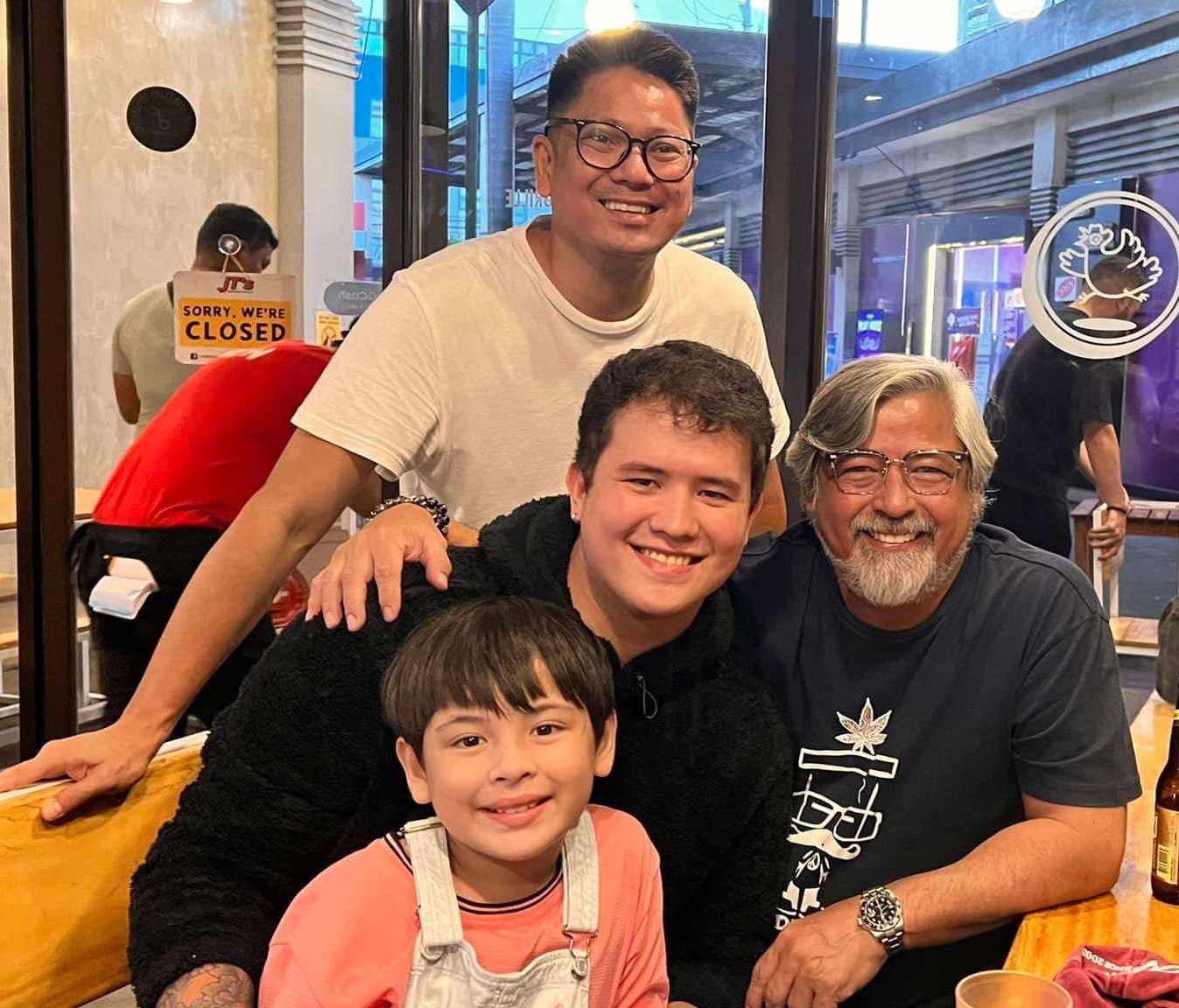
Benedict Mique with the cast of 'Lolo and the Kid'
Mique has been tapped by ABS-CBN to helm Nobody, an action-drama series starring Gerald Anderson, who is making a comeback on primetime TV after two years.
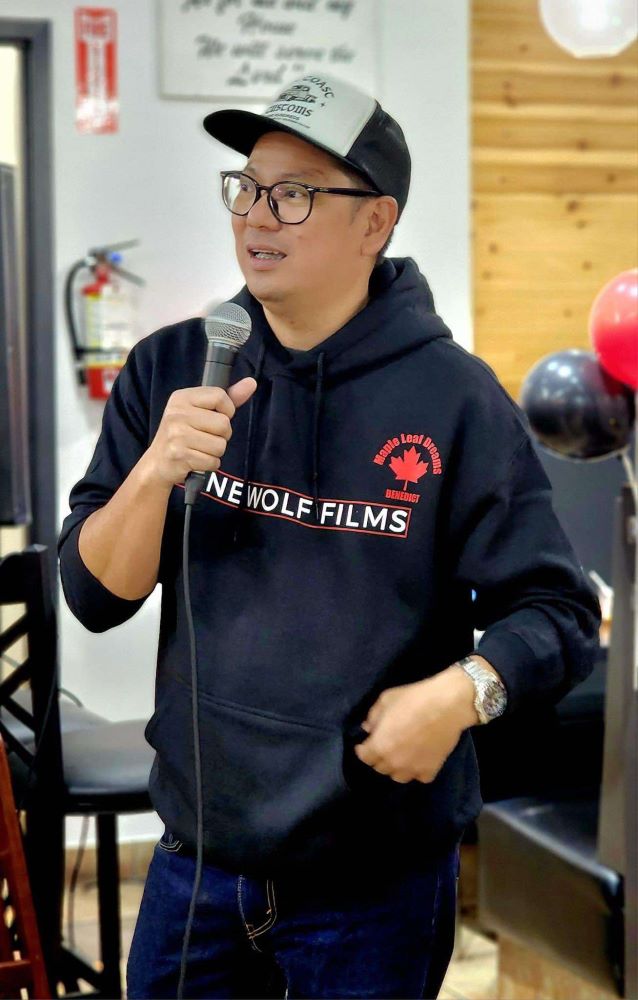
Mique also wrote, directed, and produced the love story Maple Leaf Dreams about OFWs in Canada, which will have a simultaneous release in cinemas in the Philippines and Canada in the last week of September.
Here, Mique opens up to Esquire Philippines about watching films with his lolo in their neighborhood in Paco, borrowing VCDs from Ricky Lee, and his dreams for Philippine cinema.
You’re a very hands-on director who's involved in every aspect of making and selling a film. What is your motivation behind this? Isn’t making a movie and completing it already big challenges?
It’s really about passion. When you are passionate about something, you want to know everything about it. My thirst for knowledge is insatiable, so I take part in everything from start to finish, because there is always something new to learn in the process.
Another reason is that I feel that delivering a completed movie is not my only responsibility as a director. It is also my duty to ensure that people watch the movie and that my producers get their money back or get their money’s worth; ayaw kong manloko ng tao.
ALSO READ
The Benevolent Genius: Ricky Lee's Lasting Impact on Filipino Storytelling
Film Writer Ricky Lee Is a Giant in Philippine Cinema
Please talk about how your love for Philippine cinema evolved. What was the first Filipino film you fell in love with? How did that pave the way for the rest of your career?
I started watching movies with my lolo in our neighborhood cinemas in Paco, Manila. Before, there were four cinemas in our area and different genres were shown. But our favorites were the action films of FPJ.
Then Ricky Lee opened up a whole new world of movies for me. It was in his home that I discovered world cinema. By borrowing the VCDs he bought from Hong Kong and his books about film, I got acquainted with the works of the great and crazy filmmakers who defied the odds and created magic.
Ricky Lee is one of your mentors. What were some of the lessons you learned from the National Artist for Film and Broadcast Arts? Do you still consult him for story concerns and career decisions?
Ricky is not only a mentor; he is a very dear friend. I am lucky to be part of a small circle in his vast universe of friendships. He knows he can rely on me when he really needs a friend. I seek his advice when I feel there is something wrong or amiss in a project I’m doing or if I have a personal problem. Likewise, I don’t hesitate to tell him my opinion when I see people taking advantage of his kindness.
You’ve risen up the ranks—from an assistant to a writer to a writer/producer/director with your own production company, Lonewolf Films. Could you cite one or two unforgettable stories or anecdotes from the days when you were starting?
What I remember most from the early days of my career were the hardships. Like commuting to and from shoots via bus or jeep even in the wee hours of the morning, using a trash bag as my traveling bag, and sleeping on the floor of an L300 van making its way from Vigan to Manila. I also experienced working on an entire movie without getting paid and without being credited. As a script and continuity writer, I had to pick up trash after a shoot in freezing Baguio.
But looking back on these make me more appreciative of how far I have gone and what I have now.
I have no bitterness or regrets because if I didn’t start from the bottom, I wouldn’t have met and fallen in love with the beautiful and wonderful woman who is now my wife.
"I share stories because I want to affect people, maybe help them forget their problems for a while, but mostly, I want to inspire them to know that there is always something better out there," says Mique.
I asked the previous question because your characters Lolo and Kid in Lolo and the Kid and Macky and Molly in Maple Leaf Dreams are very real in terms of their dreams and the challenges they go through. Aside from your personal experiences, what else has helped you refine your ability to tap into what would relate the most to the viewers?
In general, I love people. At the same time, there are certain kinds of people I hate. But I am always interested in people. So, I do a lot of research for the character. I also like creating the backstories of my characters. I process a lot of emotions. As a writer, I need to know and accept that people are complicated. It is this complexity that makes people interesting. I can’t write a character without fully knowing him.
Sometimes I create character “pegs” from people I know, I’ve met, or I have read about. Sometimes, I combine different people into a composite character. It takes a lot of work. As a filmmaker, I must help my actor discover and embrace his character fully.
Recently you’ve been saying that there might come a time when Filipino films won’t be shown in the cinemas. Why is the commercial cinema still an important platform for you? Why should people still go and watch movies in the cinemas?
Because going to the movies is part of Filipino culture. Because the cinema brings people together; it’s the home where so many emotions emerge. Because the cinema is one of the greatest loves of my life.
Your work in television is continuous and stable. In fact, your career is flourishing in the Philippines. What drives your passion?
Stories. When you take away everything from me–my being a director, writer, and producer–what would be left is my being a storyteller. I share stories because I want to affect people, maybe help them forget their problems for a while, but mostly, I want to inspire them to know that there is always something better out there. I also want my kids and my future grandkids to be proud of what their Dad/Lolo created.
Maple Leaf Dreams has been described as your “love letter to OFWs in Canada”. If you were to write a love letter to Philippine cinema, what would you say, what story would you tell?
Cinema Paradiso is one of my favorite films. One day, I want to pay tribute to the great Filipino filmmakers through a movie that is as touching as that. When I say Filipino filmmakers, I am not referring to the likes of Lino Brocka or Ishmael Bernal. There are other Pinoy filmmakers who are as passionate and dedicated but do not enjoy the same success and popularity. They are the silent lovers, but they are the reason why Philippine cinema still exists today.
