

'Fast Car' Is Having a Pop Culture Moment, And We Couldn't Be More Thrilled

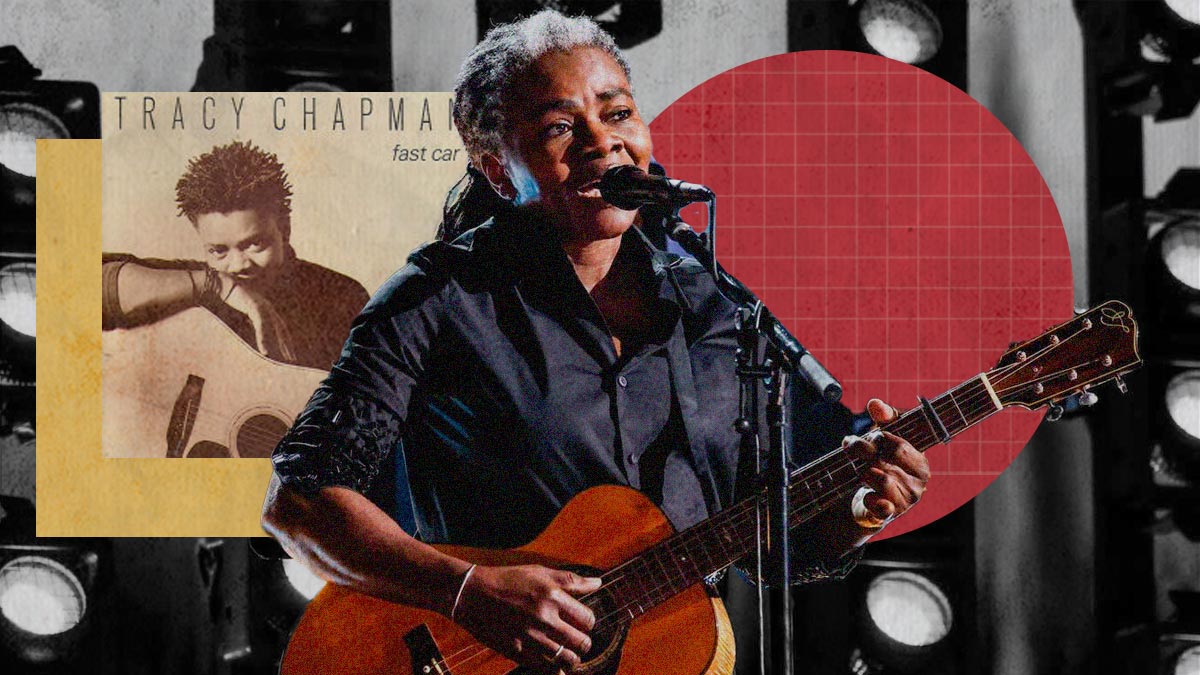
“Fast Car” came out in the ‘80s, way before I had any inkling about what it meant or even about music in general. But in the ‘90s when I came of age, I remember listening to the song on a bootlegged cassette tape, fascinated by the intensely catchy chorus and the powerfully sincere voice behind it.
It wasn’t until much later, when I started paying attention to the lyrics, that I realized that the song—incredibly fun as it was to turn up during car rides or belt out during arbitrary moments like at bars or in convenience stores—carried a much deeper meaning than it had initially let on.
ALSO READ
The Best Dressed Men of the 2024 Grammys
Jay-Z Called Out the Grammys for Decades of Hip-Hop Blind Spots
In “Fast Car,” Tracy Chapman, the artist who won the Grammy for Best New Artist in 1989, paints a grim portrait of modern-day America from the point of view of a working-class citizen just barely on the threshold of the poverty line. She sings about trying to make ends meet working at a convenience store and taking care of a deadbeat father who claims, “his body’s too old for workin’,” though, also, “his body’s too young to look like this.”
Our protagonist lays out her dire situation and longs for things to improve. She wants—no needs—to get out of the rut that is her life. “Any place is better,” she laments. And her ticket out of this wretched life is, you guessed it, a fast car.
“Is it fast enough so we can fly away?” she wonders, more in the hopes of access to a quick getaway than an actual inquiry into the vehicle’s speed. The car is a symbol of escape and freedom from a hard, miserable life, one where there’s little chance of happiness and hope. It represents a very real way out of an endless loop of debilitating sameness.
That Chapman manages to squeeze all of that dark heavy subject matter in a radio-friendly track seemingly made for spontaneous sing-alongs is perhaps one of its greatest triumphs. Many of us mouth the words in time with the singer-songwriter without giving a second thought to what we’re singing along to. But when our mind catch up to our ears, we begin to understand the song’s meaning and develop a much deeper appreciation for it. We get a lesson in empathy and belonginess without it being rammed down our throats.
Since 1988, countless other musicians have covered the song and attempted to deliver its message to newer listeners. Acoustic trio Boyce Avenue has recorded a version and has incorporated the song into their live setlists over the years. British record producer Jonas Blue came out with a tropical house cover in 2015 that became somewhat of a hit, especially in the U.K., when it was released. And just last year, American country music star Luke Combs also recorded a version that topped multiple charts, and earned for him a Grammy nomination.
It's this latest version that is responsible for the most recent resurgence of the song. Chapman’s original version topped the Country Songwriters Chart in June 2023 soon after Combs’ remake. Chapman also won for song of the year at the Country Music Awards in November, the first black woman songwriter to ever win the award. And after Chapman joined Combs to perform a cover of the song at last Sunday’s Grammy awards, “Fast Car” climbed to the top of the iTunes charts. Even her eponymous debut album also made it to number one.
Watching the performance, I couldn’t help but feel emotional. It wasn’t just because it was the first time we all saw Chapman onstage after a very, very long time (some have said it was her first public appearance onstage after nearly a decade), but it was also for her delivery of a now-36-year-old song alongside someone who is, at least physically, her polar opposite. Chapman, who is a queer black woman pushing 60, was onstage singing her song alongside Combs, a straight white man in his early 30s. Her hair more gray than raven, Chapman commanded maturity and authority in stark contrast to Combs, who, despite already achieving much is still pretty much at the beginning of his career. Even if you didn’t know much about what’s going on in the U.S these days, the two of them sharing the stage together said so much about inclusivity and harmony in the midst of so much divisiveness and intolerance. It was a definite highlight of this year’s Grammys ceremony.
And now, many of us who’ve seen that performance no doubt have “Fast Car” on repeat; whether it’s clips from that Grammys version that are probably all over our social media feed, or the original track playing on our streaming platform of choice. Perhaps some of us are even dusting off our CDs or vinyl records, or yes, even bootlegged cassette tapes, giving a true classic another spin and belting our lungs off at all the right lines. We couldn’t be more thrilled at the song’s renewed moment in the pop culture spotlight as it’s one that transcends time and genres, and one that will likely remain a cherished favorite for many more years to come.
