
Unpacking the Myth: Do Kapampangans Really Eat Dogs?

Kapampangans are famous for their rich food culture deeply rooted in their history and traditions. They are known for their penchant for incorporating exotic food into their cuisine, a testament to their adventurous and innovative culinary spirit.
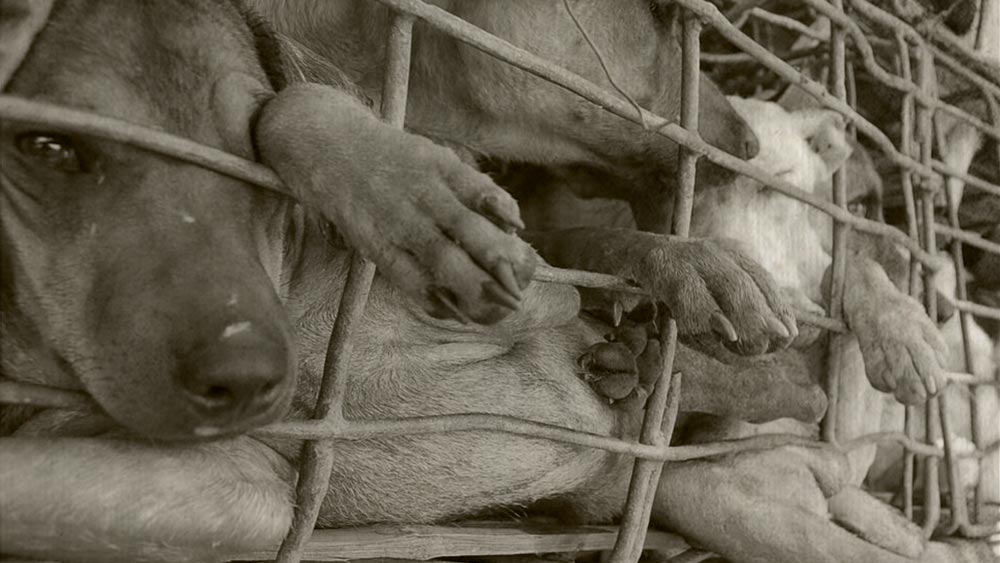
Dog-eating—considered unethical and even illegal by some cultures—unfortunately is a stereotype that's also associated with Kapampangans. But what does history tell us about this claim? Are there historical evidence and cultural studies that shed light on the origins and prevalence of this practice within Pampanga and the broader Filipino culture?
Ian Christopher Alfonso, a senior history researcher at the National Historical Commission of the Philippines (NHCP) and author of "Dogs in Philippine History," recently addressed this sensitive subject at the 1st International Conference on Kapampangan Cuisine and Food Tourism held at Holy Angel University in Angeles City.
ALSO READ:
Believe It or Not, Chow Chows Were Once Stray Dogs That Roamed the Streets of Manila
Asong Gubat: Will This Be the First Official Dog Breed of the Philippines?
He began his talk by discussing the two Filipino terms linked to dog-eating: azucena and kuba.
Azucena is a portmanteau of the words aso (dog) and cena (Spanish for dinner). Veterinary scholars Dr. Enrique Carlos and Dr. Loinda Baldrias suggested a deliberate wordplay linking the strong aroma of dog meat with the fragrant azucena flower.
This was supported by National Artist for Literature Nick Joaquin, who stated, "When cooked right, dog meat has the pungency of game (e.g., venison or wild duck)," suggesting that this quality makes it particularly suited for outdoor consumption.
Kapampangans typically use the term kuba for dog-eating. According to Alfonso, it is derived from the Spanish word curva, depicting the method of slaughtering the dog by striking its back until it breaks before cooking.
Dog-eating narratives
Several literary works link dog-eating practices to the Tagalogs. Among the earliest references Alfonso discovered in his research is the 1946 Tagalog novel by Blas Celestino Garcia, titled "Mapait na Lihim o ang Anak Kong Hindi Akin," which mentions the term kuba.
In 1976, the Beerhouse Gang released the song "Pulutang Kubang Aso," narrating how Filipino drinkers indulge in dog meat as pulutan. Likewise, National Artist Lazaro Francisco, a Tagalog from Nueva Ecija, incorporated the term kuba in his 1976 novel, "Daluyong."
Antonio Enriquez, a writer from Zamboanga City, penned a short story in 1977 titled "Azucena," referencing dog-eating in Zamboanga City, introduced by the Ilocanos.
Yet, the historical researcher has found no Kapampangan literature—be it novels, short stories, or poetry—that discusses dog eating from the Spanish period to the present.
How did the perception that Kapampangans eat dogs come about?
One potential source is Amado B. Hernandez's 1968 novel "Mga Ibong Mandaragit." In an early section, he describes a Tagalog and a Kapampangan visiting Tondo during Christmas of 1944. Near Tondo Church, food vendors call out, "Kalderetang kambing! Azucena, bagong hango! Husto sa rekado. Diyenuwain ito, Diyenuwain. Tingnan nyo sa pinggan ang bungo."
The Tagalog jested, "Matakaw ka pala ng aso," to which the Kapampangan responded, "Anong sinasabi mo?"
Survival and stigma
The earliest record Alfonso discovered, mentioning Kapampangans consuming dog meat, was from an August 1943 issue of The Tribune. It reported, "Some locals of Talba, Bacolor, and Pampanga proudly remarked that the rising price of pork and beef due to World War II did not bother them because they could resort to dog meat consumption."
"Napuwersa ang mga taga Bacolor na kumain ng aso dahil iyon ang available sa paligid noong panahon ng Hapon. Bagsak ang ating ekonomiya," Alfonso explained. He hasn't come across any documentation of Kapampangans consuming dog meat during the early American and Spanish periods.
The earliest Spanish record of Filipinos eating dogs dates back to the 1600s Tagalog revolt in Morong, Rizal.
The first recorded occurrence of dog-eating in the Philippines took place on the Sarangani Islands in 1544, with Spaniards resorting to it because of food scarcity.
Dugong aso
"Dugong aso" has been used to describe Kapampangans. Is it because they have allegedly consumed dog meat?
"Tinawag tayong dugong aso dahil tayo ay itinuring na mga Tagalog na kasing sahol ng mga tulisan," the historian explained. "Ang nagpaalab ng misconception, ng stereotype na ang mga Kapampangan ay dugong aso ay ang pagkampi ng mga Macabebe sa mananakop. Mas inuna nila ang pagkampi sa mga dayuhan kaysa sa sarili nating bansa noong panahong ikinakampanya natin ang kalayaan ng Pilipinas."
The Macabebe Scouts, an American military unit during the Philippine-American War (1899 to 1902), have been viewed unfavorably in history. Their alliance with American forces, seen as a betrayal by many, included aiding in the capture of Emilio Aguinaldo in Palanan, Isabela. Their actions have often been labeled "dugong aso" or "masahol pa sa tulisan."
Over time, the term "dugong aso" has evolved from its original meaning. It is now employed in literature to denote a traitor, a person of malicious character, or a blind follower. This shift in definition represents a broader evolution of the phrase. Intriguingly, while dogs are celebrated for their loyalty, the expression implies that Kapampangans display a similar loyalty to those in authority.
Alfonso concludes his talk by stressing the importance of differentiating between myths and historical truths, advocating for a more respectful and accurate understanding of the nation's cultural diversity.
