The Philippines is one of the world’s most biodiverse countries. The archipelago’s location in the Coral Triangle bestows the Philippine reefs with great marine biodiversity, and the island geography plus the complex geological history of the country gave it unique species on land.
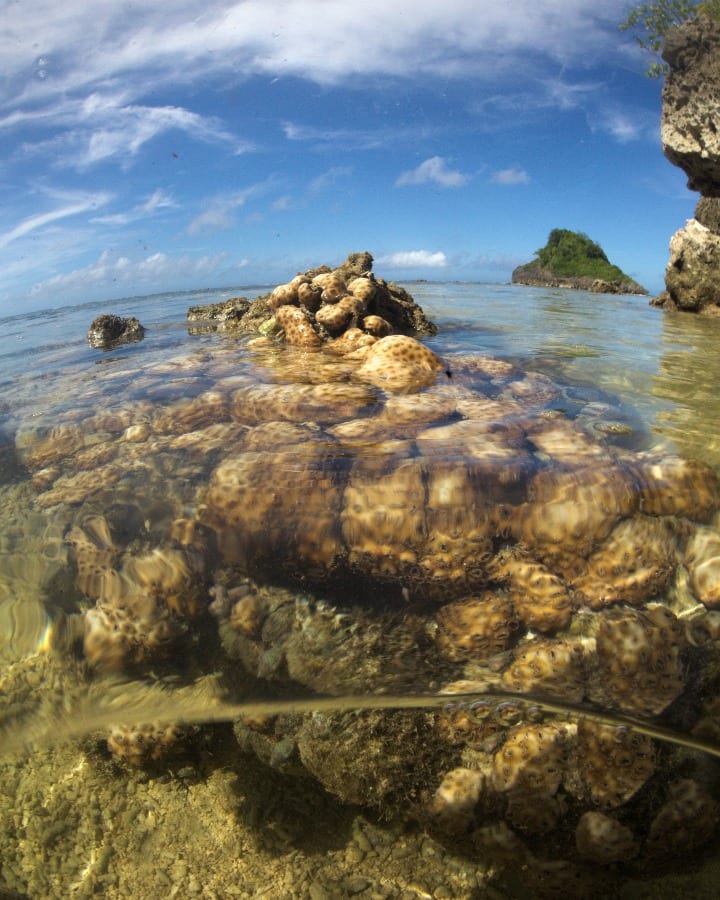
Coral can live in very shallow water and even be exposed at low tide
Klaus Stiefel
ADVERTISEMENT - CONTINUE READING BELOW
The country is also home to a sturdy economic growth and a growing middle class. While these are undoubtedly good developments, Mother Nature sometimes takes some bad blows from economic growth. Hence it’s great that there are some places which are left untouched, off-limits from too much human meddling, where nature can flourish. Danjugan Island in Negros Occidental is such a place.
Bought by the Philippine Reef and Rainforest Foundation (PRRF) in 1994, the island is devoid of human habitation but for a small eco-lodge on the island’s west side, and a marine life education camp on the island’s east. The land part of the island is completely protected; there is no logging or other form of exploitation on Danjugan. Guests are strongly discouraged to even take sea shells home as “souvenirs.” The little plastic trash there is—sadly unavoidable in Southeast Asia in 2024—is swept in by the ocean currents from locations outside of the island, and is generally quickly removed by attentive staff and eco-conscious visitors.
CONTINUE READING BELOW
watch now
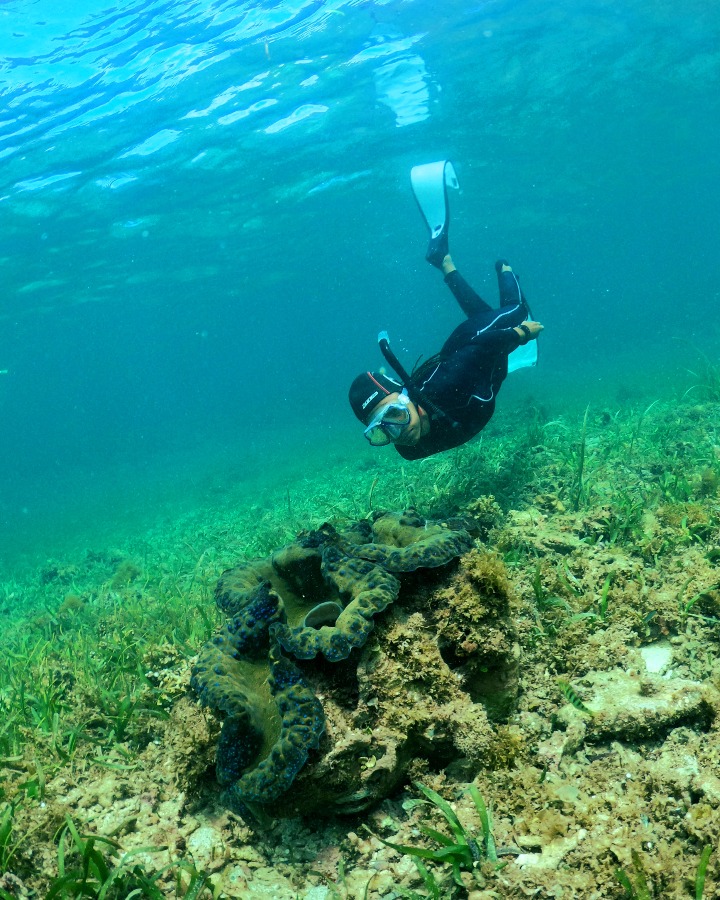
A truly giant clam in Danjugan Island
PHOTO: Klaus Stiefel
Narrow pathways over rocks and mud lead the island’s visitors through the dense vegetation of Danjugan interior, past mangroves and exits to quiet beaches. The island is made up of irregular limestone rocks, and it takes a bit of concentration to make your way up and down the paths. They are constructed from this limestone and climbing around on them is good fun. Take your time to traverse the island, and stop to smell the mangroves and marvel at the butterflies and dragonflies buzzing around. This is not a place to rush.
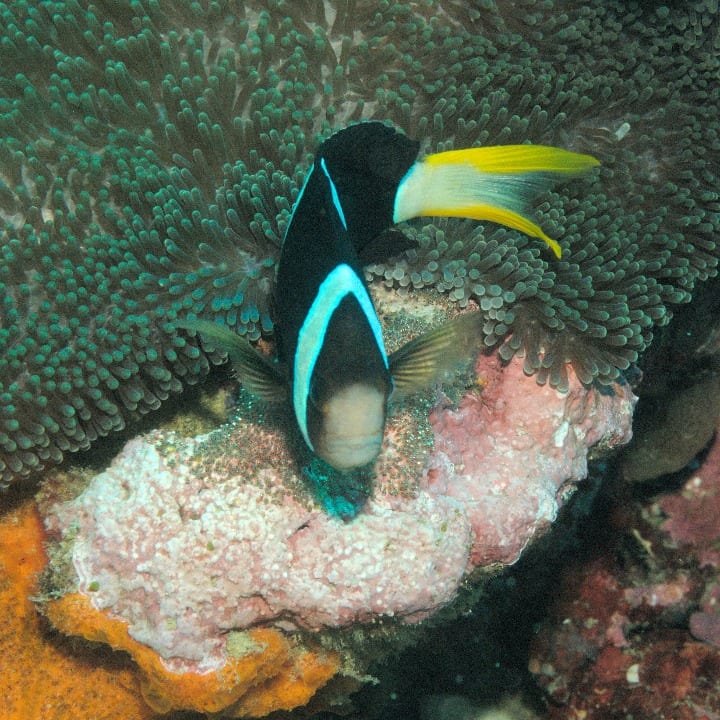
An anemone fish close to its brood
Klaus Stiefel
ADVERTISEMENT - CONTINUE READING BELOW
There are no feral dog or cats on the island, which has extremely positive effects on the island’s bird fauna, since none of these feral predators prey on birds or their nests. The call of kingfishers frequently sounds between the canopy of Danjugan. Both the collared as well as the much rarer stork-billed kingfisher can be seen around the island’s mangroves. The true highlight of Danjugan birdwatching is certainly the pair of white-bellied fishing eagles, which soar high above the island in search of food. These are large and, even though not endangered, nevertheless somewhat rarely seen raptors.
A cave in the rough limestone rock that makes up Danjugan is home to bats; and native reticulated pythons also roam the island’s interior (no, they are not dangerous to humans).
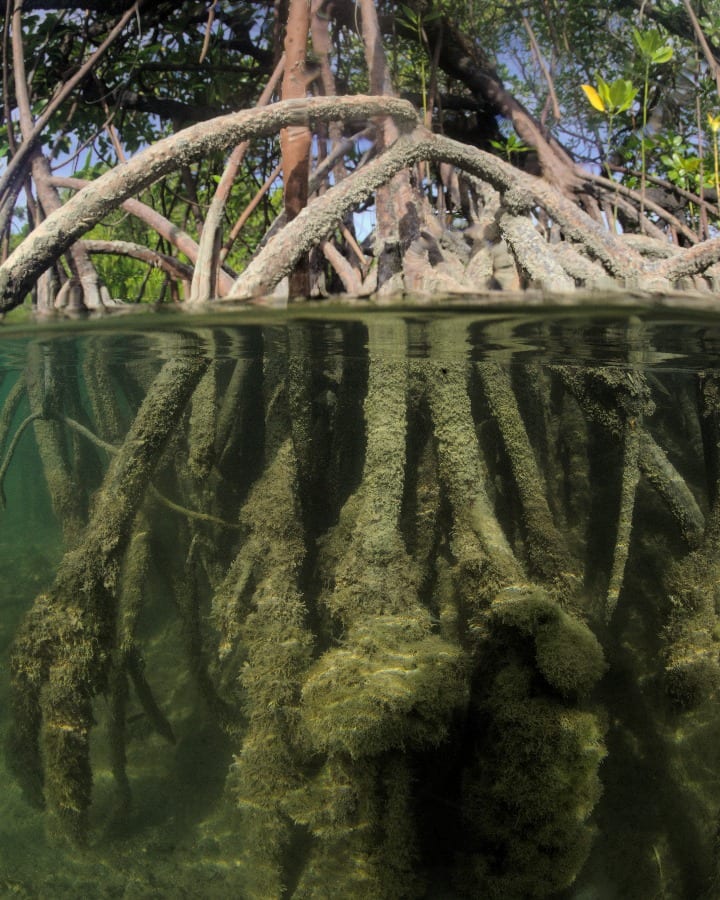
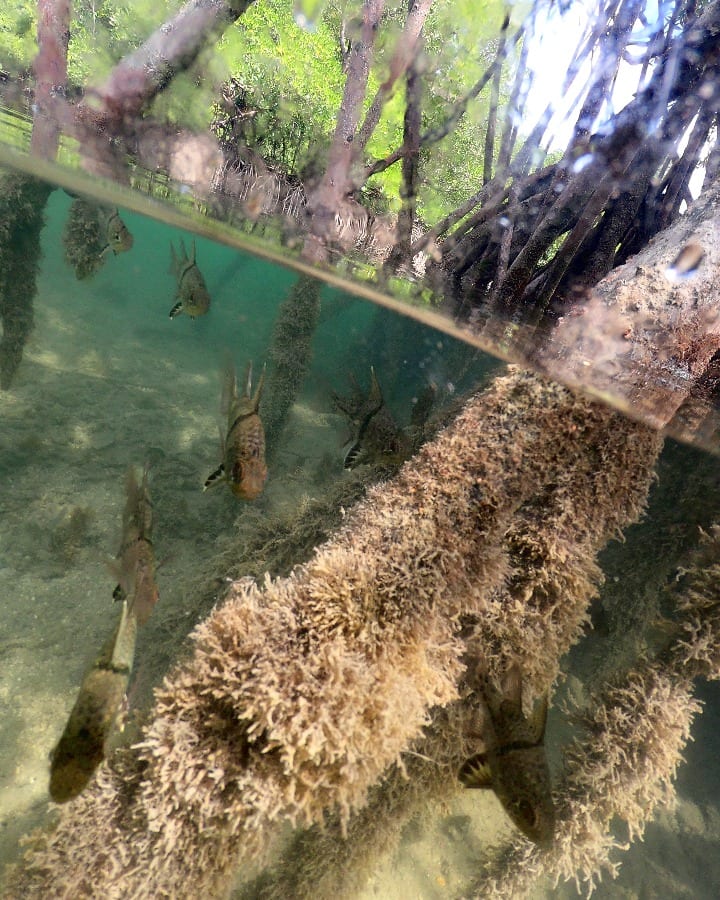
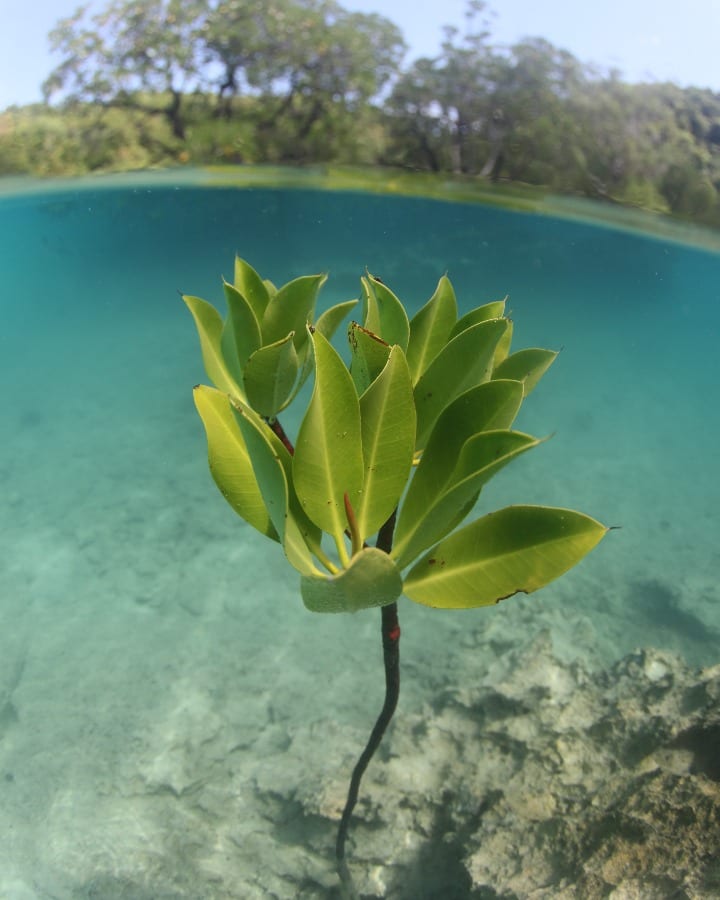
The aforementioned mangroves are another highlight for the naturalist visiting Danjugan. The Philippines has lost approximately half of its mangroves since the 1950s, and some of the remaining mangrove forests are in less-than-ideal shape. Seeing healthy mangrove trees, with roots devoid of entangled plastic trash, is heartwarming for a nature lover. Anyone with a bit of patience can observe the crabs and mudskippers at home between the mangrove roots engaging in their surprisingly complex social lives.
The mangroves of Danjugan island
Klaus Stiefel
ADVERTISEMENT - CONTINUE READING BELOW
Amazing mangrove roots
Klaus Stiefel
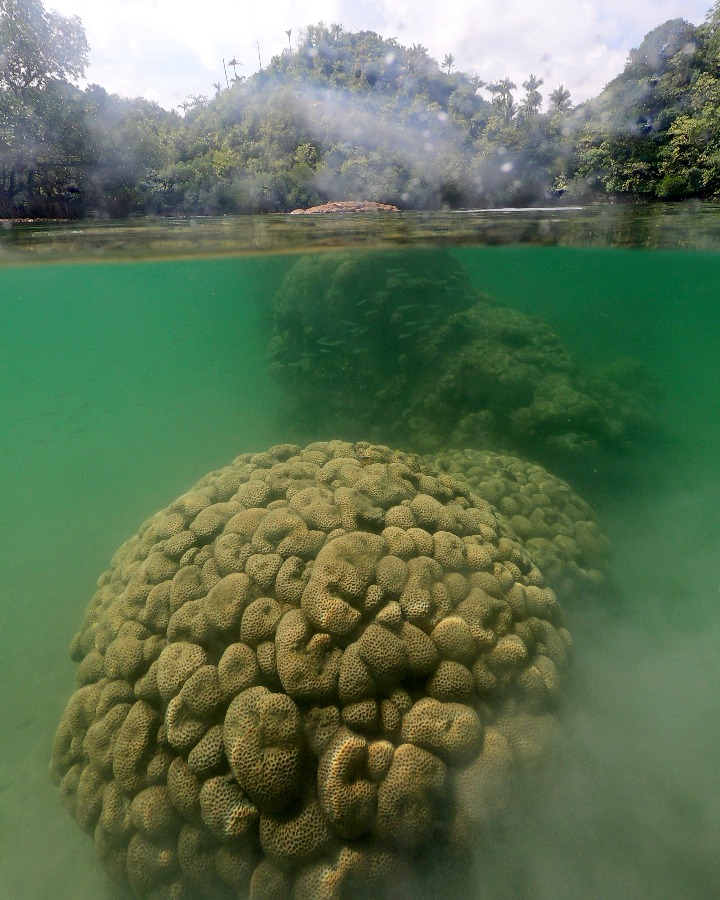
Further afar from shore, Danjugan is home to coral reefs. Some of the corals took a hit during typhoon Odette, but the reef is recovering in some places, and wasn’t as badly affected in other sites, out of the main path of the typhoon.
The Philippine Reef and Rainforest Foundation has placed giant clams, from the famous breeding program run by the University of the Philippines Marine Science Institute in Pangasinan, on the reef. The oldest of these clams—once almost locally extinct in the Philippines—were transplanted in 2000, and at an age of a quarter of a century have indeed grown to gargantuan sizes, with more than a meter in length and likely weights of more than 200 kilograms.
The mantles of the clams are colored in iridescent orange and purple by symbiotic algae which live in their tissues. The clams are shallow enough so that snorkelers can observe them.
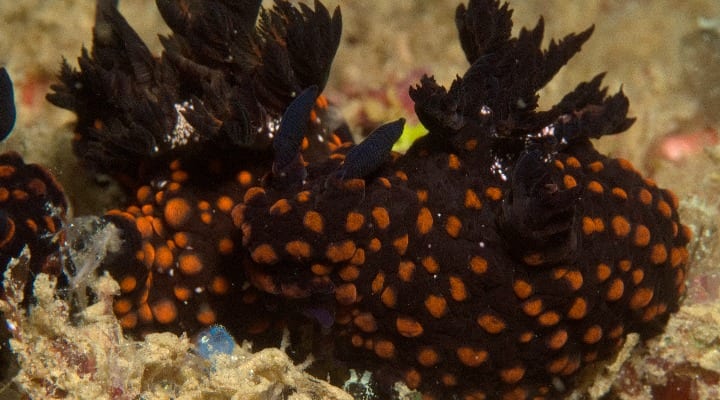
A sea slug Nembrotha yonowae, at home on the reefs of Danjugan
Klaus Stiefel
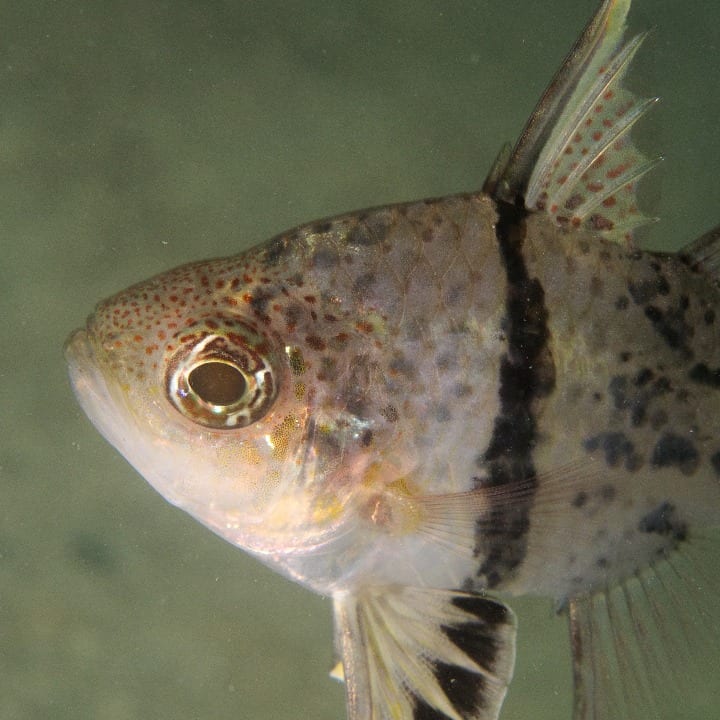
A cardinal fish, at home between mangrove roots
Klaus Stiefel
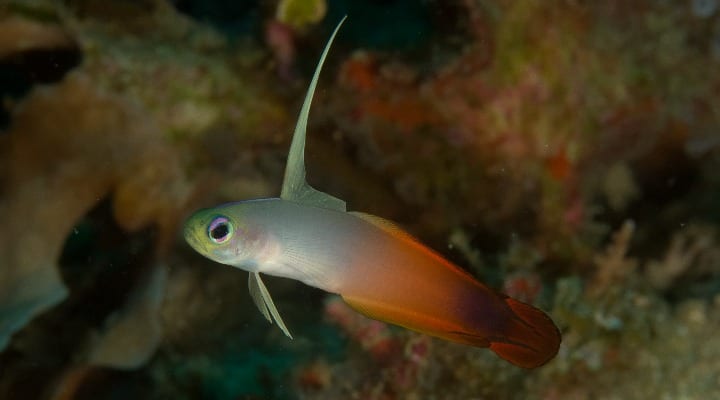
A section of the reef on the island’s west coast is a marine protected area, where marine life thrives without human intervention. The remainder of the island’s reefs are not heavily fished, and snorkelers and divers can encounter turtles and large fishes, like barracudas. Little gems like sea slugs, gobies and dartfish, and multi-colored crabs perched on the edges of anemones round off the pleasures of exploring Danjugan’s reefs.
The PRRF regularly conducts eco-camps on the island where experts talk about the plants and animals on the island, and on its reefs. (I had the pleasure to contribute in this way a few times myself). You can also visit the island independently of these camps (please see below). Besides being a haven for nature, which is a pleasure to experience, a stay in Danjugan also never fails to recharge the soul. I am all for the right to party, but a few days without videoke booming in the distance (or not-so-far distance) have a calming effect. There is no traffic, there are no crowds, and there are no barking dogs or crowing roosters. No fast-food chain is expected to try to establish a branch on the island, or will be given permission to do so.
The mighty mangroves of Danjugan Island
PHOTO: Klaus Stiefel
“I have been coming to the Danjugan since I was little and it always shows me something new!” Kaila Ledesma Trebol, PRRF trustee, says. “ Its biodiversity never fails to amaze me. It is a place you can find eight ecosystems - limestone forests, mangroves, caves, lagoons, seagrass beds, white sand beaches, coral reefs, and the open sea—the best example that shows everything is connected! It is nature’s perfect classroom.
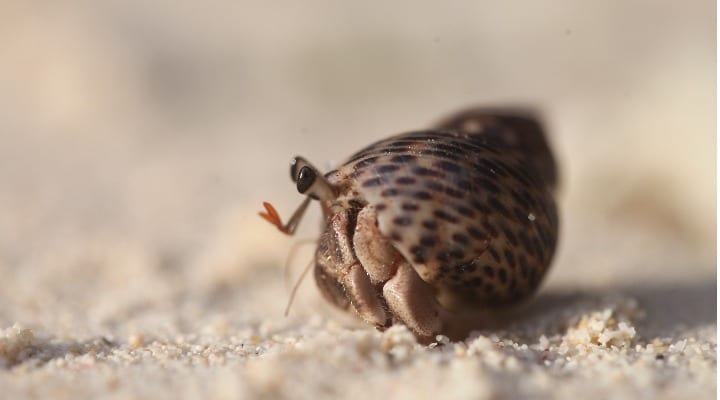
Hermit crab enjoying the beach life in Danjugan
Klaus Stiefel
“Danjugan will always be a special place to me,” she adds. “A place where people and wildlife can co-exist. We work to keep it that way, so wildlife can thrive when so much of our environment is being destroyed. Danjugan is a gift and opens her doors to those who need to be with nature and learn from her.”
Wise words!
A fire dartfish
Klaus Stiefel
Tourism Tips
You can reach Antol port, the jump-off point to Danjugan, in two-and-a-half hours by car from Bacolod or in four hours from Dumaguete. From there, a 10-minute bangka ride will take you to Danjugan. Accommodation on the island is comfortable, and thanks to Starlink, there is reliable internet. Food is healthy, and you will find a selection of hammocks in scenic places overlooking the ocean for your relaxation time after exploring the island.
A young mangrove plant, submerged during high tide
Klaus Stiefel
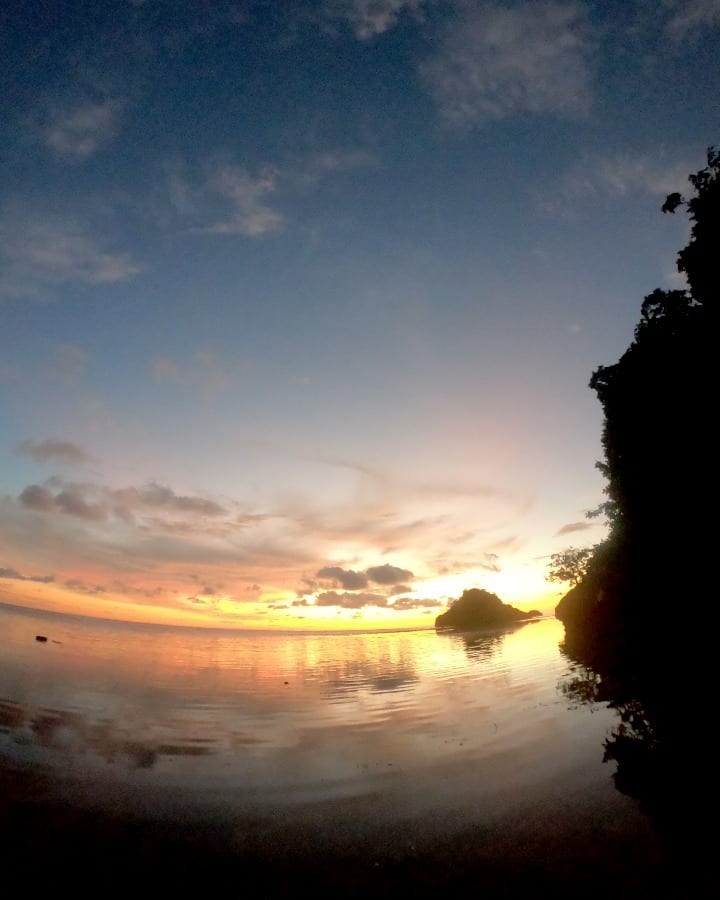
Sunset in Danjugan Island
Klaus Stiefel
Keep your eyes on the social media of the PRRF for upcoming eco-camps for kids and adults. You can also visit independently from eco-camps, and contact the foundation via their webpage.
We use cookies to ensure you get the best experience on Esquiremag.ph. By continued use, you agree to our privacy policy and accept our use of such cookies. Find out more here.