

It's Time to Get to Know Itbayat Island, Batanes


On the journey back to Batan Island, I found myself fighting off nausea aboard a small faluwa, the traditional Ivatan boat known for its open deck, deep hull, and absence of outriggers, built to navigate the strong, unpredictable currents in the seas of the Batanes Group of Islands.
As the Philippine Sea rolled its giant waves beneath us, the boat pitched and leapt, and I gripped the rails tightly, trying to steady both my balance and my stomach. The thought of throwing up beside the other passengers felt increasingly real and deeply embarrassing. To stave it off, I let my thoughts drift to the days just passed, memories still vivid, still clinging to me like a loyal, long-lost dog.
Mauyen Cliff in Itbayat

ALSO READ:
How Sagay City and Isabela de Basilan Became Benchmarks for Community-based Tourism
From Kalinga's Fields to Your Plate: Discovering the Slow Food Community in Pasil
Itbayat’s Cinematic Landscape
Where to begin? I wondered, as a rapid sequence of images played in my mind like scenes from a film, each one carefully framed, reminiscent of filmmaker Terrence Malick’s reflective approach to nature. The island unfolded with a silent power and left a strong impression on me. I had heard stories from friends who had been here before, and I thought I had a sense of what to expect. But Itbayat still surprised me with its immense, cinematic landscapes and unbothered beauty.
Valanga Port
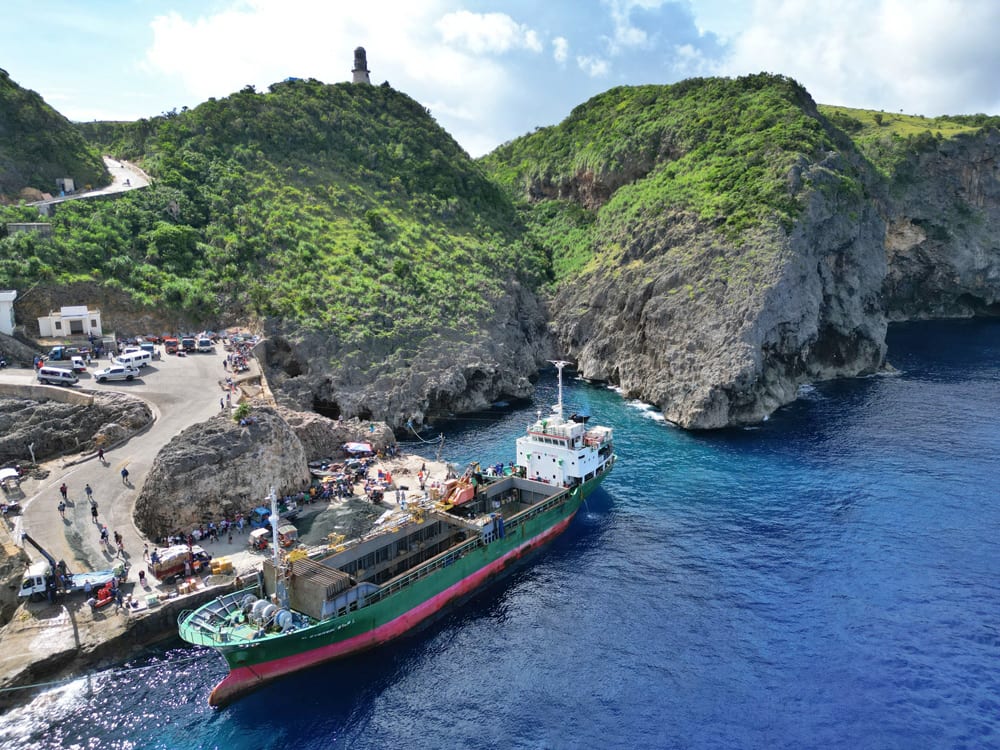

Just getting off the faluwa on arrival was an experience. "You’re lucky the waves weren’t that high today," said a local passenger. If that was a lucky crossing, I could only imagine the worse days, as already four members of our group had gotten seasick mid-crossing.
Inland and finally away from the giant swells of the Philippine Sea, we laced up our hiking shoes and explored the countryside of Itbayat. What greeted us was a landscape that showcased Batanes’ iconic terrain, rolling hills rising steadily toward jagged limestone peaks and dramatic cliffs. The scenery stretched wide and open, dotted with pockets of lush grassland where cows and goats roamed freely, as if the island belonged entirely to them.
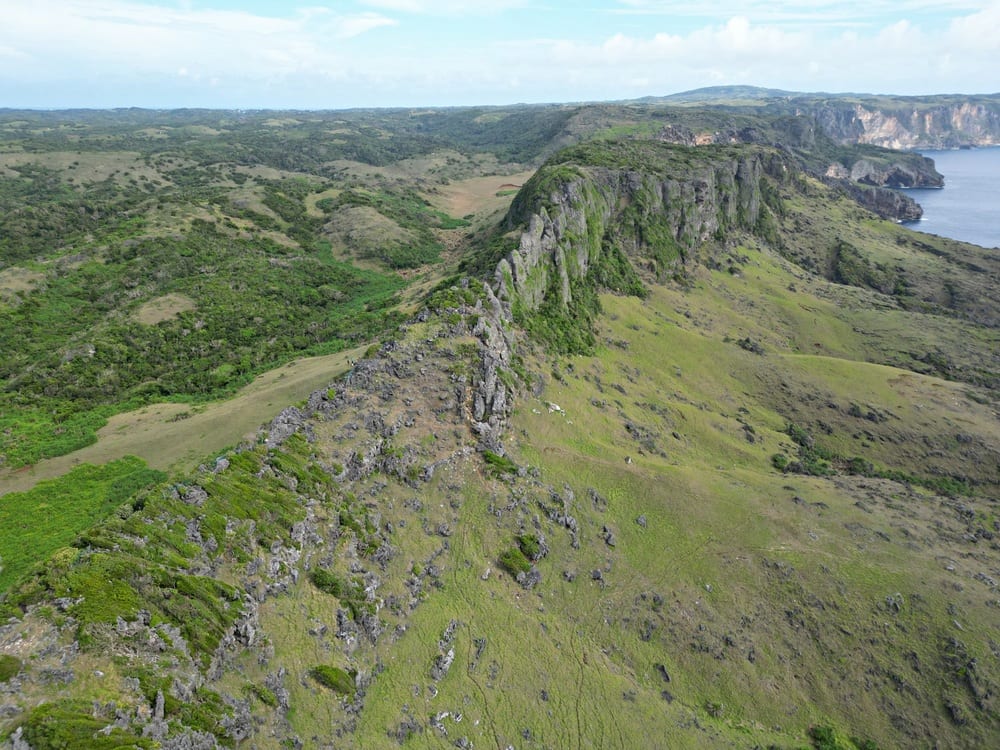
Rapang Cliff felt like a fantasy come to life. Its flat ridges and sea-facing table-top-like ridges called to mind Game of Thrones’ mythical Wall, only this one was carved by nature. Getting there took a two-hour hike over a five-kilometer trail. But between the steady climb and irresistible views, the trek stretched longer. We stopped often to breathe, to snap photos, to soak in the gifts of the island.
Rapang Cliff

At Mauyen Cliff, the scene looked tailor-made for the finale of GMA’s Widows’ War, if only they had chosen a location shoot over a green screen. Here, cliff drops offer both breathtaking beauty and edge-of-your-seat suspense. We found ourselves exchanging nervous reminders: don’t get too close, or else, it’s sayonara, world.
Mauyen Cliff

Even from a safe distance, the place gets your attention. That high-altitude mix of adrenaline and awe, outlined by a 360-degree panorama of sea and sky, felt like a movie-like mic drop, an exclamation point to end our first day on the island.
Among the natural attractions we managed to visit during our brief three-day stay on the island, several offered not only stunning views but also unexpected insights. One such site was Cavaywan Lake.
Cavaywan Lake

At first glance, its still waters projected a sense of calmness typical of many nature spots. However, it was the land surrounding the lake that captured our attention. Our local guide explained that the reddish soil may be due to high concentrations of iron and protein, giving the area another earthy character that sets it apart from more typical lake environments.
Of all the places we visited, Torongan Cliff offered the most meaningful learning experience of the trip, providing me with a newfound insight into the prehistoric past of the Philippines. Within Torongan Cave, now inaccessible after a typhoon destroyed its mouth a few years ago and once believed by archaeologists to have housed the country’s earliest known human settlements, lies the Axurud: a spherical stone tomb now stamped with archaeological significance.
Shaped like a boat and pointed toward the sea, the tomb is thought to contain the remains of an entire Austronesian family that lived on the island between 2,000 and 4,000 years ago. Its design is no coincidence. For the Austronesians, the sea was more than a passage—it was both a path and a final destination. In death, they believed that the spirit was to return to the ocean, completing a journey back to its origin.
Archaeological evidence traces these early settlers to Formosa (modern-day Taiwan), from where they embarked on a vast maritime migration around 4,000 B.C., eventually spreading through the Pacific and Southeast Asia. Their influence remains evident in our languages, rituals, and even the physical traits of many ethnolinguistic groups across the Philippines.
Torongan Burial

Learning this raised had me raising a question: who truly came first? The Negritos long believed to have crossed a land bridge from Borneo tens of thousands of years ago? Or the Austronesians, whose presence has been strengthened with recent discoveries in caves across Batanes and as far south as Cagayan’s Callao Cave? It’s a debate that continues to drive archaeological inquiry, and it’s what makes places like Torongan essential not just for tourism, but for identity.
A few more nature spots, each deserving of a lengthy article on its own, rounded out our glimpse into the island of Itbayat. As a travel writer and someone who takes every chance to explore during time off from work, I sometimes find that travel can begin to feel routine. But Itbayat shattered that illusion.
It reminded me how fortunate I am simply to stand, walk, hop, and even leap for a photograph across its swelling hills, high-rise cliffs, and boulder peaks—all sculpted by thousands of years of crashing waves and nature’s craftsmanship. The landscapes here weren’t just remote; they felt otherworldly or like a setting of a period movie. Think Braveheart (1995). And for that, I felt nothing but gratitude.
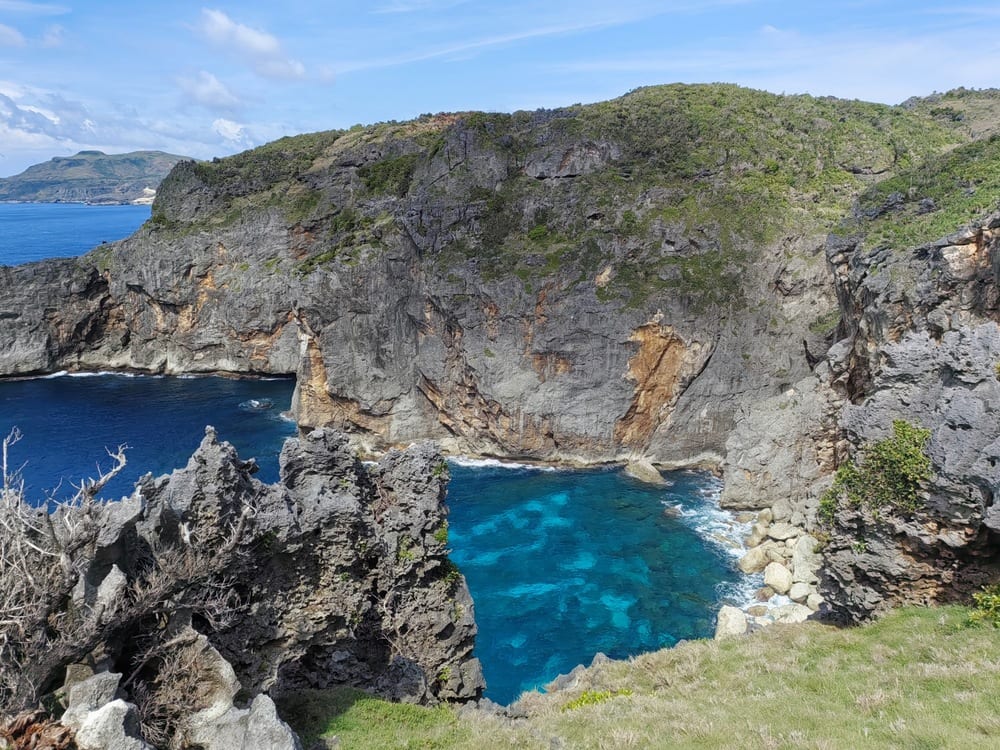
Blue Lagoon
Marketing Itbayat the Right Way: A Workshop on Sustainable Tourism and Resilience
As our small group of travel writers and content creators joined DOT-accredited tour guides in exploring the island of Itbayat, the Tourism Promotions Board (TPB) of the Philippines was simultaneously conducting a two-day tourism workshop focused on strengthening the island’s resilience and community-based tourism sector.
This initiative marked the first capacity-building program on the island by a government agency since the pandemic, and it was warmly received by local stakeholders. Participants included staff from the Batanes tourism office, homestay owners, tour guides, travel operators, and municipal employees.
Tourism and Marketing Workshop in Batanes
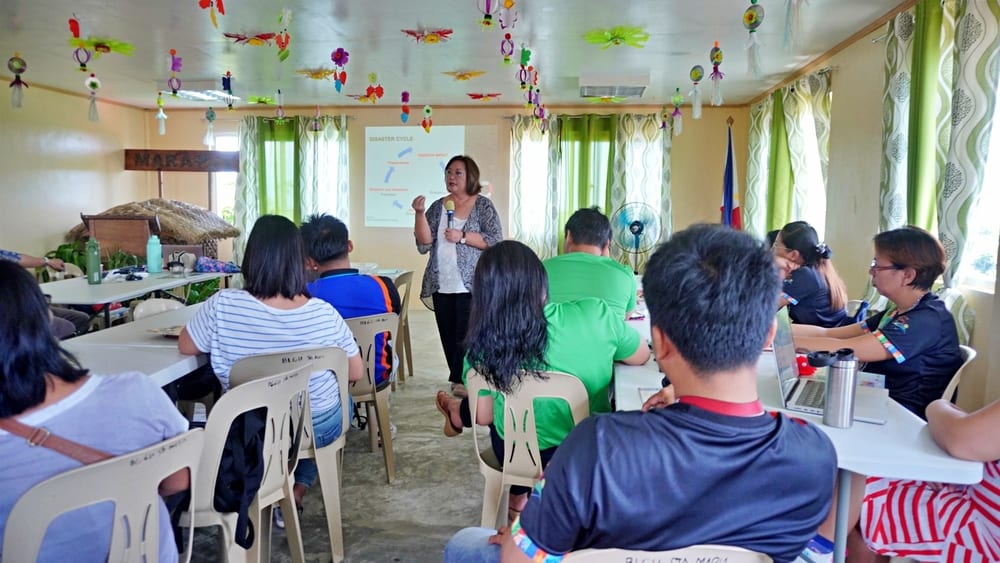
Itbayat Mayor Sabas C. de Sagon thanked the TPB not just for visiting, but for organizing a workshop that could help locals promote the island more effectively. “It’s an honor for us to be here,” added Alberto Gadia, TPB’s Domestic Tourism Marketing Specialist. “We’re here to share knowledge, but also to learn from the community.”
The workshop featured three tourism experts flown in by TPB to lead discussions on strategic marketing and disaster resilience that are vital for a province frequently hit by typhoons and earthquakes. A magnitude 6.0 quake in 2019, for instance, damaged Itbayat’s traditional stone homes and the historic Santa Maria de Mayan Church.
Among the speakers were Boboi Costas, founder of Grassroots Travel Consulting and former Cebu tourism officer, and Louie and Chen Mencias, a husband-and-wife team known for developing community empowerment training programs. Together, they guided participants on how to promote Itbayat in a way that is thoughtful, inclusive, and sustainable.
“This project was born from that very need: to strengthen and empower local tourism stakeholders—both public and private—with the tools, knowledge, and frameworks to sustain tourism amid climate-related and other external pressures”, said TPB Chief Operating Officer Marga Nograles.
With only 13,000 tourist arrivals in all of Batanes in 2024, and less than 10% of those reaching Itbayat, the island remains one of the most remote and least visited destinations in the Philippines. Most visitors tend to explore Batan and Sabtang islands, while only a handful brave the three-hour, often rough, boat ride to Itbayat or the seven-minute flight aboard a small plane that is prone to cancellation due to weather unpredictability.
But that may slowly change. With Itbayat being introduced to a wider audience and with hopes for better infrastructure, including a modern seaport, the TPB is ensuring development follows a community-first model. The goal is to protect the island’s fragile ecology, maintain its cultural traditions, and allow locals to benefit directly from tourism.
“This is the spirit we hope to cultivate through our Local Tourism and Marketing Workshop in Itbayat—empowering the local community to take pride in their land, preserve its integrity, and participate meaningfully in tourism development”, adds Marga Nograles. “Our emphasis on low-impact, 'leave no trace' travel ensures that visitors experience Itbayat in its most natural, unfiltered state, while helping safeguard it for future generations.”
Vunung, an Ivatan word loosely translated as 'to share,' is composed of different Ivatan dishes with rice, uvud (banana corm), and meat. It is often served on special occasions.

A Trip Long Time Coming
After over a decade of toying with the idea, imagining the wild faluwa boat ride, I finally made the leap. Or more accurately, I finally crossed the water from Batan to this long-teased, mysterious island of Itbayat that I skipped during my first visit to Batanes. Now that I’m here, I get it.
Boarding the 'faluwa'

The island delivers the goods: vast, rolling hills carpeted in grass where goats and cows freely roam, and a sweeping terrain that would make you want to run and sing a tune from the classic “Sound of Music” even if you don’t know the lyrics.
Yes, I stepped in cow dung, more than once, but if anything, it only confirmed Itbayat’s rawness. Here, there are no filters nor tourist trappings, just full-on island realism.
The real story, however? It’s the people. Morning walks turn into scenes of spontaneous warmth: cheerful greetings from strangers like they’ve been waiting years to say hello, tour guides who double as natural storytellers with a flair for the dramatic and a refreshing sense of humor, and visual delights that feel like they’ve been lifted straight out of a Wes Anderson film. Yes, put them all together, Mallick, Anderson, and as the Martin Scorsese meme says, Itbayat is 'ABSOLUTE CINEMA'.
