• Man at His Best 2025
  • Long Reads
  • Style
  • Money
  • Wheels
  • Culture
  • Opinion
  • CORNER OFFICE
Search
Menu
Close
Close
  • Man at His Best 2025
  • Long Reads
  • Style
  • Money
  • Wheels
  • Culture
  • Opinion
  • Style
    • Fashion
    • Grooming
    • Watches
  • The Good Life
    • Pursuits
    • What She Wants
    • Mavericks
    • The Directory
    • The Noble Man
  • Culture
    • Food & Drink
    • Arts & Entertainment
    • Lifestyle
    • Tech
    • Movies & TV
    • Music
    • Books & Art
    • Design
  • Wheels
    • Cars
    • Motorcycles
    • Drive
  • Money
    • Industry
    • Wealth
    • Capital
    • Movers
  • Long Reads
    • Notes & Essays
    • ESQ&A
    • What I've Learned
    • Fiction
    • Features
  • Life
    • Sports
    • Health & Fitness
    • Women
    • Sex & Relationships
    • Travel
  • Politics
    • Opinion
    • News
  • COUPONS
  • About Us
  • Terms of Use
  • Privacy Policy

NPC Seal of Registration

Esquire has been granted the NPC Seal of Registration in recognition of the successful registration of its DPO and DPS

© 2026 EsquireMag.ph, All Rights Reserved
Long Reads

“I’m here because I want to do things. It’s as simple as that.”—Sonny Angara, Senatorial Candidate

By Cherrie Regalado
Apr 16, 2019
Post a Comment

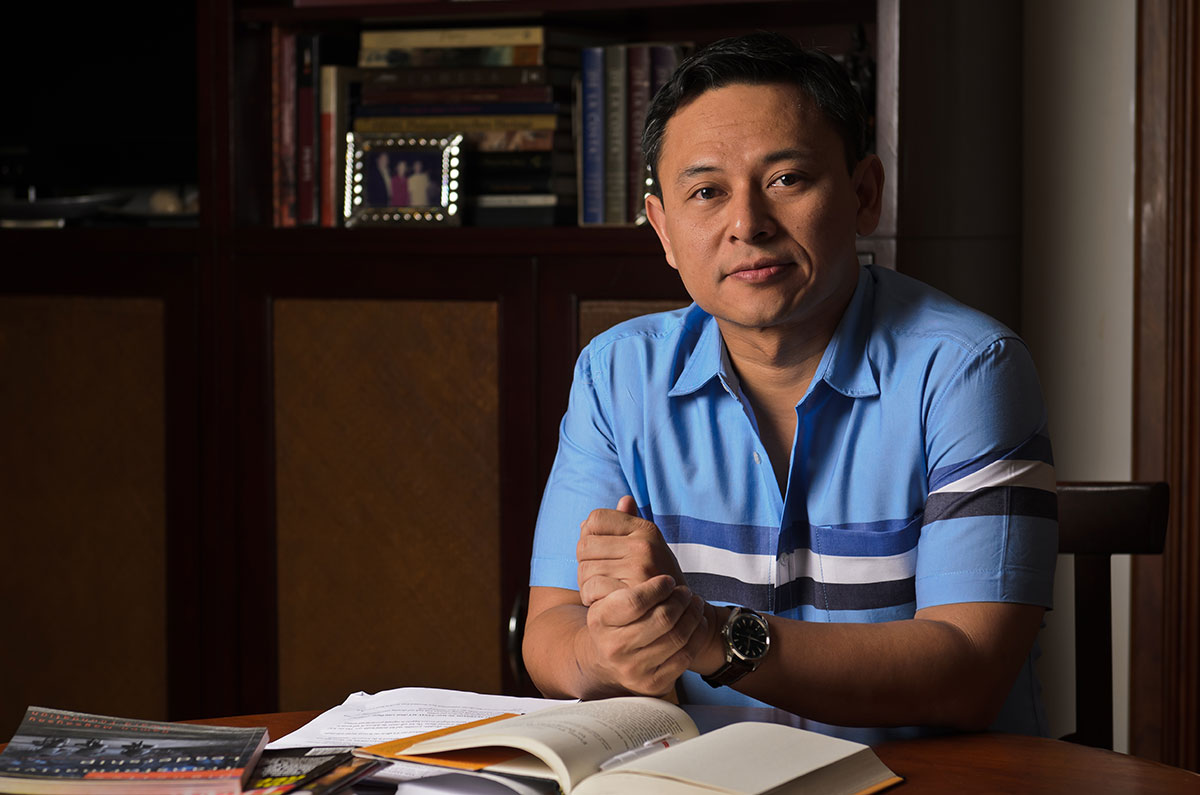
It is an early morning schedule with re-electionist Juan Edgardo Angara, more popularly known as Sonny Angara. He walks into his father’s house looking and sounding like he could benefit from more hours of sleep and rest. Weeks of campaigning, hopping from one province to another, seem to be taking a toll on the senator. Yet, Angara, already a veteran on the campaign trail having been elected three times as a congressman of his home province Aurora, before getting a seat in the Senate in 2013, is ready for another day.

He says the scorching heat is making the campaign season much harder. The son of the late Senator Edgardo Angara doesn’t remember having to endure such hot weather back in the 2013 election season. He is also recovering from a cold.

But the senator’s efforts in securing another term seem to be paying off. The Pulse Asia survey for March released just hours before this interview, shows Angara is in the third to fourth spot. It is a “safe place” Angara says. He says being on top of the survey means having many people trying to pull you down while the ninth to 12th place is a precarious spot, too, he explains.

ADVERTISEMENT - CONTINUE READING BELOW

ESQUIRE PHILIPPINES: When did you know that you wanted to be in politics?

SONNY ANGARA: I [knew] I wanted to be a lawmaker or a policy or decision maker sometime around boarding school and college. And then that kind of—I was studying history a lot; that was really fascinating—crystallized or hardened in law school. It was a very political atmosphere. (Editor's note: Angara took International Relations at the London School of Economics, then went to U.P. Law School, and took his Masters in Law at Harvard University.)

ESQ: You didn't want it growing up?

SA: Not really. I liked writing. I wanted to be a journalist, actually, photojournalist. Travel the world. Then my mom told me good luck making a living on that (laughs). 

ESQ: Was there a particular point when you said, “Yes, I’m going to be a policy maker, I’m going to be a lawmaker”?

CONTINUE READING BELOW
watch now

SA: I think that really hardened in law school. When I was already in U.P., it was a politicized atmosphere. You’ve taken the history of the place and all the great students. That was it. I think that was the point when I said, “Yeah, I'd like to be making laws also.” 

article big image
PHOTO: Kai Huang
Post a Comment

ESQ: This will be your second term, if ever. What are your biggest accomplishments in the Senate?

SA: In the last two or three years, there are reforms that really stood out that will really help the country move forward. The first is the Free College Law and the second is the Universal Health Bill. 

I think with the Philippines having the youngest population in Asia, it’s really an opportunity for us to propel ourselves about where we are now, what kind of a midland economy. But, for that to work, we’ll need more investment. Make them smart, make the young people healthy. There’s a massive opportunity to leverage on something good.  

ADVERTISEMENT - CONTINUE READING BELOW

As a complement to that, you need a better environment. So, I appreciate the Build, Build, Build initiative of the administration to put in the infrastructure. When I talk of Build, Build, Build, it’s not just hard infrastructure, it’s not just road and bridges. It’s also things like school, you know. And financial systems, things which are softer infrastructure. Human infrastructure, I think that’s a better term. You’re preparing them for a better future. 

In my second term, I want to work on something like “Made in the Philippines,” “Tatak Pinoy.” Sounds a bit corny but parang there’s no more pride in something that’s made in the Philippines. There’s a number of purposes behind it. You want to have the pride in being Filipino again, and I think that will bring out a kind of pride and unity in a sense because it's highly divided. We have these colored groups. You’re in this color, you’re in this part of the political spectrum.  

That’s something that can unite us. Because, even at the national level, it's made in the Philippines, but also at the local level. You go to the province. You go to Laguna, Davao, or Zamboanga. You ask what is the skill set up there or what’s the unique selling proposition. Is it tourism, services, something like that? It’s going to be a huge effort on our part. 

ESQ: What kind of legislation will you need to achieve that? What kind of laws will you need to pass?

SA: For that, it’s how to encourage certain types of investment or how to encourage innovation, for instance. The economy is growing, but incomes are not growing that dramatically. And if you look at countries that have done it or maybe the so-called miracle economies in the region [like] Korea or Singapore, they’ve done it through innovation, so somewhere along the line put innovation and tech.  

ADVERTISEMENT - CONTINUE READING BELOW

So, legislations and policies. But someone has to be the kind of—because we’re so scattered like islands and our industries don’t talk to each other even within industries. Like within cement industry or skill industry, I notice from my travels that they don’t talk to each other that much and talk to the government and say this is what we need to grow. Wala talaga tayo ganun. So, maybe someone has to reach out and talk to each other. 

ESQ: Which priority areas are you looking at?

SA: Definitely low-hanging fruit there like tourism. Maybe enough of the tingi-tingi that we’ll do small airports here and there. There will be some; there has to be a larger-scale type. We’re falling behind in tourism in the region, and it’s the world’s fastest growing industry and we’re not taking advantage of it. Clearly, domestic tourism is massive. It's growing but yung influx of foreign [tourists], we’re missing out on that. 

"The tax reform had to be done because we had a lot of young working people paying a huge percentage of their income to the government in the form of income taxes, PhilHealth, Pag-Ibig."

ESQ: What about TRAIN (Tax Reform for Acceleration and Inclusion) Law? 

SA: I think that’s a good one also. Tax reform is something that’s needed to be done. 

ESQ:  Do you consider it one of your biggest accomplishment in your first term as senator?

SA: I think, I might have if the prices didn’t spike so much. But nagkataon na the excise tax came along with the global spike in fuel prices. So, that one kind of dampened [it].

Right now, the jury is still out. In a few years we’ll see how TRAIN was because, in 2021 and 2022, there’s another round of income tax cuts. No one’s talking about that and no one’s talking. And if you look at the figures NEDA (National Economic and Development Authority) released yesterday or two days ago, 2015 to 2018 there’s like a seven percent decrease in the poverty incidence level.  

I think we’re on the right track in the sense that, if you do educational reforms and health reforms, those are things that will really impact the poor people. The lack of education [and] getting sick can totally destroy a lower middle class family—wipe out your savings. So, those things in the long run will put us on the right track, although it’s a severe fiscal challenge for the government kasi patong-patong yan.  

This year pa lang we have another million students coming in. We have to fund first year, second year, third year, fourth year. That’s the challenge going forward. Hindi masyado napag-uusapan where we’ll get the money. It’s difficult. My role is to find money for these things. That’s the difficult part of my tenure as senator.  

But in the end, we made a good decision. The tax reform had to be done because we had a lot of young working people paying a huge percentage of their income to the government in the form of income taxes, PhilHealth, Pag-Ibig. Halos four percent ng kita dun napupunta. And if you’re a teacher earning P16,000 or P18,000 per month, that’s a huge chunk. There’s nothing really left at the end.  

For me, that was one thing I wanted to do from the get go as a senator. Maybe two years to put more money in the pockets of the people. And I think, it’s the first time the government gave back money of this magnitude to the people. We had 120 billion pesos in one year, and it’s going to keep increasing. And yet the government is providing more social services like education and health care. So, ang hirap talaga gawin nun. I think in a sense, it’s underappreciated. 

But I think—going back to the issue of infrastructure, soft infrastructure, helping people—we might miss the essence of these reforms like free education. It’s not enough that everyone’s in a school. We should make sure that they learn and that they make something of that education. I think in the next six years, we should look at the quality of the education.  

There’s a finding released by Philippine Business for Education that reading comprehension is way down, and the challenge for businesses is finding people with the right skills. So, that’s all connected, because we’re saying, “Oh high school is free, kindergarten is free, college is free, we’ve solved the education problem.”

Actually no, you’ve given rise to a whole new set of challenges, which is to make sure that your people are good for work for higher paying jobs. There’s a love for learning there. Yun yung mga challenges and maybe it could require education or could require good implementation. 

article big image
PHOTO: Kai Huang
Post a Comment

ESQ: But going back to what you said, you might have considered TRAIN law as one of your biggest accomplishments. Didn't you make allowances for global oil prices unpredictability?

SA: Yes, sure. That’s what we did. Actually the DOF (Department of Finance) wanted six pesos for one year to fund the Build, Build, Build program and the House of Representatives went three, two, one. Meaning, first year, three pesos, second year, two, then one. We even lowered it. We went 2.50, two, 1.50. So, that one is in response to your inquiry if we didn’t foresee that. So that was the reaction to the unpredictability or volatility of the crude oil prices. 

If you’ve seen the movie, The Perfect Storm, it's like you make preparations but still nagsabay-sabay 'di ba? You’re in the middle of [it], but you can’t turn back. So, parang ganon. 

I think things have settled down somewhat. From 6.9 inflation, it's now 3.3. It’s the fifth month of low inflation. Hopefully that continues, especially with the lower price of rice, which is what economic managers are predicting. 

Yung made in the Philippines may impact din sa agriculture. I want to make it an umbrella for fixing all our economic bottlenecks. Like for agriculture masyado tayo nag-import na ngayon. We’re importing everything when we don’t even check if the potential for growth is there for the local market like garlic, rice. Parang when in doubt, import. Parang may mali eh. Parang when you need something, you cull it around your own backyard first. 

ESQ: What are your plans for enhancing the productivity of the agricultural sector?

SA: You just have to look at all the land. We have so much idle land. I travel a lot and government has a lot of land. Other countries have launched programs where they pay people to plant on public land. Maybe that’s something that we could study.

Agriculture is not my committee. But that’s something that we should look into. There’s a lot of land. People always blame conversion and everything, but we have so much land and its not planted on. 

ESQ: In previous interviews you said you were open to suspending the excise tax on fuel.

SA: That was last year when the inflation was at six. Now it’s three, so it’s okay. 

ESQ: What’s the threshold? When will you push for it?

SA: During the deliberations on tax reform, there was a mechanism for four percent inflation. So, its 3.3, so we’re on the safer side.  

"I’m proudest of my work for sectors that really are underappreciated and forgotten by society. The poorer seniors who got their pensions, the persons with disabilities who got relief from the cost of their disabilities."

ESQ: According to your senate profile you have authored more than 80 laws.

SA: More na. I think it’s around 150. 

ESQ: Of these laws, which are you proudest of aside from the Free Tuition Fee and Universal Healthcare?

SA: I’m also proud of the laws that contributed to nation-building in the more offbeat or underappreciated areas like sports. Like the Athletes Incentive Law where we give rewards [to whomever] gets medals in international meets. And even the coaches, and we’ve included athletes with disabilities there. That one was appreciated by our athletes like Hidilyn Diaz. She was actually one of the first recipients when she won the silver medal in Rio Olympics for weightlifting. 

Then there’s the Philippine Sports Training Center. That’s a newly signed law by the President. We’ve done some work in sports. Then, we’ve done some in arts also like the Heritage Law where we make structures 50 years older protected. Meaning, if you want to demolish something that’s 50 years old, you need to get the National Historical Commission to sign off on that.  

ESQ: We’re a bit late for that.

SA: Super delayed tayo diyan. Those demolitions gave push to heritage conservation. Marami nga nasira na buildings like Jai Alai, I think, but at least, it saved some important structures also. 

I am also proud of the OWWA charter, Overseas Workers Welfare Act. Some of the laws we passed for OFWs like giving tax exemptions for balikbayan boxes.  

The Job Start Law is a relatively new program—two years old—which helps out-of-school youth. It’s a new DOLE program but still a bit underfunded. It’s not yet rolled out nationwide, but the idea is to get young people from poor [communities] and match them with companies. So, parang skills and job mismatch is somewhat addressed there. 

So, these are some of the laws we passed. Also our work for the seniors, PWDs (persons with disabilities). This is the law that grants tax exemptions for PWDs. We did the standard senior act in 2010 when I was in congress. That was also when we gave benefits to the seniors and gave pension to the poor seniors. 

If you ask me what I’m proudest of, it’s my work for these sectors that really are underappreciated and forgotten by society. The poorer seniors who got their pensions, the persons with disabilities who got some relief from the cost of their disabilities. The out-of-school youth who got opportunities to get a desk job for a company they never thought they’ll be working for. Coming off the street, and suddenly it’s a full-time job. Mga ganung transformation. 

article big image
PHOTO: Kai Huang
Post a Comment

ESQ: Aside from your dad’s absence in this campaign, how is this campaign different from 2013? 

SA: It’s now easier to get media attention when I make statements or send a press release or call out on a particular issue. Kasi I’m already a sitting senator. As compared to when I was a congressman, you get a little more attention. It’s easier to call attention to your advocacies.  

How is it different? It’s hotter? I don’t think we had 40-degree temperature back then. Our airports are better. There are more flights now. 

ESQ: In terms of managing your campaign, is there anything you’re doing differently this time around?

SA: Wala naman. I think campaigns have changed. The nature of the campaign has changed, but at the end of the day, it’s winning the hearts and minds of people. So maybe the methodology can change. You use social media before, less of the rallies, but we seem to have more rallies now. 

ESQ: What about singing? Do they ask you to sing?

SA: No. Not like that. People have fear of public speaking. That’s the number one fear of people. Heights, but public speaking is above heights, but my fear is public singing. 

ESQ: What about public dancing?

SA: That’s another fear of mine. But that’s slightly lower than public singing. So they pull you on stage, then you move. (Laughs) Whatever they’re doing, usually there’s intermission. It’s all about pakisama. They just want to see that you’re game. 

ESQ: Before the interview, you said that you needed to be friends with everyone. Why’s that?

SA: Because it makes pushing your advocacies much easier. Because in the senate you have multiple parties, multiple individuals. It helps that there is no personal animosity between you and, let us say hypothetically, the opposition. If you’re on good terms, then there’s that trust that you are not BS-ing. So, this guy will say, “Oh, this guy seems sincere so I’ll support his bill.” That’s what I meant. 

ESQ: Is it also because you want higher office eventually or you see yourself seeking higher office eventually? You’re only 46.

SA: Not really. It’s not really strategic or well-planned, you know. It’s really about being in the moment and getting your goals and putting plans into actions. If you’re friends with people and you're civil.  

Something that makes me different from other politicians is that I made my way to the Senate without stepping on people. Some people have somehow needed a punching bag. I’ve tried to stay on the positive side of things. I tried to be a builder rather than a destroyer. 

article big image
PHOTO: Kai Huang
Post a Comment

ESQ: Why run under the Hugpong ng Pagbabago? You ran under PNoy’s ticket in 2013.

SA: Hugpong ng Pagbabago is a coalition of different parties. And it's a regional party chaired by mayor Sara Duterte based in Mindanao in the Davao region. If you look at the coalition partners, Nacionalista, they were also with team PNoy in 2013, Nationalist People's Coalition, they were in PNoy, and National Unity Party. This is a coalition of parties. Nagkataon lang na my party, LDP (Laban Ng Demokratikong Pilipino), is under this coalition. 

I guess under this multi-party state of politics in the Philippines, there’s always some kind of... what’s the word? Assembly, break-up, and re-assembly of political parties. Some people understand it and some people don’t. Then they ask you why are you here.  

ESQ: So, why are you there? Why on the admin ticket?

SA: Because the President put his political will to pass the Free College Law. The President put his political will to pass Universal Health Care, despite recommendations to veto because they cost too much and they will put a hole in our budget. These are issues that have been close to our hearts ever since.  

"I made my way to the Senate without stepping on people. Some people have somehow needed a punching bag. I’ve tried to stay on the positive side of things. I tried to be a builder rather than a destroyer."

We have to look beyond personalities and say there are larger horses or issues at play rather than individual politicians. If you look at individual politicians then that’s just PNoy, Duterte, Mar. If you’re just looking at that kind of level, then that’s just a personality-based analysis of politics of the Philippines, when really we should be looking at whether our income is picking up in the last decade. Are we producing more jobs? Are we making more products? Has the standard of living gone up in Eastern Visayas? Those are the lenses that I view our politics. 

ESQ: Was it the accomplishments of the Duterte administration that made you join the coalition?

SA: No, it’s because we were part of the majority that pushed for those reforms. So, we’d like to—for the next three years and the next and even to the next administration—we want to have that coalition of reforms going forward.  

That’s why I talked about the Build, Build, Build. We support that, but again, with the reminder that you are not building buildings or structures, but these infrastructure represent something. You build a bridge, but you make sure you’re connecting something and someone’s going to be able to sell a product and reach a new market because of that infrastructure.  

When you build a school, it’s not just about putting in a school, it’s also about getting quality education. Minsan nakakalimutan natin, we think our job is done when we build the structure but actually the underlying value is what we’re after. 

ESQ: How would you respond to criticism that you were once identified with the PNoy administration. You were on the administration ticket, you were part of the prosecution panel of the impeachment of Chief Justice Corona. If somebody asks you, “Are you a political turncoat?”, how would you respond?

SA: I’m not. I’ve been in one political party all my life. LDP, that’s my party.  

And if you’re talking about PNoy, I’m still friends with PNoy. I don’t think he hates my guts. We can text each other. That goes back to what I said about being friends with people. It’s just being consistent with your advocacies. Some find it to be an issue, but I don’t. 

ESQ: We have to ask the question because so many people are asking what happened to Sonny.

SA: Sure and I appreciate it.  

ESQ: How would you respond to that question, what happened to Sonny?

SA: Kasi may presumption na nagkamali ako eh. Parang sa akin naman,“Oh what happened nga?” I’m here because I want to do things. It’s as simple as that.

ESQ: Had it crossed your mind to run as an independent?

SA: As an independent, that’s difficult. The only ones who've done it successfully are celebrities. Noli de Castro. Kiko [Pangilinan] has done it. He went on a caravan with Sharon [Cuneta]. They had a bus. Si Grace [Poe]. I think Grace is a celebrity in her own right. I think you have to have a certain level of fame. If you’re a regular politician, it might be difficult to run independent. At saka, I already have a political party so that has some benefits, too. 

A lot of independents don’t believe in political parties. Ako kasi I believe in building up over time because nga of the personalistic nature of Philippine politics. So, it’s like PNoy, Mar, Duterte, Cory ganyan. So, really, what was the continuity of ideas there? I’d like political parties to develop and have that more of issue-type based of politics. 

ESQ: The President, I think it happened twice during the campaign trail, has referred to your faithfulness to Tootsy. I think the most recent was in Laguna. He said, “Maawa na kayo isa lang inuuwian niya.” How do you feel about that when he makes that kind of remark?

SA: Well, I appreciate it. The endorsements of the President. I think he was joking lang. I think he has other reasons why he thinks people should vote for me. He was trying to get the attention of the crowd. 

ESQ: Do you feel embarrassed?

SA: Hindi naman. If you listen to the speeches of the President, there’s a lot of colorful ideas and language. You try to get used to it.

In this story: Produced by Clifford Olanday • Photographs by Kai Huang • Interview by Cherrie Regalado

This story is part of our ongoing series featuring the candidates of the 2019 Philippine Senate Elections. For more, click the links below:

Samira Gutoc: "People on the fringes like us cannot participate fully."

Bam Aquino: "It’s a disservice to our country and democracy if the senate becomes monolithic."

Erin Tañada: "Stick to the core advocacies that you believe will uplift the lives of people."

Serge Osmeña: "You just hope that the people will see right, rather than see emotion."

Dr. Willie Ong: "Should I change myself in order to please them to get the votes?"

Florin Hilbay: "When I talk about the poor, I am talking about my own experience."

Bato dela Rosa: "I don’t think I will win much support when it comes to legislating the death penalty for corrupt politicians"

Read Next
Inviting a Marcos Isn’t As Simple As Inviting One’s Tita to a Party
Read more stories about
  • ESQ&A,
  • politics
Most Shared
by author
Esquire Money
Most Popular
Latest Feed
The New Dean of New York University's Faculty of Arts and Science Is a Filipino
Armscor CEO Martin O. Tuason Passes Away at 51
A Fond Farewell to Chocolate Lover Inc.
The 8-Ball of Greatness in Philippine Pool
Tom Cruise Wore an Extremely Rare £70,000 'President' Rolex Watch to Accept His First Oscar
What Can Poetry Teach Us about Natural Disasters?
#InTheLoop
  • Politics
  • Culture
  • MONEY
  • Style
  • Long Reads
© EsquireMag.ph, All Rights Reserved.
  • About Us
  • Contact Us
  • Terms of Use
  • Privacy Policy
  • Sitemap
Close

We use cookies to ensure you get the best experience on Esquiremag.ph. By continued use, you agree to our privacy policy and accept our use of such cookies. Find out more here.

Present
Read Cover Story
Read Cover Story
Catfish Image